Skip to product information


Burgundy Apple (Spring 2027)
$49.99
Reliable shipping
Flexible returns
Pollination
Needs a partner
Bloom group
4 of 7 (Mid)
Ripening
Will it finish before your first hard freeze?
Check it on the Ripening Map (opens in a new tab)
Disease resistanceNo strong resistance
- 2 Apple scab : Susceptible, 2 of 5
- 2 Cedar-apple rust : Susceptible, 2 of 5
- 1 Fire blight : Highly susceptible, 1 of 5
- 2 Powdery mildew : Susceptible, 2 of 5
Scored 1 to 5. Higher resists better, and ? means no published data yet.
See it on our apple disease chart (opens in a new tab)At a glance: Burgundy Apple is an apple tree conservatively rated hardy to zone 2b from other growers' reports (winters to -45°F), not self-fertile, so it needs a different variety nearby as a pollenizer (bloom group 4 of 7, mid for an apple or crabapple), and it ripens about Sep 17 to Sep 29 in Missoula (our Missoula estimate).
| Hardy to | Zone 2b to 8. The b means the warmer half of zone 2 only (winters to -45°F). St. Lawrence Nurseries rates it to -50°F. Find your zone with our cold hardiness calculator. |
|---|---|
| Chill hours | About 1,000 hours (800 to 1,200). Our estimate. No published figure exists for this variety yet. Montana winters give it plenty. In milder climates, make sure your winters average at least this much. Check your chill hours or see our sources. |
| Pollination | Needs Cross-Pollination. Bloom group 4 of 7 (mid), late spring here. Plant a different apple or crabapple variety that blooms in groups 3 to 5. It has good pollen, so it can also pollenize other apples blooming at the same time. Good partners we carry: Otterson Crabapple, Trail Crabapple, Alexander Apple, Cortland Apple and 103 more. Apple Pollination Map. |
| Ripens | About Sep 17 to Sep 29 in Missoula (a Missoula estimate from published sources). Real years swing about a week either way. See the date for your town. |
| Rootstock and size | Bud 118: semi-dwarf in our dry Montana soils, semi-standard on paper, about 12 to 18 ft tall unpruned. Stands on its own, few suckers. Plant about 15 ft apart. Our rootstock guide. |
| Good for | Hard cider (7/10), fresh eating (6/10), cooking and roasting (6/10). Scores are our 1 to 10 ratings, but we're still new to this one, so they lean on published descriptions and other growers rather than our own harvests. 8 and up makes our Best Of lists. |
| Deer | A deer favorite. Fence it or cage it. |
| What you get | Bare root, 3-5 ft or 5-7 ft. Shipped or picked up in Missoula in spring, roots wrapped in moist sawdust. Guaranteed to bud out. |
New to us this year, so the notes below come from the Geneva breeding records and from growers who have had it longer. We will update once we have fruited it here and seen how it handles a Montana winter.
Overview
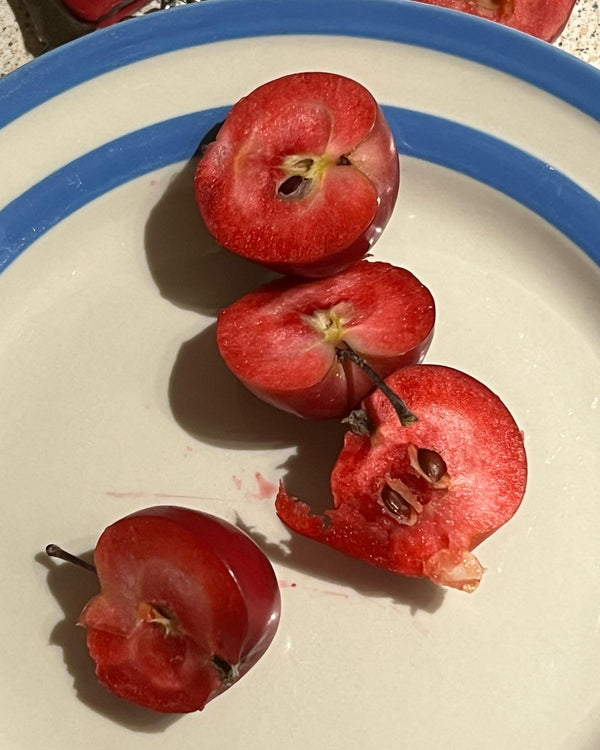
Burgundy is about as dark as an apple gets without being a novelty, and unlike most of the pretty ones it has serious hardiness behind it. Cut one open and you will find waves and rays of red running through the flesh, which is not something you see every day.
Origin and History
R.C. Lamb made the cross at the New York State Agricultural Experiment Station in Geneva in 1953, using Monroe as one parent and a numbered seedling called NY 18491 as the other. NY 18491 is Macoun crossed with Antonovka, and it is the same apple we sell as Rhuby. About 357 seedlings from the cross went in the ground in 1955, the first fruit came in 1960, R.D. Way pulled several selections in 1961, and one of them, NY 161, was finally released as Burgundy in 1974. So if you plant Burgundy and Rhuby together you are growing a child and its parent, and the Antonovka behind both of them is where all that hardiness comes from.
Fruit and Uses
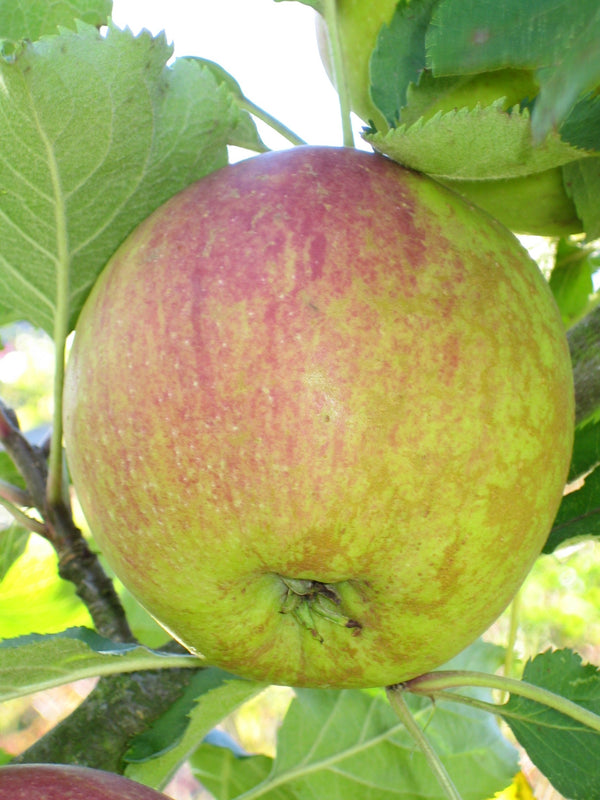
Large fruit, up to about three inches, glossy and purplish red. Firm and juicy with red rays through the flesh, a strong distinctive aroma, and a tart zingy finish. It is a very good dessert apple, it holds its shape cooking, and it makes an aromatic, well-balanced early cider. It stores about two months. Two practical points worth knowing: it bears annually rather than alternating, and the fruit hangs on the tree without dropping early, so you get an extended picking window instead of one frantic weekend.
Growth Habit and Spacing
Ours are on Bud 118 semi-dwarf rootstock. Plan on about 15 feet between trees, and up to 18 feet if you want better airflow and less pruning pressure over time. Vigorous grower.
Pollination
Burgundy needs a pollenizer. Our bloom data has it mid-season, though some northern growers report it blooming late, so the safest play is to pair it with something that overlaps both. Honeycrisp, Macoun, Cortland and most of our crabapples will cover you either way.
Cold Hardiness
We are listing it at zone 2b. St. Lawrence Nurseries, who have grown it in Potsdam, New York for years, rate it to -50°F, and Fedco up in Maine calls it extremely hardy and recommends it for all northern districts. We would rather stay conservative until we have our own winter data, but the Antonovka parentage makes those numbers believable.
Photo credit: “Cross section of Burgundy” by the National Fruit Collection, Brogdale, via Wikimedia Commons, licensed under the Open Government Licence v2.0.
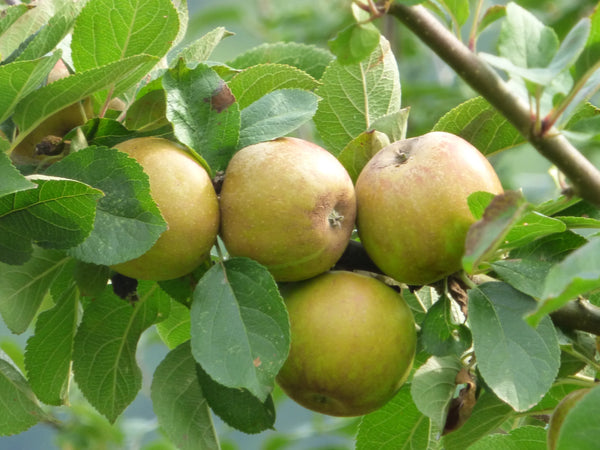
Photos: “Burgundy jm55144” by joergens.mi, via Wikimedia Commons, licensed CC BY-SA 3.0, cropped; “PI 588835 Burgundy, Malus domestica, fruit image (2012)” by USDA-ARS National Plant Germplasm System, Plant Genetic Resources Unit, Geneva NY, via USDA GRIN, public domain.
Questions we get about Burgundy Apple
Does Burgundy Apple need a pollenizer?
Yes. Burgundy Apple needs pollen from a different variety that blooms at about the same time. Plant a different apple or crabapple variety that blooms in groups 3 to 5. It has good pollen, so it can also pollenize other apples blooming at the same time. Partners we carry include Otterson Crabapple, Trail Crabapple, Alexander Apple.
How cold hardy is Burgundy Apple?
We list Burgundy Apple at zone 2b, which means winters down to about -45°F. St. Lawrence Nurseries rates it to -50°F and Fedco calls it extremely hardy, but we'd rather stay a notch conservative until our own trees have been through some Montana winters.
How many chill hours does Burgundy Apple need?
About 1,000 hours of winter chill (we count hours at or below 45°F), likely somewhere between 800 and 1,200. Nobody has published a chill figure for it, so that's our estimate from its relatives and origin. Our chill hours guide has a calculator for your winters, and our research page lists the sources.
When does Burgundy Apple ripen?
About Sep 17 to Sep 29 in Missoula, Montana (an estimate built from published sources and our climate). Warmer places run earlier and cooler places later; our ripening map converts the date to your town.
How big does Burgundy Apple get?
We graft Burgundy Apple onto Bud 118 (semi-dwarf in our dry Montana soils, semi-standard on paper), which makes a tree roughly 12 to 18 ft tall if you never prune it. Plant about 15 ft apart.
What is Burgundy Apple good for?
Our top use scores for Burgundy Apple are hard cider (7/10), fresh eating (6/10), cooking and roasting (6/10). Since we're still new to it, those scores lean on Geneva's records and other growers rather than our own harvests.
Is Burgundy Apple disease resistant?
No. It's very prone to fire blight, and prone to apple scab, cedar-apple rust and powdery mildew. Our apple disease resistance chart has every rating, the notes and the sources.
Will deer eat Burgundy Apple?
Yes, deer love it. Protect Burgundy Apple with a fence or a cage, especially while it is young.
Pollination partners
Trees that will pollenize Burgundy Apple
Burgundy Apple needs a different apple or crabapple nearby to set fruit. Every tree below blooms at the same time and has pollen that works for it. Plant partners within about 100 feet.
Bloom group
4 of 7 (Mid)
Pollination
Needs a partner
Pollen
Good pollenizer
-
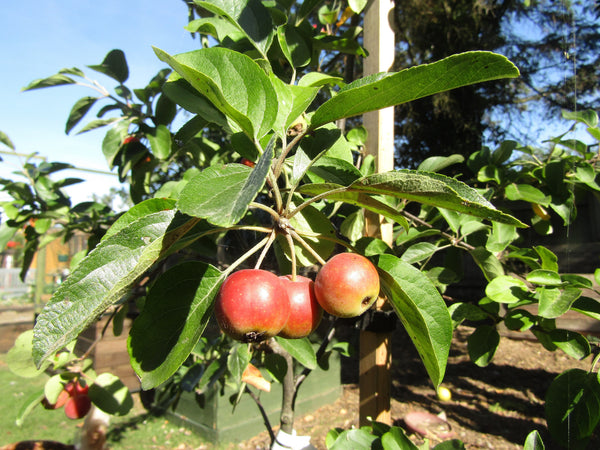 Trail Crabapple(Spring 2027)
$49.99
-
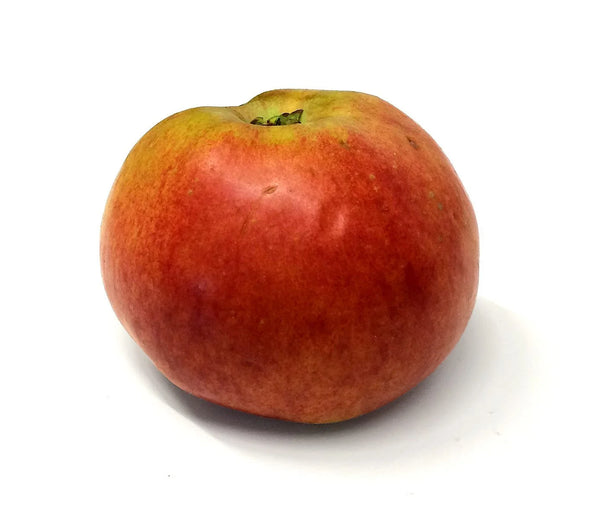 Alexander Apple(Spring 2027)
From $49.99
-
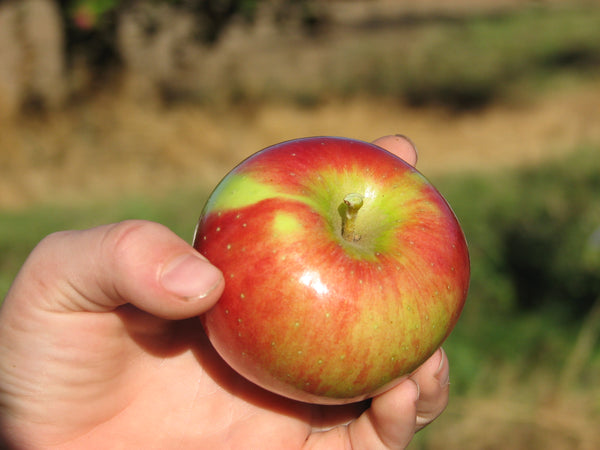 Cortland Apple(Spring 2027)
From $44.99
-
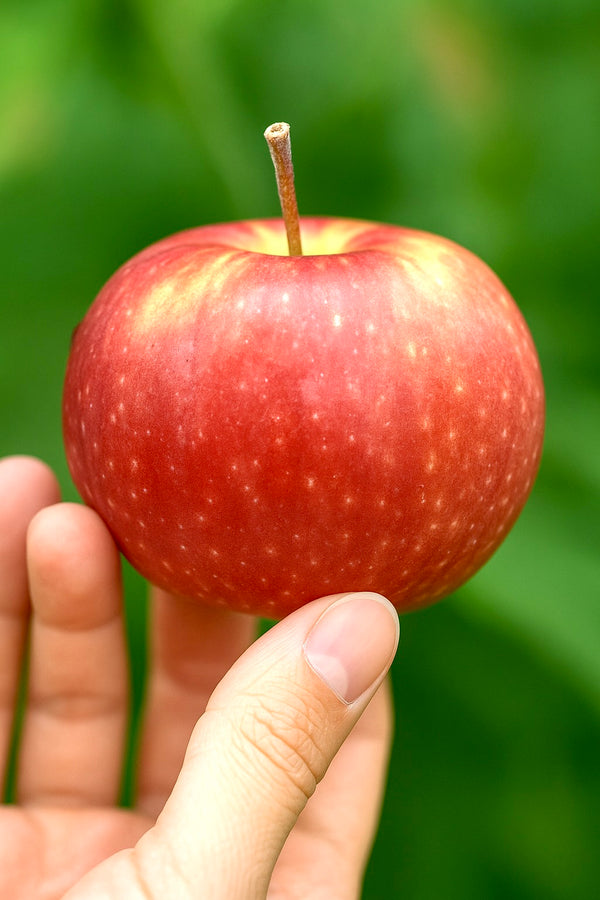 Frostbite Apple(Spring 2027)
From $59.99
-
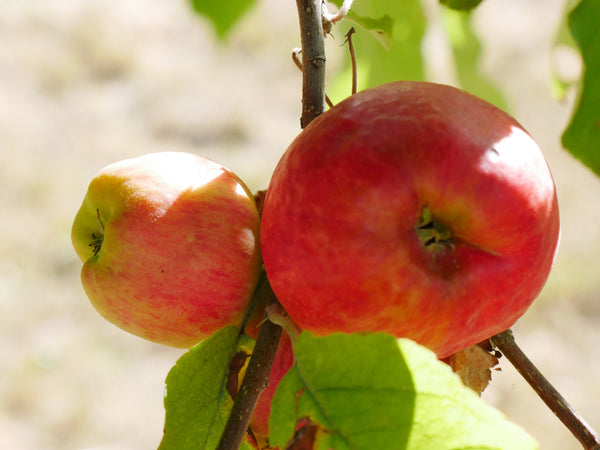 Goodland Apple(Spring 2027)
From $44.99
-
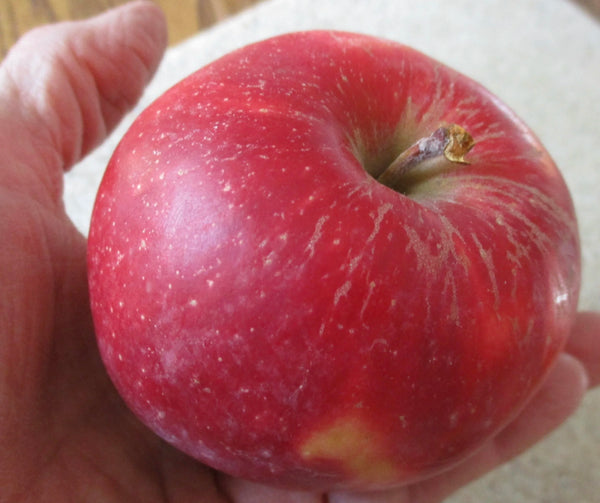 Haralson Apple(Spring 2027)
From $54.99
-
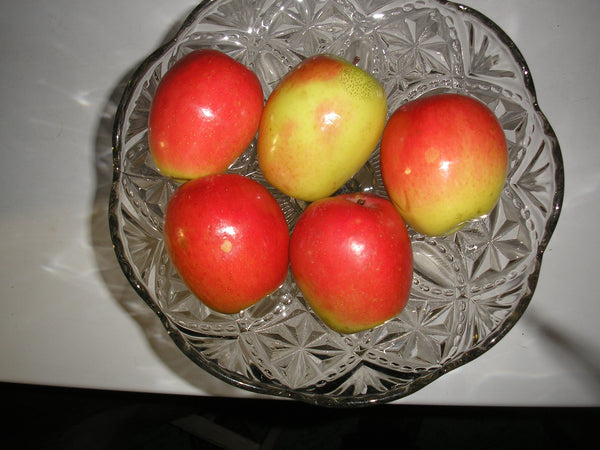 Kandil Sinap Apple(Spring 2027)
From $44.99
-
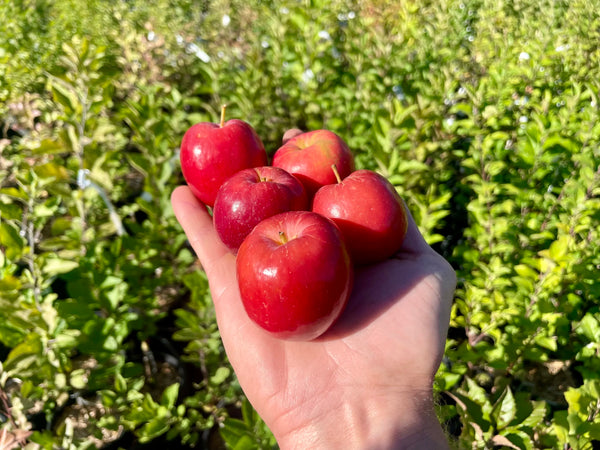 Kerr Applecrab(Spring 2027)
From $54.99
-
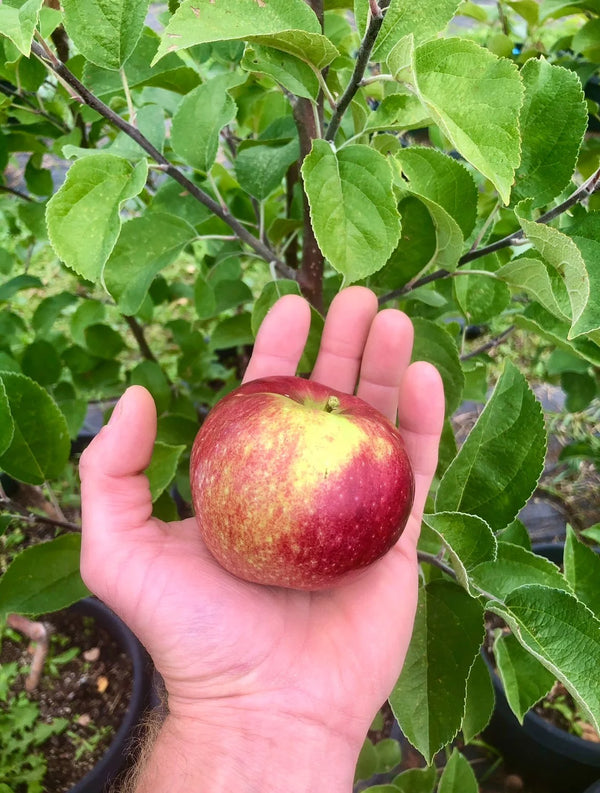 Macoun Apple(Spring 2027)
$59.99