Skip to product information


Hyslop Crabapple (Spring 2027)
$74.99
Reliable shipping
Flexible returns
Pollination
Needs a partner
Bloom group
3 of 7 (Early-Mid)
Ripening
Will it finish before your first hard freeze?
Check it on the Ripening Map (opens in a new tab)At a glance: Hyslop Crabapple is a crabapple tree rated hardy to zone 3 from other growers' reports (winters to -40°F), not self-fertile, so it needs a different variety nearby as a pollenizer (bloom group 3 of 7, early-mid for an apple or crabapple), and it ripens about Sep 21 to Oct 5 in Missoula (our Missoula estimate).
| Hardy to | Zone 3 to 8. A bare number means the whole of zone 3, colder half included (winters to -40°F). Find your zone with our cold hardiness calculator. |
|---|---|
| Pollination | Needs Cross-Pollination. Bloom group 3 of 7 (early-mid), late spring here. Plant a different apple or crabapple variety that blooms in groups 2 to 4, such as Dolgo Crabapple, Kerr Applecrab or Carroll. It has good pollen, so it can also pollenize other apples blooming at the same time. Good partners we carry: Carroll Apple, Liberty Apple, Spokane Beauty Apple, Fred's Mac Apple and 100 more. Apple Pollination Map. |
| Ripens | About Sep 21 to Oct 5 in Missoula (a Missoula estimate from published sources). Real years swing about a week either way. See the date for your town. |
| Rootstock and size | Bud 118: semi-dwarf in our dry Montana soils, semi-standard on paper, about 12 to 18 ft tall unpruned. Stands on its own, few suckers. Plant about 15 ft apart. Our rootstock guide. |
| Good for | Canning and freezing (8/10), jams and jellies (7/10), hard cider (7/10), ornamental value (7/10), pollenizing other trees (7/10), feeding wildlife (6/10). Scores are our 1 to 10 ratings, but we're still new to this one, so they lean on published descriptions and other growers rather than our own harvests. 8 and up makes our Best Of lists. |
| Deer | A deer favorite. Fence it or cage it. |
| What you get | Bare root, 4-6 ft. Shipped or picked up in Missoula in spring, roots wrapped in moist sawdust. Guaranteed to bud out. |
2026 was our first year growing Hyslop crabapple, and we do not yet have direct experience growing this variety ourselves. All information presented here comes from second-hand sources including historical pomological records, nursery descriptions, and grower reports, and should not be considered experiential or based on our own field observations.
Overview
Hyslop is a historic American heirloom crabapple known for unusually large fruit for a crabapple, strong cold hardiness, heavy productivity, and very high tannin content. It has long been valued for jelly, cider blending, preserves, and pollination, and has historically been planted as both a functional orchard tree and an ornamental due to its abundant bloom and striking fruit.
Origin and history
Hyslop crabapple is an old American heirloom of unknown parentage that originated in the Boston, Massachusetts region sometime prior to 1869, when it was first formally recorded in pomological literature. The tree appears to have arisen as a chance seedling, and no confirmed parentage has ever been identified. Because most apples do not grow true from seed, Hyslop represents a unique genetic individual preserved through grafting.
Historical sources suggest the variety likely originated well before 1850 and was named by or associated with the Hyslop family of Massachusetts during the 19th century. It was documented in early American pomology texts such as Beach’s Apples of New York (1905), which described it as a vigorous, very hardy tree and a reliable cropper producing heavy crops of brilliantly colored fruit.
By the late 1800s it had become widely planted across North America for preserves, cider production, and ornamental use. It remained in continuous cultivation for more than a century and is considered one of the classic large-fruited American crabapples.
No verified records exist identifying its species background or hybrid lineage beyond classification within the genus Malus.
Fruit & Uses
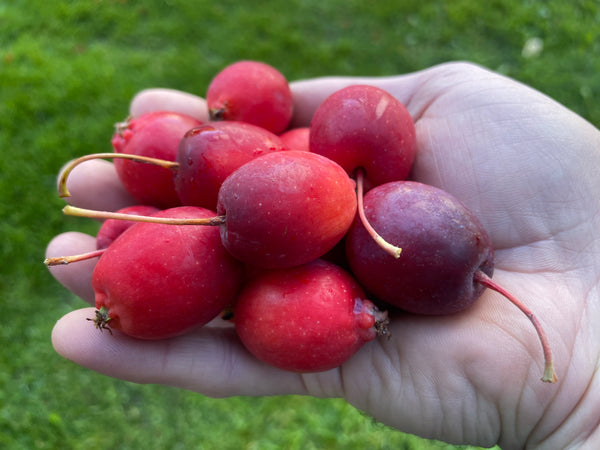
Hyslop produces fruit that is fairly large for a crabapple, typically around 1½ inches in diameter. The fruit is round to slightly oblate and deep crimson to dark red or purplish in color, often covered with a heavy bluish bloom and borne in large clusters.
The flesh is firm, yellowish to white, and juicy when first ripe but becomes mealy quickly after harvest. The flavor is strongly acidic, astringent, and high in tannins. It is generally not considered suitable for fresh eating but is highly valued for jelly, pickling, sauce, preserves, and cider blending, where its tannin content contributes structure and acidity.
The fruit ripens from late summer into early fall depending on climate and typically has a short storage life.
Growth Habit
Hyslop is a vigorous, upright to rounded tree with strong structural growth and reliable productivity. Mature trees commonly reach about 15–25 feet tall with a similar spread, though size varies with rootstock and site conditions. The tree produces abundant white to pink-tinged blossoms and is known for heavy fruit set.
Historical descriptions characterize it as a strong grower and dependable bearer, often producing heavy crops biennially or annually under good management. It is considered precocious and capable of early production.
Spacing
We offer Hyslop crabapple on Bud 118 rootstock, which should be spaced about 15 feet apart. For tighter plantings, spacing can be reduced to 12 feet apart and for wider spacing in fertile soils or lower-density systems, trees can be spaced up to 18 feet apart.
Pollination
Like almost all Malus, Hyslop is not self-fertile and requires cross-pollination. It is diploid and blooms in the early to mid-season apple bloom window. Compatible pollenizers include Dolgo, Kerr, Carroll, McIntosh, Fred's McIntosh, Trailman, Zestar!, Liberty, Spokane Beauty, and much more.
Cold hardiness
Hyslop is widely described as very hardy and adapted to cold climates, with places such as Pomiferous and Walden Heights listing it as hardy through zone 3. In Montana where significant parts of the state can experience -40F to -50F temps, whether Hyslop can survive these temps remains to be seen. For now, we are listing it as hardy down to -40F/zone 3.
Other Notes
Hyslop is notable for producing fruit significantly larger than most crabapples and for its exceptionally high tannin content, which made it historically important in traditional cider making and preserves.
Early pomological literature describes the tree as vigorous, hardy, and a reliable cropper, often bearing heavily. However, the fruit becomes mealy quickly after harvest and does not store well.
The variety is susceptible to common apple diseases such as apple scab and requires standard orchard management. It has also been valued historically as an ornamental planting due to its abundant spring bloom and heavy clusters of dark red fruit.
Image: Resolution enhanced from a public domain image. The crabapple is unchanged, but some of the surrounding text and numbers may vary.
Questions we get about Hyslop Crabapple
Does Hyslop Crabapple need a pollenizer?
Yes. Hyslop Crabapple needs pollen from a different variety that blooms at about the same time. Plant a different apple or crabapple variety that blooms in groups 2 to 4, such as Dolgo Crabapple, Kerr Applecrab or Carroll. It has good pollen, so it can also pollenize other apples blooming at the same time. Partners we carry include Carroll Apple, Liberty Apple, Spokane Beauty Apple.
How cold hardy is Hyslop Crabapple?
We list Hyslop Crabapple at zone 3, which means winters down to about -40°F. We're still new to it, so that rating comes from sources like Pomiferous and Walden Heights rather than our own winters. Whether it handles -40°F to -50°F in Montana remains to be seen, and we'll adjust it as our own trees go through more winters.
When does Hyslop Crabapple ripen?
About Sep 21 to Oct 5 in Missoula, Montana (an estimate built from published sources and our climate). Warmer places run earlier and cooler places later; our ripening map converts the date to your town.
How big does Hyslop Crabapple get?
We graft Hyslop Crabapple onto Bud 118 (semi-dwarf in our dry Montana soils, semi-standard on paper), which makes a tree roughly 12 to 18 ft tall if you never prune it. Plant about 15 ft apart.
What is Hyslop Crabapple good for?
Our top use scores for Hyslop Crabapple are canning and freezing (8/10), jams and jellies (7/10), hard cider (7/10), ornamental value (7/10). Since we're still new to it, those scores lean on published descriptions and other growers rather than our own harvests. Anything scored 8 or higher makes our Best Of lists.
Will deer eat Hyslop Crabapple?
Yes, deer love it. Protect Hyslop Crabapple with a fence or a cage, especially while it is young.
Pollination partners
Trees that will pollenize Hyslop Crabapple
Hyslop Crabapple needs a different apple or crabapple nearby to set fruit. Every tree below blooms at the same time and has pollen that works for it. Plant partners within about 100 feet.
Bloom group
3 of 7 (Early-Mid)
Pollination
Needs a partner
Pollen
Good pollenizer
-
 Carroll Apple(Spring 2027)
From $49.99
Carroll Apple(Spring 2027)
From $49.99
-
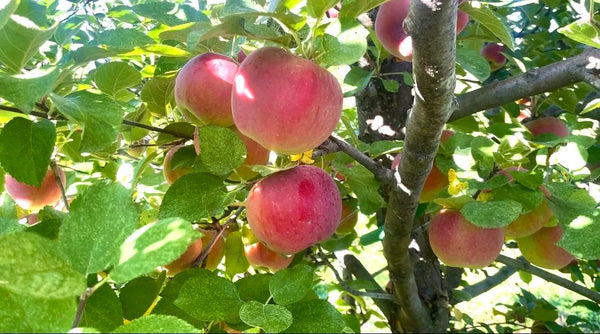 Liberty Apple(Spring 2027)
From $49.99
Liberty Apple(Spring 2027)
From $49.99
-
 Fred's Mac Apple(Spring 2027)
From $59.99
Fred's Mac Apple(Spring 2027)
From $59.99
-
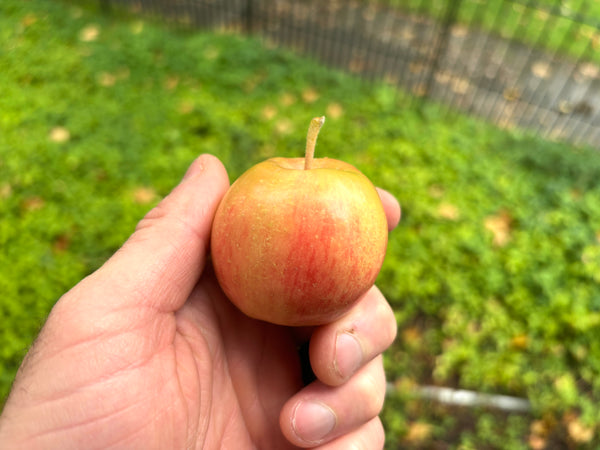 Hewe's Virginia Crabapple(Spring 2027)
From $74.99
Hewe's Virginia Crabapple(Spring 2027)
From $74.99
-
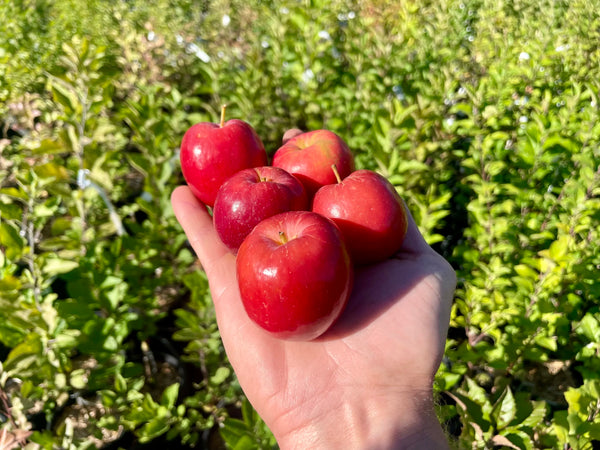 Kerr Applecrab(Spring 2027)
From $54.99
Kerr Applecrab(Spring 2027)
From $54.99
-
 Zestar!® Apple(Spring 2027)
From $59.99
Zestar!® Apple(Spring 2027)
From $59.99
-
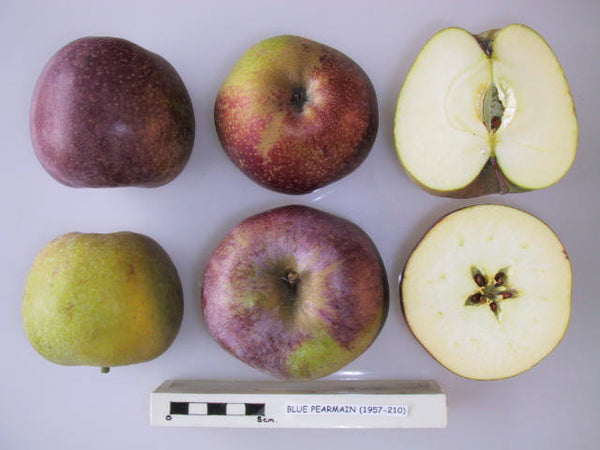 Blue Pearmain Apple(Spring 2027)
From $39.99
Blue Pearmain Apple(Spring 2027)
From $39.99
-
 Centennial Applecrab(Spring 2027)
From $59.99
Centennial Applecrab(Spring 2027)
From $59.99
-
 Empire Apple(Spring 2027)
From $34.99
Empire Apple(Spring 2027)
From $34.99