
Skip to product information


Black Walnut (Bundle of 3)
$99.99
Reliable shipping
Flexible returns
Ripening
Will it finish before your first hard freeze?
Check it on the Ripening Map (opens in a new tab)At a glance: Black Walnut is a walnut tree rated hardy to zone 3 in our ratings (winters to -40°F), wind-pollinated with staggered male and female bloom, so plant two different trees, and it ripens about Sep 19 to Oct 7 in Missoula (our Missoula estimate).
| Hardy to | Zone 3 to 9. A bare number means the whole of zone 3, colder half included (winters to -40°F). Find your zone with our cold hardiness calculator. |
|---|---|
| Pollination | Heterodichogamous - Plant Two Different Trees. Bloom group 5 of 7 (mid-late), late spring to early summer here. Black walnut is wind-pollinated and a single tree often sheds pollen when its own female flowers are not ready, so plant all three seedlings together (a bundle usually includes both flowering types). Butternut, heartnut and buartnut can also cross with it where bloom overlaps, but English walnut usually blooms at a different time. Good partners we carry: Rhodes Heartnut Seedling (Bundle of 2), Buartblack Walnut (Bundle of 2), Purvis English Walnut Seedling (Bundle of 2), Purvis Hardy English Walnut (Bundle of 2). Bloom group is our estimate from the variety's origin and relatives. Walnut & Heartnut Pollination Chart. |
| Ripens | About Sep 19 to Oct 7 in Missoula (a Missoula estimate from published sources). Real years swing about a week either way. See the date for your town. |
| Good for | Wood (9/10), pies and baking (8/10), winter storage (6/10), edible nuts (6/10), feeding wildlife (6/10). Scores are our own 1 to 10 ratings; 8 and up makes our Best Of lists. |
| Deer | A deer favorite. Fence it or cage it. |
| What you get | Bare root, 3-5 ft. Shipped or picked up in Missoula in spring, roots wrapped in moist sawdust. Guaranteed to bud out. |
Overview
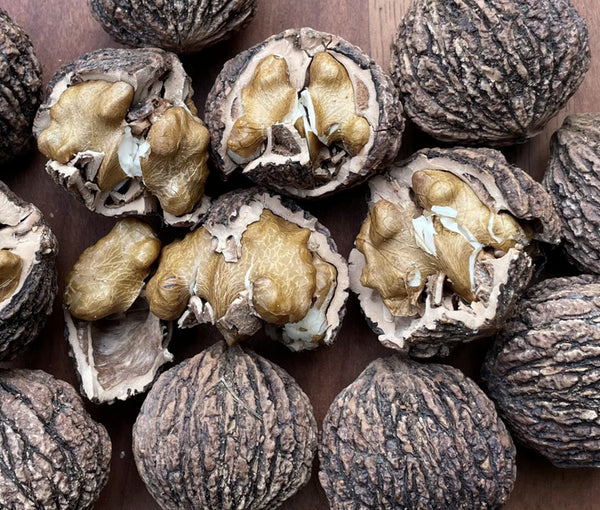
Although these nuts may be a challenge to crack, with the right tools the reward presents itself, a sweet nut that has been a staple food for North American peoples for millennia. Snack on the nutritious walnuts out of hand, add them to soups and stews, or grind them into meal for baking. The hard shells provide a perfect package for storing the nuts over winter. Also makes for some of the finest and sought after wood for next generations. Massive carbon storing potential. Hardy to zone 3.
Seedlings Offered
These black walnut seedlings from unnamed parents. The tree grows 40-65 feet and bears fruit in late September here in Western MT. Black walnuts in this bundle will all pollenize themselves.
Trees are 3-5 ft.
Other Note
Check out in the second photo the Black Walnut Ice Cream that the former Missoula Sentinel Creamery had advertised 100 years ago in the Missoula Sentinel newspaper dated April 30,1926.
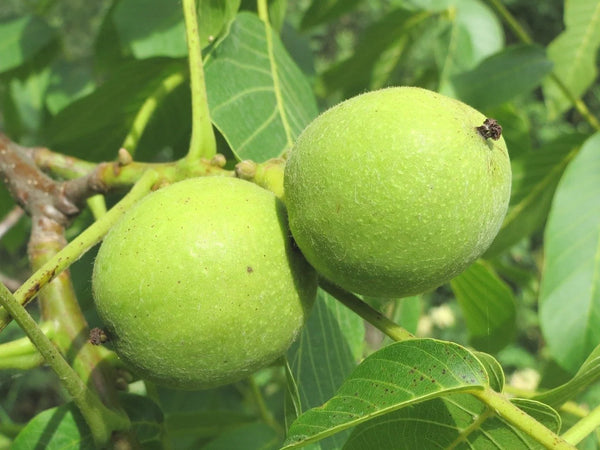
Images Courtesy of Plant Image Library and Jim Linwood
Questions we get about Black Walnut
How cold hardy is Black Walnut?
We rate Black Walnut hardy to zone 3, which means winters down to about -40°F. Our ratings come from real winters at our two Montana sites and from trusted growers across the North, not from a catalog average.
When does Black Walnut ripen?
About Sep 19 to Oct 7 in Missoula, Montana (an estimate built from published sources and our climate). Warmer places run earlier and cooler places later; our ripening map converts the date to your town.
What is Black Walnut good for?
Our top use scores for Black Walnut are wood (9/10), pies and baking (8/10), winter storage (6/10), edible nuts (6/10). Anything scored 8 or higher makes our Best Of lists.
Will deer eat Black Walnut?
Yes, deer love it. Protect Black Walnut with a fence or a cage, especially while it is young.
What arrives, and when does Black Walnut ship?
A dormant bare-root plant, roots wrapped in moist sawdust with a vapor barrier, shipped or picked up in Missoula in spring. Sizes offered: 3-5 ft. We guarantee our plants bud out. Stone fruits can be slow, so if one still has not budded out by August 15, write to us and we credit you for the following spring.
Pollination partners
Trees that will pollenize Black Walnut
Black walnut is wind-pollinated and a single tree often sheds pollen when its own female flowers are not ready, so plant all three seedlings together (a bundle usually includes both flowering types). Butternut, heartnut and buartnut can also cross with it where bloom overlaps, but English walnut usually blooms at a different time.
Bloom group
5 of 7 (Mid-Late)
Pollination
Plant two or more
Pollen
Good pollenizer
-
 Sold out
Buartblack Walnut(Bundle of 2)
Sold out
Buartblack Walnut(Bundle of 2)
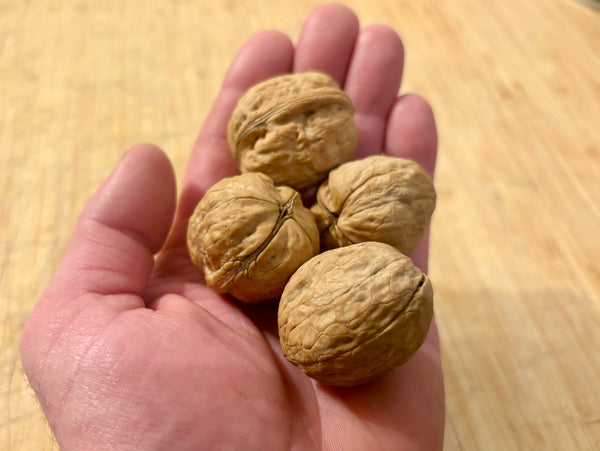
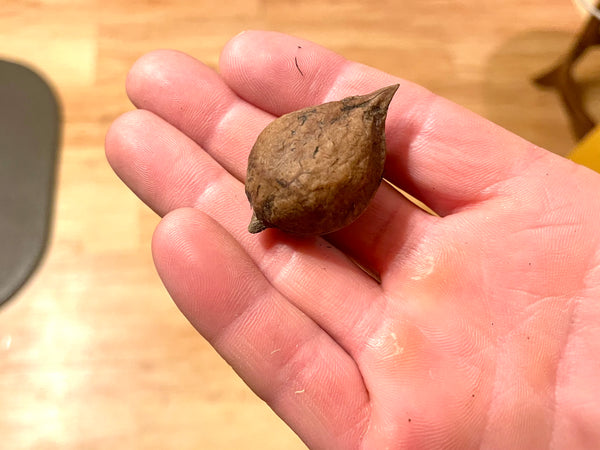
See every pairing on the Walnut & Heartnut Pollination Chart
Black Walnut's bloom group is our best estimate. Watch it bloom and tell us what you see.