Skip to product information


Honeycrisp Apple (Spring 2027)
$59.99
Reliable shipping
Flexible returns
Pollination
Needs a partner
Bloom group
5 of 7 (Mid-Late)
Ripening
Will it finish before your first hard freeze?
Check it on the Ripening Map (opens in a new tab)
Disease resistanceResists 1 of 4
- 4 Apple scab : Resistant, 4 of 5
- 2 Cedar-apple rust : Susceptible, 2 of 5
- 3 Fire blight : Moderate, 3 of 5
- 2 Powdery mildew : Susceptible, 2 of 5
Scored 1 to 5. Higher resists better, and ? means no published data yet.
See it on our apple disease chart (opens in a new tab)
At a glance: Honeycrisp Apple is an apple tree rated hardy to zone 2b in our ratings (winters to -45°F), not self-fertile, so it needs a different variety nearby as a pollenizer (bloom group 5 of 7, mid-late for an apple or crabapple), and it ripens about Sep 8 to Sep 28 in Missoula (our Missoula estimate).
| Hardy to | Zone 2b to 8. The b means the warmer half of zone 2 only (winters to -45°F). Find your zone with our cold hardiness calculator. |
|---|---|
| Chill hours | About 850 hours (800 to 1,000). Well documented. Independent sources agree. Montana winters give it plenty. In milder climates, make sure your winters average at least this much. Check your chill hours or see our sources. |
| Pollination | Needs Cross-Pollination. Bloom group 5 of 7 (mid-late), late spring here. Plant a different apple or crabapple variety that blooms in groups 4 to 6. It has good pollen, so it can also pollenize other apples blooming at the same time. Good partners we carry: Black Oxford Apple, Northern Spy Apple, Oriole Apple, Prairie Spy Apple and 70 more. Apple Pollination Map. |
| Ripens | About Sep 8 to Sep 28 in Missoula (a Missoula estimate from published sources). Real years swing about a week either way. See the date for your town. |
| Rootstock and size | Spy 227: full size. A Northern Spy selection. Dolgo: full size, about 20 to 30 ft tall unpruned. Very hardy and well anchored. G890: semi-dwarf, about 11 to 16 ft tall unpruned. Our rootstock guide. |
| Good for | Fresh eating (9/10), winter storage (9/10), salads and slicing (8/10). Scores are our own 1 to 10 ratings; 8 and up makes our Best Of lists. |
| Deer | A deer favorite. Fence it or cage it. |
| What you get | Bare root, 3-5 ft or 5-6 ft or 5-7 ft or 5-7 ft. Larger and More Branching. Shipped or picked up in Missoula in spring, roots wrapped in moist sawdust. Guaranteed to bud out. |
Overview
Honeycrisp has become one of the best-selling apples in the U.S. Since its creation by University of Minnesota breeders, Honeycrisp has been lauded for its winter hardiness and its ability to produce large, high-quality fruit. It quickly gained popularity, particularly in temperate regions like Washington and Oregon, but colder climate growers have had success with it, particularly here in western Montana.
Flavor
The Honeycrisp apple is known for its aromatic sweetness, with a honey-like flavor and a juicy, crisp texture that has made it a consumer favorite.
Cold Hardiness – A Relative Concept
Updated 2024: While Honeycrisp is often considered cold-hardy, its hardiness is relative. It may be well-suited to regions like New York or parts of the Midwest, but in parts of Montana where temperatures can drop below -45°F, which is much of the state east of the continental divide, Honeycrisp does not perform well. This has been our observation in the field.
For example, on Robert Narotsky’s farm in Bozeman, Honeycrisp suffered serious frost damage to the trunk after exposure to -50°F. Similarly, on Ed Schultz’s farm in Gallatin Gateway, MT, the apple saw -47°F, resulting in serious limb damage that made its way into the trunk. If your region experiences temperatures below -45°F, we do not recommend planting Honeycrisp. Final note, it's Ed Schultz' experience that Honeycrisp along with many of the University of Minnesota apples (Haralson, Zestar!, Sweet Sixteen, Snowsweet, & others) take awhile to shut down and can get wiped out by Montana's brutal early Fall frosts. Ed has a massive pile of dead University of Minnesota apple trees in the back of his farm from these Fall frosts he experienced in 2019 and 2020. Meanwhile, these University of MN apples all did fine in most of Western Montana's early Fall frosts during this time period.
Rootstock and Availability for 2027
For Spring 2027, we offer Honeycrisp trees on a few different rootstocks based on your location and climate:
Dolgo Rootstock: Ideal for areas where winters dip below -40°F and even -50°F, offering better cold hardiness.
Spy 227: Full size, hardy to at least -45°F or more.
G890: Semi-Dwarf and disease resistant rootstock, but likely not hardy below -40F.
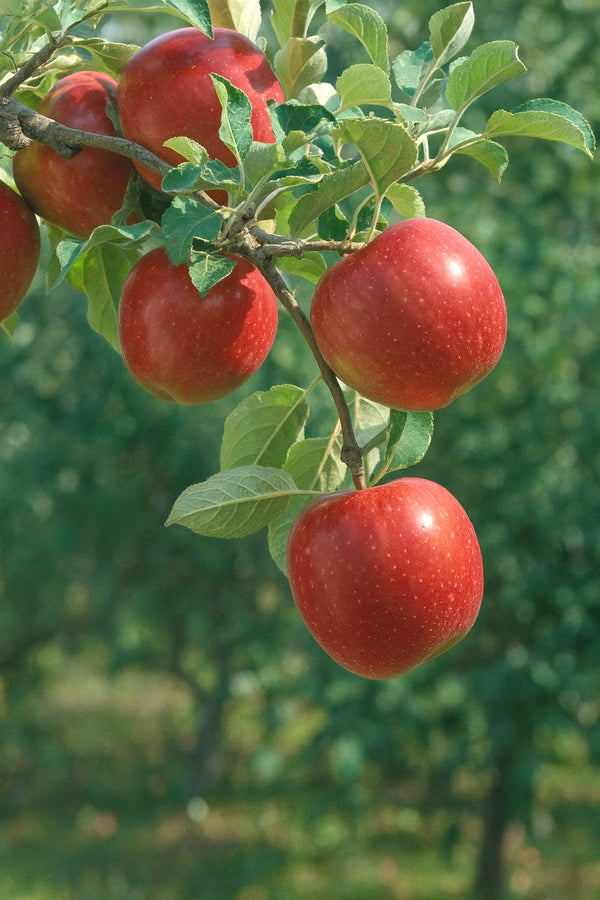
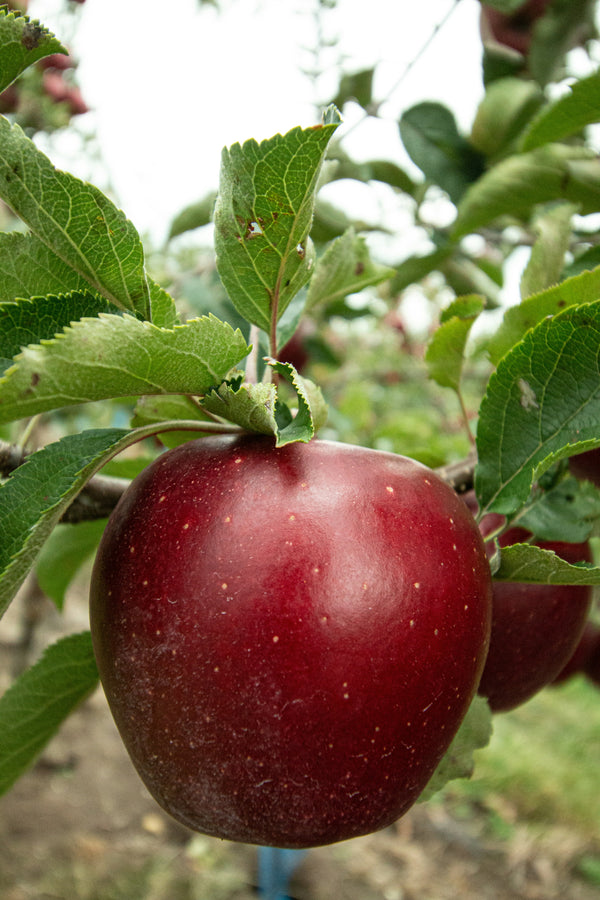
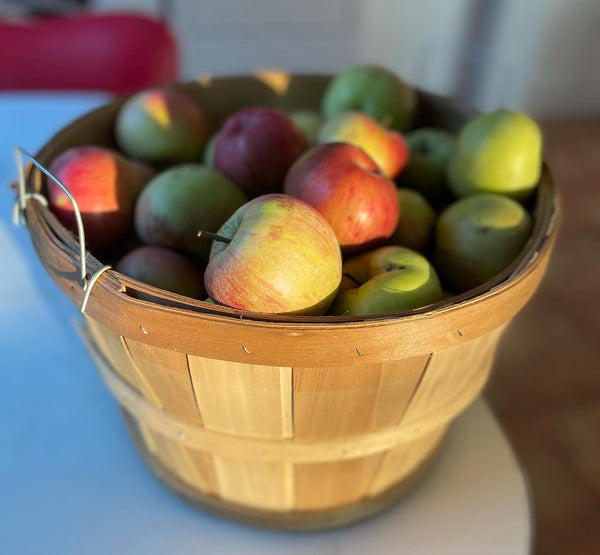
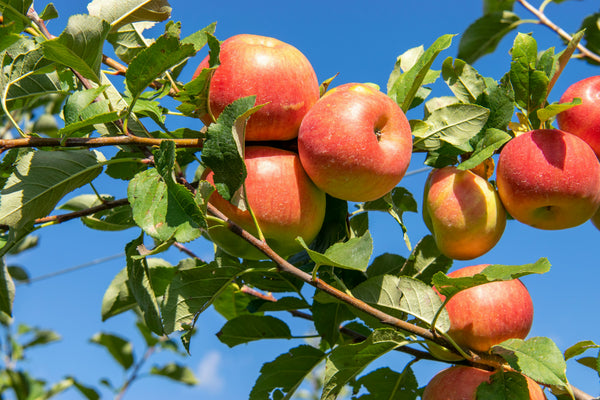
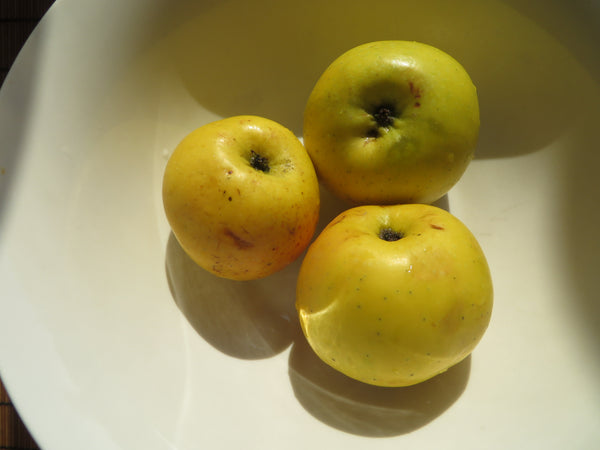
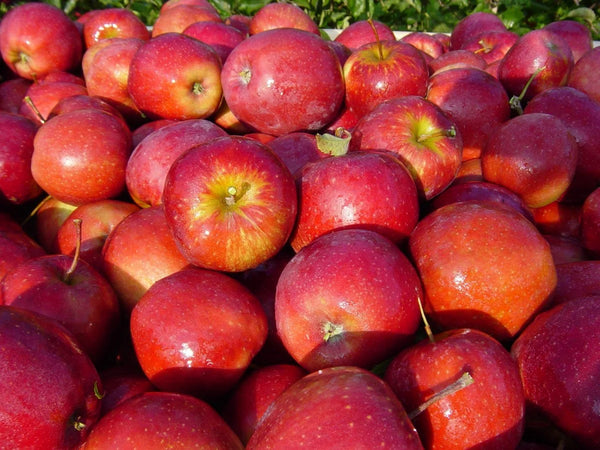
Photos: “Honeycrisp apples” by MikeyMoose, via Wikimedia Commons, licensed CC BY-SA 3.0; “Honeycrisp apple tree” by MikeyMoose, via Wikimedia Commons, licensed CC BY-SA 3.0; “Honeycrisp-Apple” by Evan-Amos, via Wikimedia Commons, licensed CC0; “Honeycrisp apple orchard” by MikeyMoose, via Wikimedia Commons, licensed CC BY-SA 3.0.
Questions we get about Honeycrisp Apple
Does Honeycrisp Apple need a pollenizer?
Yes. Honeycrisp Apple needs pollen from a different variety that blooms at about the same time. Plant a different apple or crabapple variety that blooms in groups 4 to 6. It has good pollen, so it can also pollenize other apples blooming at the same time. Partners we carry include Black Oxford Apple, Northern Spy Apple, Oriole Apple.
How cold hardy is Honeycrisp Apple?
We rate Honeycrisp Apple hardy to zone 2b, which means winters down to about -45°F. Our ratings come from real winters at our two Montana sites and from trusted growers across the North, not from a catalog average.
How many chill hours does Honeycrisp Apple need?
About 850 hours of winter chill (we count hours at or below 45°F), likely somewhere between 800 and 1,000. That figure is well documented: independent sources agree. Nurseries list 800 to 1,000 chill hours. Not a pick for mild-winter climates, but Montana winters cover it easily. Our chill hours guide has a calculator for your winters, and our research page lists the sources.
When does Honeycrisp Apple ripen?
About Sep 8 to Sep 28 in Missoula, Montana (an estimate built from published sources and our climate). Warmer places run earlier and cooler places later; our ripening map converts the date to your town.
How big does Honeycrisp Apple get?
We graft Honeycrisp Apple onto Spy 227 (full size). Some sizes are on Dolgo, G890.
What is Honeycrisp Apple good for?
Our top use scores for Honeycrisp Apple are fresh eating (9/10), winter storage (9/10), salads and slicing (8/10). Anything scored 8 or higher makes our Best Of lists.
Is Honeycrisp Apple disease resistant?
For some diseases, yes. It's resistant to apple scab. It holds up moderately well against fire blight. It's prone to cedar-apple rust and powdery mildew. Our apple disease resistance chart has every rating, the notes and the sources.
Will deer eat Honeycrisp Apple?
Yes, deer love it. Protect Honeycrisp Apple with a fence or a cage, especially while it is young.
Pollination partners
Trees that will pollenize Honeycrisp Apple
Honeycrisp Apple needs a different apple or crabapple nearby to set fruit. Every tree below blooms at the same time and has pollen that works for it. Plant partners within about 100 feet.
Bloom group
5 of 7 (Mid-Late)
Pollination
Needs a partner
Pollen
Good pollenizer
-
 Black Oxford Apple(Spring 2027)
From $44.99
Black Oxford Apple(Spring 2027)
From $44.99
-
 Northern Spy Apple(Spring 2027)
From $39.99
Northern Spy Apple(Spring 2027)
From $39.99
-
 Oriole Apple(Spring 2027)
From $49.99
Oriole Apple(Spring 2027)
From $49.99
-
 Reinette Simirenko Apple(Spring 2027)
From $44.99
Reinette Simirenko Apple(Spring 2027)
From $44.99
-
 Spencer Apple(Spring 2027)
From $49.99
Spencer Apple(Spring 2027)
From $49.99
-
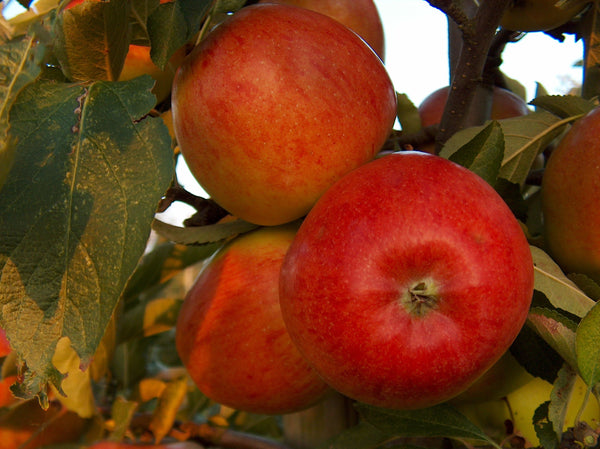 Sweet Sixteen Apple(Spring 2027)
From $44.99
Sweet Sixteen Apple(Spring 2027)
From $44.99
-
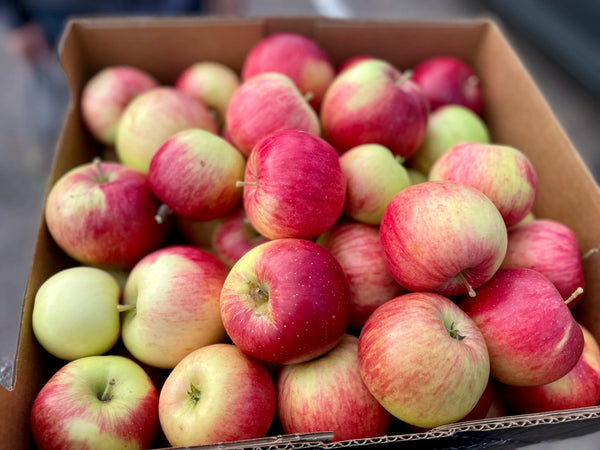 Wealthy Apple(Spring 2027)
From $59.99
Wealthy Apple(Spring 2027)
From $59.99
-
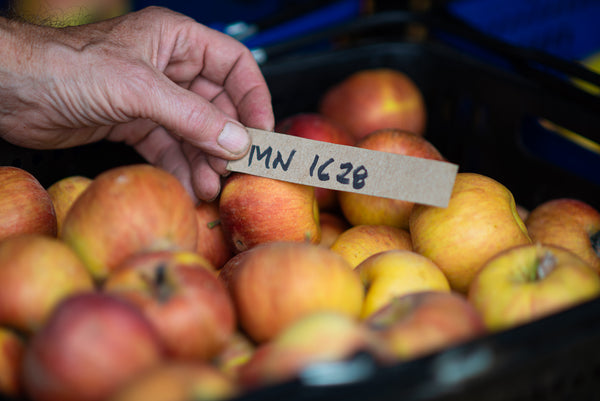 MN 1628 Apple(Spring 2027)
$89.99
MN 1628 Apple(Spring 2027)
$89.99
-
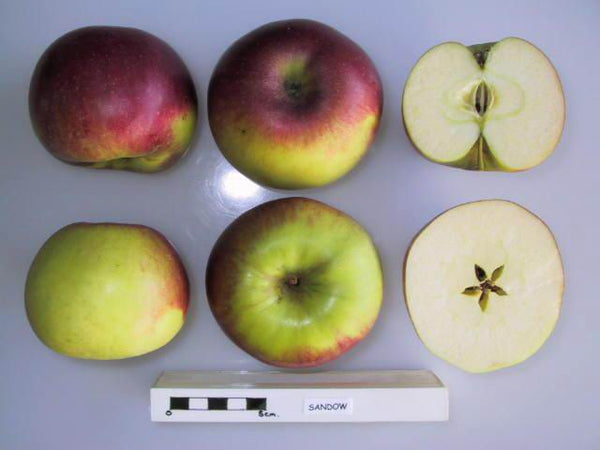 Sandow Apple(Spring 2027)
From $44.99
Sandow Apple(Spring 2027)
From $44.99