Skip to product information


Debbie's Gold Apricot (Spring 2027)
$54.99
Reliable shipping
Flexible returns
Pollination
Self-fertile
Bloom group
3 of 7 (Early-Mid)
Ripening
Will it finish before your first hard freeze?
Check it on the Ripening Map (opens in a new tab)
Disease resistanceNot tested yet
- ? Bacterial canker : Unknown, no published data yet
- ? Bacterial spot : Unknown, no published data yet
- ? Brown rot : Unknown, no published data yet
- ? Cytospora canker : Unknown, no published data yet
- ? Shot hole : Unknown, no published data yet
Scored 1 to 5. Higher resists better, and ? means no published data yet.
See it on our apricot disease chart (opens in a new tab)
At a glance: Debbie's Gold Apricot is an apricot tree rated hardy to zone 2 in our ratings (winters to -50°F), self-fertile, so one tree can crop (bloom group 3 of 7, early-mid for an apricot), and it ripens about Jul 28 to Aug 8 in Missoula (our Missoula estimate).
| Hardy to | Zone 2 to 7. A bare number means the whole of zone 2, colder half included (winters to -50°F). Find your zone with our cold hardiness calculator. |
|---|---|
| Chill hours | About 650 hours (450 to 850). Our estimate. No published figure exists for this variety yet. Montana winters give it plenty. In milder climates, make sure your winters average at least this much. Check your chill hours or see our sources. |
| Pollination | Self-Fertile. Bloom group 3 of 7 (early-mid), very early spring here. Self-fruitful per Bob Purvis, though crops are better with a second early apricot such as Westcot, Morden 604 or Manchurian nearby as a pollenizer. Nearby varieties that can boost the crop: Morden 604 Apricot, Westcot Apricot, Perfection Apricot, Tomcot Apricot and 8 more. Apricot Pollination Map. |
| Ripens | About Jul 28 to Aug 8 in Missoula (a Missoula estimate from published sources). Real years swing about a week either way. See the date for your town. |
| Rootstock and size | Manchurian: full size, about 15 to 20 ft tall unpruned. The hardiest apricot root there is. Plant about 15 ft apart. Our rootstock guide. |
| Good for | Canning and freezing (8/10), fresh eating (7/10), jams and jellies (7/10), pies and baking (6/10), cooking and roasting (6/10). Scores are our own 1 to 10 ratings; 8 and up makes our Best Of lists. |
| Deer | Sometimes damaged by deer. |
| What you get | Bare root, 3-5 ft or 4-6 ft or 5-7 ft or 6-8 ft. Shipped or picked up in Missoula in spring, roots wrapped in moist sawdust. Guaranteed to bud out. |
Overview
Debbie’s Gold Apricot is a cold-climate apricot originating from the Canadian prairies, where it was selected for its ability to survive harsh winters while still producing high-quality fruit. It has earned a strong reputation among northern growers as one of the better-flavored hardy apricots for areas where apricots are often considered marginal. Still blooms fairly early, so this part it always a risk in the Spring.
Growth Habit & Spacing (Manchurian Rootstock)
Our Debbie's Gold are all grafted onto Manchurian apricot rootstock. Debbie’s Gold grows as a vigorous, upright to spreading tree with good structural strength and anchorage. Manchurian rootstock is equally cold hardy (-50F) and adaptable to our dry, alkaline soils. Trees should be spaced approximately 15 ft. apart (or more for less dense spacing). With pruning, size can be managed, but this is not a dwarf tree.
Fruit Quality & Uses
Debbie’s Gold produces medium-sized, golden-yellow apricots with firm, sweet flesh. The fruit is well suited for fresh eating, drying, canning, preserves, sauces, and desserts. While we did not have the opportunity to taste Debbie’s Gold specifically in our video, its reputation for flavor aligns closely with the types of hardy apricots we discussed in Cold Climate Fruit Growing with Bob Purvis, where fruit quality, genetics, and cold adaptation are explored in depth.
Pollination
Debbie's Gold is at least partially self-fertile, like most apricots, although fruit set/productivity will be higher if planted with any of our other Prairie Province apricots, such as Westcot and Morden 604, as well as Manchurian, Precious and Zard.
Cold Hardiness
Debbie’s Gold is generally considered hardy to Zone 3, and possibly even zone 2, having withstood temps into the -40Fs. Both the wood and buds have shown good tolerance to severe winter temperatures typical of prairie and northern mountain climates. Like many hardy apricots, it tends to shut down earlier in fall than tender varieties, which helps reduce winter injury and improves survival in regions with early cold snaps and long winters.
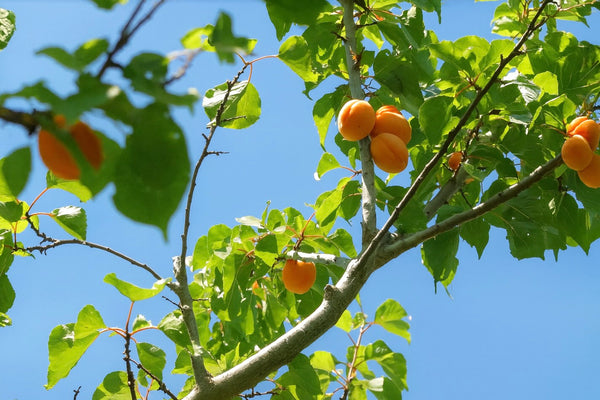
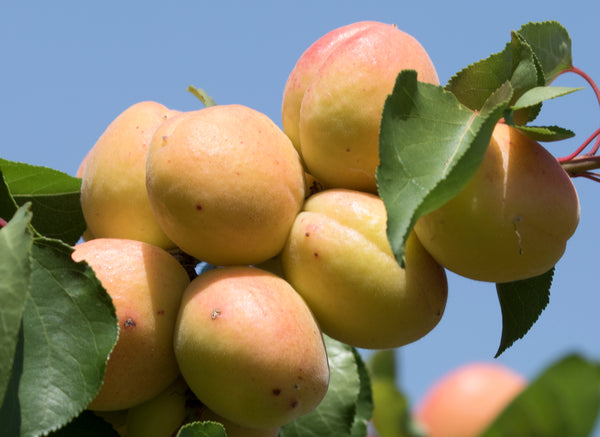
About the photo: this isn’t Debbie's Gold itself. Photos of Debbie's Gold are either under copyright or simply unavailable, so we picked the open-source image that looks closest to the fruit. Photo: “Marelica Kečkemetska ruža - zreli plodovi na grani” by Silverije, via Wikimedia Commons, licensed CC BY-SA 4.0.
Questions we get about Debbie's Gold Apricot
Does Debbie's Gold Apricot need a pollenizer?
No. Debbie's Gold Apricot is self-fertile, so a single tree can set fruit. Self-fruitful per Bob Purvis, though crops are better with a second early apricot such as Westcot, Morden 604 or Manchurian nearby as a pollenizer. Partners we carry include Morden 604 Apricot, Westcot Apricot, Perfection Apricot.
How cold hardy is Debbie's Gold Apricot?
We rate Debbie's Gold Apricot hardy to zone 2, which means winters down to about -50°F. Our ratings come from real winters at our two Montana sites and from trusted growers across the North, not from a catalog average.
How many chill hours does Debbie's Gold Apricot need?
About 650 hours of winter chill (we count hours at or below 45°F), likely somewhere between 450 and 850. Nobody has published a chill figure for it, so that's our estimate from its relatives and origin. Montana winters cover its chill easily. The real risk is early bloom, so a spot that warms slowly in spring helps dodge frost. Our chill hours guide has a calculator for your winters, and our research page lists the sources.
When does Debbie's Gold Apricot ripen?
About Jul 28 to Aug 8 in Missoula, Montana (an estimate built from published sources and our climate). Warmer places run earlier and cooler places later; our ripening map converts the date to your town.
How big does Debbie's Gold Apricot get?
We graft Debbie's Gold Apricot onto Manchurian (full size), which makes a tree roughly 15 to 20 ft tall if you never prune it. Plant about 15 ft apart.
What is Debbie's Gold Apricot good for?
Our top use scores for Debbie's Gold Apricot are canning and freezing (8/10), fresh eating (7/10), jams and jellies (7/10), pies and baking (6/10). Anything scored 8 or higher makes our Best Of lists.
Is Debbie's Gold Apricot disease resistant?
We don't know yet. Nobody has published solid disease data on Debbie's Gold Apricot for bacterial canker, bacterial spot, brown rot, cytospora canker and shot hole, so we list it as unknown instead of guessing. That doesn't mean it's weak. Plenty of the plants we grow have never been through formal disease trials. Our apricot disease resistance chart has every rating, the notes and the sources.
Will deer eat Debbie's Gold Apricot?
Sometimes. Deer browse Debbie's Gold Apricot now and then, so protect young plants where deer pressure is high.
Pollination partners
Good partners for Debbie's Gold Apricot
Debbie's Gold Apricot is self-fertile, so one tree will fruit on its own. If you'd like a second apricot, these bloom at the same time and work well together.
Bloom group
3 of 7 (Early-Mid)
Pollination
Self-fertile
Pollen
Good pollenizer
-
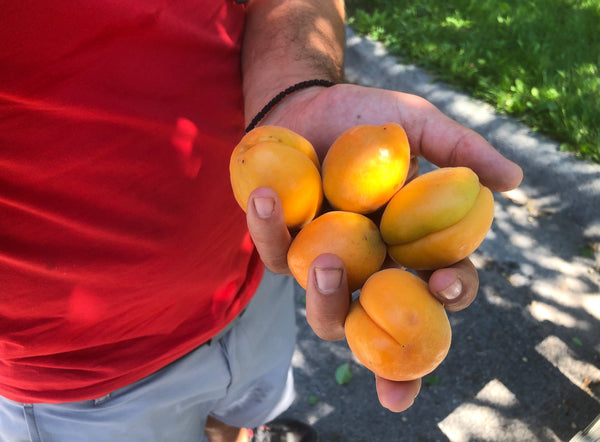 Morden 604 Apricot(Spring 2027)
From $49.99
Morden 604 Apricot(Spring 2027)
From $49.99
-
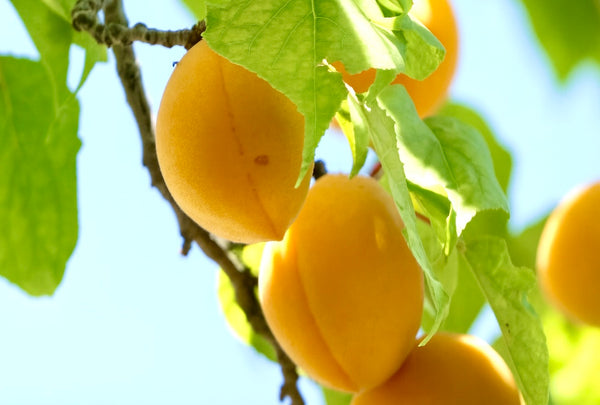 Westcot Apricot(Spring 2027)
From $49.99
Westcot Apricot(Spring 2027)
From $49.99
-
 Tomcot Apricot(Spring 2027)
From $49.99
Tomcot Apricot(Spring 2027)
From $49.99
-
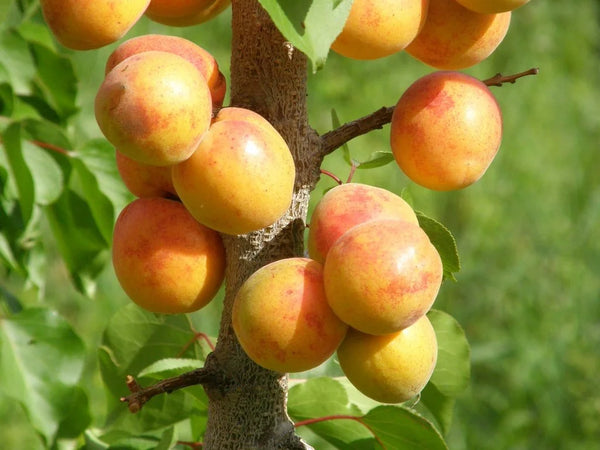 Manchurian Apricot(Bundle of 2) | Spring 2027
From $69.99
Manchurian Apricot(Bundle of 2) | Spring 2027
From $69.99
-
 Corbett Apricot(Spring 2027)
From $69.99
Corbett Apricot(Spring 2027)
From $69.99