
Skip to product information


Nova Pear (Spring 2027)
$49.99
Reliable shipping
Flexible returns
Pollination
Partly self-fertile
Bloom group
4 of 7 (Mid)
Ripening
Will it finish before your first hard freeze?
Check it on the Ripening Map (opens in a new tab)
Disease resistanceNo strong resistance
- 3 Fire blight : Moderate, 3 of 5
- 1 Pear scab : Highly susceptible, 1 of 5
Scored 1 to 5. Higher resists better, and ? means no published data yet.
See it on our pear disease chart (opens in a new tab)At a glance: Nova Pear is a pear tree rated hardy to zone 3 in our ratings (winters to -40°F), partially self-fertile, so a second variety nearby makes crops more dependable (bloom group 4 of 7, mid for a European pear), and it ripens about Sep 11 to Sep 21 in Missoula (picked and dated at our place in Missoula).
| Hardy to | Zone 3 to 8. A bare number means the whole of zone 3, colder half included (winters to -40°F). Find your zone with our cold hardiness calculator. |
|---|---|
| Chill hours | About 800 hours (600 to 1,100). Our estimate. No published figure exists for this variety yet. Montana winters give it plenty. In milder climates, make sure your winters average at least this much. Check your chill hours or see our sources. |
| Pollination | Partially Self-Fertile. Bloom group 4 of 7 (mid), mid spring here. Nova's introducer calls it self-fertile, but other growers hedge, so plant a second pear for dependable crops. Flemish Beauty, Hudar or Ure are good partners. Nearby varieties that can boost the crop: Flemish Beauty Pear, Hudar Pear, Ure Pear, Bartlett Pear and 29 more. Bloom group is our estimate from the variety's origin and relatives. Pear Pollination Map. |
| Ripens | About Sep 11 to Sep 21 in Missoula (picked and dated off our own trees). Real years swing about a week either way. See the date for your town. |
| Rootstock and size | OHxF87: semi-dwarf, about 14 to 19 ft tall unpruned. The most precocious OHxF stock. Our rootstock guide. |
| Good for | Fresh eating (8/10), cooking and roasting (6/10), winter storage (6/10). Scores are our own 1 to 10 ratings; 8 and up makes our Best Of lists. |
| Deer | Sometimes damaged by deer. |
| What you get | Bare root, 3-5 ft or 5-7 ft. Shipped or picked up in Missoula in spring, roots wrapped in moist sawdust. Guaranteed to bud out. |
Overview
Nova is a decently cold-hardy European pear introduced through St. Lawrence Nurseries and is widely regarded as one of the better fresh-eating pears available for colder climates. It is valued for its excellent fruit quality, precocity, and reliable performance where many dessert pears struggle.
History & Parentage
Nova was introduced by St. Lawrence Nurseries and named by Bill MacKentley after his daughter, Nova. While the exact parentage is not formally documented in published breeding records, Nova has long circulated in cold-climate nursery trade based on performance rather than pedigree.
Fruit Quality & Uses
Nova produces large, round pears with melting, juicy flesh and good to excellent eating quality. It is considered among the best fresh-eating pears for cold regions. The fruit may be used either green or fully ripe, offering flexibility in harvest timing. Pears hang well on the tree and ripen around mid-September in the Bitterroot Valley, developing a yellow skin as they mature. Nova is also suitable for kitchen use, though it is primarily valued as a dessert pear.
Growth Habit & Spacing
Trees are described as low vigor, spreading, and precocious, making them well suited to smaller plantings and easier long-term management. Standard pear spacing applies depending on rootstock, but 15–20 ft is a practical range for semi-dwarf to standard systems, with wider spacing improving airflow and light penetration.
Pollination
Nova is often described as self-fruitful, which is somewhat uncommon among European pears. Even so, fruit set and consistency are typically improved when planted with another pear that overlaps bloom. Hudar, Ure, Flemish Beauty, Golden Spice, or any of the Russian pairs would serve well as a pollenizer for Nova.
Cold Hardiness
Some list Nova as a zone 2 pear, although it is more likely zone3. We have obrserved Nova survive at -38F in Stevensville, MT without any winter injury and situated in a lower spot where frost settles more readily. That said, growers in Fairbanks have not had good success with Nova. Could work in eastern MT with appropriate site selection and frost drainage, but if your areas consistently drops below -40F, stick with the Russian varieties.
Questions we get about Nova Pear
Does Nova Pear need a pollenizer?
It helps. Nova Pear is partially self-fertile, so it can set some fruit alone, but a second variety nearby makes crops more dependable. Nova's introducer calls it self-fertile, but other growers hedge, so plant a second pear for dependable crops. Flemish Beauty, Hudar or Ure are good partners. Partners we carry include Flemish Beauty Pear, Hudar Pear, Ure Pear.
How cold hardy is Nova Pear?
We rate Nova Pear hardy to zone 3, which means winters down to about -40°F. Our ratings come from real winters at our two Montana sites and from trusted growers across the North, not from a catalog average.
How many chill hours does Nova Pear need?
About 800 hours of winter chill (we count hours at or below 45°F), likely somewhere between 600 and 1,100. Nobody has published a chill figure for it, so that's our estimate from its relatives and origin. Our chill hours guide has a calculator for your winters, and our research page lists the sources.
When does Nova Pear ripen?
About Sep 11 to Sep 21 in Missoula, Montana (picked and dated off our own trees). Warmer places run earlier and cooler places later; our ripening map converts the date to your town.
How big does Nova Pear get?
We graft Nova Pear onto OHxF87 (semi-dwarf), which makes a tree roughly 14 to 19 ft tall if you never prune it.
What is Nova Pear good for?
Our top use scores for Nova Pear are fresh eating (8/10), cooking and roasting (6/10), winter storage (6/10). Anything scored 8 or higher makes our Best Of lists.
Is Nova Pear disease resistant?
Not really. It holds up moderately well against fire blight. It's very prone to pear scab. Our pear disease resistance chart has every rating, the notes and the sources.
Will deer eat Nova Pear?
Sometimes. Deer browse Nova Pear now and then, so protect young plants where deer pressure is high.
Pollination partners
Partners for a bigger Nova Pear crop
Nova Pear sets some fruit on its own, but a lot more with a partner. Every tree below blooms at the same time and has pollen that works for it.
Bloom group
4 of 7 (Mid)
Pollination
Partly self-fertile
Pollen
Not tested yet
-
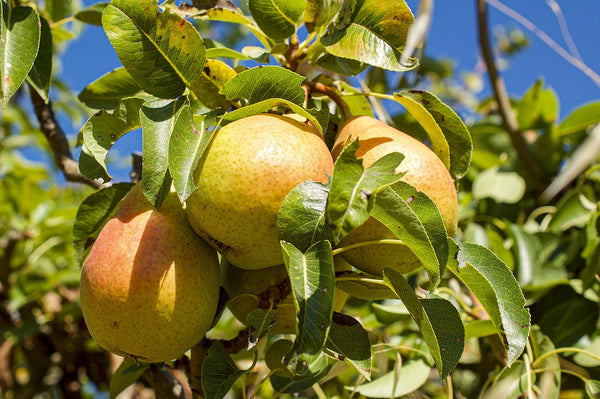 Hudar Pear(Spring 2027)
From $44.99
Hudar Pear(Spring 2027)
From $44.99
-
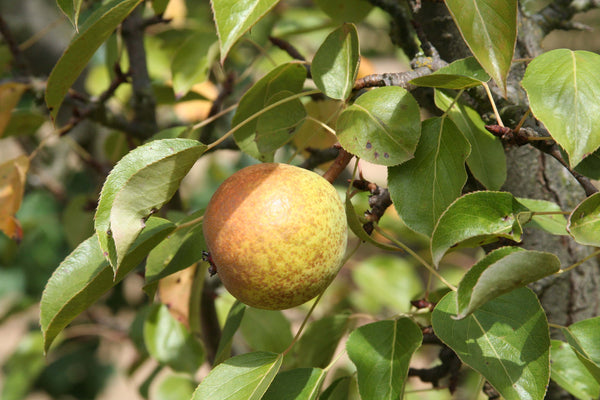 Ure Pear(Spring 2027)
From $49.99
Ure Pear(Spring 2027)
From $49.99
-
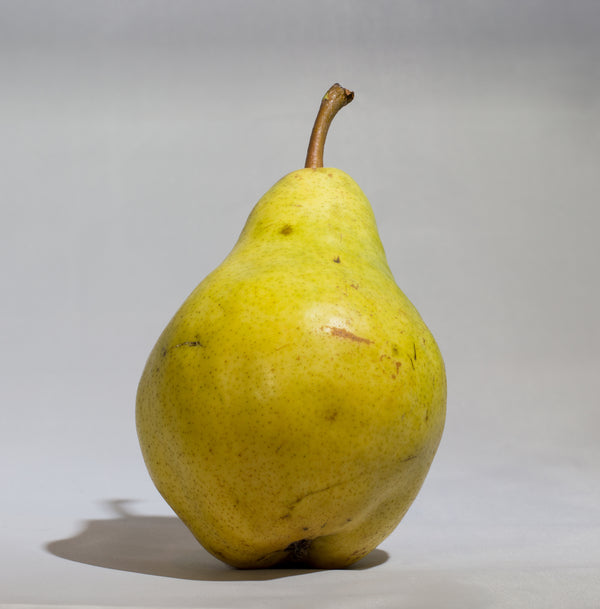 Bartlett Pear(Spring 2027)
From $64.99
Bartlett Pear(Spring 2027)
From $64.99
-
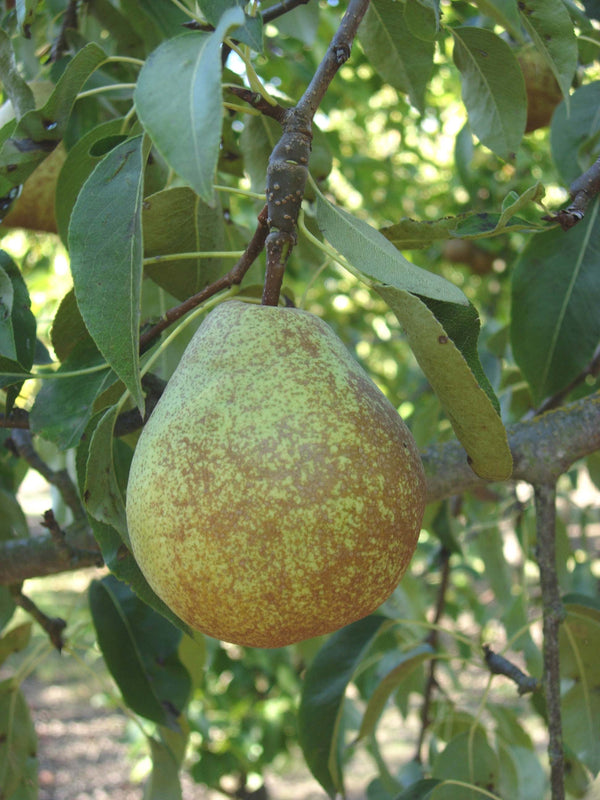 Dana Hovey Pear(Spring 2027)
From $34.99
Dana Hovey Pear(Spring 2027)
From $34.99
-
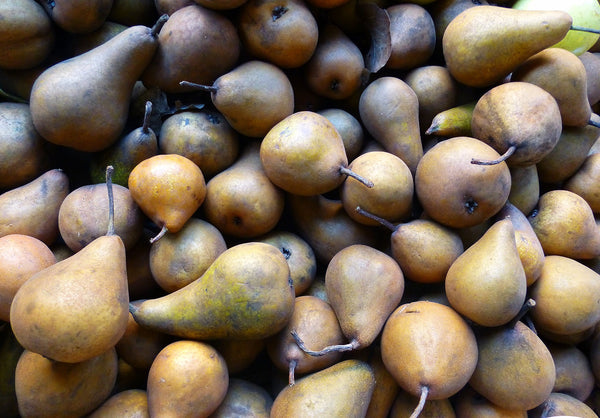 Honeysweet Pear(Spring 2027)
$49.99
Honeysweet Pear(Spring 2027)
$49.99
-
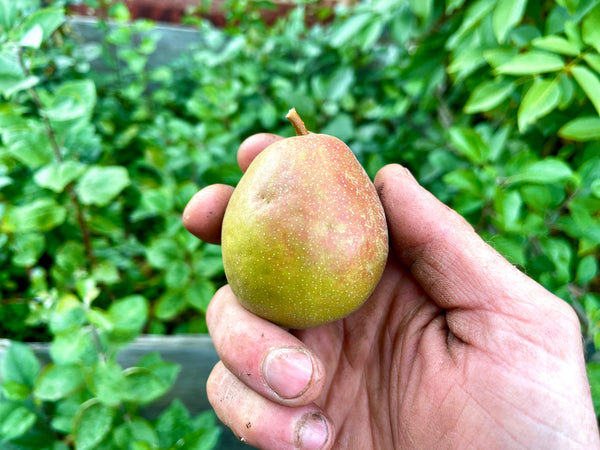 Seckel Pear(Spring 2027)
From $109.99
Seckel Pear(Spring 2027)
From $109.99
-
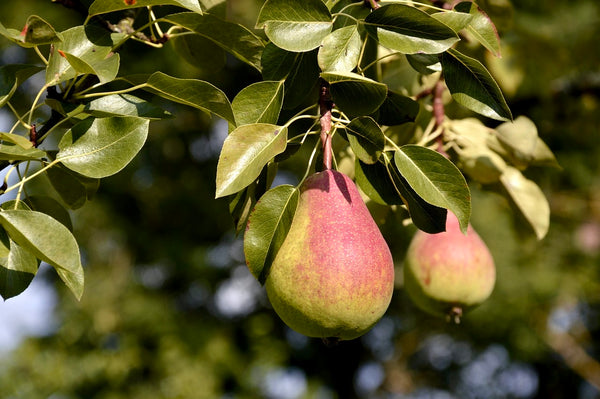 Ubileen Pear(Spring 2027)
From $34.99
Ubileen Pear(Spring 2027)
From $34.99
-
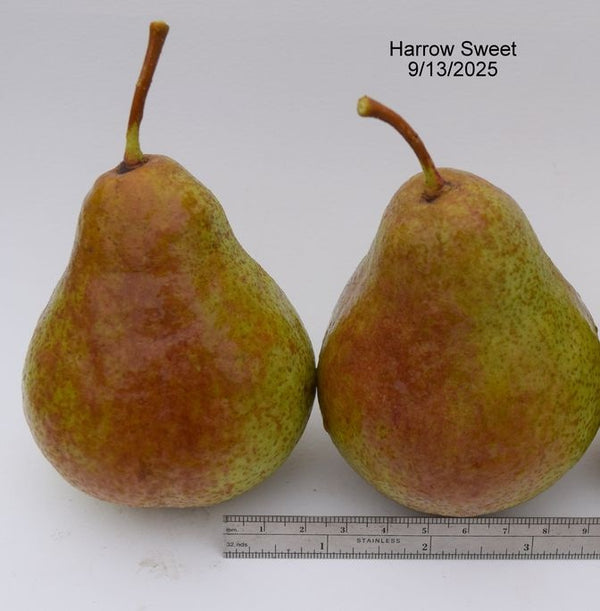 Harrow Sweet Pear(Spring 2027)
From $34.99
Harrow Sweet Pear(Spring 2027)
From $34.99
-
 Bulgaria Pear(Spring 2027)
$49.99
Bulgaria Pear(Spring 2027)
$49.99
-
 Frost Pear(Spring 2027)
From $34.99
Frost Pear(Spring 2027)
From $34.99
-
 Waterville Pear(Spring 2027)
From $39.99
Waterville Pear(Spring 2027)
From $39.99
See every pairing on the Pear Pollination Map
Nova Pear's bloom group is our best estimate. Watch it bloom and tell us what you see.