Skip to product information


Seckel Pear (Spring 2027)
$109.99
Reliable shipping
Flexible returns
Pollination
Partly self-fertile
Bloom group
4 of 7 (Mid)
Ripening
Will it finish before your first hard freeze?
Check it on the Ripening Map (opens in a new tab)
Disease resistanceResists 1 of 2
- 4 Fire blight : Resistant, 4 of 5
- 2 Pear scab : Susceptible, 2 of 5
Scored 1 to 5. Higher resists better, and ? means no published data yet.
See it on our pear disease chart (opens in a new tab)At a glance: Seckel Pear is a pear tree rated hardy to zone 3b in our ratings (winters to -35°F), partially self-fertile, so a second variety nearby makes crops more dependable (bloom group 4 of 7, mid for a European pear), and it ripens about Sep 30 to Oct 6 in Missoula (picked and dated at our place in Missoula).
| Hardy to | Zone 3b to 8. The b means the warmer half of zone 3 only (winters to -35°F). Find your zone with our cold hardiness calculator. |
|---|---|
| Chill hours | About 500 hours (500 to 800). From published figures. Montana winters give it plenty. In milder climates, make sure your winters average at least this much. Check your chill hours or see our sources. |
| Pollination | Partially Self-Fertile. Bloom group 4 of 7 (mid), mid spring here. Seckel sets some fruit alone but does much better with D'Anjou, Bosc or Flemish Beauty. Do not count on Bartlett or its red sport Red Sensation, since Bartlett pollen does not work on Seckel. Nearby varieties that can boost the crop: Flemish Beauty Pear, D'Anjou Pear, Golden Russet Bosc Pear, Dana Hovey Pear and 28 more. Pear Pollination Map. |
| Ripens | About Sep 30 to Oct 6 in Missoula (picked and dated off our own trees). Real years swing about a week either way. See the date for your town. |
| Rootstock and size | OHxF 87: semi-dwarf, about 14 to 19 ft tall unpruned. The most precocious OHxF stock. Plant 18 to 22 ft apart. Our rootstock guide. |
| Good for | Fresh eating (9/10), cooking and roasting (8/10), canning and freezing (8/10), jams and jellies (7/10), salads and slicing (6/10), pies and baking (6/10). Scores are our own 1 to 10 ratings; 8 and up makes our Best Of lists. |
| Deer | Sometimes damaged by deer. |
| What you get | Bare root, 5-6 ft. One Year Older and Larger & More Branching or 6-7 ft. One Year Older and Larger & More Branching. Shipped or picked up in Missoula in spring, roots wrapped in moist sawdust. Guaranteed to bud out. |
Overview
Seckel is the classic “sugar pear”: very small fruit, intensely sweet, richly aromatic flesh, and a long-standing reputation as one of the best-flavored dessert pears ever grown in North America. It has been celebrated in American horticulture for more than two centuries and remains especially compelling for growers who prioritize flavor over fruit size.
Origin and history
Seckel is an American pear discovered as a chance seedling near Philadelphia, Pennsylvania (late 1700s to early 1800s depending on the source), and it became known under the name “Seckel” after the person/farm associated with its early propagation and distribution.
Exact parentage has never been proven. There is no confirmed, recorded cross for Seckel, and reputable references continue to describe it as a wild or chance seedling rather than a deliberate breeding result. In other words, any specific parentage claim would be speculation.
Historically, Seckel’s reputation traveled fast because its eating quality was considered exceptional even compared to famous European pears. It was grown at Monticello, and the variety’s long-running cultural footprint is part of why it’s still referred to as “Philadelphia’s pear” in regional horticulture circles.
Fruit & Uses
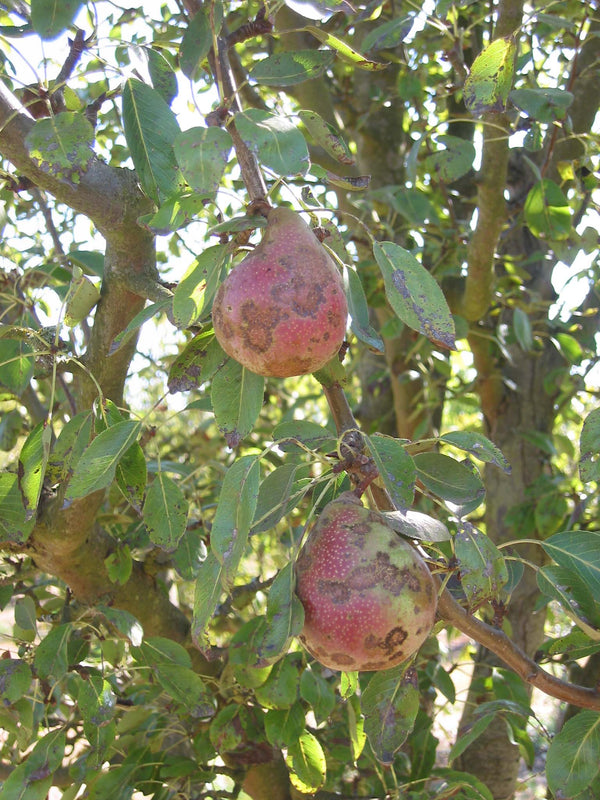
Seckel fruit is notably small, often “snack-sized,” but dense with sugar and aroma. The pears are consistently buttery, melting flesh and have a distinctive spicy flavor when properly ripened. Deliciously sweet. It ripens in last week of September in Missoula, and the skin is a dull yellowish-brown with russeting and a red cheek or blush.
Seckel is best known as a dessert pear for fresh eating at peak ripeness, but its small size and high sugar also make it excellent for preserves, spiced pears, and pickling.
Growth Habit
Seckel is commonly characterized as vigorous and productive, with an upright-to-spreading habit, and it is often described as relatively small or compact compared with many European pear standards (rootstock and training will still strongly control final size).
One reason Seckel remains important to growers is that it’s repeatedly noted as having better fire blight resistance than many traditional European pears, which is also why it has been used and referenced in breeding and selection conversations around disease resilience.
Spacing
We offer Seckel on two root systems: OHxF 87 semi-dwarf and Pyrus communis full size.
On OHxF 87, we recommend 15 feet between trees as a practical baseline. For tighter plantings, 12 feet can work with disciplined pruning and training. For wider spacing, 18 feet is appropriate on more fertile sites, with less pruning intensity, or where you want larger canopies. (These are spacing targets for in-row distances; row spacing is typically wider to accommodate equipment and mature canopy width.)
On Pyrus communis full-size, spacing needs to be wider than OHxF 87. A practical baseline is roughly 18–22 feet between trees (and wider where vigor is high), because full-size pears will ultimately occupy substantially more canopy volume.
Pollination
Seckel is not reliably self-fertile in a way you should bank on for consistent cropping. Many references describe it as at least partially self-fertile, but also emphasize better production with a compatible pollenizer.
Seckel is a European pear (Pyrus communis) and should be pollenized with another Pyrus communis cultivar that blooms at the same time.
One important compatibility note that shows up in nursery guidance is that Bartlett is commonly listed as a poor or incompatible match for Seckel as a pollenizer (including explicit “do not pair” guidance). Because we offer Bartlett types in our pear lineup, we do not recommend relying on Bartlett or its sports (i.e. Red Sensation Bartlett) as the primary pollenizer for Seckel.
We carry a broad range of other European pears that can serve as pollenizers for Seckel, such as Flemish Beauty, Stuttgarter Gaishirtle, Ubileen, Giffard, and others.
Cold Hardiness
While many places cite Seckel as hardy to zone 5-8, it is hardier than zone 5 for certain. Seckel has been surviving in the Bitterroot Valley for decades, including in Hamilton where winter lows have approached −38°F. There are also reported sightings near Great Falls, particularly Highwood (roughly 30 miles east of Great Falls). While the particular tree in Highwood is positioned somewhat above the valley floor, winter lows in that area can still approach −40°F. At the minimum, we would rate Seckel a solid zone 3b pear.
Other Notes
Seckel has an exceptional flavor. It is on of those pears that is repeatedly singled out for dessert quality, and it’s one of the few pears that routinely gets described as excellent rather than merely “good.”
Disease-wise, Seckel has better-than-average fire blight resistance among European pears, which is a major reason growers keep coming back to it even when larger-fruited pears exist. That said, it should still be managed like any pear in a fire blight region: avoid excessive nitrogen, push balanced growth, prune thoughtfully, and remove strikes promptly if they occur.
Questions we get about Seckel Pear
Does Seckel Pear need a pollenizer?
It helps. Seckel Pear is partially self-fertile, so it can set some fruit alone, but a second variety nearby makes crops more dependable. Seckel sets some fruit alone but does much better with D'Anjou, Bosc or Flemish Beauty. Do not count on Bartlett or its red sport Red Sensation, since Bartlett pollen does not work on Seckel. Partners we carry include Flemish Beauty Pear, D'Anjou Pear, Golden Russet Bosc Pear.
How cold hardy is Seckel Pear?
We rate Seckel Pear hardy to zone 3b, which means winters down to about -35°F. Our ratings come from real winters at our two Montana sites and from trusted growers across the North, not from a catalog average.
How many chill hours does Seckel Pear need?
About 500 hours of winter chill (we count hours at or below 45°F), likely somewhere between 500 and 800. That comes from published figures for this variety. At about 500 hours, Seckel needs less winter chill than most European pears, so it also suits milder-winter areas. Our chill hours guide has a calculator for your winters, and our research page lists the sources.
When does Seckel Pear ripen?
About Sep 30 to Oct 6 in Missoula, Montana (picked and dated off our own trees). Warmer places run earlier and cooler places later; our ripening map converts the date to your town.
How big does Seckel Pear get?
We graft Seckel Pear onto OHxF 87 (semi-dwarf), which makes a tree roughly 14 to 19 ft tall if you never prune it. Plant 18 to 22 ft apart.
What is Seckel Pear good for?
Our top use scores for Seckel Pear are fresh eating (9/10), cooking and roasting (8/10), canning and freezing (8/10), jams and jellies (7/10). Anything scored 8 or higher makes our Best Of lists.
Is Seckel Pear disease resistant?
For some diseases, yes. It's resistant to fire blight. It's prone to pear scab. Our pear disease resistance chart has every rating, the notes and the sources.
Will deer eat Seckel Pear?
Sometimes. Deer browse Seckel Pear now and then, so protect young plants where deer pressure is high.
Pollination partners
Partners for a bigger Seckel Pear crop
Seckel Pear sets some fruit on its own, but a lot more with a partner. Every tree below blooms at the same time and has pollen that works for it.
Bloom group
4 of 7 (Mid)
Pollination
Partly self-fertile
Pollen
Good pollenizer
-
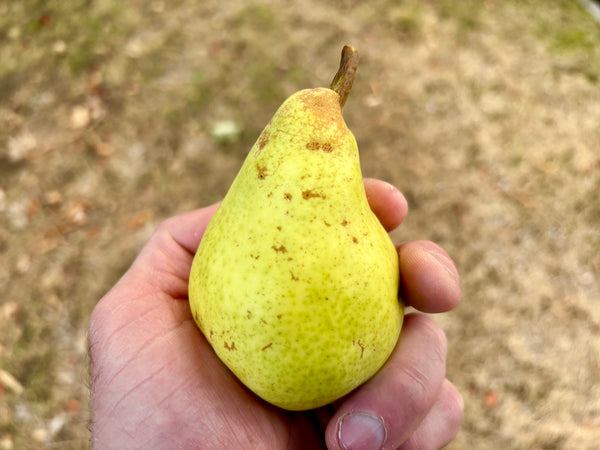 D'Anjou Pear(Spring 2027)
From $64.99
D'Anjou Pear(Spring 2027)
From $64.99
-
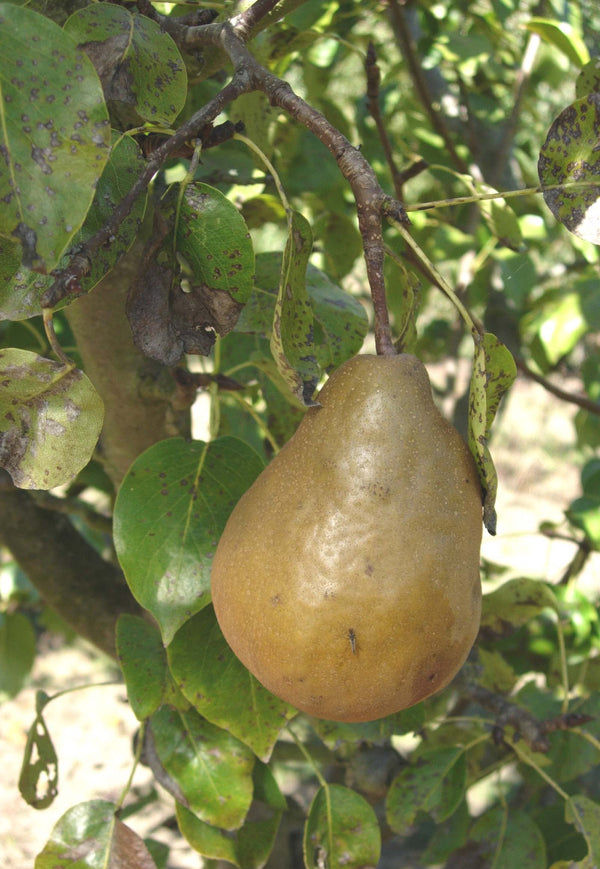 Golden Russet Bosc Pear(Spring 2027)
From $64.99
Golden Russet Bosc Pear(Spring 2027)
From $64.99
-
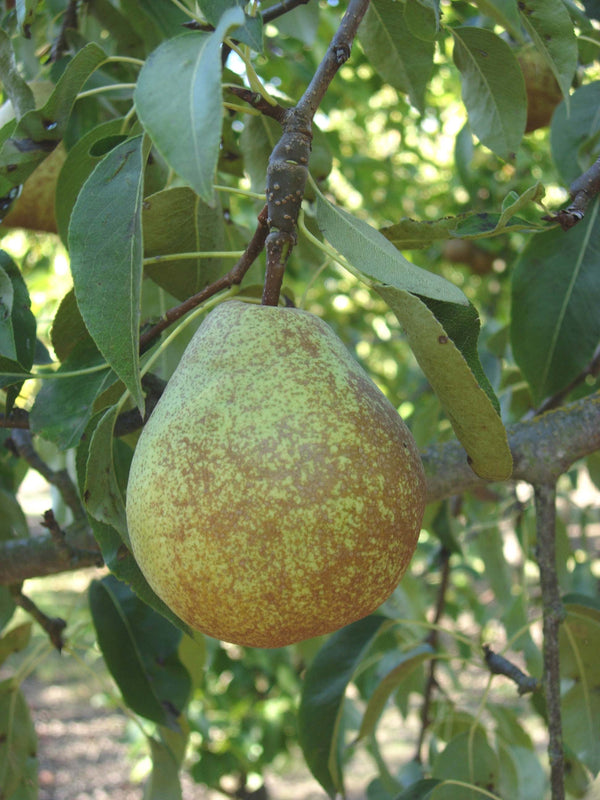 Dana Hovey Pear(Spring 2027)
From $34.99
Dana Hovey Pear(Spring 2027)
From $34.99
-
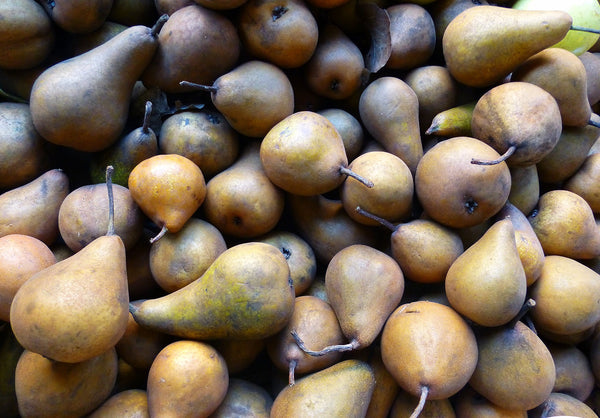 Honeysweet Pear(Spring 2027)
$49.99
Honeysweet Pear(Spring 2027)
$49.99
-
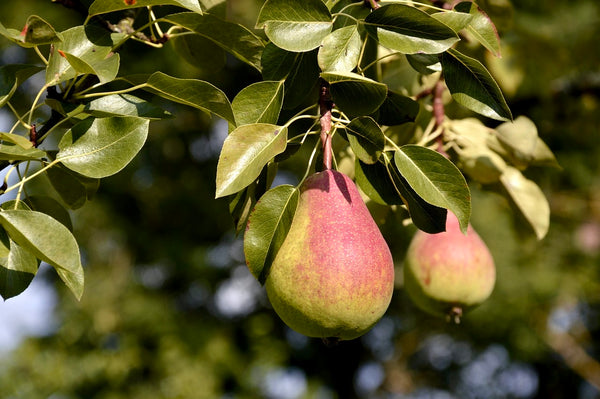 Ubileen Pear(Spring 2027)
From $34.99
Ubileen Pear(Spring 2027)
From $34.99
-
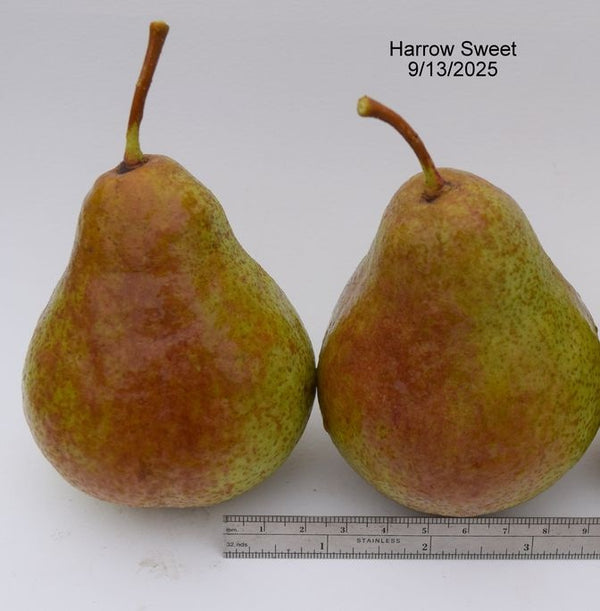 Harrow Sweet Pear(Spring 2027)
From $34.99
Harrow Sweet Pear(Spring 2027)
From $34.99
-
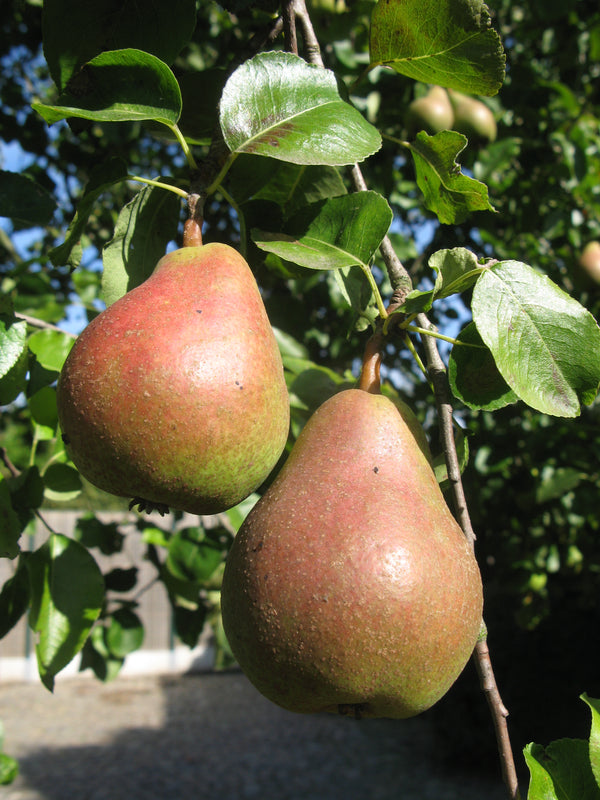 Bulgaria Pear(Spring 2027)
$49.99
Bulgaria Pear(Spring 2027)
$49.99
-
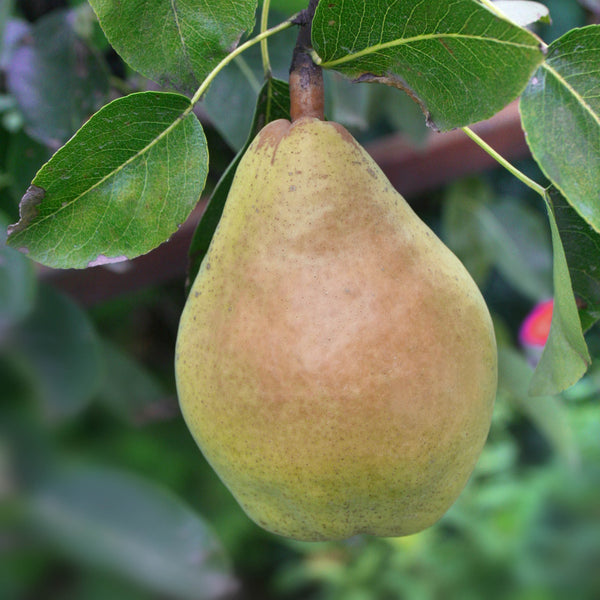 Frost Pear(Spring 2027)
From $34.99
Frost Pear(Spring 2027)
From $34.99
-
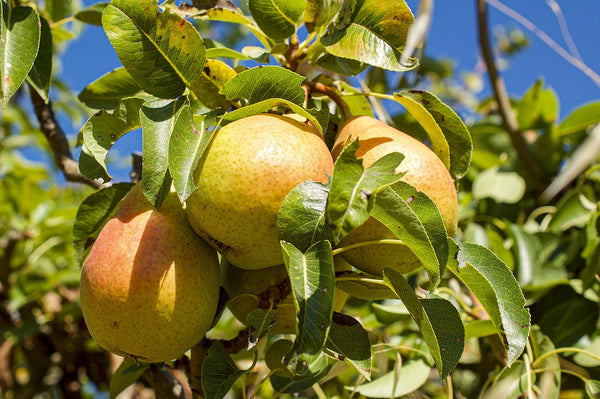 Hudar Pear(Spring 2027)
From $44.99
Hudar Pear(Spring 2027)
From $44.99
-
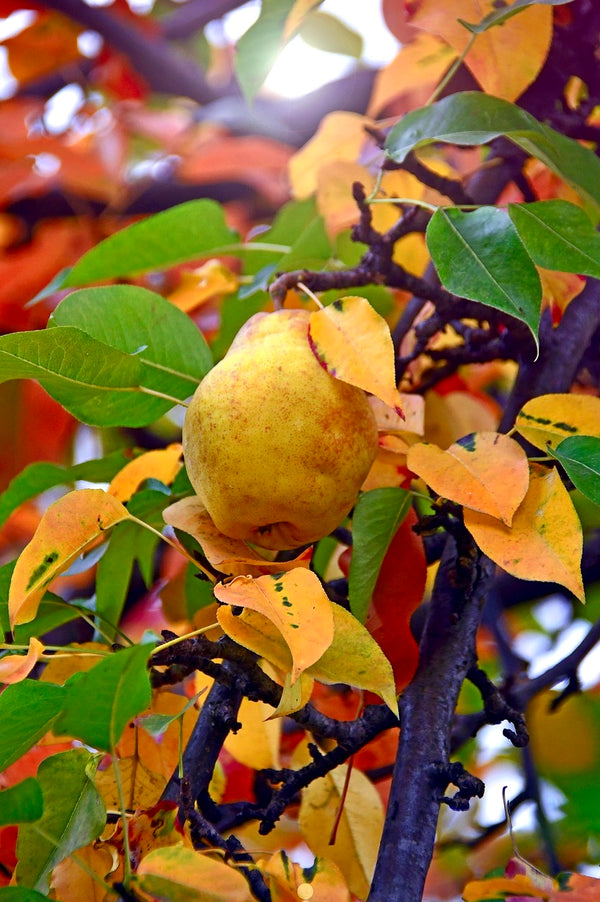 Nova Pear(Spring 2027)
From $49.99
Nova Pear(Spring 2027)
From $49.99
-
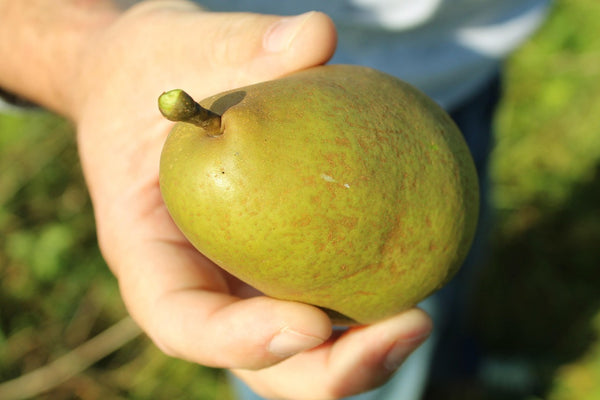 Waterville Pear(Spring 2027)
From $39.99
Waterville Pear(Spring 2027)
From $39.99