Skip to product information


Flemish Beauty Pear (Spring 2027)
$109.99
Reliable shipping
Flexible returns
Pollination
Partly self-fertile
Bloom group
4 of 7 (Mid)
Ripening
Will it finish before your first hard freeze?
Check it on the Ripening Map (opens in a new tab)
Disease resistanceNo strong resistance
- 1 Fire blight : Highly susceptible, 1 of 5
- 1 Pear scab : Highly susceptible, 1 of 5
Scored 1 to 5. Higher resists better, and ? means no published data yet.
See it on our pear disease chart (opens in a new tab)At a glance: Flemish Beauty Pear is a pear tree rated hardy to zone 3 in our ratings (winters to -40°F), partially self-fertile, so a second variety nearby makes crops more dependable (bloom group 4 of 7, mid for a European pear), and it ripens about Sep 19 to Oct 3 in Missoula (our Missoula estimate).
| Hardy to | Zone 3 to 8. A bare number means the whole of zone 3, colder half included (winters to -40°F). Find your zone with our cold hardiness calculator. |
|---|---|
| Chill hours | About 850 hours (750 to 1,000). Well documented. Independent sources agree. Montana winters give it plenty. In milder climates, make sure your winters average at least this much. Check your chill hours or see our sources. |
| Pollination | Partially Self-Fertile. Bloom group 4 of 7 (mid), mid spring here. Flemish Beauty is one of the most self-fertile European pears and often crops alone, but a partner such as Bartlett gives bigger, steadier crops. Nearby varieties that can boost the crop: Bartlett Pear, Beurré Giffard Pear, Dana Hovey Pear, Honeysweet Pear and 29 more. Pear Pollination Map. |
| Ripens | About Sep 19 to Oct 3 in Missoula (a Missoula estimate from published sources). Real years swing about a week either way. See the date for your town. |
| Rootstock and size | OHxF 87: semi-dwarf, about 14 to 19 ft tall unpruned. The most precocious OHxF stock. Our rootstock guide. |
| Good for | Fresh eating (8/10), drying (7/10). Scores are our own 1 to 10 ratings; 8 and up makes our Best Of lists. |
| Deer | Sometimes damaged by deer. |
| What you get | Bare root, 6-8 ft. Shipped or picked up in Missoula in spring, roots wrapped in moist sawdust. Guaranteed to bud out. |
This variety has been grown on Wildhorse Island in Flathead Lake for over one hundred years. One of the most cold-hardy of all European pears, Flemish Beauty performs well in Zone 3 sites (–30°F to –40°F).
Origin and Fruit Characteristics
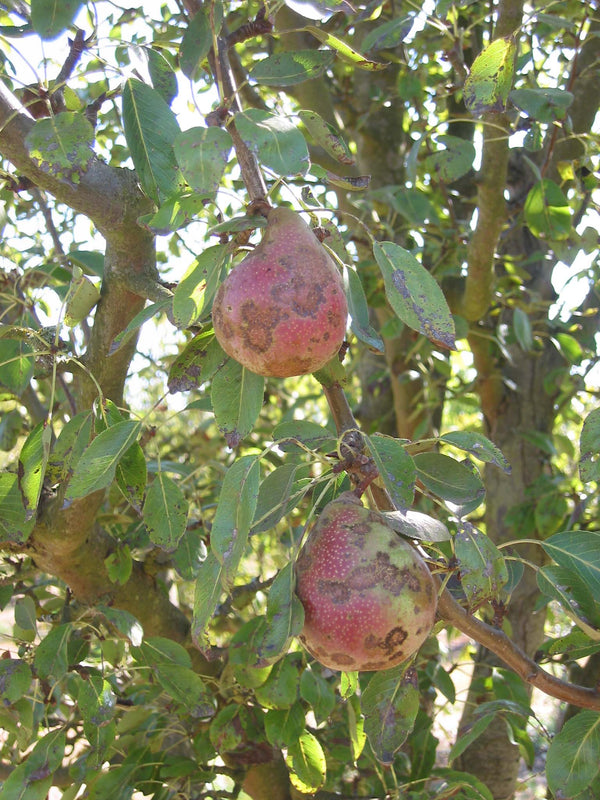
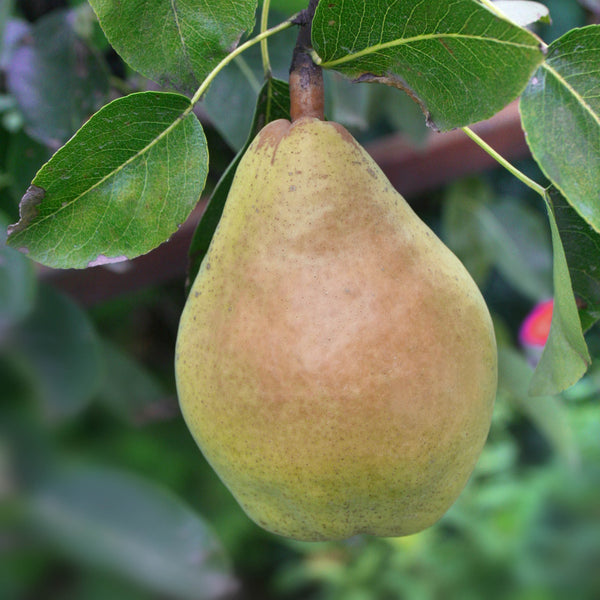
A Belgian pear, Flemish Beauty is medium to large with a round shape, yellow skin, and an attractive red blush. We mainly eat them fresh, but they’re also great for drying. Some growers have reported fungal issues in wetter climates, though we haven’t experienced any problems here in Montana.
Rootstock and Disease Resistance
Our Flemish Beauty pears are grafted onto scab- and fireblight-resistant OHxF87 rootstock. That said, it’s still up for debate how much of that disease resistance carries into the scion. Personally, I think the lack of fungal issues here has more to do with our drier climate than anything else.
Tree Structure and Sunlight Tips
As with all fruit trees—but especially pears, and even more so with Flemish Beauty—we recommend purchasing limb spreaders. This helps discourage their naturally vertical, pyriform growth. Wider branch angles allow more sunlight to reach into the canopy and can help prevent fungal problems.
Cold Hardiness and Future Options
These pears are hardy to –40°F. If you’re in a spot that sees temps colder than that, then check out our Russian pears (Larinskaya, Vekovaya, Krazulya, Bolshaya). Russian pears and other varieties that can handle down to –50°F.
Tree Sizes Available
Our Flemish Beauty pears come in multiple sizes, but all are grafted onto OHxF87, which we’ve found to be reliably hardy down to –40°F, and in many cases even –45°F.
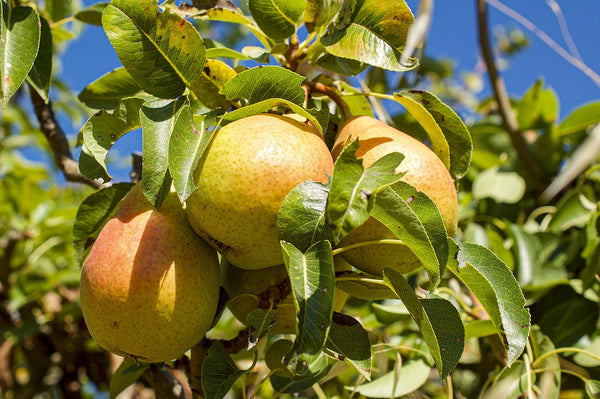
Photos: “Holzfarbige Butterbirne - Fondante des Bois - Flemish Beauty” by Bahnmoeller, via Wikimedia Commons, licensed CC BY-SA 3.0, cropped and brightened; “PI 541189 'Flemish Beauty' fruit, 2011 (pyr0225.003.fruit.2011)” by USDA-ARS National Clonal Germplasm Repository, Corvallis (GRIN-Global), via USDA GRIN, public domain.
Questions we get about Flemish Beauty Pear
Does Flemish Beauty Pear need a pollenizer?
It helps. Flemish Beauty Pear is partially self-fertile, so it can set some fruit alone, but a second variety nearby makes crops more dependable. Flemish Beauty is one of the most self-fertile European pears and often crops alone, but a partner such as Bartlett gives bigger, steadier crops. Partners we carry include Bartlett Pear, Beurré Giffard Pear, Dana Hovey Pear.
How cold hardy is Flemish Beauty Pear?
We rate Flemish Beauty Pear hardy to zone 3, which means winters down to about -40°F. Our ratings come from real winters at our two Montana sites and from trusted growers across the North, not from a catalog average.
How many chill hours does Flemish Beauty Pear need?
About 850 hours of winter chill (we count hours at or below 45°F), likely somewhere between 750 and 1,000. That figure is well documented: independent sources agree. That's a bit more than most European pears. Great for cold winters, a poor fit for mild ones. Our chill hours guide has a calculator for your winters, and our research page lists the sources.
When does Flemish Beauty Pear ripen?
About Sep 19 to Oct 3 in Missoula, Montana (an estimate built from published sources and our climate). Warmer places run earlier and cooler places later; our ripening map converts the date to your town.
How big does Flemish Beauty Pear get?
We graft Flemish Beauty Pear onto OHxF 87 (semi-dwarf), which makes a tree roughly 14 to 19 ft tall if you never prune it.
What is Flemish Beauty Pear good for?
Our top use scores for Flemish Beauty Pear are fresh eating (8/10), drying (7/10). Anything scored 8 or higher makes our Best Of lists.
Is Flemish Beauty Pear disease resistant?
No. It's very prone to fire blight and pear scab. Our pear disease resistance chart has every rating, the notes and the sources.
Will deer eat Flemish Beauty Pear?
Sometimes. Deer browse Flemish Beauty Pear now and then, so protect young plants where deer pressure is high.
Pollination partners
Partners for a bigger Flemish Beauty Pear crop
Flemish Beauty Pear sets some fruit on its own, but a lot more with a partner. Every tree below blooms at the same time and has pollen that works for it.
Bloom group
4 of 7 (Mid)
Pollination
Partly self-fertile
Pollen
Good pollenizer
-
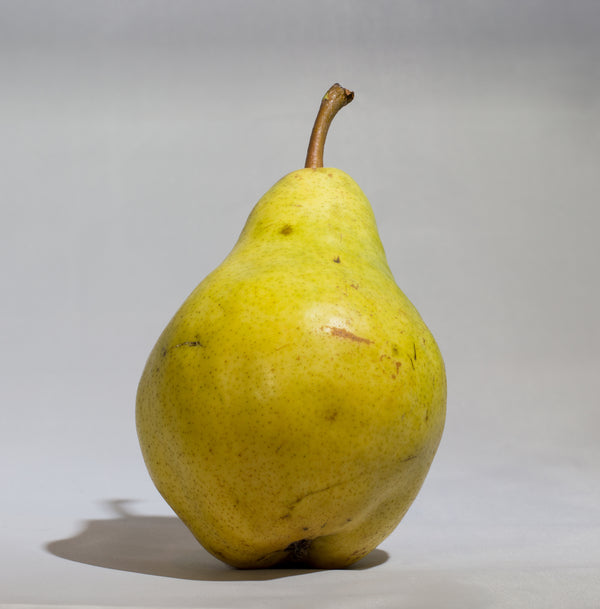 Bartlett Pear(Spring 2027)
From $64.99
Bartlett Pear(Spring 2027)
From $64.99
-
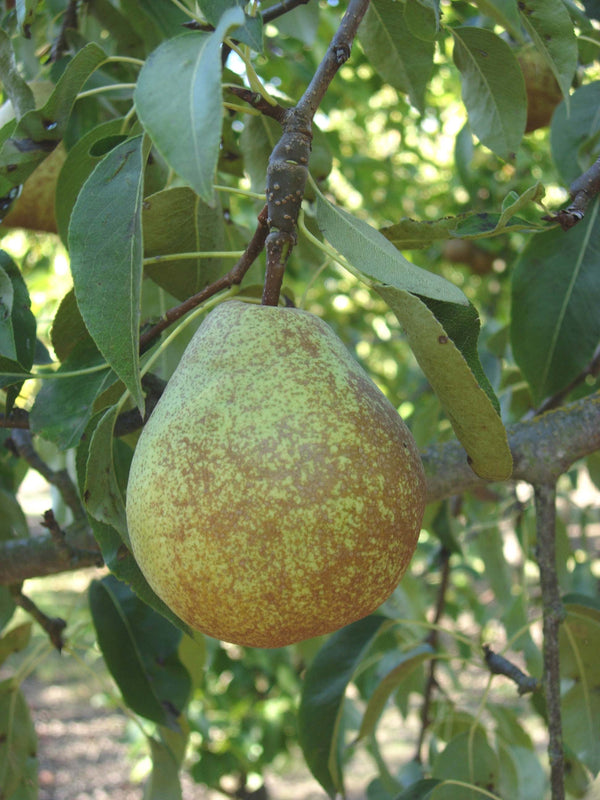 Dana Hovey Pear(Spring 2027)
From $34.99
Dana Hovey Pear(Spring 2027)
From $34.99
-
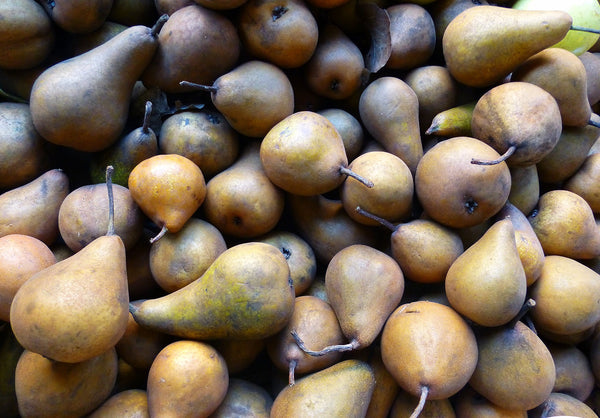 Honeysweet Pear(Spring 2027)
$49.99
Honeysweet Pear(Spring 2027)
$49.99
-
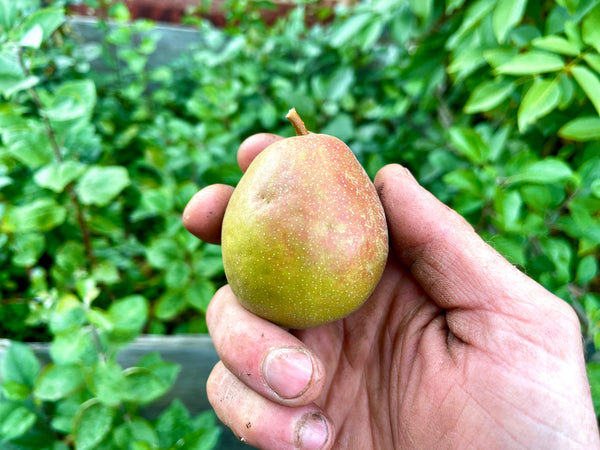 Seckel Pear(Spring 2027)
From $109.99
Seckel Pear(Spring 2027)
From $109.99
-
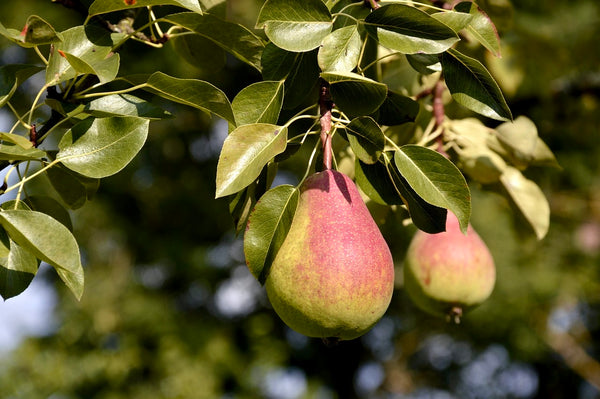 Ubileen Pear(Spring 2027)
From $34.99
Ubileen Pear(Spring 2027)
From $34.99
-
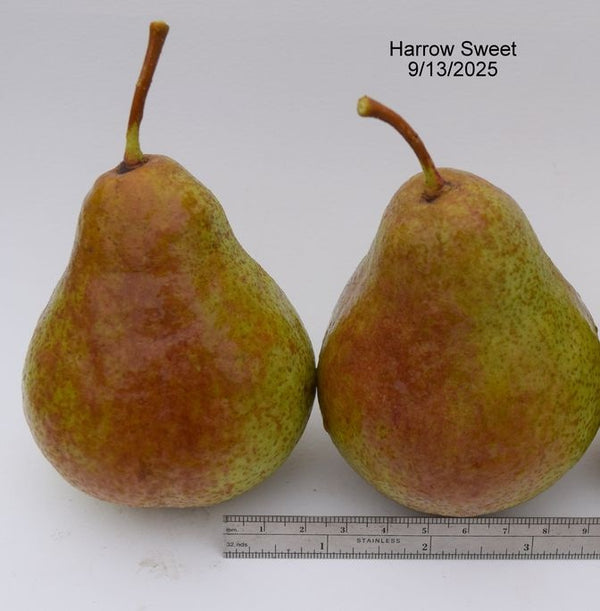 Harrow Sweet Pear(Spring 2027)
From $34.99
Harrow Sweet Pear(Spring 2027)
From $34.99
-
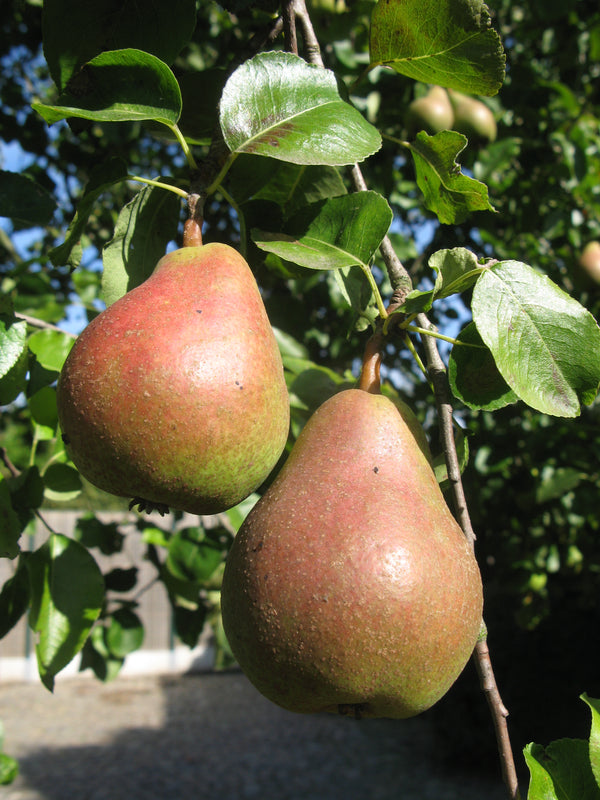 Bulgaria Pear(Spring 2027)
$49.99
Bulgaria Pear(Spring 2027)
$49.99
-
 Frost Pear(Spring 2027)
From $34.99
Frost Pear(Spring 2027)
From $34.99
-
 Hudar Pear(Spring 2027)
From $44.99
Hudar Pear(Spring 2027)
From $44.99
-
 Nova Pear(Spring 2027)
From $49.99
Nova Pear(Spring 2027)
From $49.99