Skip to product information


Tomcot Apricot (Spring 2027)
$69.99
Reliable shipping
Flexible returns
Pollination
Partly self-fertile
Bloom group
3 of 7 (Early-Mid)
Ripening
Will it finish before your first hard freeze?
Check it on the Ripening Map (opens in a new tab)
Disease resistanceNo strong resistance
- 3 Bacterial canker : Moderate, 3 of 5
- ? Bacterial spot : Unknown, no published data yet
- 3 Brown rot : Moderate, 3 of 5
- ? Cytospora canker : Unknown, no published data yet
- ? Shot hole : Unknown, no published data yet
Scored 1 to 5. Higher resists better, and ? means no published data yet.
See it on our apricot disease chart (opens in a new tab)At a glance: Tomcot Apricot is an apricot tree rated hardy to zone 4 from other growers' reports (winters to -30°F), and partially self-fertile, so a second variety nearby makes crops more dependable (bloom group 3 of 7, early-mid for an apricot).
| Hardy to | Zone 4 to 8. A bare number means the whole of zone 4, colder half included (winters to -30°F). Find your zone with our cold hardiness calculator. |
|---|---|
| Chill hours | About 500 hours (400 to 600). From published figures. Montana winters give it plenty. In milder climates, make sure your winters average at least this much. Check your chill hours or see our sources. |
| Pollination | Partially Self-Fertile. Bloom group 3 of 7 (early-mid), very early spring here. Tomcot sets some fruit alone but crops much better with another apricot nearby as a pollenizer. Its long bloom period helps it overlap many other apricots. Nearby varieties that can boost the crop: Debbie's Gold Apricot, Perfection Apricot, 3rd and Myrtle Apricot (Bundle of 2), Goldrich Apricot and 8 more. Apricot Pollination Map. |
| Rootstock and size | Manchurian: full size, about 15 to 20 ft tall unpruned. The hardiest apricot root there is. Plant about 15 ft apart. Our rootstock guide. |
| Good for | Fresh eating (7/10), pies and baking (7/10), jams and jellies (6/10), drying (6/10). Scores are our 1 to 10 ratings, but we're still new to this one, so they lean on published descriptions and other growers rather than our own harvests. 8 and up makes our Best Of lists. |
| Deer | Sometimes damaged by deer. |
| What you get | Bare root, 3-5 ft or 5-7 ft. Shipped or picked up in Missoula in spring, roots wrapped in moist sawdust. Guaranteed to bud out. |
This is our first year growing Tomcot, so everything below is secondhand until we get more long-term data from our own mother trees.
Overview
Tomcot is an early, large, firm apricot from Washington State University. It ripens a couple of weeks ahead of Wenatchee Moorpark, and Bob Purvis says it has performed well in Montana.
Origin and History
It was bred by Tom Toyama at WSU's research center in Prosser, Washington, and patented in 1989 as PA 7005-8. According to the patent, it was picked out in 1974 from 166 seedlings of a cross between Rival and P63-265, which is an open-pollinated seedling of Goldrich.
Fruit and Uses
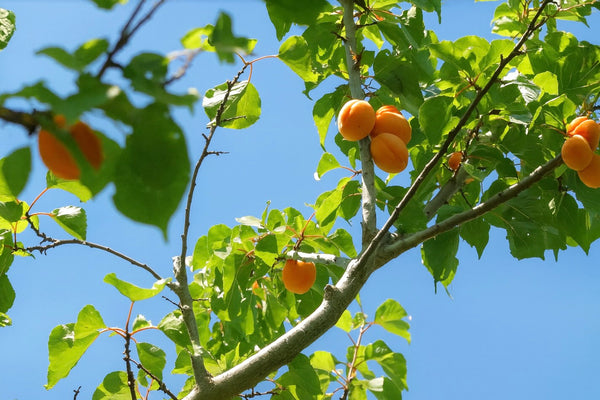
The patent describes large, oval, firm fruit about 2¼ inches across when thinned, light orange with a trace of blush, and flesh that's firm, fine-grained, meaty, moderately juicy and sweet. Dave Wilson Nursery calls the flavor "slightly tart, old-time apricot flavor." It ripens about two and a half weeks before Wenatchee Moorpark, around July 7 at Prosser. The patent says it has long storage and shelf life and is very good fresh, "however, canning quality is poor."
Growth Habit and Spacing
The patent calls it large and vigorous, "very vigorous when placed on apricot seedling rootstocks," which is what ours are on. Manchurian apricot makes a full size tree of about 15 to 20 feet unpruned, so plan on about 15 feet between trees, or more if you want less pruning. Purvis notes above average tolerance to spring frosts and a long bloom period, and says it has performed well on the East Coast and in Montana, Washington, Nevada and Idaho.
Pollination
Tomcot is partially self-fertile. The patent says it "may not require cross-pollination under some growing conditions," but most sources recommend another apricot for bigger crops. Debbie's Gold, 3rd and Myrtle, Westcot, Morden 604 and Corbett all work.
Cold Hardiness
The patent doesn't mention winter hardiness, and we haven't found a documented survival temperature. Dave Wilson rates it USDA zone 4, and Purvis says it has done well in Montana and Wyoming. We've listed it at zone 4.
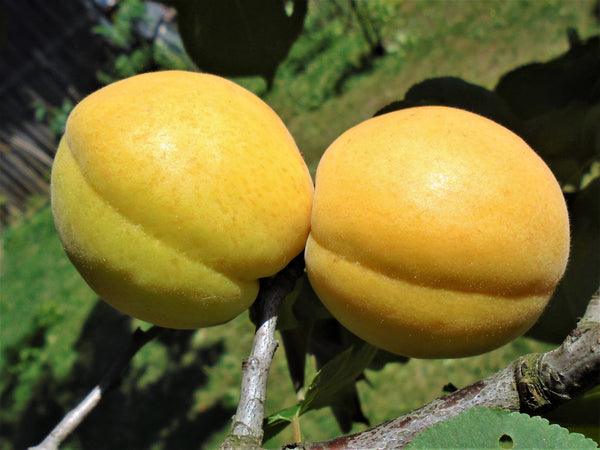
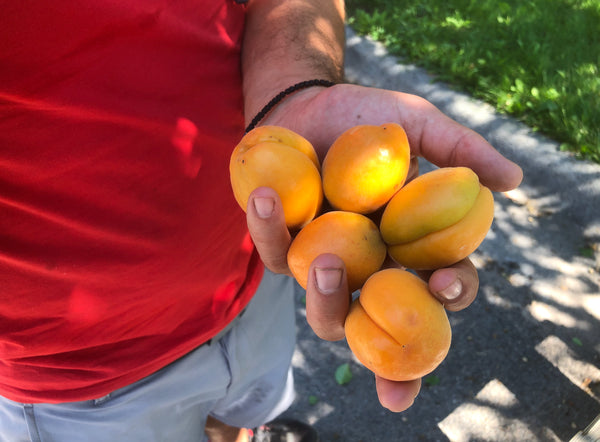
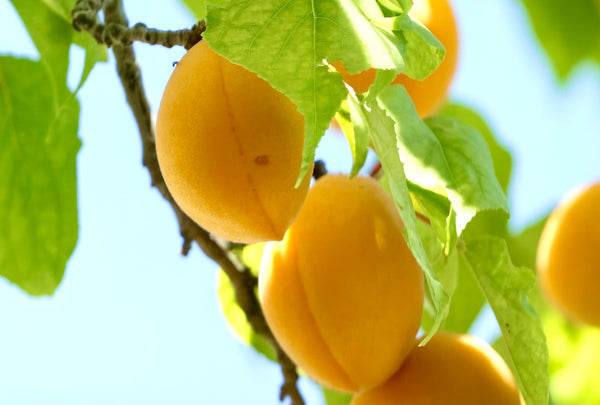
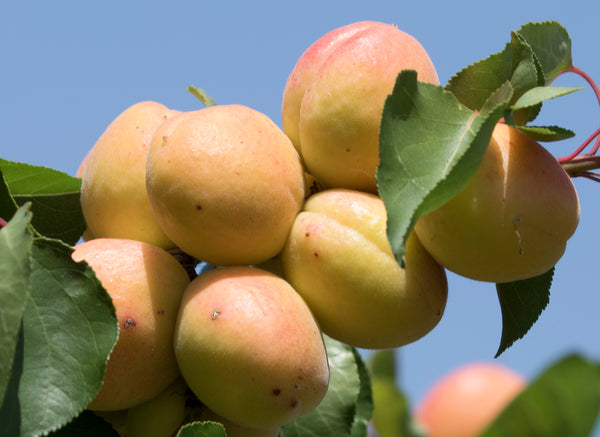
About the photo: this isn’t Tomcot itself. Photos of Tomcot are either under copyright or simply unavailable, so we picked the open-source image that looks closest to the fruit. Photo: “Apricots-824626” by 夏沐沐, via Wikimedia Commons, licensed CC0.
Questions we get about Tomcot Apricot
Does Tomcot Apricot need a pollenizer?
It helps. Tomcot Apricot is partially self-fertile, so it sets some fruit alone but crops much better with another apricot nearby as a pollenizer. Its long bloom period helps it overlap many other apricots. Partners we carry include Debbie's Gold Apricot, Perfection Apricot, 3rd and Myrtle Apricot (Bundle of 2).
How cold hardy is Tomcot Apricot?
We list Tomcot Apricot at zone 4, which means winters down to about -30°F. That comes from Dave Wilson's USDA zone 4 rating and Bob Purvis's reports of it doing well in Montana and Wyoming, not from our own winters yet. We'll update it once we've wintered our own trees.
How many chill hours does Tomcot Apricot need?
About 500 hours of winter chill (we count hours at or below 45°F), likely somewhere between 400 and 600. That comes from published figures for this variety. Low chill for an apricot, but it needs lots of spring heat to bloom (most of 10 varieties in one study), which slightly delays flowering. Our chill hours guide has a calculator for your winters, and our research page lists the sources.
How big does Tomcot Apricot get?
We graft Tomcot Apricot onto Manchurian (full size), which makes a tree roughly 15 to 20 ft tall if you never prune it. Plant about 15 ft apart.
What is Tomcot Apricot good for?
Our top use scores for Tomcot Apricot are fresh eating (7/10), pies and baking (7/10), jams and jellies (6/10), drying (6/10). Since we're still new to it, those scores lean on the patent and published descriptions rather than our own harvests.
Is Tomcot Apricot disease resistant?
Somewhat. It holds up moderately well against bacterial canker and brown rot. Nobody has published solid data on it for bacterial spot, cytospora canker and shot hole yet, so we list those as unknown. Our apricot disease resistance chart has every rating, the notes and the sources.
Will deer eat Tomcot Apricot?
Sometimes. Deer browse Tomcot Apricot now and then, so protect young plants where deer pressure is high.
What arrives, and when does Tomcot Apricot ship?
A dormant bare-root plant, roots wrapped in moist sawdust with a vapor barrier, shipped or picked up in Missoula in spring. Sizes offered: 3-5 ft or 5-7 ft. We guarantee our plants bud out. Stone fruits can be slow, so if one still has not budded out by August 15, write to us and we credit you for the following spring.
Pollination partners
Partners for a bigger Tomcot Apricot crop
Tomcot Apricot sets some fruit on its own, but a lot more with a partner. Every tree below blooms at the same time and has pollen that works for it.
Bloom group
3 of 7 (Early-Mid)
Pollination
Partly self-fertile
Pollen
Good pollenizer
-
 Debbie's Gold Apricot(Spring 2027)
From $54.99
-
 Morden 604 Apricot(Spring 2027)
From $49.99
-
 Westcot Apricot(Spring 2027)
From $49.99
-
 Corbett Apricot(Spring 2027)
From $69.99
-
 Manchurian Apricot(Bundle of 2) | Spring 2027
From $69.99