Skip to product information


Black Ice Plum (Spring 2027)
$59.99
Reliable shipping
Flexible returns
Pollination
Needs a partner
Bloom group
4 of 7 (Mid)
Ripening
Will it finish before your first hard freeze?
Check it on the Ripening Map (opens in a new tab)
Disease resistanceNo strong resistance
- 2 Bacterial canker : Susceptible, 2 of 5
- 3 Bacterial spot : Moderate, 3 of 5
- 2 Black knot : Susceptible, 2 of 5
- 2 Brown rot : Susceptible, 2 of 5
- ? Cytospora canker : Unknown, no published data yet
- ? Plum pocket : Unknown, no published data yet
Scored 1 to 5. Higher resists better, and ? means no published data yet.
See it on our plum disease chart (opens in a new tab)At a glance: Black Ice Plum is a plum tree rated hardy to zone 3 in our ratings (winters to -40°F), not self-fertile, so it needs a different variety nearby as a pollenizer (bloom group 4 of 7, mid for a hybrid or Japanese plum), and it ripens about Aug 18 to Aug 30 in Missoula (our Missoula estimate).
| Hardy to | Zone 3 to 8. A bare number means the whole of zone 3, colder half included (winters to -40°F). Our notes have it taking -38°F. Find your zone with our cold hardiness calculator. |
|---|---|
| Chill hours | About 600 hours (250 to 900). Our estimate. No published figure exists for this variety yet. Montana winters give it plenty. In milder climates, make sure your winters average at least this much. Check your chill hours or see our sources. |
| Pollination | Needs Cross-Pollination. Bloom group 4 of 7 (mid), early spring here. Black Ice needs a pollenizer. Plant Toka nearby. Good partners we carry: Toka Plum, Kaga Plum, Kahinta Plum, South Dakota Plum and 15 more. Plum Pollination Map. |
| Ripens | About Aug 18 to Aug 30 in Missoula (a Missoula estimate from published sources). Real years swing about a week either way. See the date for your town. |
| Rootstock and size | Prairie Red: semi-dwarf, about 10 to 15 ft tall unpruned. A seed-grown American plum hybrid from the USDA plant materials center in Bismarck; it suckers. Prunus americana: semi-dwarf, about 10 to 15 ft tall unpruned. American plum, the most dwarfing root in this group; it suckers. Our rootstock guide. |
| Good for | Fresh eating (7/10), jams and jellies (6/10). Scores are our own 1 to 10 ratings; 8 and up makes our Best Of lists. |
| Deer | A deer favorite. Fence it or cage it. |
| What you get | Bare root, 3-4 ft or 4-6 ft. Shipped or picked up in Missoula in spring, roots wrapped in moist sawdust. Guaranteed to bud out. |
Overview
Black Ice is a hybrid plum that has proven itself in some of Montana’s harsher spots, including sites that have dropped to around –40°F. At Rod McIver’s place, which hit –38°F on January 12, 2024, his Black Ice trees came through with only minor tip damage—which is a pretty remarkable performance for a dessert-quality plum in that kind of cold.
History & Breeding
Black Ice was developed by Dr. Brian Smith at the University of Wisconsin–River Falls and released in the mid-2000s (around 2005–2006).
According to info on its release, this complex plum hybrid was built to solve a specific problem:
create a “California-type” large, sweet Japanese-style plum that could still handle Upper Midwest / Zone 3 winters.
Genetically, it combines Japanese plum (Prunus salicina) with hardy native Prunus (variously described as cherry plum or Western sandcherry), which is where it gets its excellent cold tolerance.
Tree Characteristics
Growth habit: Spreading, somewhat low and wide rather than tall and upright.
Bearing: Precocious—comes into bearing early, often much sooner than older plum standards.
Productivity: Very productive when properly thinned; tends to set heavy crops.
Frost tolerance: Above-average bud and wood hardiness for a dessert plum, designed for cold-winter climates.
Fruit Description & Ripening
Fruit: Large, round to slightly oval, with dark purple-black skin and firm, sweet flesh—often described as “California-type” in quality.
Texture & flavor: Firm but juicy, with rich, sweet dessert flavor. Often used primarily for fresh eating, but also suitable for preserves.
Ripening: Early for a plum of this quality—around early August in many cold-climate locations.
Cold Hardiness & Performance in Montana
On paper, Black Ice is marketed as hardy to about USDA Zone 3, which means survival in an area that sees -35°F on average across a 30 year spread. So the minimum extreme winter low that the tree can see is theoretically lower. Herein lies the issues, though with going off of the USDA hardiness map, which is that what the absolute extreme is that the tree can observe based on this 30 year average extreme is anyone's guess. So to be conservative, we are listing this at simply being able to withstand -38F with minor winter injury.
In the field:
-
It has been grown reliably in parts of Montana that see –35°F to –38°F as their extreme mid-winter cold, especially in favored microclimates with good air drainage.
-
At Rod McIver’s site, where the temperature dropped to –38°F on January 12, 2024, his Black Ice trees came through with only minor tip damage
- Montana Growers east of the divide who see temps sub –38°F should be cautious when growing Black Ice. This would likely only be areas in near Billings (Joliet, Bridger, Belfry, Red Lodge, Park City) and even the warmer microclimates in those areas at that.
For most growers in Western Montana, Black Ice is one of the better candidates if you want a true dessert-type plum (not just a wild American plum) and you still regularly see –30°F or colder in a bad winter.
Pollination
Black Ice is not self-fruitful. It needs a compatible pollenizer:
-
Recommended pollenizers we carry: Toka, Underwood, Alderman, Hanska, Superior, and others
-
Other compatible hybrid or American plums can also work, as long as bloom times overlap.
- Pollination chart coming soon if it isn't already on the site
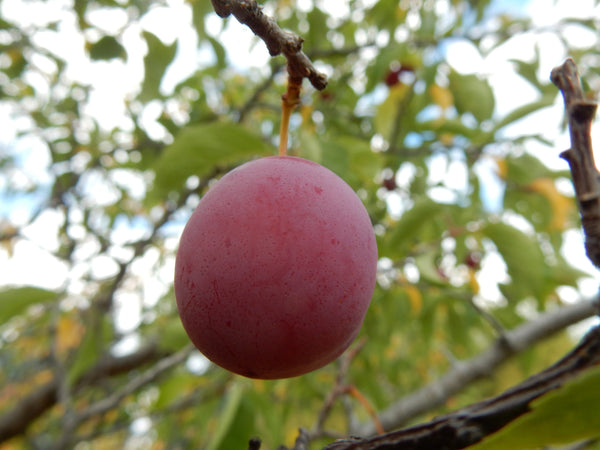
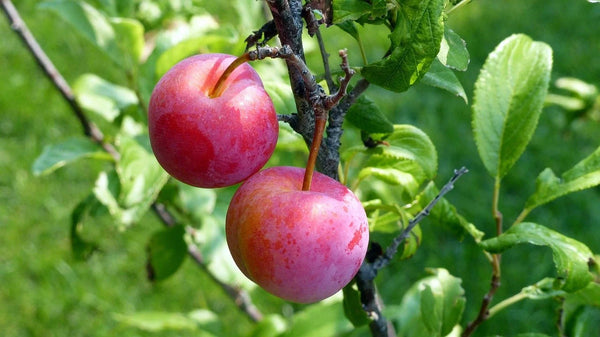
About the photo: this isn’t Black Ice itself. Photos of Black Ice are either under copyright or simply unavailable, so we picked the open-source image that looks closest to the fruit. Photo: “Plums hanging from a tree with green leaves” by JOGphotos, via Unsplash, under the Unsplash License.
Questions we get about Black Ice Plum
Does Black Ice Plum need a pollenizer?
Yes. Black Ice Plum needs pollen from a different variety that blooms at about the same time. Black Ice needs a pollenizer. Plant Toka nearby. Partners we carry include Toka Plum, Kaga Plum, Kahinta Plum.
How cold hardy is Black Ice Plum?
We rate Black Ice Plum hardy to zone 3, which means winters down to about -40°F. Our notes have it taking -38°F. Our ratings come from real winters at our two Montana sites and from trusted growers across the North, not from a catalog average.
How many chill hours does Black Ice Plum need?
About 600 hours of winter chill (we count hours at or below 45°F), likely somewhere between 250 and 900. Nobody has published a chill figure for it, so that's our estimate from its relatives and origin. One nursery lists 250 hours, but its Japanese plum and sand cherry ancestry point higher. We estimate about 600. Our chill hours guide has a calculator for your winters, and our research page lists the sources.
When does Black Ice Plum ripen?
About Aug 18 to Aug 30 in Missoula, Montana (an estimate built from published sources and our climate). Warmer places run earlier and cooler places later; our ripening map converts the date to your town.
How big does Black Ice Plum get?
We graft Black Ice Plum onto Prairie Red (semi-dwarf), which makes a tree roughly 10 to 15 ft tall if you never prune it. Some sizes are on Prunus americana.
What is Black Ice Plum good for?
Our top use scores for Black Ice Plum are fresh eating (7/10), jams and jellies (6/10).
Is Black Ice Plum disease resistant?
Not really. It holds up moderately well against bacterial spot. It's prone to bacterial canker, black knot and brown rot. Nobody has published solid data on it for cytospora canker and plum pocket yet, so we list those as unknown. Our plum disease resistance chart has every rating, the notes and the sources.
Will deer eat Black Ice Plum?
Yes, deer love it. Protect Black Ice Plum with a fence or a cage, especially while it is young.
Pollination partners
Trees that will pollenize Black Ice Plum
Black Ice Plum needs a different hybrid or Japanese plum nearby to set fruit. Every tree below blooms at the same time and has pollen that works for it. Plant partners within about 100 feet.
Bloom group
4 of 7 (Mid)
Pollination
Needs a partner
Pollen
Good pollenizer
-
 Toka Plum(Spring 2027)
From $49.99
Toka Plum(Spring 2027)
From $49.99
-
 Kaga Plum(Spring 2027)
From $54.99
Kaga Plum(Spring 2027)
From $54.99
-
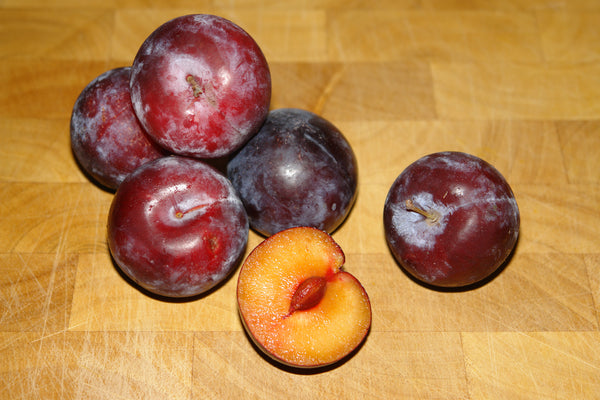 Kahinta Plum(Spring 2027)
$79.99
Kahinta Plum(Spring 2027)
$79.99
-
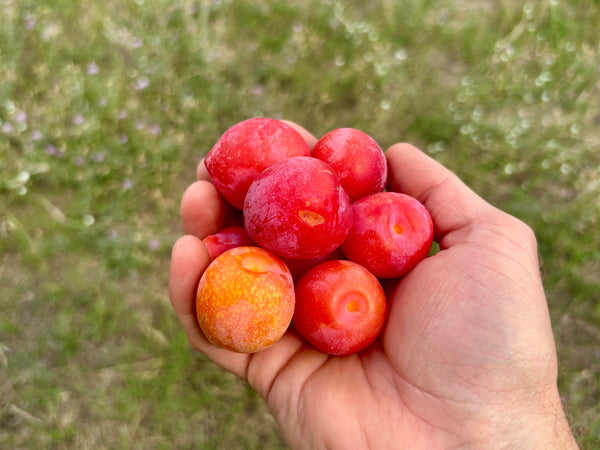 Superior Plum(Spring 2027)
From $49.99
Superior Plum(Spring 2027)
From $49.99
-
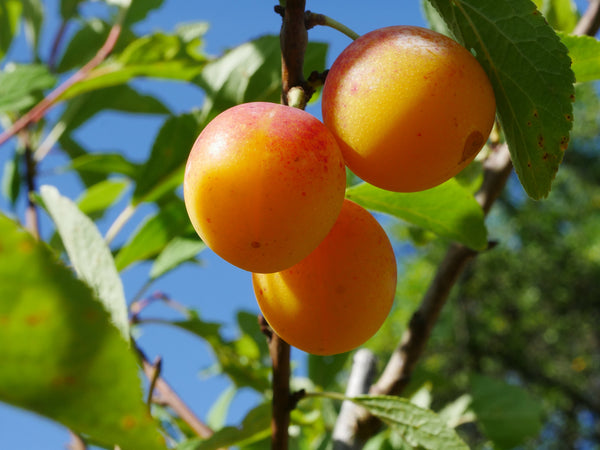 Brookgold Plum(Spring 2027)
From $59.99
Brookgold Plum(Spring 2027)
From $59.99
-
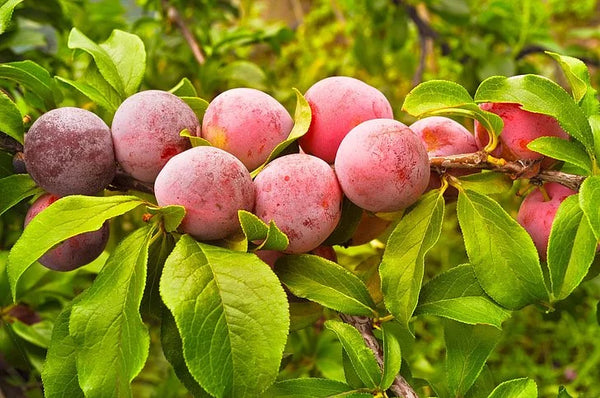 Pipestone Plum(Spring 2027)
From $59.99
Pipestone Plum(Spring 2027)
From $59.99
-
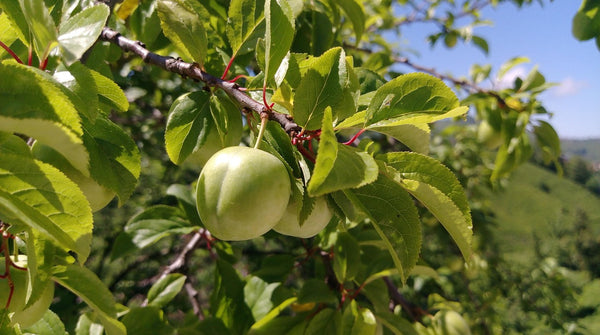 Ptitsin #5 Plum(Spring 2027)
From $54.99
Ptitsin #5 Plum(Spring 2027)
From $54.99
-
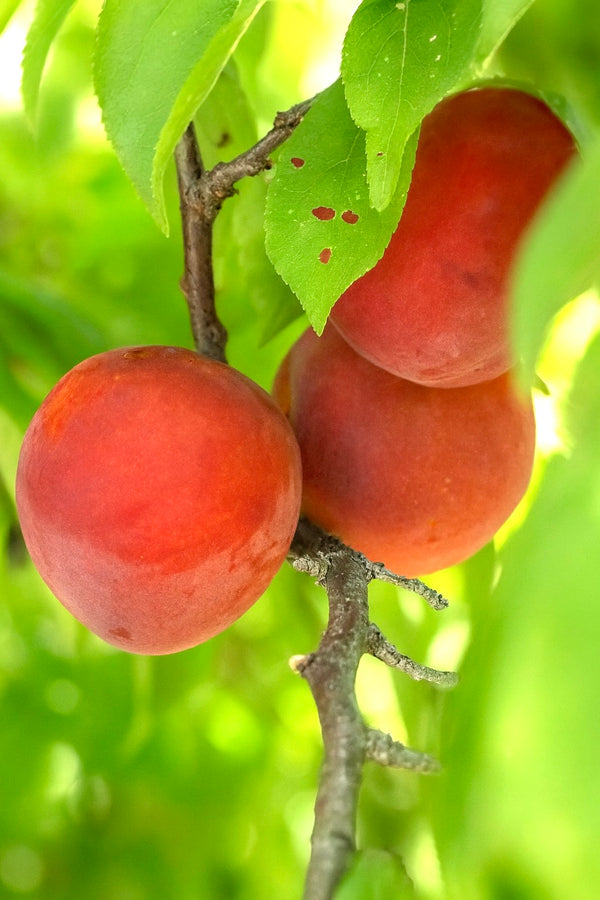 Underwood Plum(Spring 2027)
From $64.99
Underwood Plum(Spring 2027)
From $64.99
-
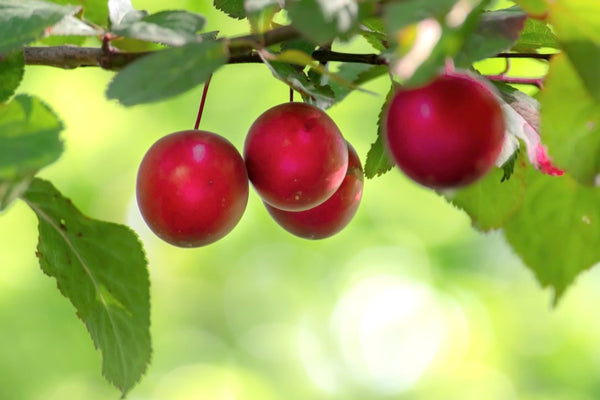 Gracious Plum(Spring 2027)
From $59.99
Gracious Plum(Spring 2027)
From $59.99
-
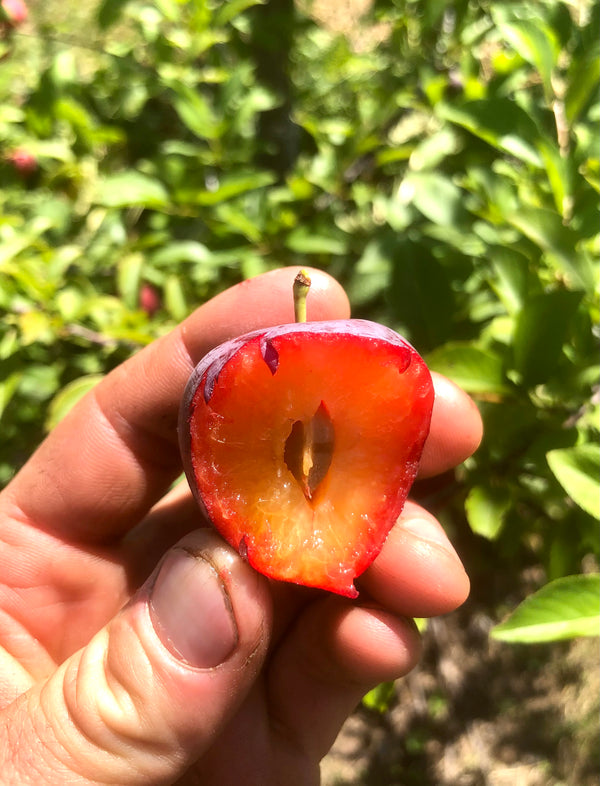 Kuban Delight Plum(Spring 2027)
$109.99
Kuban Delight Plum(Spring 2027)
$109.99