
Skip to product information


Burton Plum Seedling
$24.99
Reliable shipping
Flexible returns
Pollination
Needs a partner
Bloom group
4 of 7 (Mid)
Ripening
Will it finish before your first hard freeze?
Check it on the Ripening Map (opens in a new tab)Although this is our first year growing Burton plum seedlings (we haven't even tried growing the mother tree), we'll give info on Burton Plum first, and then include info below regarding these specific seedlings.
Overview
According to trusted sources it is as a late-ripening, pink, oval-shaped plum of medium to large size. The flesh is amber, somewhat soft, very sweet, and semi-clingstone, making it well suited for fresh eating, drying, and freezing. The tree is described as upright to spreading, precocious, self-fertile, and a strong pollenizer for other European plums. Fruit is noted to keep very well in cold storage.
History and Origins
Burton Plum originated in Vacaville, California, discovered around 1900 as a chance seedling found by R. E. Burton. It entered commercial circulation in the early 20th century, around 1926. Because it arose as a seedling rather than through controlled breeding, its specific ancestral varieties were never recorded.
Parentage and Genetics
The exact parentage of Burton Plum is unknown. It is a European plum (Prunus domestica), which is typically hexaploid and genetically derived from ancient hybridization events involving species such as Prunus cerasifera and Prunus spinosa. As a result, Burton follows the broad genetic pattern of European plums rather than Japanese plum hybrids.
Hardiness
Burton’s original discovery in California does not provide strong cold-hardiness data, but being a European-type plum suggests at least moderate cold tolerance, and Purvis lists it on par with Italian plum (zone 4a), which has done well for a purely European plum in the warmer Valleys of Western Montana. Precise Montana hardiness is still being observed, and this season represents our first year growing Burton, so all current information is second hand. Hardy to zone 4a.
Seedling Status & Genetic Implications
These Burton plums are seedlings, not grafted clones taken from a mother tree. Because seedlings are the result of sexual reproduction rather than vegetative cloning, their genetics will not be identical to the historical Burton cultivar—though they may strongly resemble it.
European plums (Prunus domestica) cannot cross with Japanese plums (P. salicina) or Asian-American hybrids, which means that the pollen parent for these seedlings must have been:
-
another European plum,
-
or a less common intergeneric cross possible within the Prunus complex.
Intergeneric crossing within Prunus follows these patterns:
-
Plum × Apricot (plumcots, pluots) are genetically possible, but almost exclusively involve Japanese plums, not European plums.
-
Plum × Peach/Nectarine hybrids are far rarer and usually require breeding intervention; natural crosses are extremely unlikely.
-
European plums occasionally show traces of apricot ancestry at a deep historical level, but modern spontaneous crosses between P. domestica and apricot or peach are considered virtually nonexistent.
Implication:
These seedlings most likely represent European plum × European plum combinations. They may retain many Burton-like qualities—late ripening, sweetness, good storage—yet still express variability in fruit size, color, and tree shape due to sexual recombination.
Pollination partners
Trees that will pollenize Burton Plum Seedling
Burton Plum Seedling needs a different European plum nearby to set fruit. Every tree below blooms at the same time and has pollen that works for it. Plant partners within about 100 feet.
Bloom group
4 of 7 (Mid)
Pollination
Needs a partner
Pollen
Good pollenizer
-
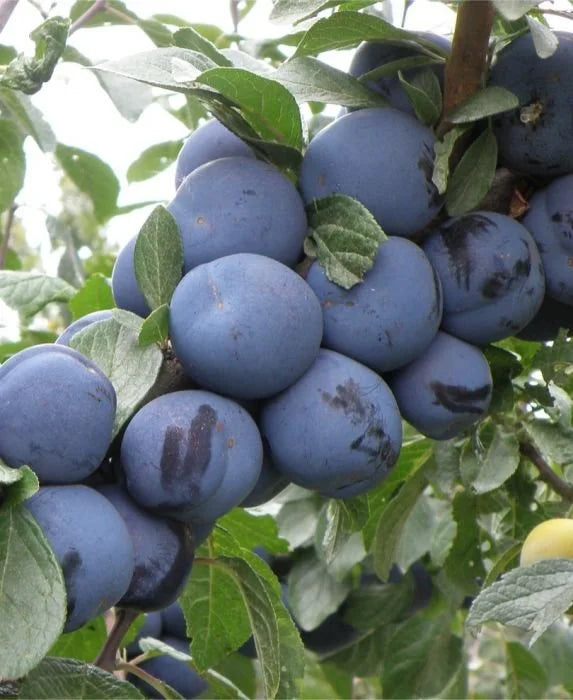 Mount Royal Plum
From $49.99
Mount Royal Plum
From $49.99
-
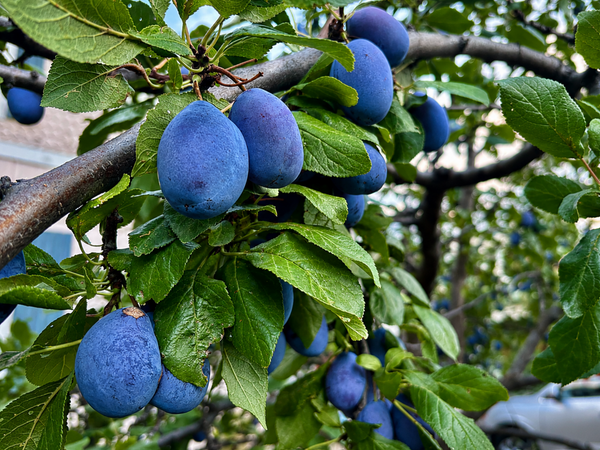 Italian Plum
From $74.99
Italian Plum
From $74.99
-
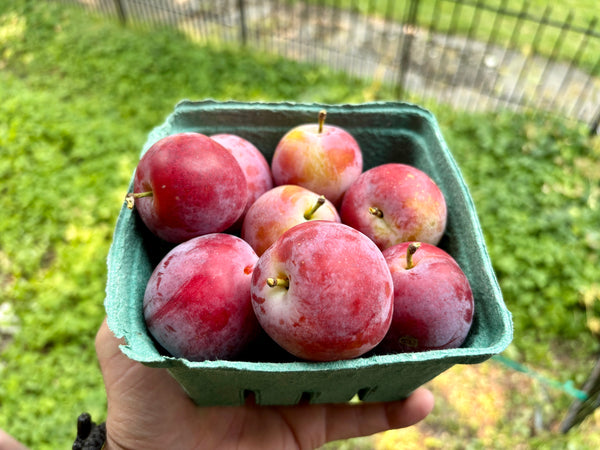 Deluge Plum
From $59.99
Deluge Plum
From $59.99
-
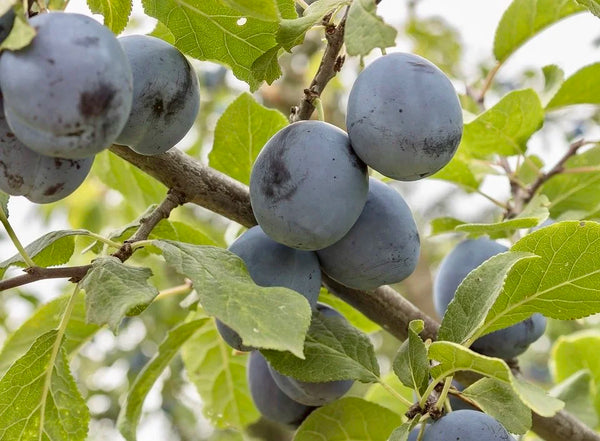 Sold out
Stanley Plum
Sold out
Stanley Plum
See every pairing on the Plum Pollination Map
Burton Plum Seedling's bloom group is our best estimate. Watch it bloom and tell us what you see.