Skip to product information


Chestnut Applecrab (Spring 2027)
$59.99
Reliable shipping
Flexible returns
Pollination
Needs a partner
Bloom group
2 of 7 (Early)
Ripening
Will it finish before your first hard freeze?
Check it on the Ripening Map (opens in a new tab)
Disease resistanceResists 3 of 4
- 3 Apple scab : Moderate, 3 of 5
- 4 Cedar-apple rust : Resistant, 4 of 5
- 4 Fire blight : Resistant, 4 of 5
- 4 Powdery mildew : Resistant, 4 of 5
Scored 1 to 5. Higher resists better, and ? means no published data yet.
See it on our crabapple disease chart (opens in a new tab)
At a glance: Chestnut Applecrab is an applecrab tree rated hardy to zone 2 in our ratings (winters to -50°F), not self-fertile, so it needs a different variety nearby as a pollenizer (bloom group 2 of 7, early for an apple or crabapple), and it ripens about Aug 31 to Sep 10 in Missoula (picked and dated at our place in Missoula).
| Hardy to | Zone 2 to 8. A bare number means the whole of zone 2, colder half included (winters to -50°F). Find your zone with our cold hardiness calculator. |
|---|---|
| Chill hours | About 750 hours (600 to 950). From published figures. Montana winters give it plenty. In milder climates, make sure your winters average at least this much. Check your chill hours or see our sources. |
| Pollination | Needs Cross-Pollination. Bloom group 2 of 7 (early), late spring here. Plant a different apple or crabapple variety that blooms in groups 1 to 3. It has good pollen, so it can also pollenize other apples blooming at the same time. Good partners we carry: Dolgo Crabapple (Bundle of 2), Crimson Beauty Apple, Lodi Apple, Martha Applecrab and 42 more. Apple Pollination Map. |
| Ripens | About Aug 31 to Sep 10 in Missoula (picked and dated off our own trees). Real years swing about a week either way. See the date for your town. |
| Rootstock and size | M26: dwarf to semi-dwarf, about 8 to 12 ft (14 to 15 ft in deep, rich soil) tall unpruned. Stake it the first few years. Bud 118: semi-dwarf in our dry Montana soils, semi-standard on paper, about 12 to 18 ft tall unpruned. Stands on its own, few suckers. Our rootstock guide. |
| Good for | Fresh eating (9/10), sauce and butter (7/10), pollenizing other trees (7/10), canning and freezing (6/10), jams and jellies (6/10). Scores are our own 1 to 10 ratings; 8 and up makes our Best Of lists. |
| Deer | A deer favorite. Fence it or cage it. |
| Where it came from | Read about the University of Minnesota breeding program and what else came out of it. |
| What you get | Bare root, 3-5 ft or 4-6 ft. Shipped or picked up in Missoula in spring, roots wrapped in moist sawdust. Guaranteed to bud out. |
About Chestnut Applecrab
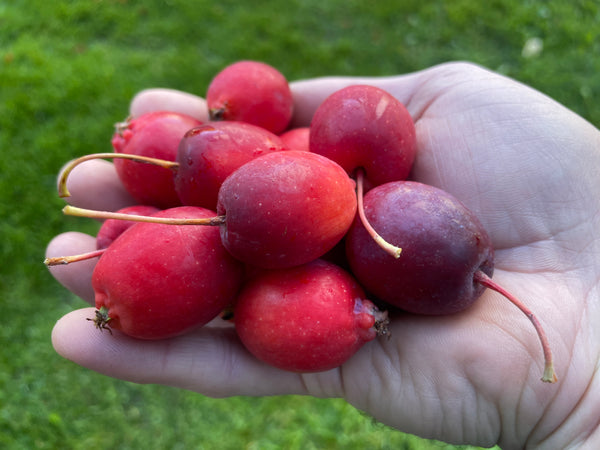
Chestnut is the sweet applecrab: an 18.7 Brix average at USDA Geneva, nutty and mellow fresh, and hardy to zone 2.
- Where it came from: A University of Minnesota release, 1946 (Orange Pippin gives 1949).
- Parents: Sources disagree (one says a Wealthy x Keswick Codlin seedling, others a Malinda seedling), so we don't state it.
- Also called: Chestnut Crab.
- Cider class: Sharp, from 0.51% acid in Lea's Geneva table (measured on finished cider, not juice).
- Juice: 18.7 Brix average at USDA Geneva, New York (MSU cider guide); 14.75 Brix and pH 3.55 at Walden Heights, Vermont, 2014.
- Winter: Rated zone 2.
- Bloom and ripening: blooms in apple group 2 of 7 (early); ripens about Aug 31 to Sep 10 in Missoula.
Part of: zone 2 cider apples, crabapple pollenizers.
More reading: best crabapples for cider.
Questions about Chestnut Applecrab
Is Chestnut crabapple good for cider? Yes, as the sweet part of a crab blend. Its juice averaged 18.7 Brix at USDA Geneva, sweeter than most apples, with moderate acid, so pair it with a sharper crab like Kerr or Hewe's.
Is Chestnut crabapple edible? Yes. It's one of the sweetest applecrabs we've tried: bubblegum one year, nutty the next.
How big does Chestnut Applecrab get? On Bud 118 it's semi-dwarf, about 12 to 18 ft unpruned; on M26 about 8 to 12 ft (14 to 15 ft in deep, rich soil).
Sources: University of Minnesota hardy fruit releases, Orange Pippin, Chestnut Crab, Apple Cultivars for Production of Hard Cider in Michigan, Walden Heights Nursery, 2014 fruit evaluation, Andrew Lea, Cider Apple Compositional Data.
Overview
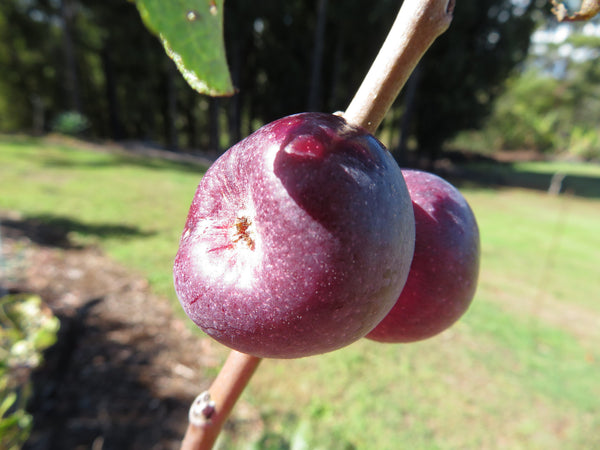
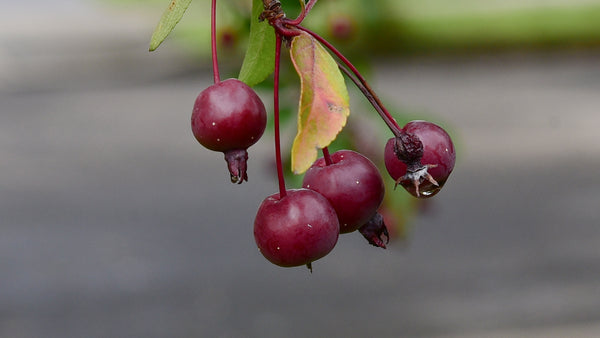
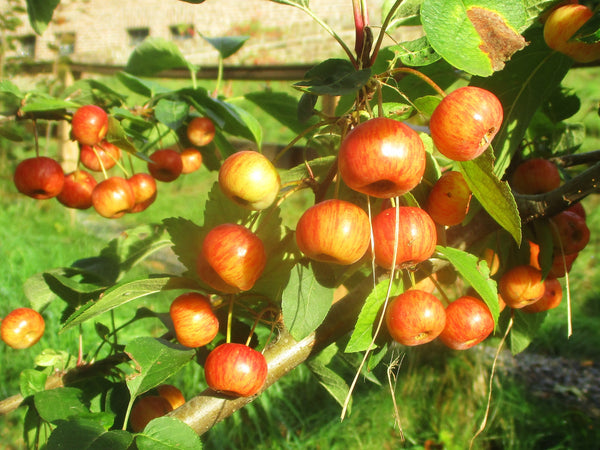
Chestnut, developed by the University of Minnesota, is technically an applecrab, 50% apple and 50% crabapple.
The University of Minnesota released Chestnut in 1946. Its parentage is disputed (one source says a Wealthy x Keswick Codlin seedling, others a Malinda seedling), so we leave it at that.
But don’t let the “crabapple” part fool you. Hand this to someone who thinks crabapples are too tart or ornamental, and you’ll likely make a believer out of them.
Flavor Notes
-
One of the sweetest applecrabs we’ve tried
-
In Fall 2023 (Kalispell orchard), we noted hints of bubblegum
-
In Fall 2024 (WARC field day), the flavor shifted to nutty, mellow, sweet, and less acidic. Super yummy!
-
Ripens 1–2 weeks before Kerr, making it a perfect complementary variety
-
Want something intense and tangy? Go with Kerr
-
Want something smooth, sweet, and nutty? Get Chestnut
-
Ripening & Use
-
Ripens early: 1st–2nd week of September in western Montana
-
Great for fresh eating, but also works in sauces or ciders
-
Stores decently for a crabapple
Cold Hardiness
-
Hardy to at least -50°F
-
Ideal for Zone 2 and possibly colder
-
Early enough to ripen even in parts of Alaska
Rootstock & Tree Info
For Spring 2027, our Chestnut applecrabs are grafted onto Bud 118, hardy to -50 F or more, and M26, which is less hardy (to -40F) and a little less dwarfing. If buying Chestnut on M26 and you can experience sub -40F, then bury the graft.
Questions we get about Chestnut Applecrab
Does Chestnut Applecrab need a pollenizer?
Yes. Chestnut Applecrab needs pollen from a different variety that blooms at about the same time. Plant a different apple or crabapple variety that blooms in groups 1 to 3. It has good pollen, so it can also pollenize other apples blooming at the same time. Partners we carry include Dolgo Crabapple (Bundle of 2), Crimson Beauty Apple, Lodi Apple.
How cold hardy is Chestnut Applecrab?
We rate Chestnut Applecrab hardy to zone 2, which means winters down to about -50°F. Our ratings come from real winters at our two Montana sites and from trusted growers across the North, not from a catalog average.
How many chill hours does Chestnut Applecrab need?
About 750 hours of winter chill (we count hours at or below 45°F), likely somewhere between 600 and 950. That comes from published figures for this variety. Blooms early, with Dolgo. Lab tests put it well below standard apples, about 750 hours. Our chill hours guide has a calculator for your winters, and our research page lists the sources.
When does Chestnut Applecrab ripen?
About Aug 31 to Sep 10 in Missoula, Montana (picked and dated off our own trees). Warmer places run earlier and cooler places later; our ripening map converts the date to your town.
How big does Chestnut Applecrab get?
We graft Chestnut Applecrab onto M26 (dwarf to semi-dwarf), which makes a tree roughly 8 to 12 ft (14 to 15 ft in deep, rich soil) tall if you never prune it. Some sizes are on Bud 118.
What is Chestnut Applecrab good for?
Our top use scores for Chestnut Applecrab are fresh eating (9/10), sauce and butter (7/10), pollenizing other trees (7/10), canning and freezing (6/10). Anything scored 8 or higher makes our Best Of lists.
Is Chestnut Applecrab disease resistant?
For some diseases, yes. It's resistant to cedar-apple rust, fire blight and powdery mildew. It holds up moderately well against apple scab. Our crabapple disease resistance chart has every rating, the notes and the sources.
Will deer eat Chestnut Applecrab?
Yes, deer love it. Protect Chestnut Applecrab with a fence or a cage, especially while it is young.
Juice data
| SG (Brix) | Acid g/L | Tannin g/L | pH |
|---|---|---|---|
| 1.070 (17.0) P | 5.5 P | 0.5 E | 3.4 P |
On these numbers it's a sharp on the Long Ashton scale. Fruit grown in NY, VT, Alberta. Letters show how solid each number is: M measured, P published but weaker, E our estimate.
14 to 20 Brix across sources, acid 4.7 to 6.2 g/L, pH 3.3 to 3.55, little tannin. Nutty and sweet.
Sources: Andrew Lea, Cider Apple Compositional Data (Long Ashton, Geneva NY and Virginia tables); Walden Heights Nursery (Walden, VT, zone 3a), SARE fruit evaluation 2014, Table 7; Apple Cultivars for Production of Hard Cider in Michigan (Brix by variety)
Run Chestnut Applecrab through the hard cider calculator to see what it does in a blend.
More Plants Like This
By Zone
Pollination, Bloom & Ripening
Disease Resistance
Pollination partners
Trees that will pollenize Chestnut Applecrab
Chestnut Applecrab needs a different apple or crabapple nearby to set fruit. Every tree below blooms at the same time and has pollen that works for it. Plant partners within about 100 feet.
Bloom group
2 of 7 (Early)
Pollination
Needs a partner
Pollen
Good pollenizer
-
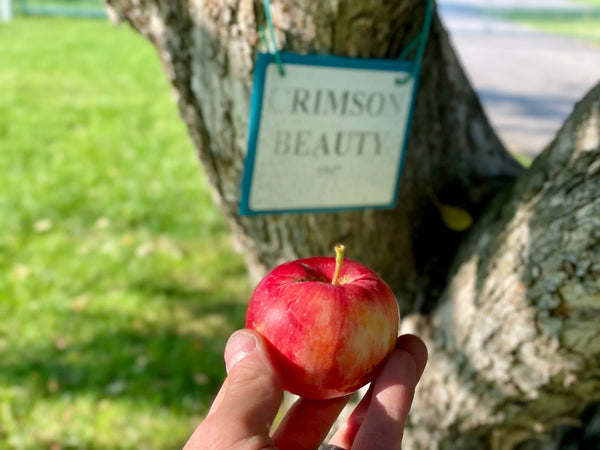 Crimson Beauty Apple(Spring 2027)
From $59.99
-
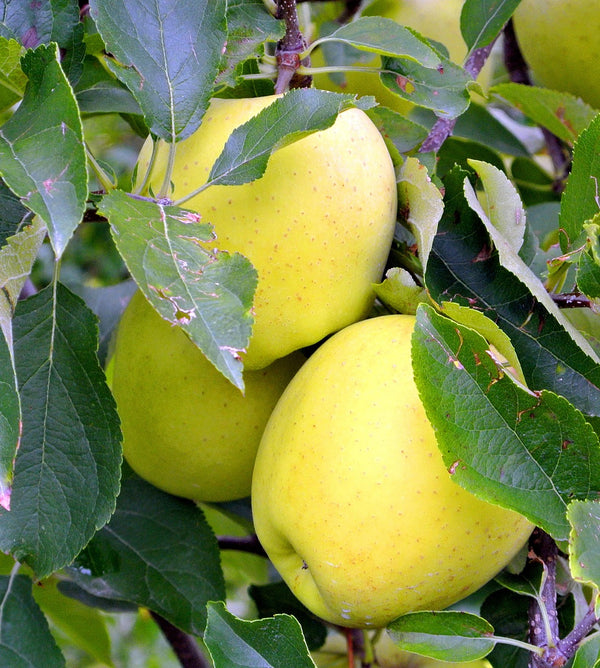 Lodi Apple(Spring 2027)
From $54.99
-
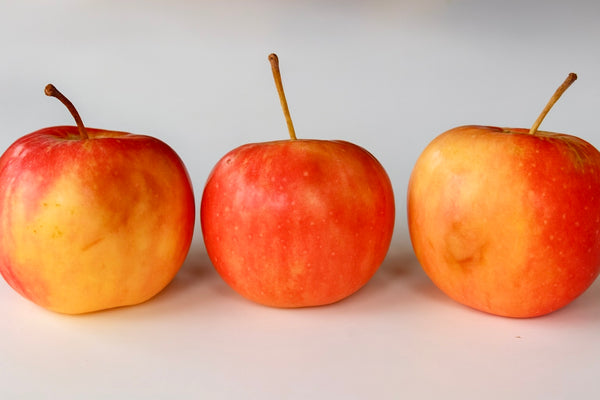 Martha Applecrab(Spring 2027)
From $44.99
-
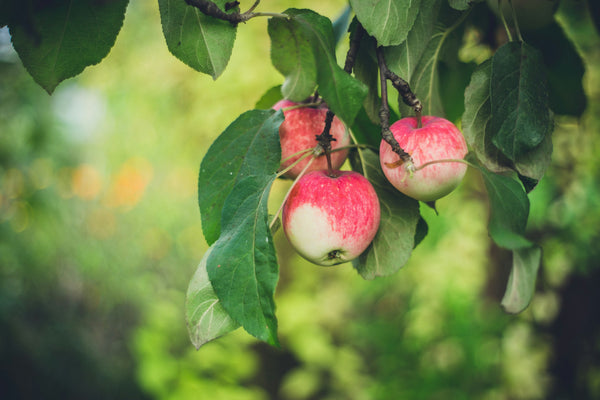 Norda Apple(Spring 2027)
From $54.99
-
 Norland Apple(Spring 2027)
From $49.99
-
 Red Baron Apple(Spring 2027)
$74.99
-
 St. Edmund's Pippin Apple(Spring 2027)
From $44.99
-
 Hewe's Virginia Crabapple(Spring 2027)
From $74.99