Skip to product information


Cox Orange Pippin Apple (Spring 2027)
$59.99
Reliable shipping
Flexible returns
Pollination
Needs a partner
Bloom group
4 of 7 (Mid)
Ripening
Will it finish before your first hard freeze?
Check it on the Ripening Map (opens in a new tab)At a glance: Cox Orange Pippin Apple is an apple tree rated hardy to zone 4 in our ratings (winters to -30°F), not self-fertile, so it needs a different variety nearby as a pollenizer (bloom group 4 of 7, mid for an apple or crabapple), and it ripens about Sep 15 to Sep 29 in Missoula (our Missoula estimate).
| Hardy to | Zone 4 to 8. A bare number means the whole of zone 4, colder half included (winters to -30°F). Find your zone with our cold hardiness calculator. |
|---|---|
| Pollination | Needs Cross-Pollination. Bloom group 4 of 7 (mid), late spring here. Plant a different apple or crabapple variety that blooms in groups 3 to 5. It has good pollen, so it can also pollenize other apples blooming at the same time. Good partners we carry: Otterson Crabapple, Trail Crabapple, Alexander Apple, Burgundy Apple and 102 more. Apple Pollination Map. |
| Ripens | About Sep 15 to Sep 29 in Missoula (a Missoula estimate from published sources). Real years swing about a week either way. See the date for your town. |
| Rootstock and size | Bud 118: semi-dwarf in our dry Montana soils, semi-standard on paper, about 12 to 18 ft tall unpruned. Stands on its own, few suckers. Our rootstock guide. |
| Good for | Fresh eating (10/10), juice and sweet cider (7/10), hard cider (6/10), winter storage (6/10). Scores are our own 1 to 10 ratings; 8 and up makes our Best Of lists. |
| Deer | A deer favorite. Fence it or cage it. |
| What you get | Bare root, 4-6 ft. Shipped or picked up in Missoula in spring, roots wrapped in moist sawdust. Guaranteed to bud out. |
Overview
Cox’s Orange Pippin is a classic English dessert apple first raised in the early 19th century by Richard Cox in Buckinghamshire, England and introduced in 1825. It is renowned for its complex, aromatic flavor and has played an important role in apple breeding.
Caution
Rod would say that, given Cox’s Orange Pippin’s proneness to scab, cracking, and seemingly every disease, it would be horticultural malpractice not to state this plainly. This is not a low-maintenance apple and requires attentive site selection and disease management. However, for growers willing to meet its needs, the reward is exceptional—when Cox’s Orange Pippin succeeds, the flavor is truly remarkable.
Uses
Cox’s Orange Pippin is primarily a fresh-eating apple, prized for its rich sweet–tart balance and distinctive, perfumed flavor. It is also valued for cider blending, where it contributes aroma and complexity, and can be used in baking when flavor is the primary goal.
Cold Hardiness
Cox’s Orange Pippin is usually considered moderately hardy and many sources will list it as a zone 5. However, in our experience in Montana, it has survived -30F in a colder spot of Missoula (near Frenchtown) without any winter injury, survived for Rod at -35F. So it is easily a zone 4 in our experience.
Final Note
If you're after the classic Cox flavor but worried about growing it, here are some notes from Rod McIver:
In Kalispell, Holstein was Rod McIver’s favorite, with Alkmene also performing well, while Rubinette and Elstar struggled. Rod did not care for Ellison Orange, finding the flavor unusual, though he acknowledged it as the most disease-resistant member of the Cox lineage.
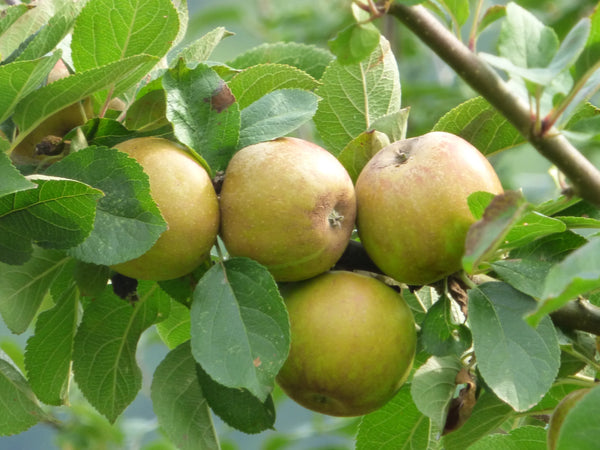
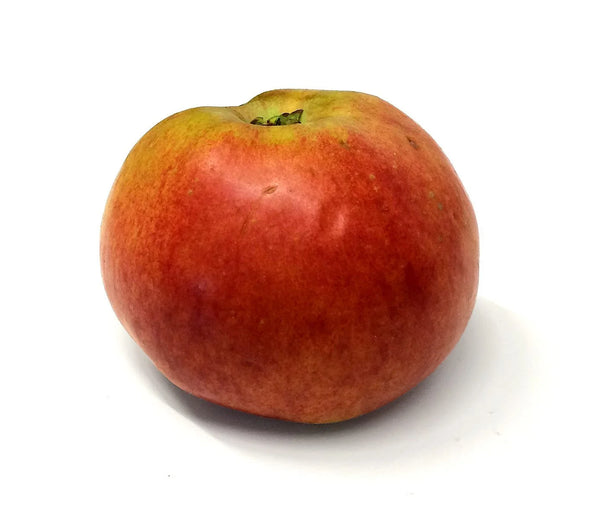
Photos: “Apple on a tree (Cox's Orange Pippin cultivar)” by Andreas Rother, via Wikimedia Commons, licensed CC BY-SA 2.5; “Apfel 030 Cox Orange (fcm)” by Frank C. Müller, via Wikimedia Commons, licensed CC BY-SA 4.0; “Cox Orange (Apple) jm99046” by joergens.mi, via Wikimedia Commons, licensed CC BY-SA 3.0.
Questions we get about Cox Orange Pippin Apple
Does Cox Orange Pippin Apple need a pollenizer?
Yes. Cox Orange Pippin Apple needs pollen from a different variety that blooms at about the same time. Plant a different apple or crabapple variety that blooms in groups 3 to 5. It has good pollen, so it can also pollenize other apples blooming at the same time. Partners we carry include Otterson Crabapple, Trail Crabapple, Alexander Apple.
How cold hardy is Cox Orange Pippin Apple?
We rate Cox Orange Pippin Apple hardy to zone 4, which means winters down to about -30°F. Our ratings come from real winters at our two Montana sites and from trusted growers across the North, not from a catalog average.
When does Cox Orange Pippin Apple ripen?
About Sep 15 to Sep 29 in Missoula, Montana (an estimate built from published sources and our climate). Warmer places run earlier and cooler places later; our ripening map converts the date to your town.
How big does Cox Orange Pippin Apple get?
We graft Cox Orange Pippin Apple onto Bud 118 (semi-dwarf in our dry Montana soils, semi-standard on paper), which makes a tree roughly 12 to 18 ft tall if you never prune it.
What is Cox Orange Pippin Apple good for?
Our top use scores for Cox Orange Pippin Apple are fresh eating (10/10), juice and sweet cider (7/10), hard cider (6/10), winter storage (6/10). Anything scored 8 or higher makes our Best Of lists.
Will deer eat Cox Orange Pippin Apple?
Yes, deer love it. Protect Cox Orange Pippin Apple with a fence or a cage, especially while it is young.
Pollination partners
Trees that will pollenize Cox Orange Pippin Apple
Cox Orange Pippin Apple needs a different apple or crabapple nearby to set fruit. Every tree below blooms at the same time and has pollen that works for it. Plant partners within about 100 feet.
Bloom group
4 of 7 (Mid)
Pollination
Needs a partner
Pollen
Good pollenizer
-
 Trail Crabapple(Spring 2027)
$49.99
-
 Alexander Apple(Spring 2027)
From $49.99
-
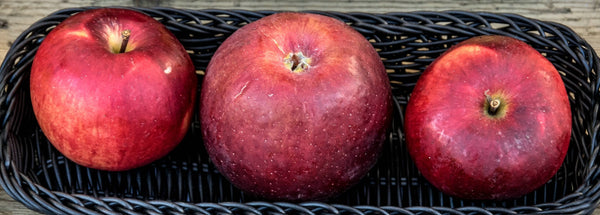 Burgundy Apple(Spring 2027)
From $49.99
-
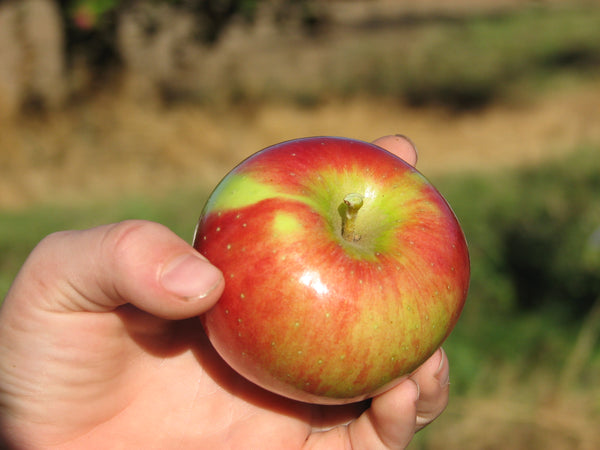 Cortland Apple(Spring 2027)
From $44.99
-
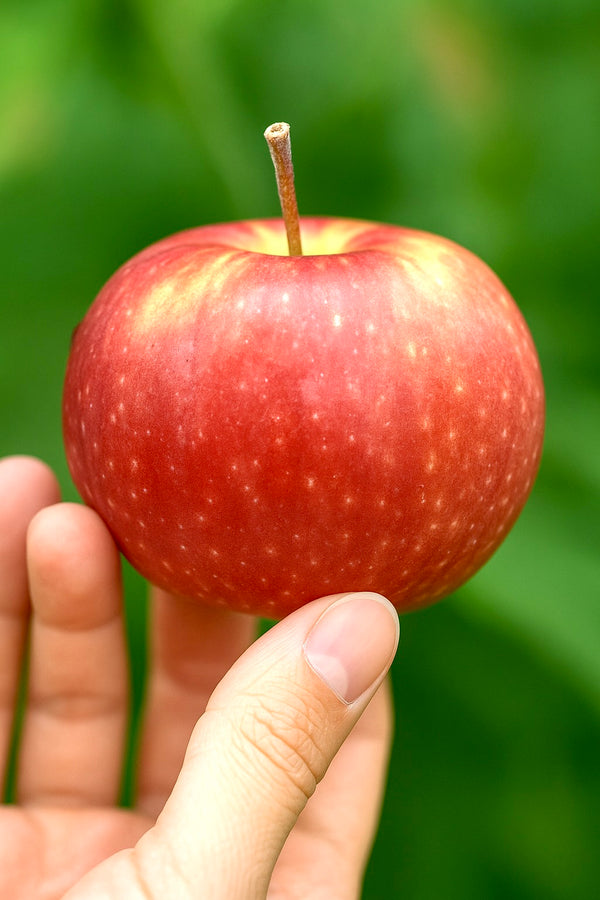 Frostbite Apple(Spring 2027)
From $59.99
-
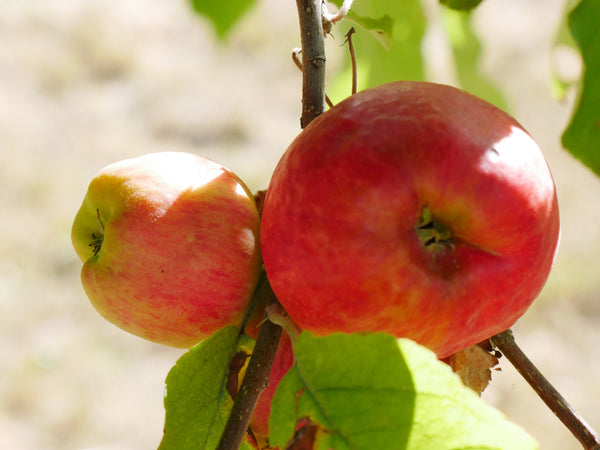 Goodland Apple(Spring 2027)
From $44.99
-
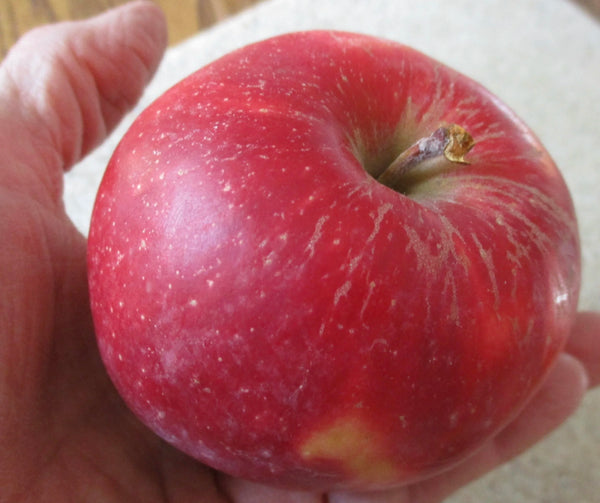 Haralson Apple(Spring 2027)
From $54.99
-
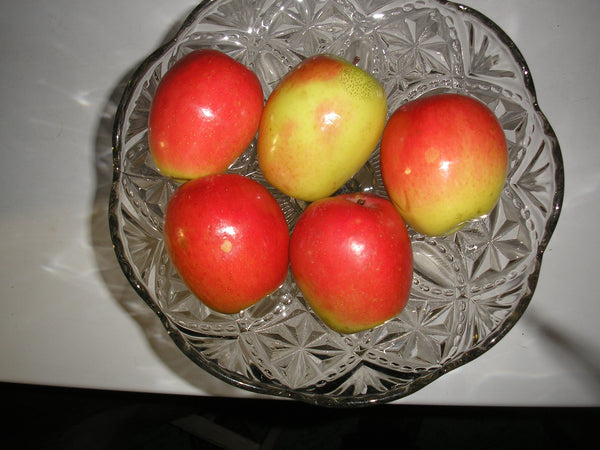 Kandil Sinap Apple(Spring 2027)
From $44.99
-
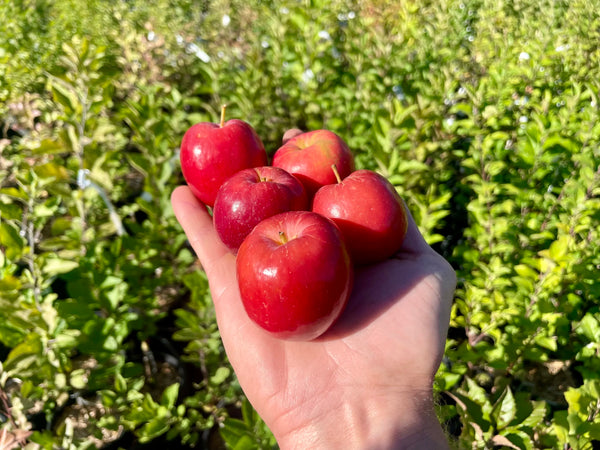 Kerr Applecrab(Spring 2027)
From $54.99
-
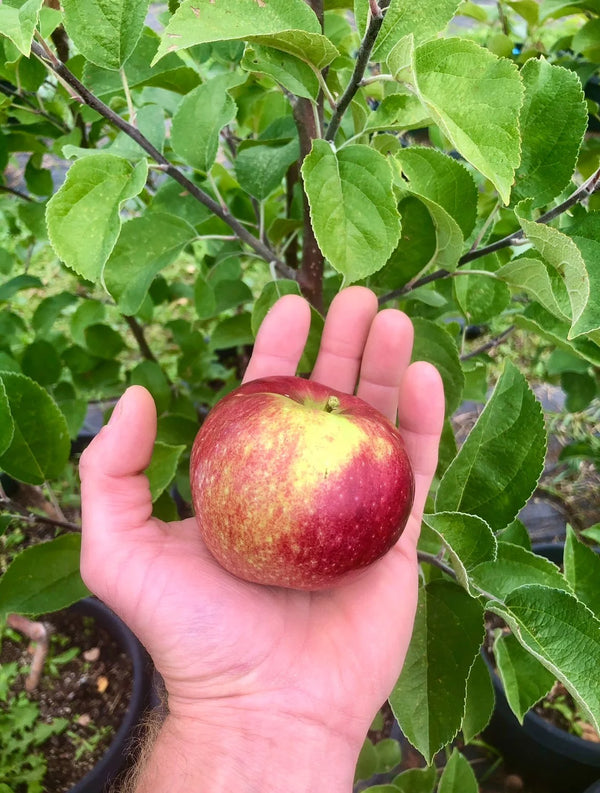 Macoun Apple(Spring 2027)
$59.99