
Skip to product information


Douglas Pear Seedlings (Bundle of 5)
$29.99
Reliable shipping
Flexible returns
Pollination
Needs a partner
Bloom group
4 of 7 (Mid)
Ripening
Will it finish before your first hard freeze?
Check it on the Ripening Map (opens in a new tab)
On video

At a glance: Douglas Pear Seedlings is a pear tree rated hardy to zone 3 in our ratings (winters to -40°F), and not self-fertile, so it needs a different variety nearby as a pollenizer (bloom group 4 of 7, mid for a European pear).
| Hardy to | Zone 3 to 8. A bare number means the whole of zone 3, colder half included (winters to -40°F). Find your zone with our cold hardiness calculator. |
|---|---|
| Pollination | Needs Cross-Pollination. Bloom group 4 of 7 (mid), mid spring here. Each seedling is unique and untested, so plant another pear nearby. A Bartlett-season pear is the safest bet for overlapping bloom. Good partners we carry: Bartlett Pear, Dana Hovey Pear, Flemish Beauty Pear, Honeysweet Pear and 29 more. Bloom group is our estimate from the variety's origin and relatives. Pear Pollination Map. |
| Spacing | Plant 15 to 20 ft apart. |
| Deer | Sometimes damaged by deer. |
| What you get | Bare root, Less than 6" Seedlings. Shipped or picked up in Missoula in spring, roots wrapped in moist sawdust. Guaranteed to bud out. |
Seedlings of the famous Douglas Pear! These seedlings are small (less than 6"), but due to the flavor, hardiness, size, beauty, and disease resistance of Douglas, these seedlings could produce some good pears, especially considering that the mother Douglas tree from which these seeds derive were in proximity to very good culinary Europeann pears such as Dana's Hovey, Clara Frijs, Seckel, and others. But do note that these seedlings will NOT ultimately create a tree that will produce Douglas pears. Below is a description of Douglas Pear. We'll link to a historic archive of Douglas pear here from which the quotes below of famed pomologists and plant breeders (Burbank, Stark, etc.) discuss Douglas pear.
Overview
Douglas Pear is a late-ripening European pear that originated in Kansas and named for the county in which it was first discovered. It gained early attention not only for its fruit quality, but for its combination of productivity, disease tolerance, and adaptability. The pear attracted commentary from several prominent horticultural figures of the late 19th and early 20th centuries, who recognized its potential well beyond its place of origin.
Luther Burbank, speaking personally to Mr. Griesa about the quality of the Douglas Pear, noted that while he did not consider its quality quite equal to the best California Bartlett, “it takes a mighty good pear to beat that,” and that the Douglas possessed enough favorable qualities to make it “the standard pear of the future.” S. J. Hunter, Professor of Entomology at the University of Kansas, observed that although the Douglas resembled Kieffer in shape and color, it differed markedly in texture and flavor, describing it as almost as good as Bartlett and remarkable for the complete absence of the woody core often found in Kieffer pears. He also noted its unusually late ripening season.
Additional growers echoed these observations. L. C. Stark of Louisiana, Missouri reported being pleased with the Douglas, describing it as good to eat with unusual qualities. A. G. Mathers of Prairie View, Illinois noted exceptional disease tolerance, reporting that during a severe blight year, nearby trees were badly affected while the Douglas showed no blight. His young trees produced nine large pears averaging seven ounces each, with fine quality.
Growth Habit & Spacing
Douglas Pear develops a moderately vigorous, upright to spreading growth habit typical of European pears. Trees form strong framework branches and respond well to structural pruning. At maturity, trees commonly reach 15–20 feet in height and width depending on rootstock and management (for these seedlings pears, they will be larger than that). For orchard or landscape plantings, space trees approximately 15–20 feet apart to allow for good light penetration, airflow, and long-term canopy development.
Fruit Quality & Uses
The fruit of Douglas Pear is medium to large, with classic pear shape and green to yellow skin when ripe. The flesh is fine-textured, juicy, and sweet, with noticeably better eating quality than many pears grown primarily for toughness or storage. Its lack of woody core, even when fully ripe, sets it apart from Kieffer-type pears. Douglas is well suited for fresh eating, slicing, and dessert use, and can also be used for canning when harvested slightly firm.
Cold Hardiness
Douglas Pear is well adapted to colder climates and has demonstrated good winter hardiness and disease tolerance in the Midwest and northern regions. It is generally considered hardy into Zone 4. Its late ripening habit helps avoid some early-season stresses, and historical observations suggest a notable resistance to fire blight compared to many other European pears, particularly under challenging growing conditions.
Questions we get about Douglas Pear Seedlings
Does Douglas Pear Seedlings need a pollenizer?
Yes. Douglas Pear Seedlings needs pollen from a different variety that blooms at about the same time. Each seedling is unique and untested, so plant another pear nearby. A Bartlett-season pear is the safest bet for overlapping bloom. Partners we carry include Bartlett Pear, Dana Hovey Pear, Flemish Beauty Pear.
How cold hardy is Douglas Pear Seedlings?
We rate Douglas Pear Seedlings hardy to zone 3, which means winters down to about -40°F. Our ratings come from real winters at our two Montana sites and from trusted growers across the North, not from a catalog average.
Will deer eat Douglas Pear Seedlings?
Sometimes. Deer browse Douglas Pear Seedlings now and then, so protect young plants where deer pressure is high.
What arrives, and when does Douglas Pear Seedlings ship?
A dormant bare-root plant, roots wrapped in moist sawdust with a vapor barrier, shipped or picked up in Missoula in spring. Sizes offered: Less than 6" Seedlings. We guarantee our plants bud out. Stone fruits can be slow, so if one still has not budded out by August 15, write to us and we credit you for the following spring.
Pollination partners
Trees that will pollenize Douglas Pear Seedlings
Douglas Pear Seedlings needs a different European pear nearby to set fruit. Every tree below blooms at the same time and has pollen that works for it. Plant partners within about 100 feet.
Bloom group
4 of 7 (Mid)
Pollination
Needs a partner
Pollen
Not tested yet
-
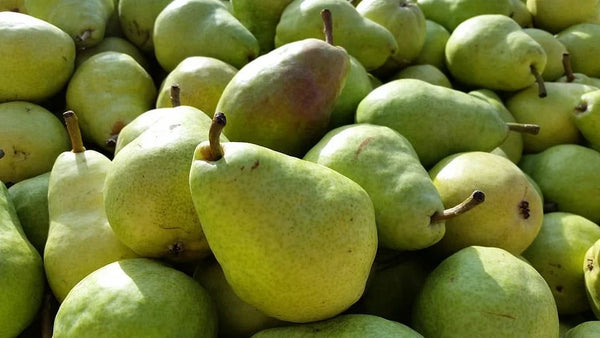 Bartlett Pear(Spring 2027)
From $64.99
Bartlett Pear(Spring 2027)
From $64.99
-
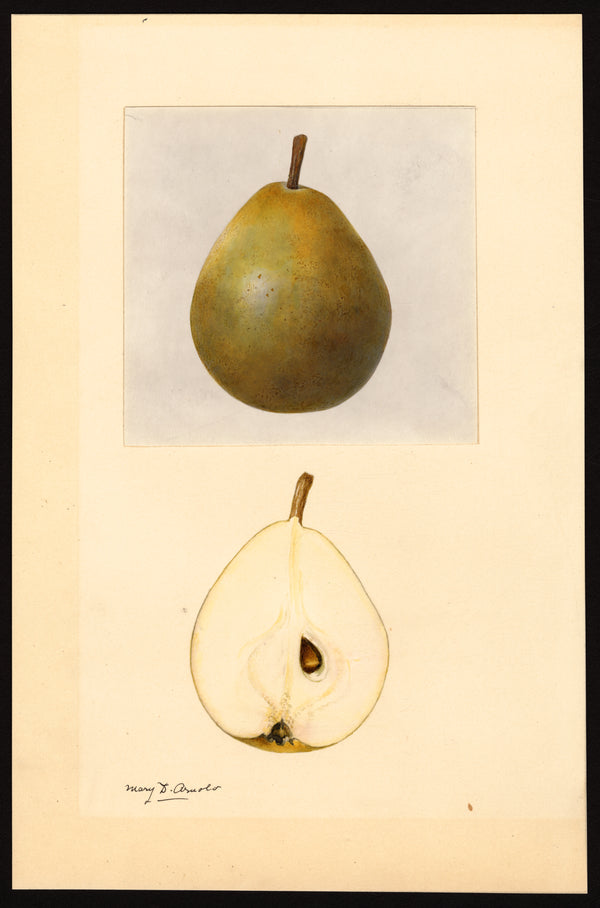 Dana Hovey Pear(Spring 2027)
From $34.99
Dana Hovey Pear(Spring 2027)
From $34.99
-
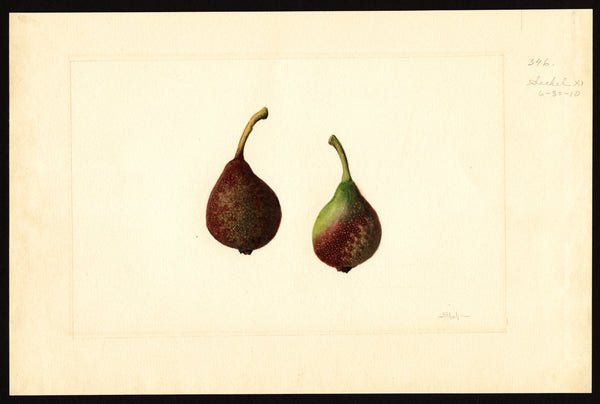 Honeysweet Pear(Spring 2027)
$49.99
Honeysweet Pear(Spring 2027)
$49.99
-
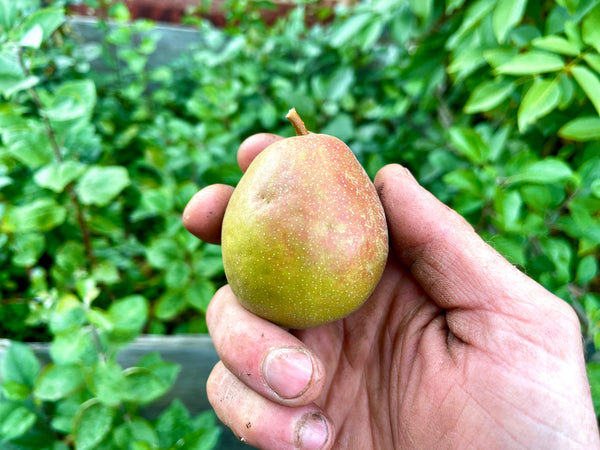 Seckel Pear(Spring 2027)
From $109.99
Seckel Pear(Spring 2027)
From $109.99
-
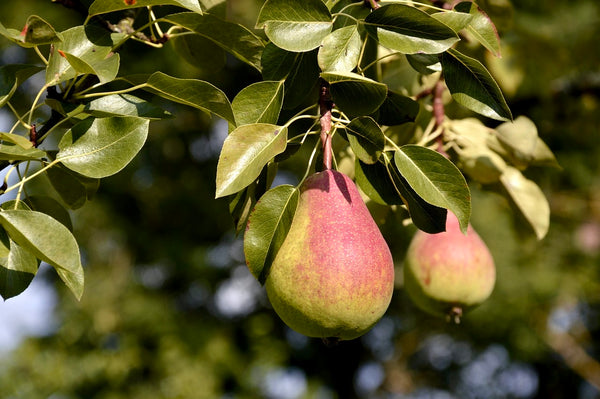 Ubileen Pear(Spring 2027)
From $34.99
Ubileen Pear(Spring 2027)
From $34.99
-
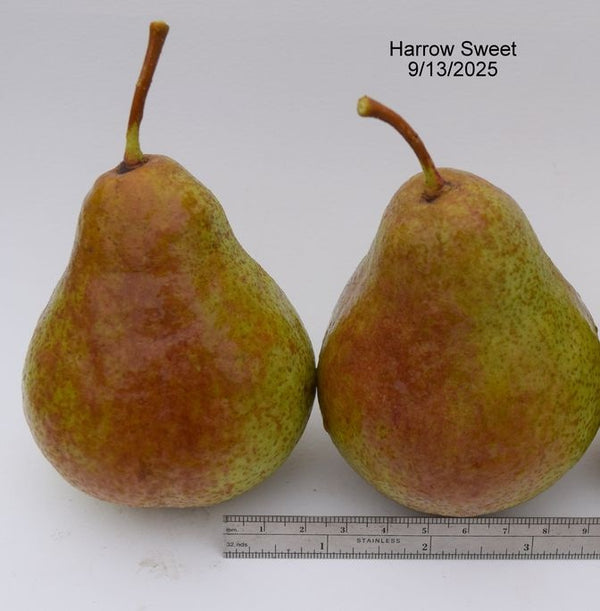 Harrow Sweet Pear(Spring 2027)
From $34.99
Harrow Sweet Pear(Spring 2027)
From $34.99
-
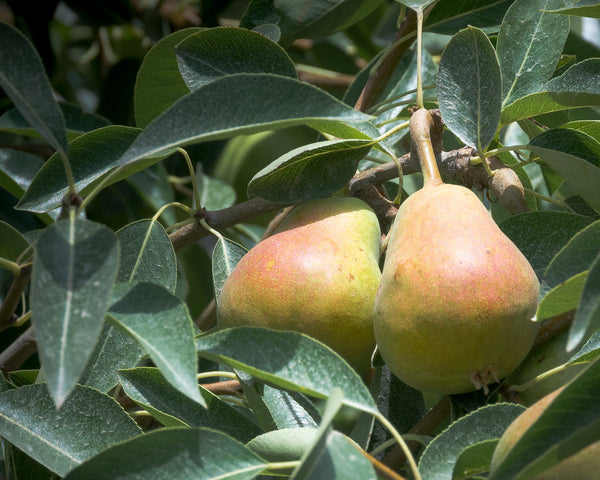 Bulgaria Pear(Spring 2027)
$49.99
Bulgaria Pear(Spring 2027)
$49.99
-
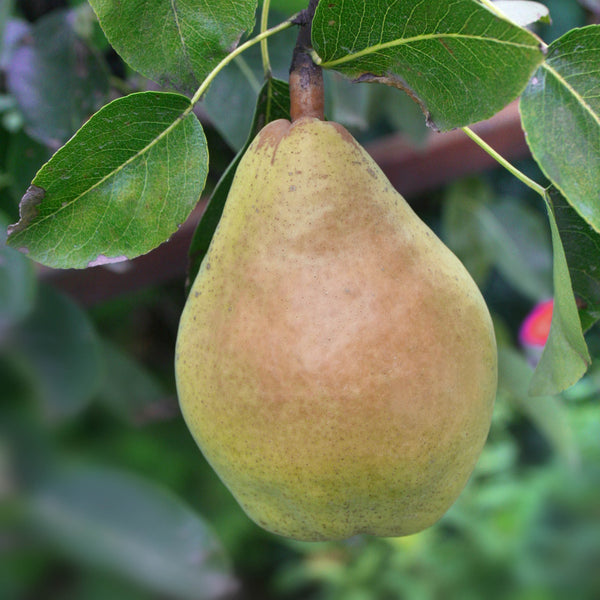 Frost Pear(Spring 2027)
From $34.99
Frost Pear(Spring 2027)
From $34.99
-
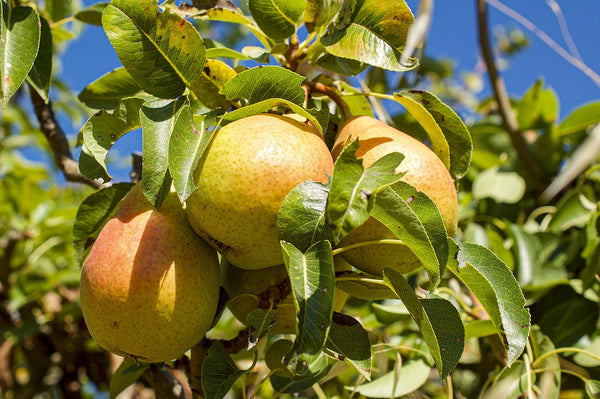 Hudar Pear(Spring 2027)
From $44.99
Hudar Pear(Spring 2027)
From $44.99
-
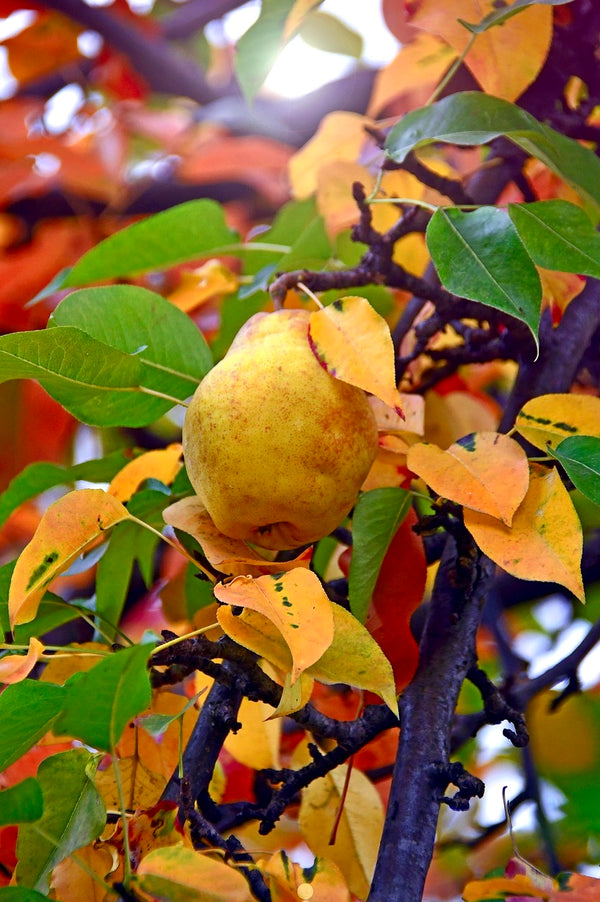 Nova Pear(Spring 2027)
From $49.99
Nova Pear(Spring 2027)
From $49.99
-
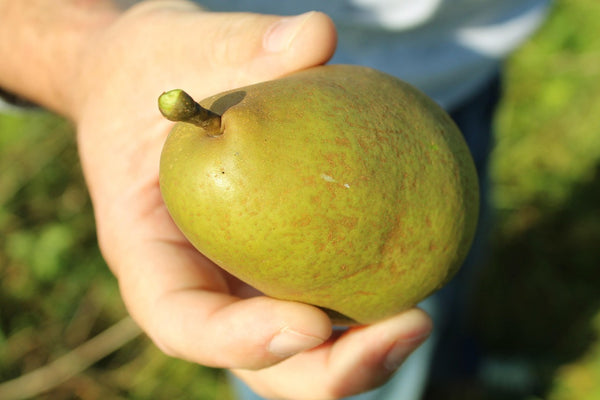 Waterville Pear(Spring 2027)
From $39.99
Waterville Pear(Spring 2027)
From $39.99
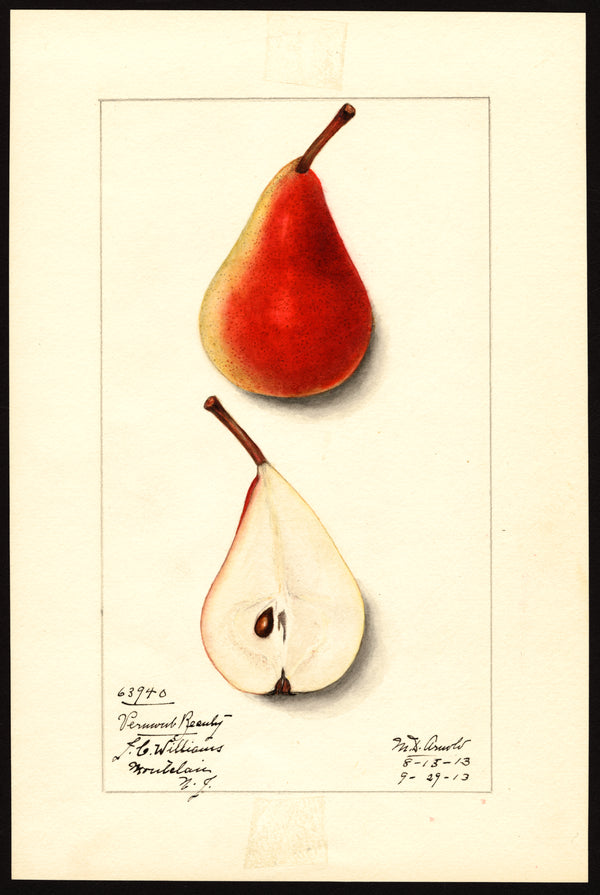
See every pairing on the Pear Pollination Map
Douglas Pear Seedlings's bloom group is our best estimate. Watch it bloom and tell us what you see.