
Skip to product information


Early Italian Plum
$59.99
Reliable shipping
Flexible returns
Pollination
Partly self-fertile
Bloom group
4 of 7 (Mid)
Ripening
Will it finish before your first hard freeze?
Check it on the Ripening MapOverview
Early Italian Plum is a European prune-type plum grown for its dependable crops of sweet, freestone, dark-skinned fruit that excels for fresh eating and drying. It’s widely regarded as one of the better-performing European plums for cool-summer regions and shorter seasons, and it’s often recommended where growers want a “classic prune plum” that ripens earlier than standard Italian types.
History
Early Italian is commonly listed as “Early Italian (Richards) Prune,” a selection introduced in the early 20th century. Commercial nursery and extension references describe it as closely related to Italian prune-type plums, but ripening earlier (often about 2 weeks ahead), helping it finish in cooler climates and higher elevations.
Fruit Quality & Uses
Fruit is medium to medium-large, oval, with dark blue/purple skin and greenish-yellow flesh, and tastes almost identical to Italian plum. It is freestone when fully ripe, with firm texture and excellent flavor—well suited to fresh eating, baking, canning, and especially drying into prunes.
Growth Habit & Spacing
Trees are typically upright to upright-spreading and vigorous, with a productive, long-lived spur-bearing habit typical of European plums. For full-size trees, which is the case here since these are grafted onto Lovell rootstock, a practical spacing is about 15–18 feet between trees (wider if you want easier equipment access; tighter only with consistent pruning).
Cold Hardiness
What it can survive down to depends on dormancy status, site exposure, and whether the tree has fully hardened off. With that said, we have observed Italian Plum (not Early Italian, though we would expect similar performance) withstand −30°F in the Missoula Valley without any winter injury. Some growers have reported even greater cold hardiness, despite many online sources listing Italian plums as less hardy. It is likely capable of surviving −35°F under favorable conditions, though −40°F would probably be a stretch. It will do well in many valleys in Western Montana (Missoula, Bitterroot, Mission, Flathead, Clarks Fork, etc.) and even some areas west of the divide include Billings and some of the warmer surrounding valleys. Will not do well in the colder parts of MT (mostly east of the divide), with lots of exposure to wind and polar fronts. Therefore, Italian (and likely Early Italian) is a solid zone 4 and may even be a stretch zone 3b.
Pollination & Bearing Reliability
Early Italian is commonly described as self-fruitful or partially self-fruitful, but it typically produces heavier and more consistent crops with another European plum nearby (for example, Stanley or Italian prune-types).
Grower Note
Our friend Dan Getman at Getmans’ Orchard and Vineyard on Flathead Lake calls Early Italian his best-performing and most reliably bearing plum variety.
Pollination partners
Partners for a bigger Early Italian Plum crop
Early Italian Plum sets some fruit on its own, but a lot more with a partner. Every tree below blooms at the same time and has pollen that works for it.
Bloom group
4 of 7 (Mid)
Pollination
Partly self-fertile
Pollen
Good pollenizer
-
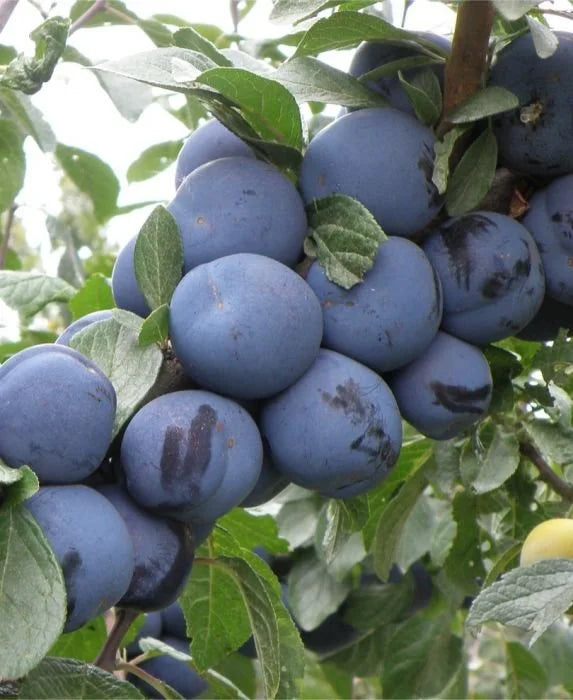 Mount Royal Plum
From $49.99
Mount Royal Plum
From $49.99
-
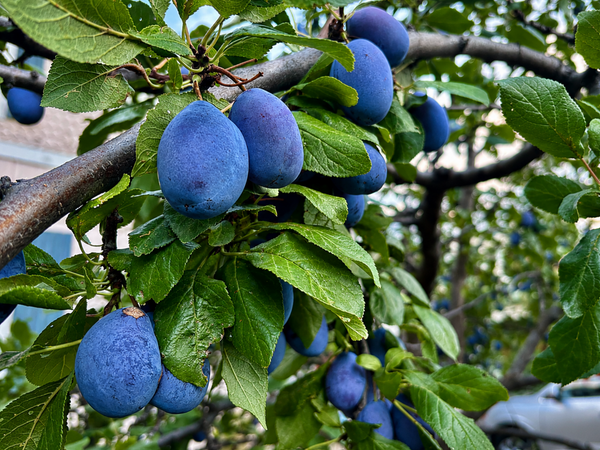 Italian Plum
From $74.99
Italian Plum
From $74.99
-
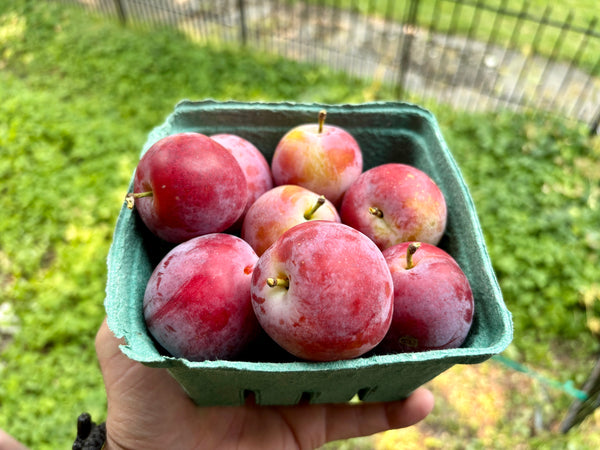 Deluge Plum
From $59.99
Deluge Plum
From $59.99
-
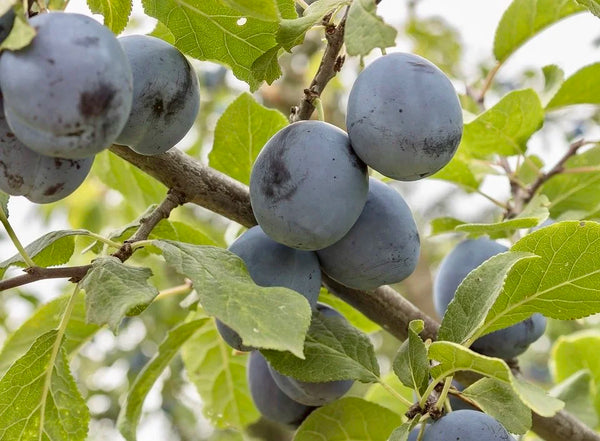 Sold out
Stanley Plum
Join the waitlist
Sold out
Stanley Plum
Join the waitlist
See every pairing on the Plum Pollination Map
Early Italian Plum's bloom group is our best estimate. Watch it bloom and tell us what you see.