
Skip to product information
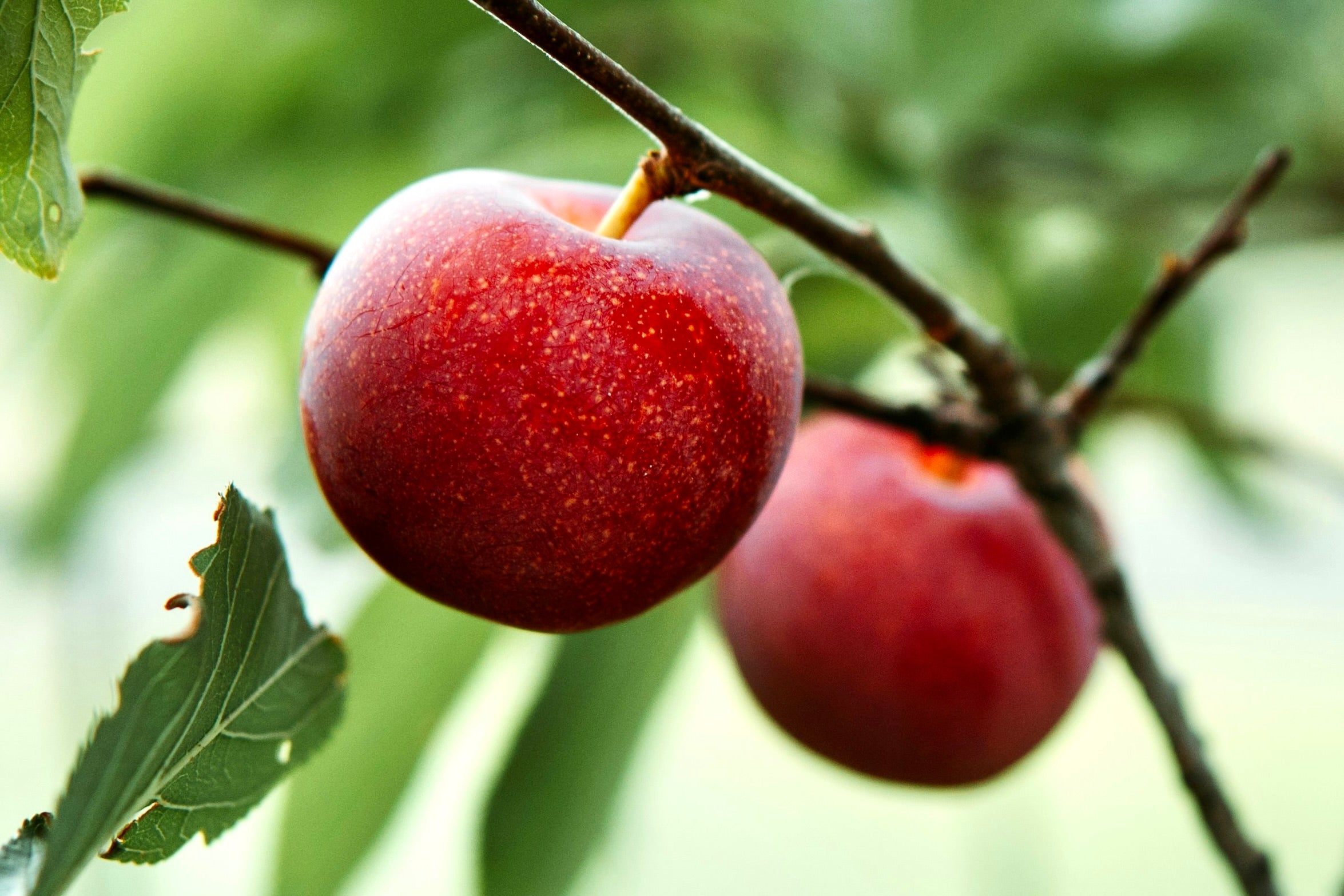
Hanska Plum
$34.99
Reliable shipping
Flexible returns
Overview
Hanska is one of the classic Hansen hybrid plums developed specifically for the northern Great Plains. Released in 1908 by Dr. N.E. Hansen with South Dakota State, it belongs to the group of hardy Asian–American hybrid plums bred to combine improved fruit quality with the durability of native American plum genetics. Hanska is commonly discussed alongside related Hansen hybrids such as Kaga and is part of the same broader breeding effort that eventually produced well-known plums like Toka. Its purpose from the outset was reliable performance in cold, continental climates. Here's a cool article on Hansen and his life's work.
Fruit Quality & Uses
From the research literature and long-standing variety descriptions, Hanska produces medium-sized fruit with red skin and yellow flesh. The fruit is aromatic and firm, with flavor that improves as it fully ripens. It is considered an all-purpose plum, usable for fresh eating when ripe and especially well suited to cooking, preserves, sauces, and other processing where its flavor holds up well.
Cold Hardiness
Hanska is hardy to -40F, which is cited by Bob Purvis, and this matches our field observations in Western Montana, in which Hanska withstood -38F in Stevenville, on Jan. 12th 2024. Hanska will therefore do well in the vast majority of Western Montana, apart from the codest valleys, such as Potomac, which can get down to -50F. Hanska well not do as well east of the divide where temps can drop below -40F in the winter, but should do survive in Billings and the surrounding warmer valleys, as well as areas that are up on a bench in eastern MT and out of frost pooling. In well-sited plantings with good cold-air drainage and proper fall hardening, it may even perform into colder microclimates than -40F, but there is no published evidence to support assigning a specific lower extreme temperature beyond a Zone 3 placement.
Growth Habit & Spacing
Hanska grows as a vigorous hybrid plum tree rather than a dwarf. Trees develop a strong framework and should be given adequate room to mature. A practical spacing is about 12–16 feet between trees, with wider spacing (15–18 feet) improving airflow, access, and long-term ease of management. Regular pruning helps maintain structure and productivity.
Pollination
Hanska benefits from cross-pollination and should be planted with at least one other compatible hybrid plum that blooms at a similar time. As with most Asian–American hybrid plums, pollination improves fruit set and consistency compared to planting a single tree in isolation. Plant with Toka, Pipestone, Alderman, Underwood, or other asian-american hybrids. Native American plum and Prairie Red Plum can also work. Will not cross with European plums.