
Skip to product information


Krasnobokaya Pear
$44.99
Reliable shipping
Flexible returns
Pollination
Needs a partner
Bloom group
3 of 7 (Early-Mid)
Introduction and Research Context
Krasnobokaya is a new pear cultivar for us. We obtained propagation material from Les McCartney, who has grown Krasnobokaya and numerous other Russian pear cultivars in Bozeman, Montana, where trees have experienced winter minimums of approximately −40°F to −45°F, with minimal to no winter injury. Because we are still in the early stages of evaluating this cultivar ourselves—and because there is very little high-quality information available in English—we conducted a targeted review of South Ural–region Russian horticultural research journals. The information below was translated directly from Russian into English and synthesized exclusively from those primary sources, including:
-
Plodovodstvo i vinogradarstvo Yuga Rossii (2021) – https://journalkubansad.ru
-
Contemporary Horticulture (2019) – https://gardenvrn.ru
-
Contemporary Horticulture (2023) (South Ural Research Institute synthesis) – https://gardenvrn.ru
The description that follows reflects only what is reported in those papers, without extrapolation.
Krasnobokaya (Краснобокая) Pear
South Ural Research–Based Description
Origin and Breeding Context
Krasnobokaya (Краснобокая) is a pear cultivar developed and evaluated within the South Ural horticultural research system. In synthesis literature addressing improvement of the pear assortment in the Southern Urals, the cultivar is listed among locally bred selections, with its introduction and registration dated to 2002.
Ripening Period and Keeping Quality
Krasnobokaya is classified as a summer-ripening pear. In variety trials, fruits reached removable maturity in the second half of August. The cultivar demonstrated short-term keeping quality, with storage reported to last up to approximately one month, consistent with early-season pears. The VNIISPK national register puts picking maturity a month later, stating that 'съемная зрелость в условиях Челябинска наступает в конце второй декады сентября' (picking maturity under Chelyabinsk conditions arrives at the end of the second ten day period of September), and classes it an autumn pear rather than a summer one. VNIISPK also gives the parentage as Nezhnost crossed with Zheltoplodnaya. We are recording both readings until our own trees fruit in Montana.
Tree Characteristics
The tree is described as medium-vigorous, forming a compact, rounded crown. In South Ural evaluations, Krasnobokaya was characterized as highly winter-hardy. The cultivar was reported to enter bearing in the 4th–5th year after planting.
Productivity and Yield
In individual variety descriptions, Krasnobokaya produced up to 26 kg (approximately 57 lb) of fruit per tree under trial conditions.
In a broader study examining the ecological plasticity of pear cultivars in the Southern Urals, Krasnobokaya was classified among intensive-type varieties. In that study, it demonstrated an average productivity of approximately 13.9 metric tons per hectare, which converts to about 12,400 pounds per acre. The cultivar was described as responsive to improved growing conditions based on its reported plasticity and stability coefficients.
Fruit Characteristics
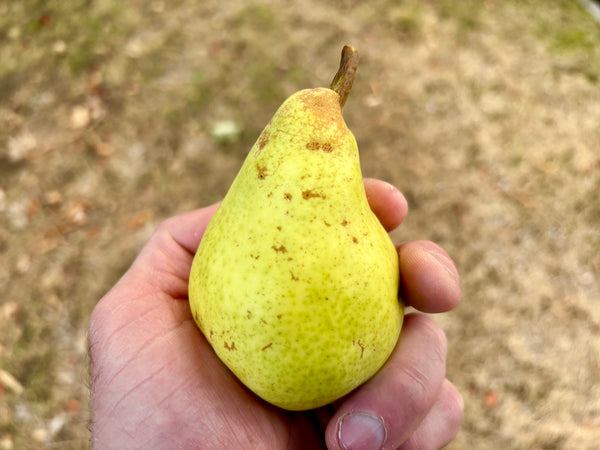
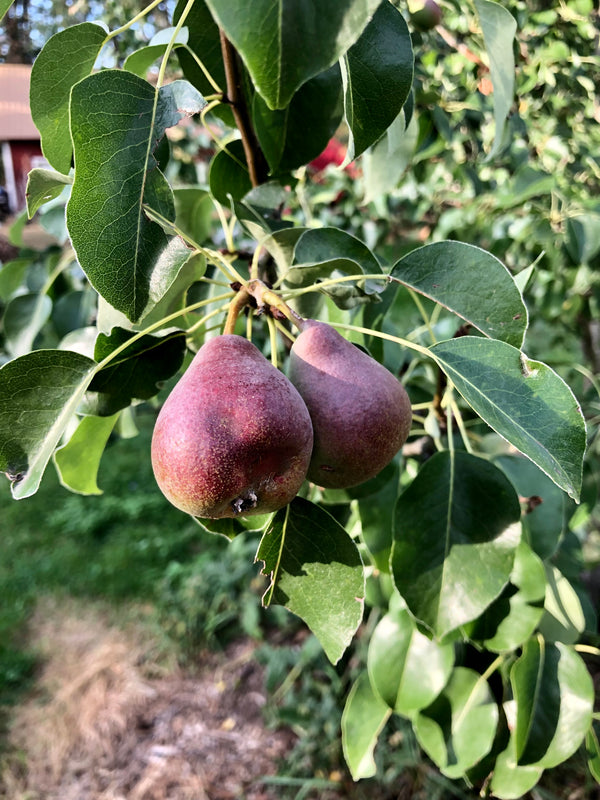
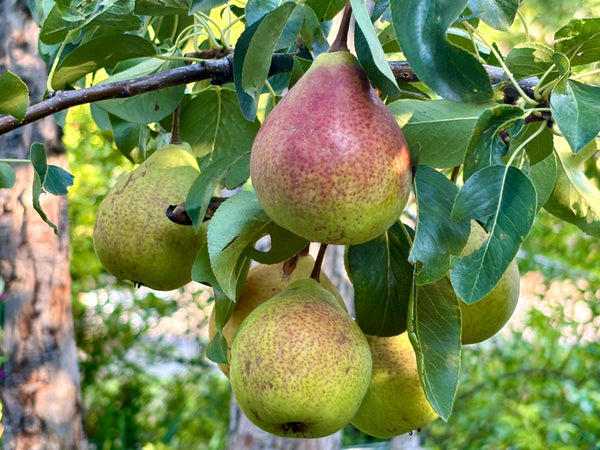
Fruits of Krasnobokaya have a mass ranging from approximately 130 to 180 g (about 4.6–6.3 oz) and a round shape. At harvest, fruits are described as green, becoming golden-yellow as they ripen, with a diffuse red blush covering roughly one-third of the fruit surface, a defining trait reflected in the cultivar’s name.
The flesh is yellow, fine-grained, and becomes very juicy during storage. Flavor was described as balanced sweet-sour, with tasting evaluations assigning the cultivar a score of approximately 4.5 points.
Disease and Pest Resistance
In South Ural research evaluations, Krasnobokaya was reported as resistant to pear scab and pear gall mite, indicating suitability for production systems with reduced reliance on chemical controls.
Winter Hardiness and Climatic Adaptation
In South Ural literature addressing pear assortment improvement, Krasnobokaya is grouped with locally bred cultivars adapted to extreme continental climates. Field observations reported that local pear cultivars experienced freezing damage not exceeding 1 point at temperatures down to −40 °C (−40 °F). While this freezing assessment was reported at the group level rather than for Krasnobokaya individually, the cultivar’s inclusion in this group supports its classification as well adapted to severe winter conditions. Finally, given Les McCartney's experience with Krasnobokaya in Bozeman, Montana, we would rate this a solid zone 2a pear.
Pollination partners
Trees that will pollenize Krasnobokaya Pear
Krasnobokaya Pear needs a different European pear nearby to set fruit. Every tree below blooms at the same time and has pollen that works for it. Plant partners within about 100 feet.
Bloom group
3 of 7 (Early-Mid)
Pollination
Needs a partner
Pollen
Not tested yet
-
 D'Anjou Pear
From $64.99
D'Anjou Pear
From $64.99
-
 Stuttgarter Gaishirtle Pear
From $49.99
Stuttgarter Gaishirtle Pear
From $49.99
-
 Summercrisp Pear
From $34.99
Summercrisp Pear
From $34.99
-
 Ure Pear
From $49.99
Ure Pear
From $49.99
-
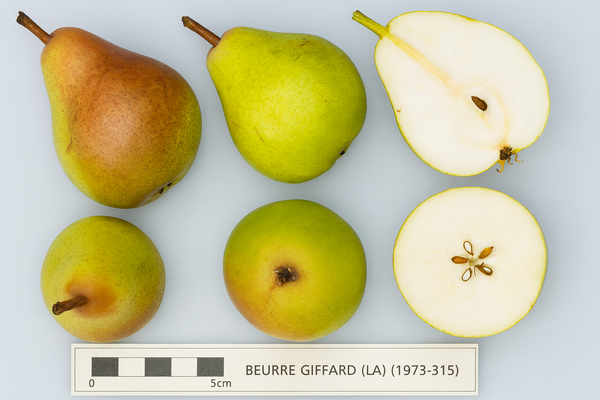 Beurré Giffard Pear
$84.99
Beurré Giffard Pear
$84.99
-
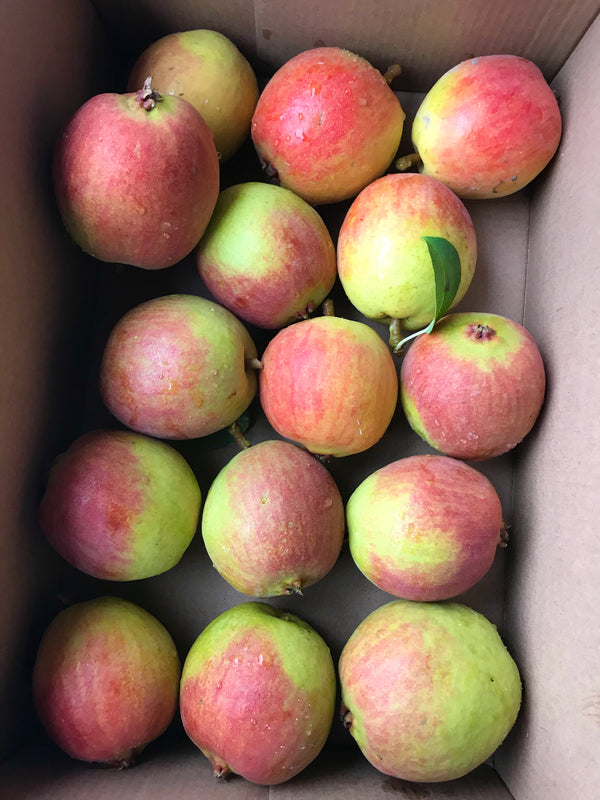 Krazulya Pear
From $44.99
Krazulya Pear
From $44.99
-
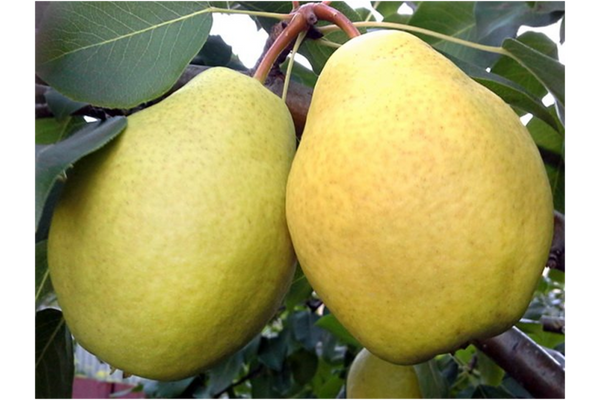 Larinskaya Pear
From $44.99
Larinskaya Pear
From $44.99
-
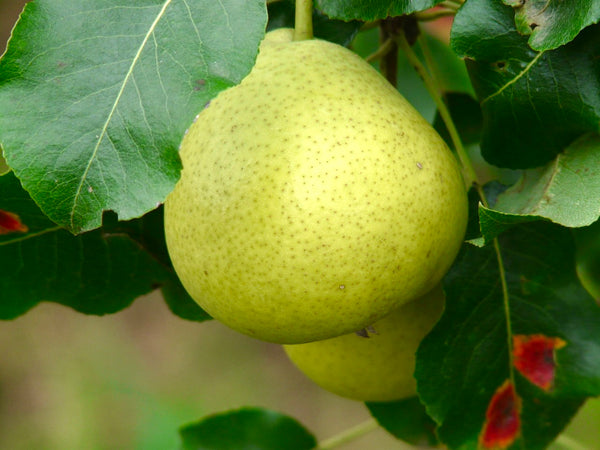 Savignac Pear
From $44.99
Savignac Pear
From $44.99
-
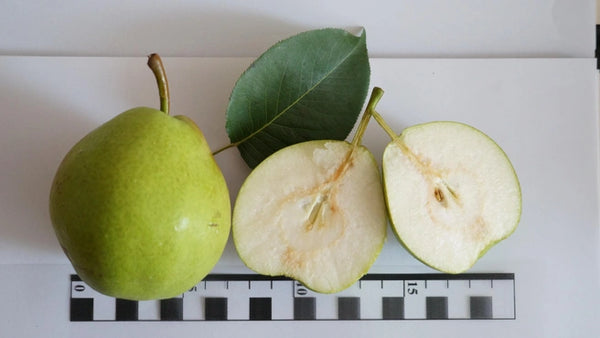 Bolshaya Pear
From $34.99
Bolshaya Pear
From $34.99
-
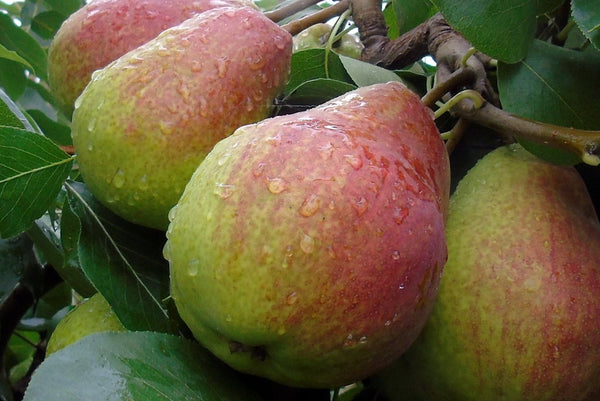 Vekovaya Pear
From $49.99
Vekovaya Pear
From $49.99
-
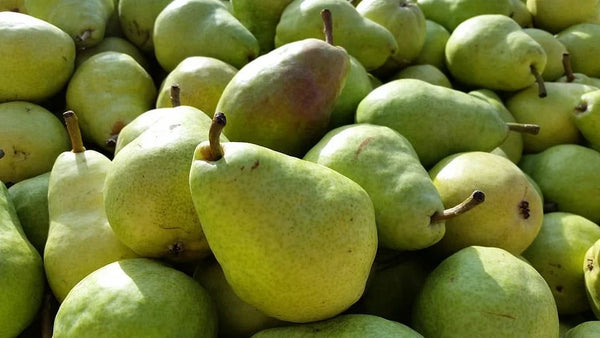 Bartlett Pear
From $64.99
Bartlett Pear
From $64.99
-
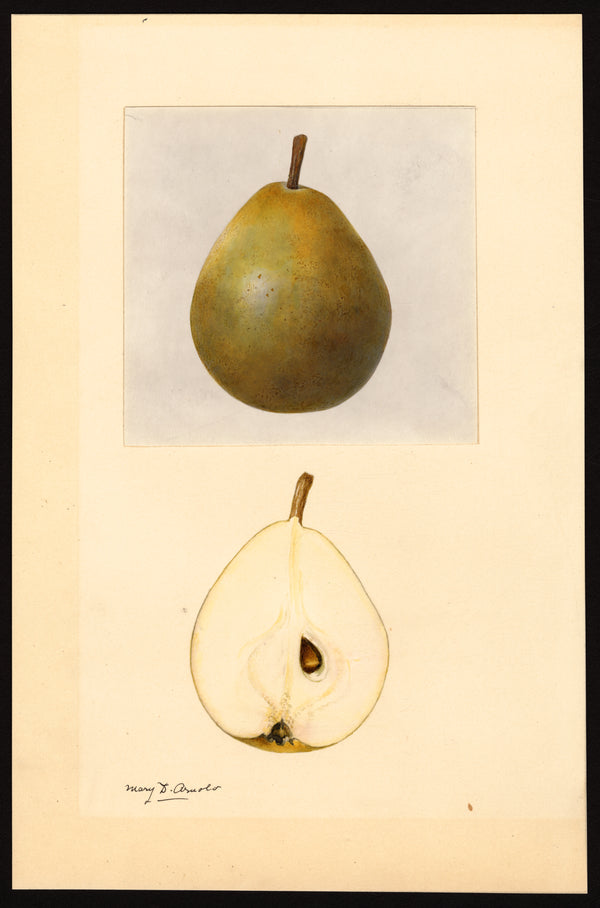 Dana Hovey Pear
From $34.99
Dana Hovey Pear
From $34.99
