
Skip to product information


Kuban Delight Plum
$109.99
Reliable shipping
Flexible returns
Pollination
Needs a partner
Bloom group
3 of 7 (Early-Mid)
Ripening
Will it finish before your first hard freeze?
Check it on the Ripening MapBackground and Origin (from pomological literature)
Kuban Delight (often rendered from Russian as Kuban’skaya Rannyaya Delight or similar trade translations) is a Russian plum selection associated with breeding work from the Kuban region of southern Russia, an area known for intensive Prunus breeding focused on flavor, early ripening, and productivity. In Russian pomological sources and nursery descriptions, Kuban-region plums are commonly described as dessert-quality selections, frequently involving complex hybrid backgrounds that may include Japanese plum (Prunus salicina) genetics and interspecific material, selected for improved flavor and appearance rather than extreme cold hardiness alone.
Published Russian descriptions of Kuban Delight consistently emphasize early to mid-season ripening, attractive fruit coloration, and dessert use, placing it in a class of plums bred primarily for fresh eating quality rather than processing.
(Note: Russian sources typically provide qualitative descriptors—flavor class, fruit appearance, and use—rather than standardized quantitative datasets for this cultivar.)
Ripening Window
In Russian and Eastern European nursery literature, Kuban Delight is described as an early-ripening plum, generally maturing in mid to late summer depending on climate. This aligns with observed ripening in the northern Rocky Mountain region, where fruit reached peak eating quality by August 16th in 2020 under Kalispell, Montana conditions.
Fruit Characteristics (from literature)
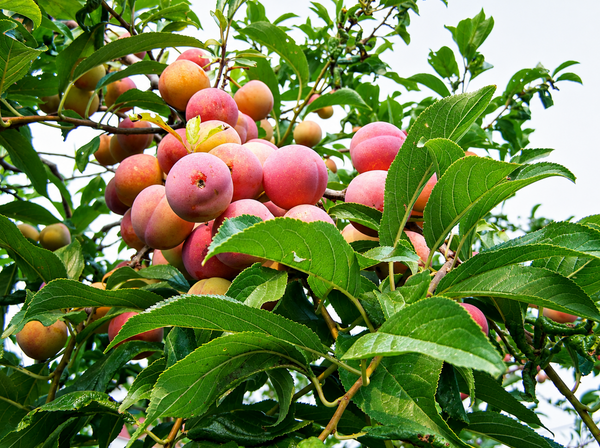
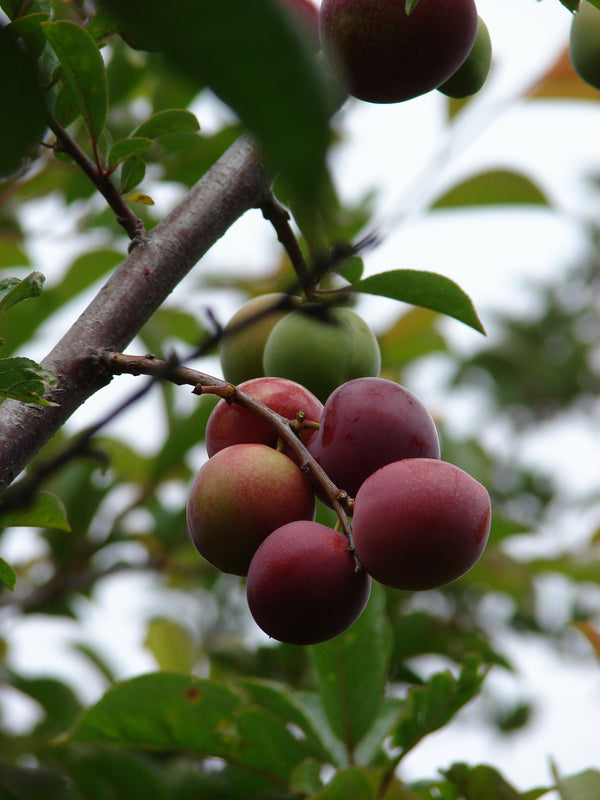
Kuban Delight is described as producing medium to large plums with:
-
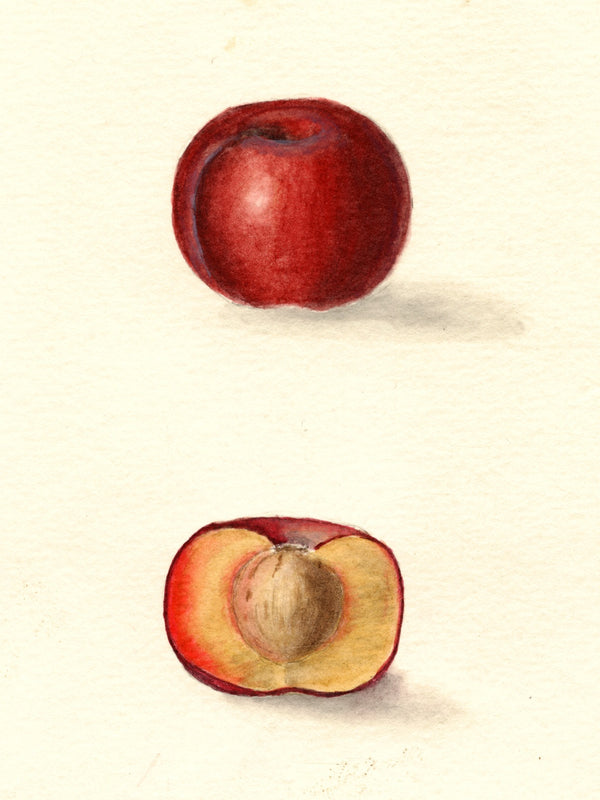
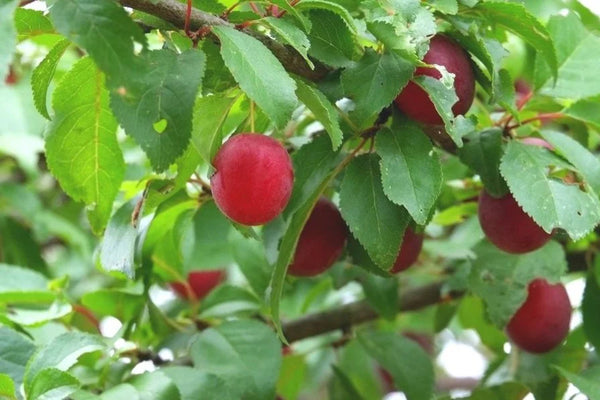
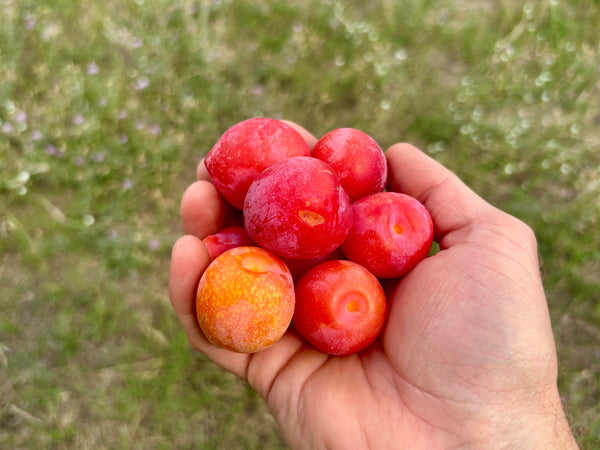
Bright, attractive skin coloration, often with red to dark red tones
-
Yellow flesh, sometimes showing red pigmentation bleeding inward from the skin, a trait commonly noted in high-flavor dessert plums
-
Flesh described in Russian sources as juicy, tender, and aromatic, intended primarily for fresh consumption
Russian nursery descriptions frequently classify Kuban Delight as a “dessert plum”, a term reserved for cultivars considered superior in flavor balance and texture.
Flavor and Eating Quality
Firsthand tasting notes (Luke Ruffner Robinson):
When Luke first tasted Kuban Delight at peak ripeness on August 16, 2020, at Rod McIver’s farm in Kalispell, the fruit made a lasting impression:
“The flavor has a good sweetness with an excellent bit of tartness from the skin that is reminiscent of strawberry, blueberry, and raspberry. A very berry-flavored plum that is at once one of the best plums I’ve ever tried. And the flesh is yellow with red that has bled into the flesh from the skin.”
These observations align closely with how Russian pomology typically characterizes elite dessert plums: high aromatic complexity, balanced acidity, and skin-derived flavor intensity that contributes significantly to the eating experience.
Tree Growth and Productivity
Russian nursery descriptions generally characterize Kuban Delight trees as:
-
Moderately vigorous
-
Productive when mature
-
Suited to intensive orchard systems in regions with adequate heat accumulation
Grower experience in Montana suggests the tree establishes well and fruits reliably once mature, though long-term yield data under extreme cold climates remains observational rather than formally published.
Winter Hardiness and Cold Tolerance
While Kuban Delight was not originally bred for ultra-cold continental climates, real-world grower experience in northwestern Montana provides valuable insight:
-
At Rod McIver’s orchard in Kalispell, Kuban Delight has consistently survived harsh winters without chronic damage.
-
Although Kalispell is somewhat milder than other parts of Montana, the tree showed zero observable winter injury during the January 13, 2024 cold event, when temperatures reached approximately −35°F.
-
No cambial damage, bud loss, or structural injury was observed following that event.
- Solid zone 3b plum, with potentially minor damage in 3a. Possibly even harder to zone 2b with more winter damage, although this is guessing.
This suggests that Kuban Delight may possess greater cold tolerance than expected for a dessert-focused plum, particularly when well established and properly sited.
Summary
Kuban Delight is best understood as a high-flavor Russian dessert plum with:
-
Documented fresh-eating quality emphasized in Russian literature
-
Early to mid-August ripening in northern U.S. climates
-
Exceptional flavor complexity, confirmed by firsthand tasting
-
Better-than-expected winter performance under Montana conditions, including survival of near −35°F without injury. Solid zone 3b plum, with potentially minor damage in 3a. Possibly even hardier into zone 2 (-40F or colder) with more winter damage, although this is guessing.
While formal cold-hardiness trials comparable to Siberian or Ussurian plums are lacking, real-world orchard performance suggests Kuban Delight deserves serious consideration by cold-climate growers seeking elite flavor first, without sacrificing basic winter survivability.
Pollination partners
Trees that will pollenize Kuban Delight Plum
Kuban Delight Plum needs a different hybrid or Japanese plum nearby to set fruit. Every tree below blooms at the same time and has pollen that works for it. Plant partners within about 100 feet.
Bloom group
3 of 7 (Early-Mid)
Pollination
Needs a partner
Pollen
Good pollenizer
-
 Toka Plum
From $49.99
Toka Plum
From $49.99
-
 Kaga Plum
From $54.99
Kaga Plum
From $54.99
-
 Kahinta Plum
$79.99
Kahinta Plum
$79.99
-
 Native American Plum(Bundle of 3)
$99.99
Native American Plum(Bundle of 3)
$99.99
-
 Superior Plum
From $49.99
Superior Plum
From $49.99
-
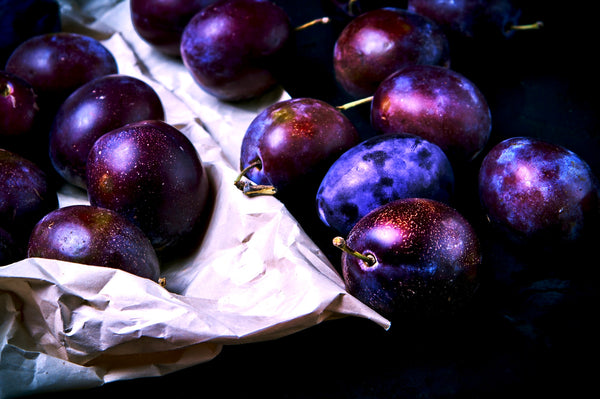 Black Ice Plum
From $44.99
Black Ice Plum
From $44.99
-
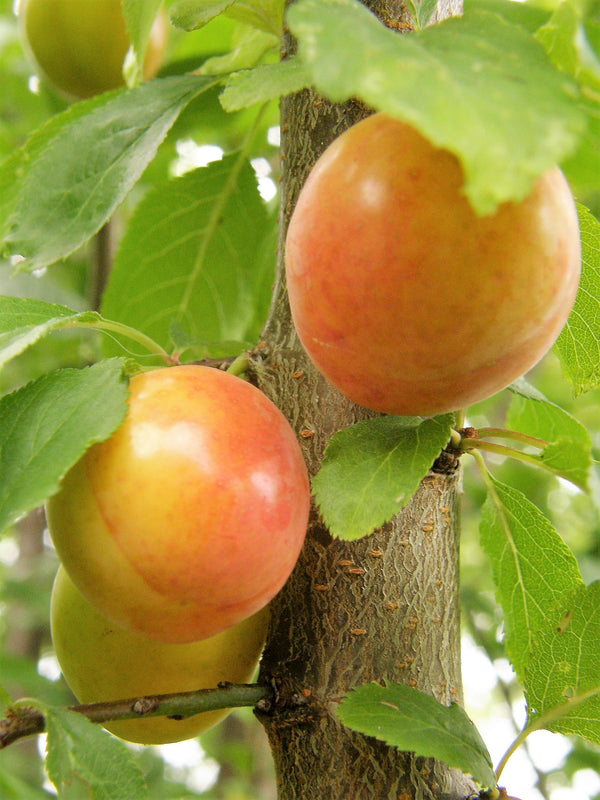 Brookgold Plum
From $59.99
Brookgold Plum
From $59.99
-
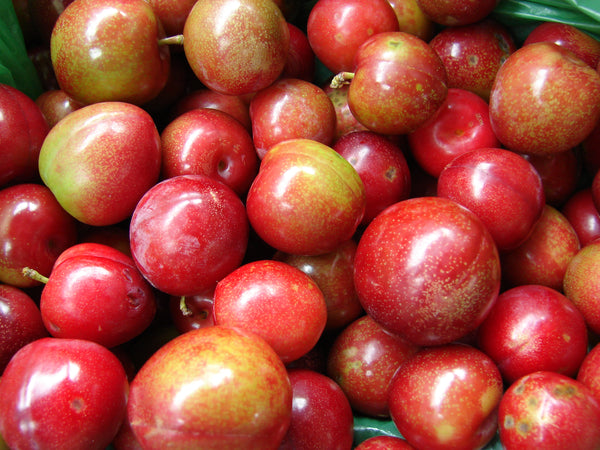 Brookred Plum
From $59.99
Brookred Plum
From $59.99
-
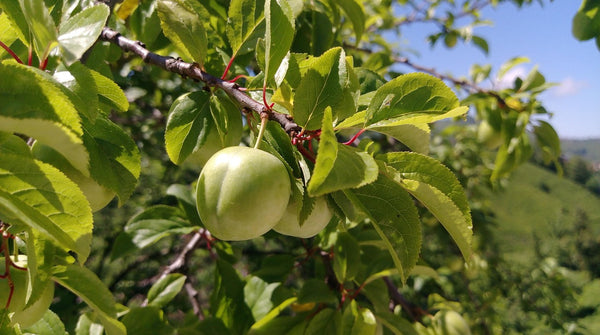 Ptitsin #5 Plum
From $54.99
Ptitsin #5 Plum
From $54.99
-
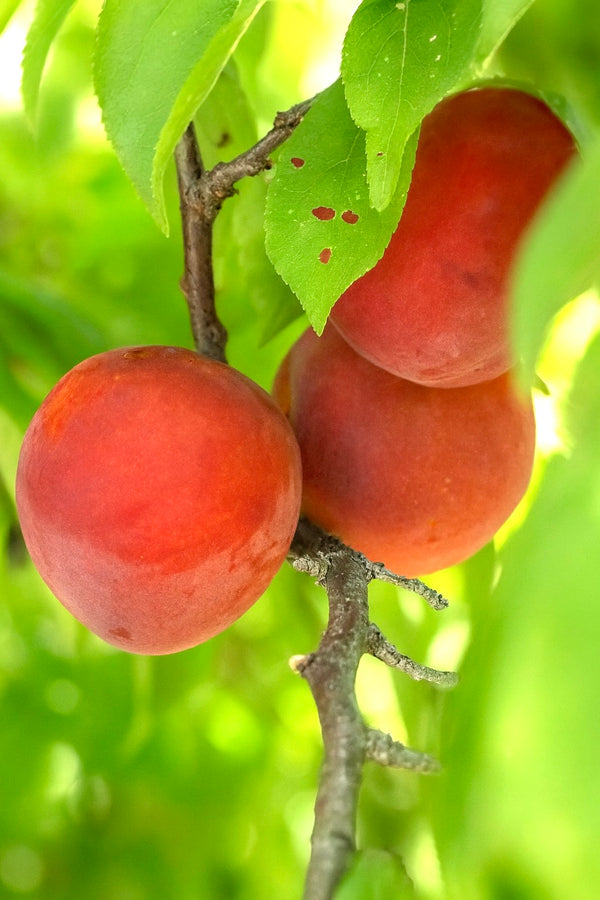 Underwood Plum
From $64.99
Underwood Plum
From $64.99
-
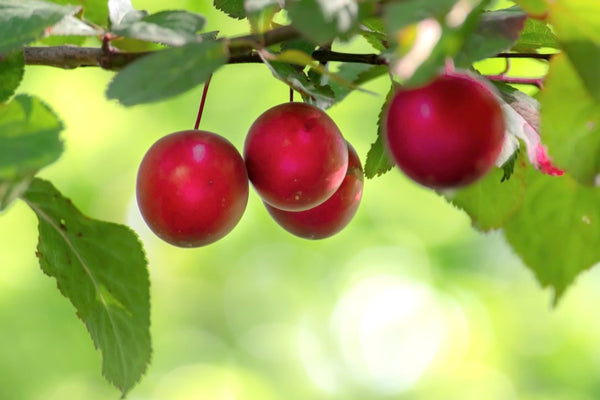 Gracious Plum
From $59.99
Gracious Plum
From $59.99
-
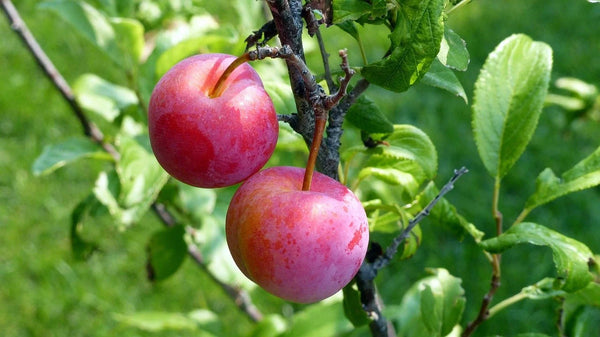 Prairie Red Plum(Bundle of 2)
$74.99
Prairie Red Plum(Bundle of 2)
$74.99
See every pairing on the Plum Pollination Map
Kuban Delight Plum's bloom group is our best estimate. Watch it bloom and tell us what you see.