
Skip to product information
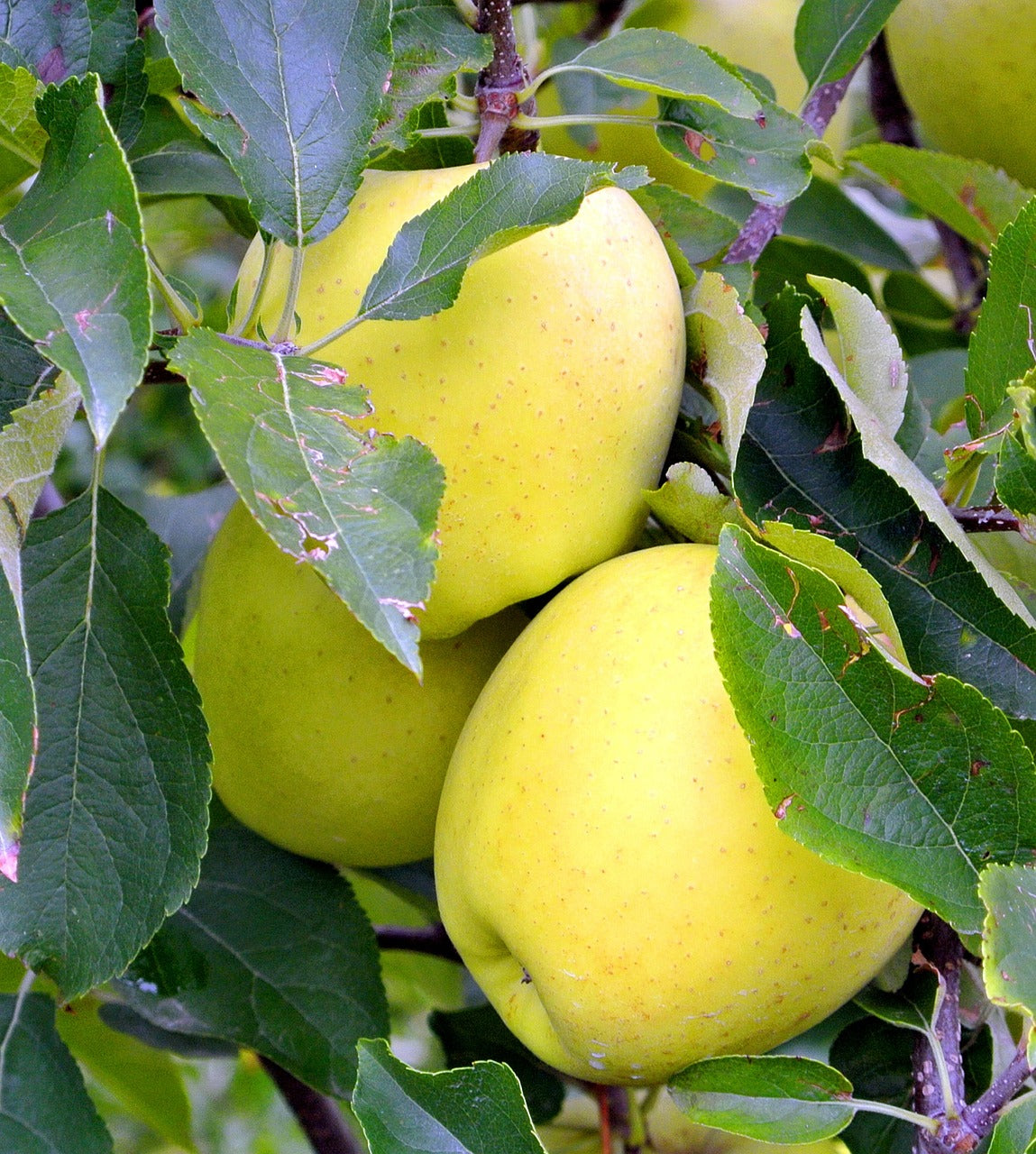
Lodi Apple
$39.99
Reliable shipping
Flexible returns
Overview
Lodi is an early-season apple similar in many ways to its dominant parent, Yellow Transparent, and is best known as an early cooking and sauce apple, though it can also be eaten fresh if you appreciate a sharper early apple. We prefer Lodi as a substitute for Yellow Transparent due to its improved resistance to fire blight (as observed in Montana).
History & Parentage
Lodi originated from a controlled cross of Yellow Transparent × Montgomery, with Yellow Transparent clearly expressing as the dominant parent. The cross was made in 1911, and the cultivar was formally introduced in 1924 by the New York State Agricultural Experiment Station. It was developed to improve on Yellow Transparent while retaining its early-season utility.
Fruit Quality & Uses
Lodi produces a reliable, extra-early crop of large green to yellow-green apples with a sharp, subacid profile. It excels for cooking, applesauce, pies, and other kitchen uses where early apples are prized. While claims that Lodi produces larger, firmer, or longer-keeping fruit than the mother plant (Yellow Transparent) are difficult to validate here, its combination of disease resistance and abundant, early cooking apples makes Lodi a serious contender in northern kitchen orchards.
Growth Habit & Spacing
The tree is vigorous and productive. Final spacing depends on rootstock and training system, but as a practical baseline, plan for approximately 15 ft. spacing for trees on Bud 118 rootstock (12 ft. for tighter spacing/more pruning), and 18-20 ft. on full size rootstock (possibly even tighter with Spring and maybe some summer pruning).
Pollination
Lodi is not self-fertile and requires cross-pollination from another apple variety with overlapping bloom, following standard apple pollination requirements. Consider early season apples as pollenizers, such as Zestar!, Norda, Norkent, Norson, Carroll, Dearborn's Unknown, Yellow Transparent, Pristine, or even some of our applecrabs, such as Martha, Rescue, Kerr, Trailman, and others.
Cold Hardiness
Lodi is hardy to −45°F, according to the legendary Montana horticulturalist, pomologist, and nurseryman Roger Joy of Corvallis, Montana. While many mainstream sources list Lodi more conservatively, this firsthand regional knowledge places it among the hardiest early apples available and helps explain its long-standing reliability in cold northern climates. This also tracks given its parentage. Yellow Transparent is hardy to -50°F more, which is where it gets its hardiness. Lodi is a solid zone 2b, possibly even 2a.