
Skip to product information
Newtown Pippin Apple
$59.99
Reliable shipping
Flexible returns
Overview
Newtown Pippin is one of the oldest American apples, originating as a chance seedling in Newtown (now Elmhurst), Queens / Long Island, New York in the late 1600s to early 1700s. It has long been regarded as a high-quality dessert apple with exceptional keeping ability and was historically prized for winter use after extended storage.
History & Parentage
Parentage is unknown (seedling origin). The cultivar has circulated under several names, most notably Albemarle Pippin, reflecting its long cultivation history in Virginia’s Albemarle region. Sources commonly distinguish Green Newtown and Yellow Newtown forms, which are often treated as closely related strains or sports rather than clearly separate cultivars in all references.
Fruit Quality & Uses
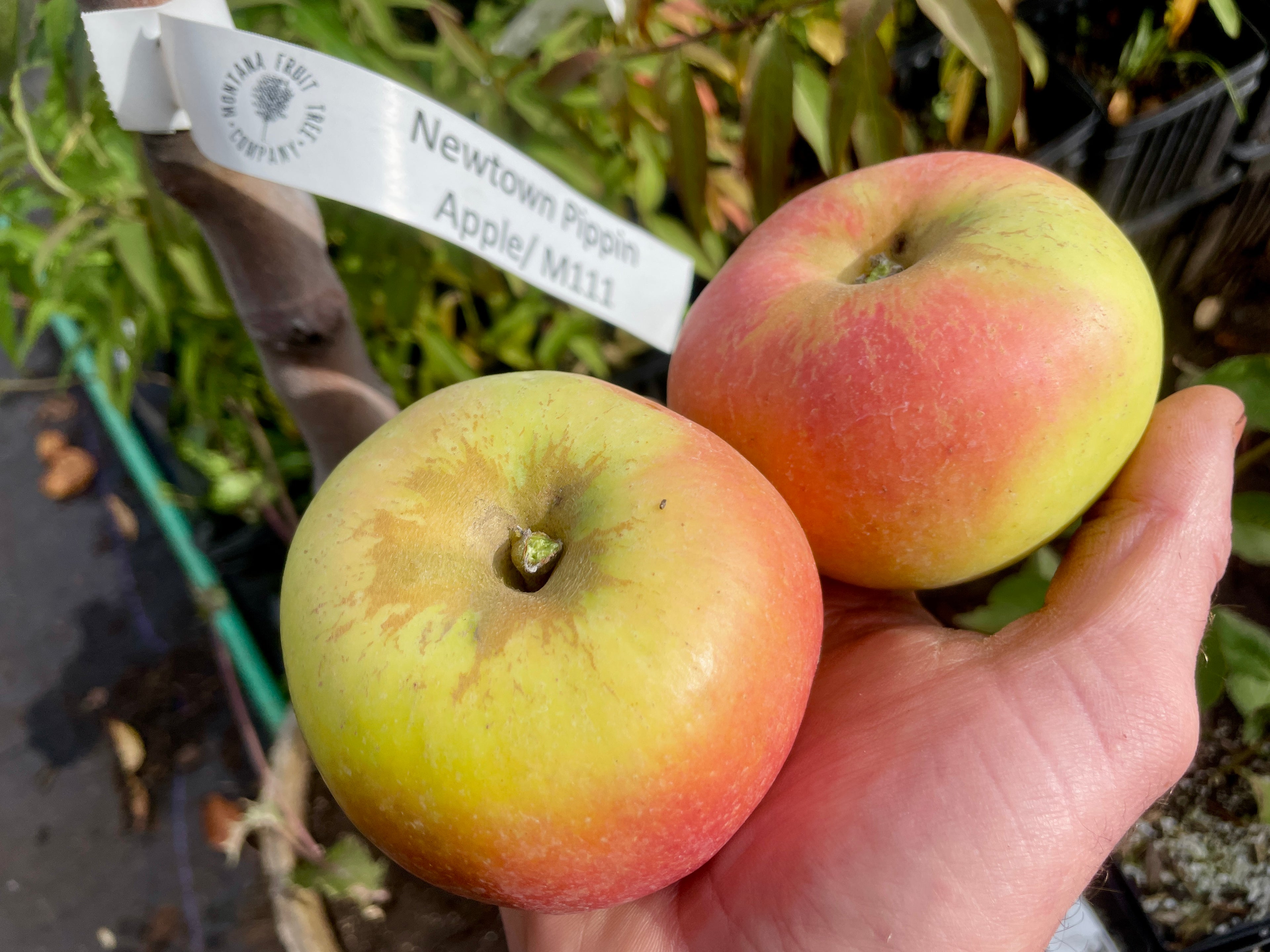
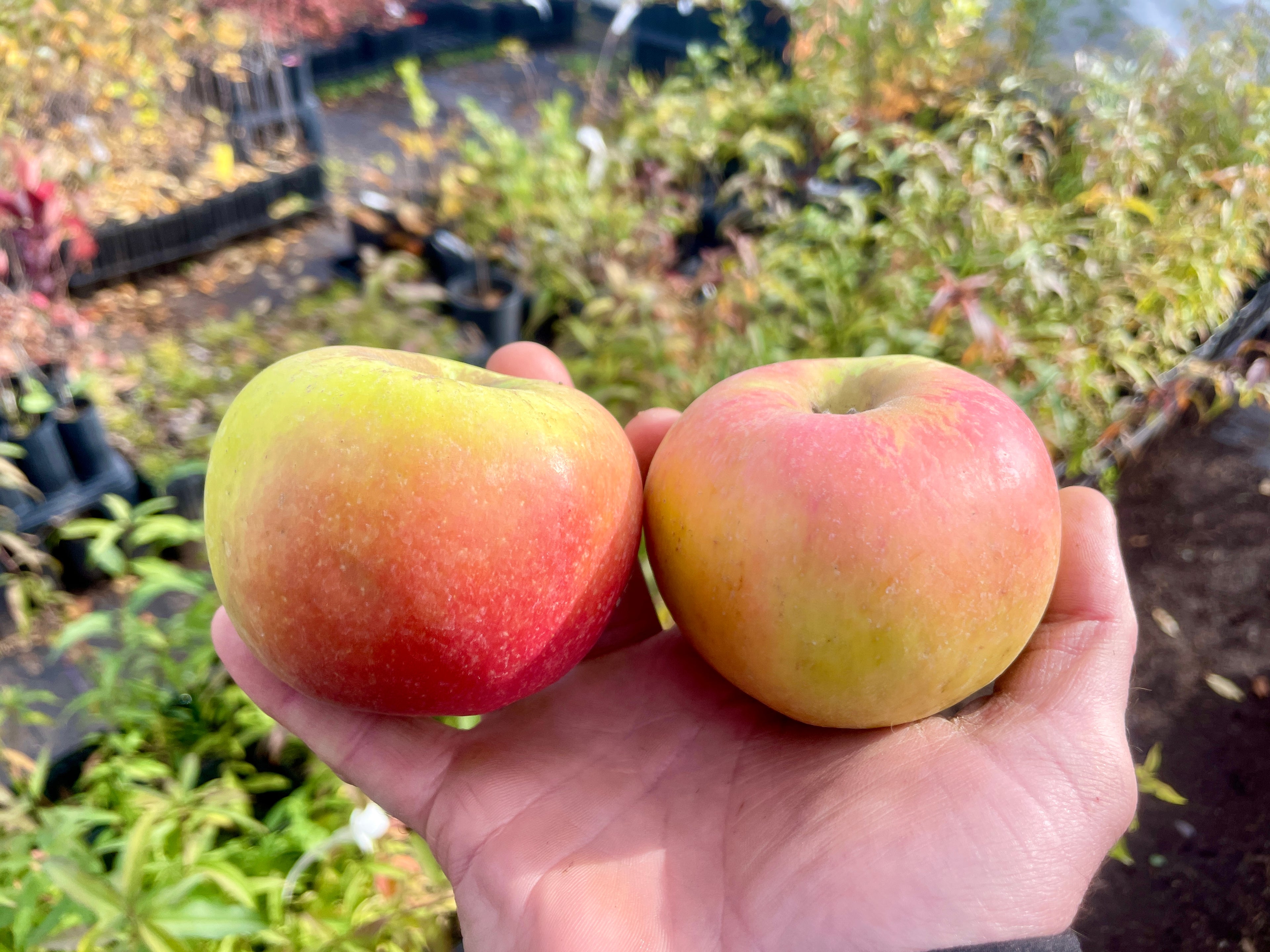
Newtown Pippin is typically described as green to green-yellow, often with light russeting, and firm yellowish flesh. All the Newtown's we have grown in Missoula, are yellow with a nice blush when ready and are very pretty (see photos).
Storage taste notes (Luke Ruffner Robinson):
Fruit harvested in early fall (specifically on Oct. 22nd in Missoula) and stored under refrigeration until late February was tasted fresh on 2/22/25. After more than four months in cold storage, the apple remained crisp and crunchy, with no mealiness. The flavor had mellowed into a soft sweetness, with low perceived acidity, yet retained a subtle lemony character on the finish. Flesh texture was fine-grained, clean, and notably crisp, confirming Newtown Pippin’s reputation as a premier long-keeping dessert apple. Overall eating quality at this stage was excellent.
Uses include fresh eating after storage, long winter keeping, and cider production, where Newtown Pippin contributes aromatic complexity and structure rather than sharp acidity. Historically, it was valued precisely because it reached peak quality after extended storage rather than at harvest.
Growth Habit & Spacing
Tree vigor and final size depend heavily on rootstock. As a general baseline:
-
Semi-dwarf systems: ~12–15+ ft
-
More vigorous or standard systems: ~18–20+ ft
Pollination
Newtown Pippin is self-sterile and requires cross-pollination. Plant with another diploid apple cultivar with overlapping bloom. Some examples of pollenizers we offer for Newtown Pippin include: 9-22 End, Alexander, Arkansas Black, Carroll, Cortland, Cox Orange Pippin, Crimson Beauty, Frostbite, Freedom, Empire, and many other mid-season blooming apples.
Cold Hardiness
Most places online list Newtown Pippin as a zone 4 apple. Ours have done well in a warm spot of Missoula that has not experienced sub-30F temps. So we are not necessarily sure if it would survive -30F or colder temps. For now we are listing it as a zone 4 apple until we know that it has survived colder temps. Therefore, this would only be for the warmest valleys in Western MT, such as Missoula, Bitterroot, Mission, Flathead, and Clark Fork, and should be sited in areas that avoid depressions/preferably up on a bench and out of where frost settles.