
Skip to product information
Nova Pear
$34.99
Reliable shipping
Flexible returns
Overview
Nova is a decently cold-hardy European pear introduced through St. Lawrence Nurseries and is widely regarded as one of the better fresh-eating pears available for colder climates. It is valued for its excellent fruit quality, precocity, and reliable performance where many dessert pears struggle.
History & Parentage
Nova was introduced by St. Lawrence Nurseries and named by Bill MacKentley after his daughter, Nova. While the exact parentage is not formally documented in published breeding records, Nova has long circulated in cold-climate nursery trade based on performance rather than pedigree.
Fruit Quality & Uses
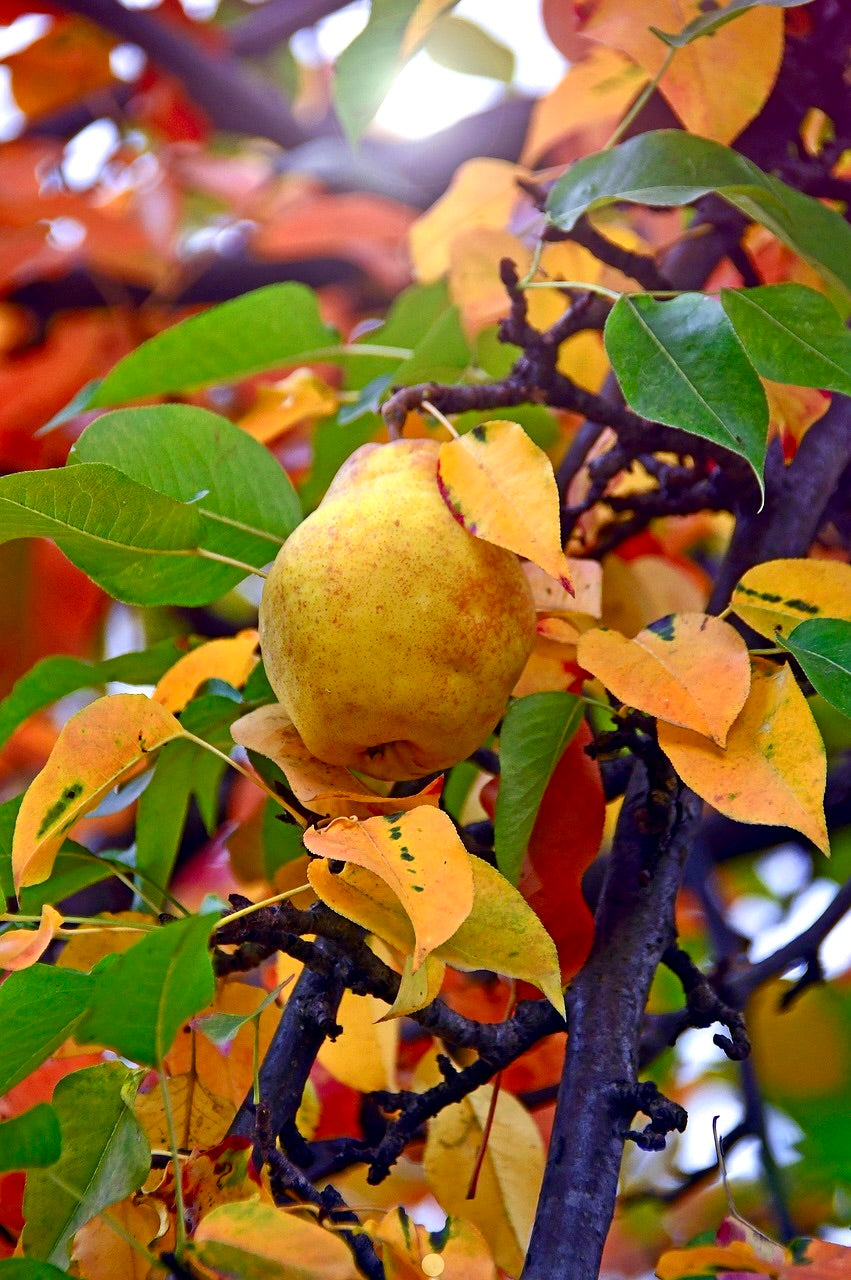
Nova produces large, round pears with melting, juicy flesh and good to excellent eating quality. It is considered among the best fresh-eating pears for cold regions. The fruit may be used either green or fully ripe, offering flexibility in harvest timing. Pears hang well on the tree and ripen around mid-September in the Bitterroot Valley, developing a yellow skin as they mature. Nova is also suitable for kitchen use, though it is primarily valued as a dessert pear.
Growth Habit & Spacing
Trees are described as low vigor, spreading, and precocious, making them well suited to smaller plantings and easier long-term management. Standard pear spacing applies depending on rootstock, but 15–20 ft is a practical range for semi-dwarf to standard systems, with wider spacing improving airflow and light penetration.
Pollination
Nova is often described as self-fruitful, which is somewhat uncommon among European pears. Even so, fruit set and consistency are typically improved when planted with another pear that overlaps bloom. Hudar, Ure, Flemish Beauty, Golden Spice, or any of the Russian pairs would serve well as a pollenizer for Nova.
Cold Hardiness
Some list Nova as a zone 2 pear, although it is more likely zone3. We have obrserved Nova survive at -38F in Stevensville, MT without any winter injury and situated in a lower spot where frost settles more readily. That said, growers in Fairbanks have not had good success with Nova. Could work in eastern MT with appropriate site selection and frost drainage, but if your areas consistently drops below -40F, stick with the Russian varieties.