
Skip to product information


South Dakota Plum
$49.99
Reliable shipping
Flexible returns
Pollination
Needs a partner
Bloom group
4 of 7 (Mid)
Ripening
Will it finish before your first hard freeze?
Check it on the Ripening MapOverview
South Dakota plum is an extremely cold-hardy American plum selection valued for its toughness, dependable fruiting, and long history of use across the northern Great Plains. It produces small to medium plums with classic American plum character — highly aromatic, sweet-tart when fully ripe, and especially well suited for preserves, sauces, and fresh eating at peak ripeness. The tree is widely grown in cold continental climates where European and Japanese plums often fail and is also valued as a strong pollenizer for other hardy plums and Asian–American hybrid plums.
South Dakota plum belongs to the American plum species (Prunus americana), a native North American fruit species known for extreme cold tolerance, adaptability, and reliability in harsh environments.
Origin & History
South Dakota plum is best understood as a named regional selection within the American plum species, originating from extremely cold regions of the northern Great Plains. It was selected from hardy native or seedling American plum populations growing in South Dakota for improved fruit quality and reliable production under severe winter conditions.
American plum itself is native to central and eastern North America and historically played a major role in early prairie horticulture. Native populations were widely used by Indigenous peoples and later selected by settlers and experiment stations for fruit production, shelterbelts, and hardy orchard plantings. Because American plums show significant variation when grown from seed, superior individuals were historically identified and propagated locally. South Dakota plum represents one of these hardy regional selections preserved through cultivation.
The selection reflects a broader Great Plains tradition of fruit improvement focused on winter survival, adaptability, and dependable cropping rather than large commercial fruit size. American plum genetics also played an important role in early northern fruit breeding work, including programs in South Dakota, Minnesota, and the Canadian prairie provinces that sought to develop plums capable of surviving extreme continental winters.
Fruit & Uses
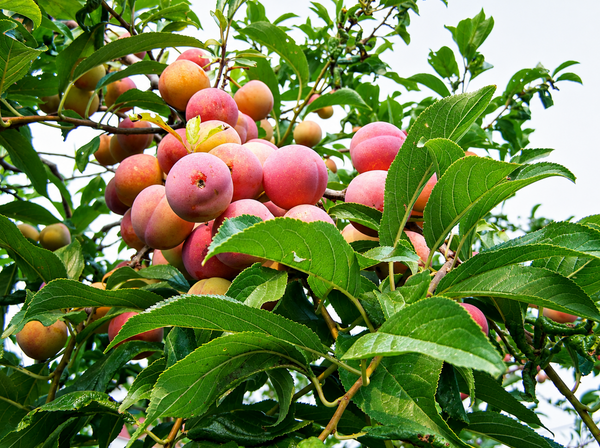
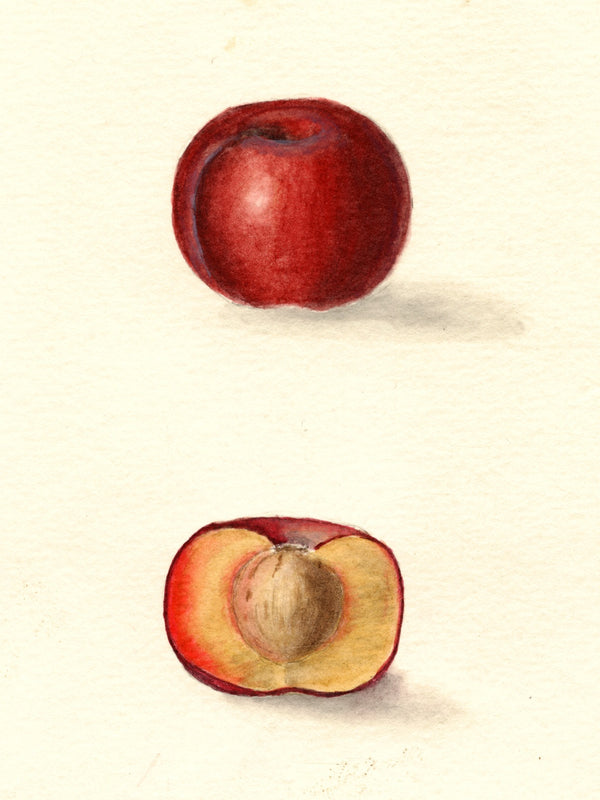
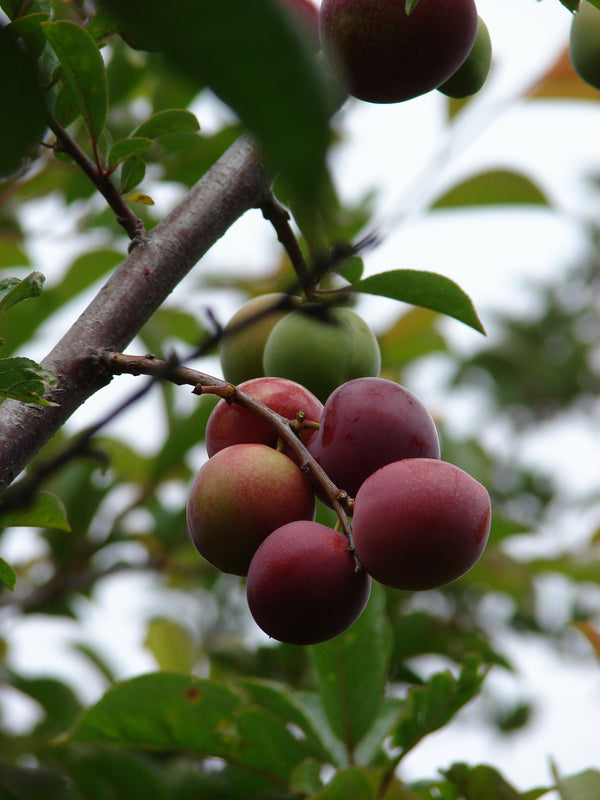
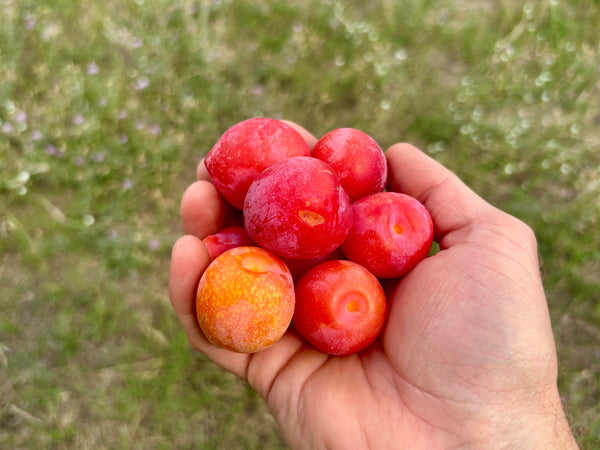
South Dakota plum produces small to medium round fruit with red to reddish skin and yellow flesh. The fruit has a strong sweet-tart flavor typical of American plums, with noticeable acidity balanced by sugars when fully ripe. Flavor is often highly aromatic and intense compared with many commercial plums.
The fruit is well suited for fresh eating when fully tree-ripened but is especially valued for preserves, jelly, sauce, fruit leather, and processing because the strong flavor carries well through cooking. Yields can be heavy under good growing conditions. Fruit typically ripens in late summer.
Growth Habit
South Dakota plum grows as a small tree or large multi-stemmed shrub, typically reaching about 10–20 feet tall with a spreading habit. Like other American plums, it may produce root suckers and can form colonies or hedgerows if unmanaged.
Trees produce abundant white blossoms in early spring, often before leaf emergence, followed by summer fruit. The plant is vigorous and well adapted to wind exposure, drought, and variable soils.
Spacing
For managed single-tree form, spacing of about 10–14 feet between trees is typical.
If grown in a more natural or thicket-form system, spacing of 16–20 feet or more allows for spreading growth and suckering.
Pollination
South Dakota plum is not self-fertile and requires cross-pollination from another compatible plum with overlapping bloom.
As an American plum type, it is compatible with other American plums and many cold-hardy Asian–American hybrid plums commonly grown in northern climates.
Reliable pollenizers include:
Native American plum and Prairie Red plum, which share compatible genetics and bloom timing.
Asian–American hybrid plums such as Toka, Black Ice, Hanska, Superior, Pipestone, Underwood, and Alderman. These hardy hybrid plums commonly overlap bloom with American plum types in cold climates and are widely planted together for reliable fruit set.
Planting at least two genetically distinct hardy plums within bee flight distance provides the most consistent pollination.
Cold hardiness
South Dakota plum was selected from extremely cold Great Plains conditions and is highly adapted to severe continental winters. Can survive temps into the -40s. Maybe not below -45F, though. As a selection of American plum, it is suited to very cold climates and performs reliably in northern orchard regions where winter survival is critical. Zone 2b.
Other Notes
American plum types are valued not only for fruit production but also for ecological benefits including pollinator support, wildlife habitat, and ornamental spring bloom. The blooms are amazing in Montana in the Spring. Especially in Eastern Montana. Head out down 310 south of Billings in the Fromberg/Bridger/Belfry area towards the end of May and you'll see all the native american plums along the irrigation ditches in bloom. An incredible sight. Trees show strong adaptability to challenging conditions but may sucker and spread over time.
South Dakota plum represents a traditional hardy prairie fruit selection emphasizing winter survival, strong productivity, and adaptability rather than large commercial fruit size, making it well suited to cold-climate orchard systems and homestead plantings.
Pollination partners
Trees that will pollenize South Dakota Plum
South Dakota Plum needs a different hybrid or Japanese plum nearby to set fruit. Every tree below blooms at the same time and has pollen that works for it. Plant partners within about 100 feet.
Bloom group
4 of 7 (Mid)
Pollination
Needs a partner
Pollen
Good pollenizer
-
 Toka Plum
From $49.99
Toka Plum
From $49.99
-
 Kaga Plum
From $54.99
Kaga Plum
From $54.99
-
 Kahinta Plum
$79.99
Kahinta Plum
$79.99
-
 Superior Plum
From $49.99
Superior Plum
From $49.99
-
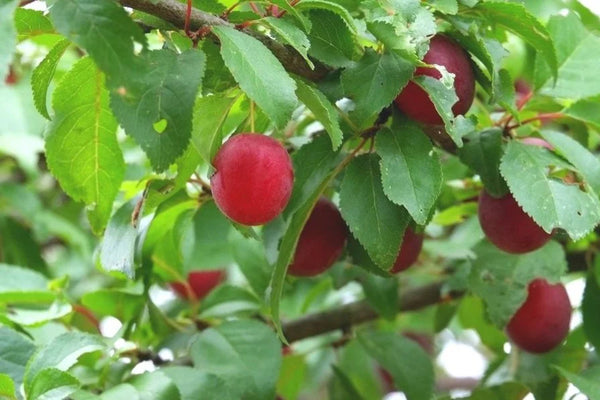 Native American Plum(Bundle of 3)
$99.99
Native American Plum(Bundle of 3)
$99.99
-
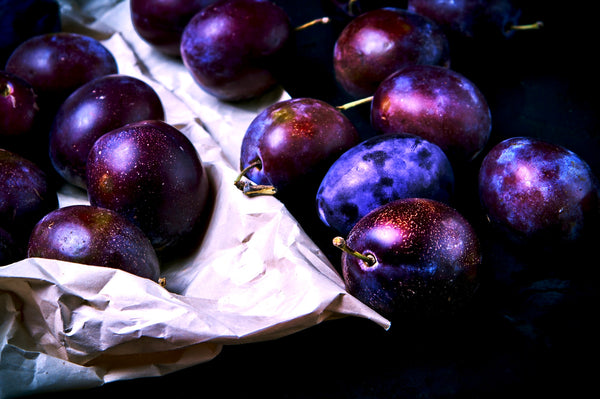 Black Ice Plum
From $44.99
Black Ice Plum
From $44.99
-
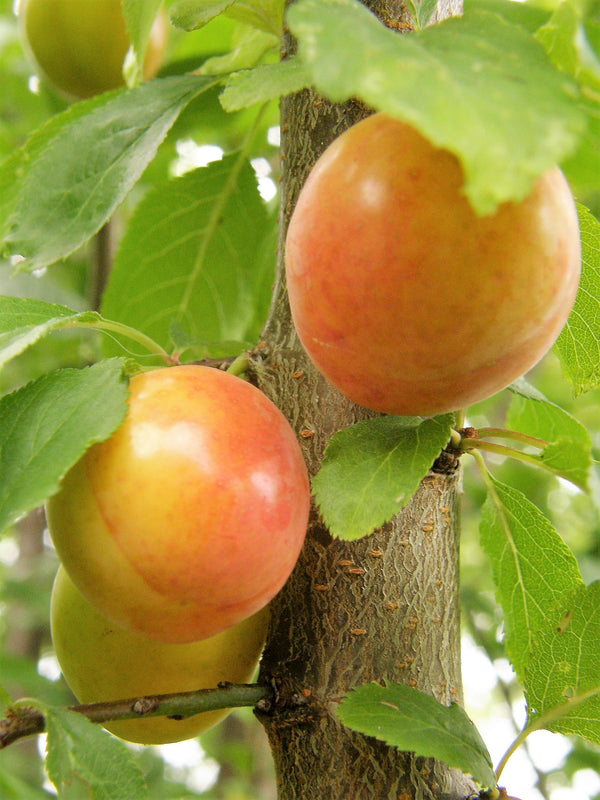 Brookgold Plum
From $59.99
Brookgold Plum
From $59.99
-
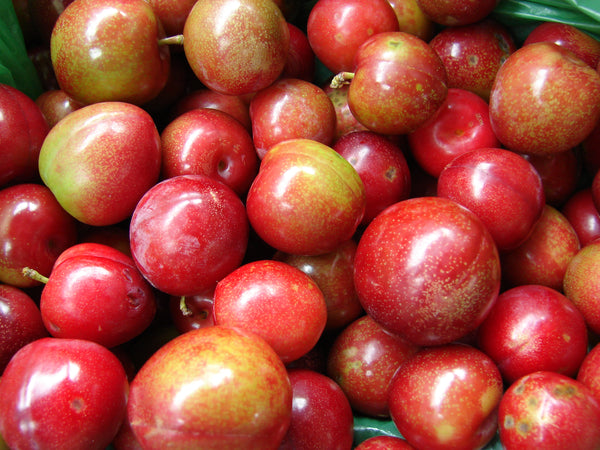 Brookred Plum
From $59.99
Brookred Plum
From $59.99
-
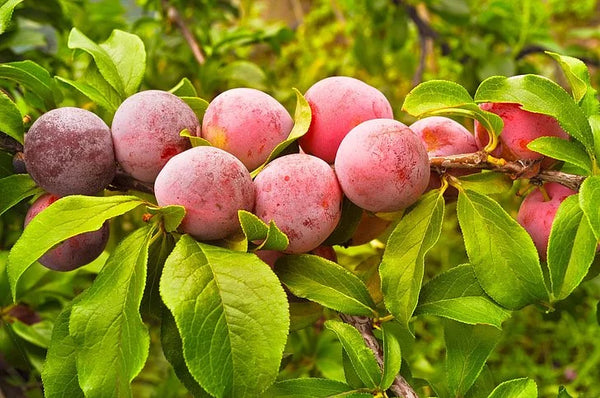 Pipestone Plum
From $59.99
Pipestone Plum
From $59.99
-
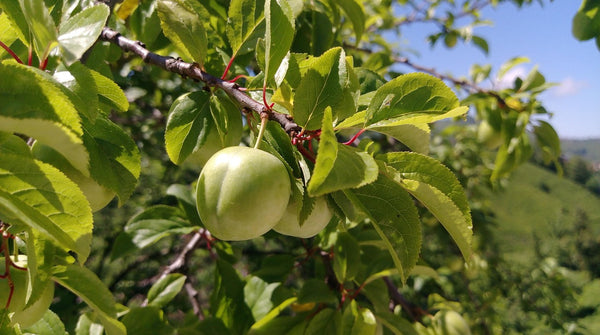 Ptitsin #5 Plum
From $54.99
Ptitsin #5 Plum
From $54.99
-
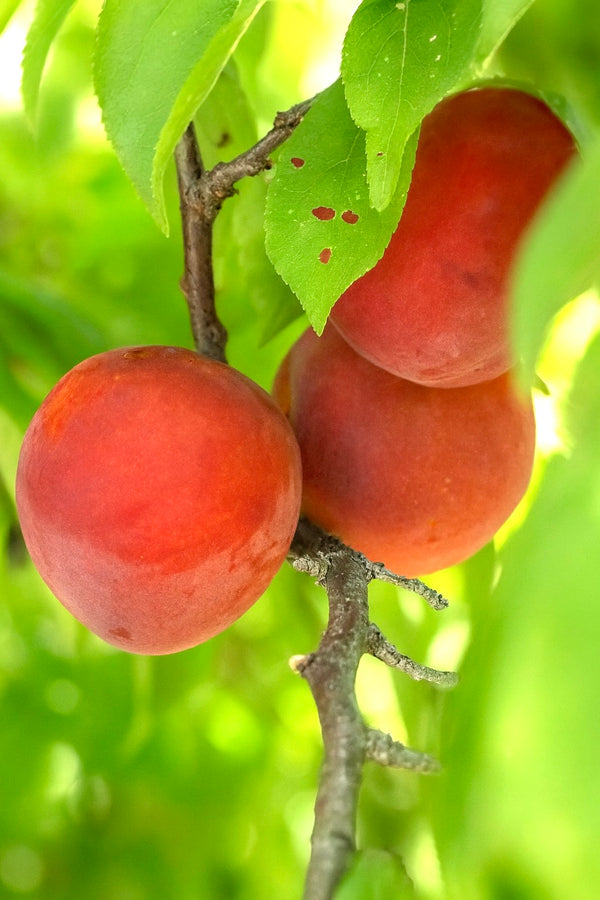 Underwood Plum
From $64.99
Underwood Plum
From $64.99
-
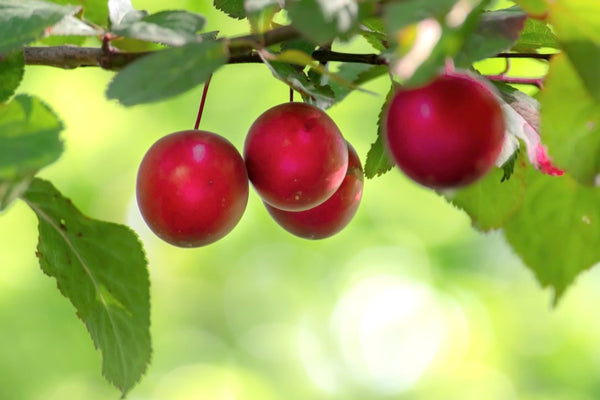 Gracious Plum
From $59.99
Gracious Plum
From $59.99
