
Skip to product information
Superior Plum
$89.99
Reliable shipping
Flexible returns
Overview
Superior Plum is a cold-hardy hybrid plum developed specifically to bring improved fruit quality into colder regions where pure Japanese plums often struggle. Remains one of the better-known Japanese–American hybrids for northern plantings.
Origin & History
Superior Plum was bred by University of Minnesota in 1933 from a cross of ‘Burbank’ × ‘Kaga’.
‘Burbank’ is a Japanese plum (Prunus salicina), while Kaga’ is itself an interspecific hybrid derived from Prunus americana × Prunus simonii.
This makes Superior a complex hybrid combining Japanese plum genetics with American plum and Simon plum ancestry. The breeding goal was to capture the fruit quality of Japanese plums while incorporating the cold tolerance and resilience of American plum material. Because of this background, Superior is often broadly described as a Japanese × American hybrid, but its exact pedigree is more accurately represented as:
Burbank × (americana × simonii).
Superior has been planted in colder regions for decades as part of early efforts to expand reliable plum production beyond traditional Japanese plum climates.
Fruit & Uses
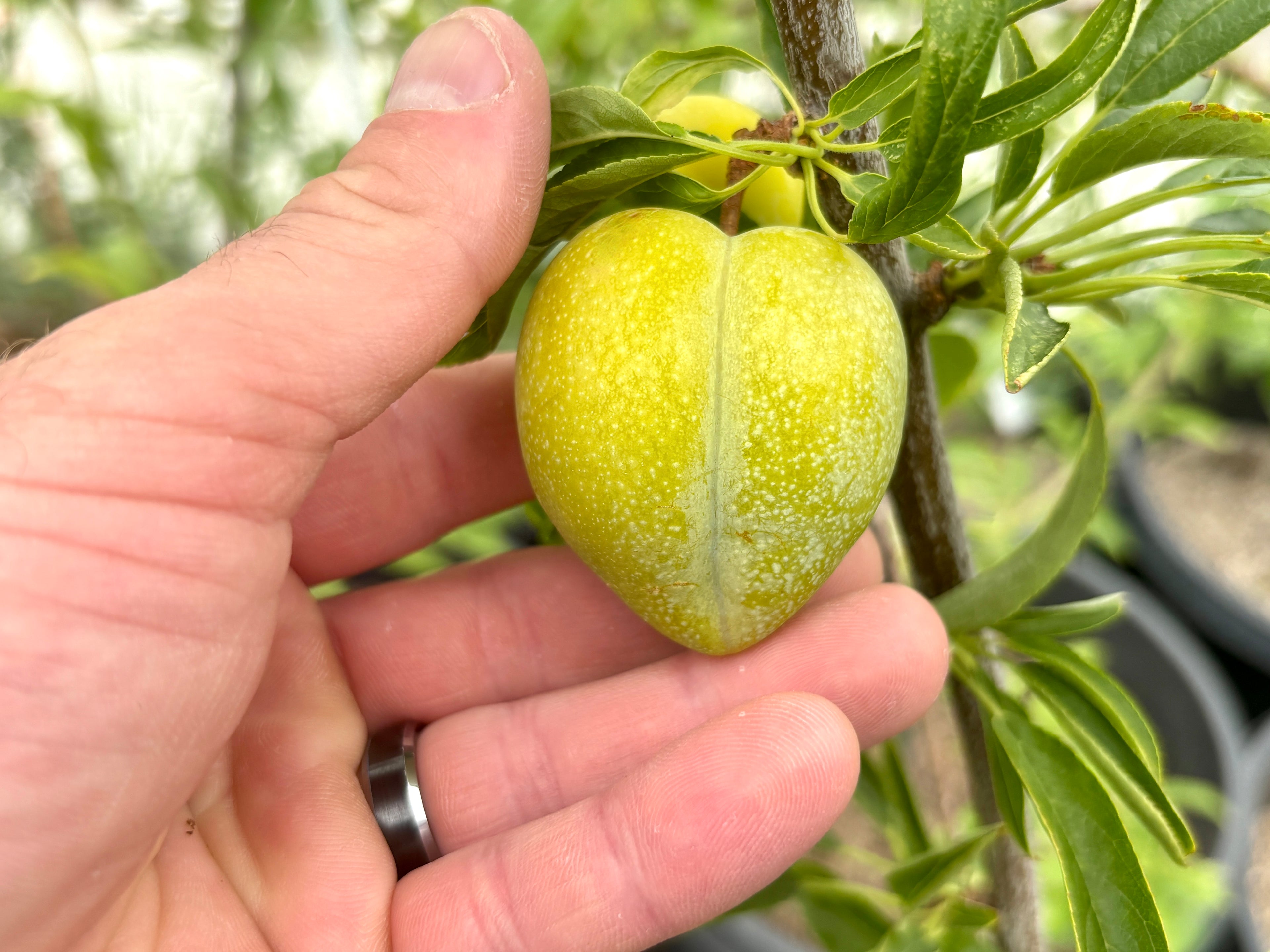
Superior produces red-skinned plums with yellow flesh. The fruit is sweet and suitable for fresh eating, while also working well for preserves, baking, jams, and other kitchen uses. It is generally grown as a dual-purpose plum: enjoyable fresh when fully ripe and practical for processing.
Growth Habit and Spacing
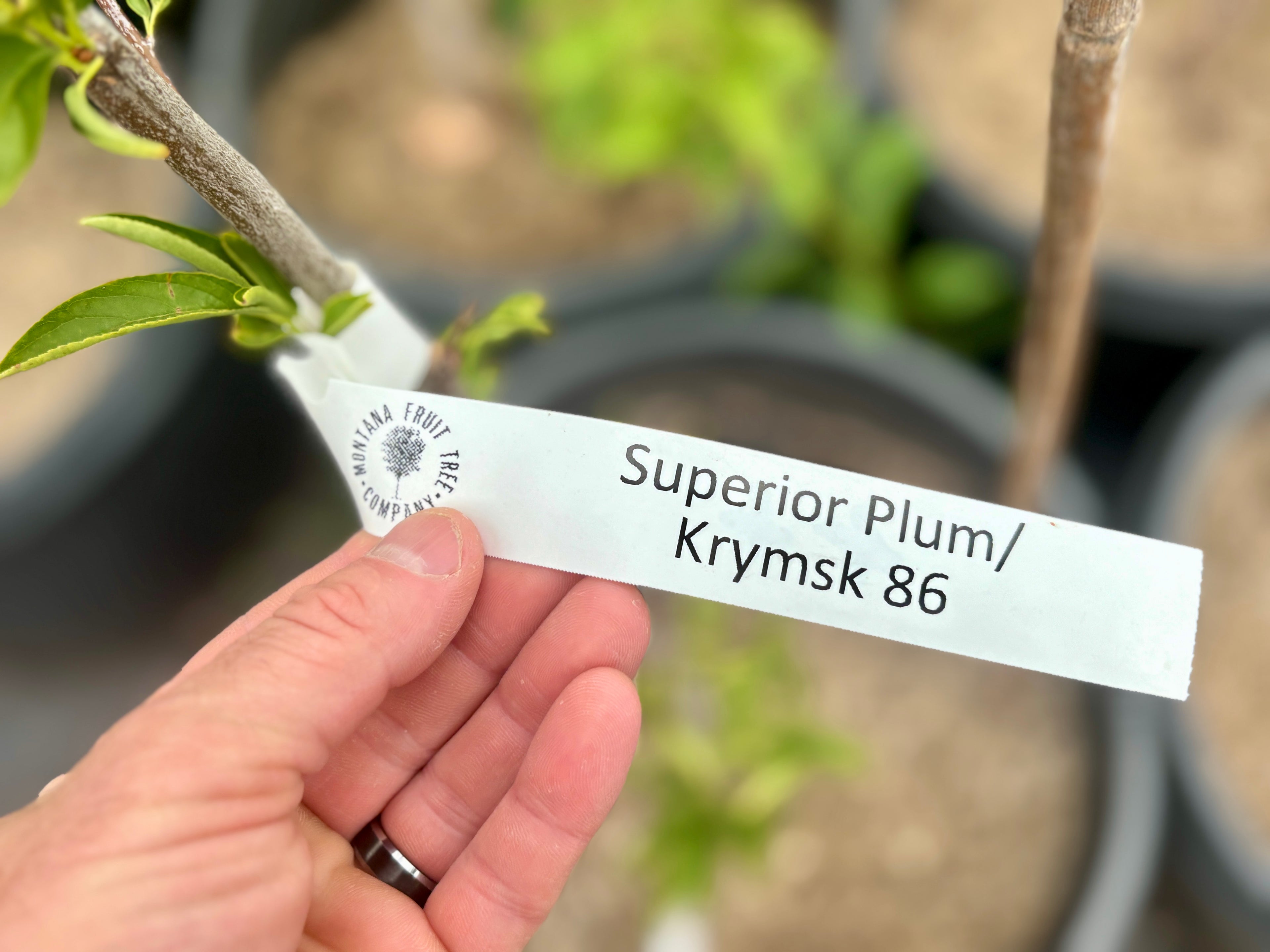
We offer Superior on Krymsk 86 semi-dwarf rootstock. On this rootstock, Superior should be expected to mature as a moderately sized tree rather than a full standard.
A planting spacing range is about 12–15 feet between trees, depending on pruning intensity and desired canopy size. Wider spacing supports airflow and light penetration; tighter spacing requires more active canopy management.
Pollination
Superior Plum is not self-fertile and requires another plum nearby to act as a pollenizer for reliable fruit set. Plant with other hybrid plums that we offer, including Alderman, Black Ice, Pipestone, Underwood, Gracious, as well Toka (often referred to as a universal pollenizer for the hybrid plums). Native and Prairie Red plums can also work as a pollenizer for Superior.
Cold hardiness
Often listed as a hardy plum, exact minimum survival temperatures and the most accurate zone ratings are not known yet in Montana, but given that Underwood, Alderman, and Pipestone have all survived -38F in Stevensville, MT, Superior would likely be part of this ilk. Likely a solid zone 3b plum at the minimum, and even possibly 3a with protection/in a good location (out of frost pooling/depression, up on a bunch, good airflow, etc.).
Other Notes
Superior’s value lies in its breeding: it represents an early and successful attempt to merge Japanese plum fruit quality with American plum toughness. This mixed ancestry is what allows it to function in colder regions where many Japanese plums fail.
We are unsure of Superior's disease resistance in Montana, given we have only been growing it for a few years. As with most plums, long-term success depends primarily on site selection, spacing, pruning for airflow, and orchard sanitation to manage common stone-fruit diseases such as bacterial canker and brown rot.