
Skip to product information
Taylor Apple Pear
$39.99
Reliable shipping
Flexible returns
Overview
Taylor Apple Pear is an Asian pear selected for extreme cold tolerance and Taylor stands out as one of the hardiest, if not the hardiest Asian pear that we know of. While the flavor is apparently very good, we have not yet tasted this variety firsthand.
Origin & History
Taylor Apple Pear circulates as a named cultivar in the cold-climate fruit nursery trade and has been marketed as an “Asian pear” or “apple pear” due to its round shape and crunchy texture. Some nurseries describe it as an introduction associated with Green Barn Nursery, but we couldn't find any credible published breeding record that documents a specific cross or named parents. For that reason, it is most accurate to treat Taylor Apple Pear as a named selection with an unpublished pedigree rather than a formally documented breeding-program cross.
Fruit & Uses
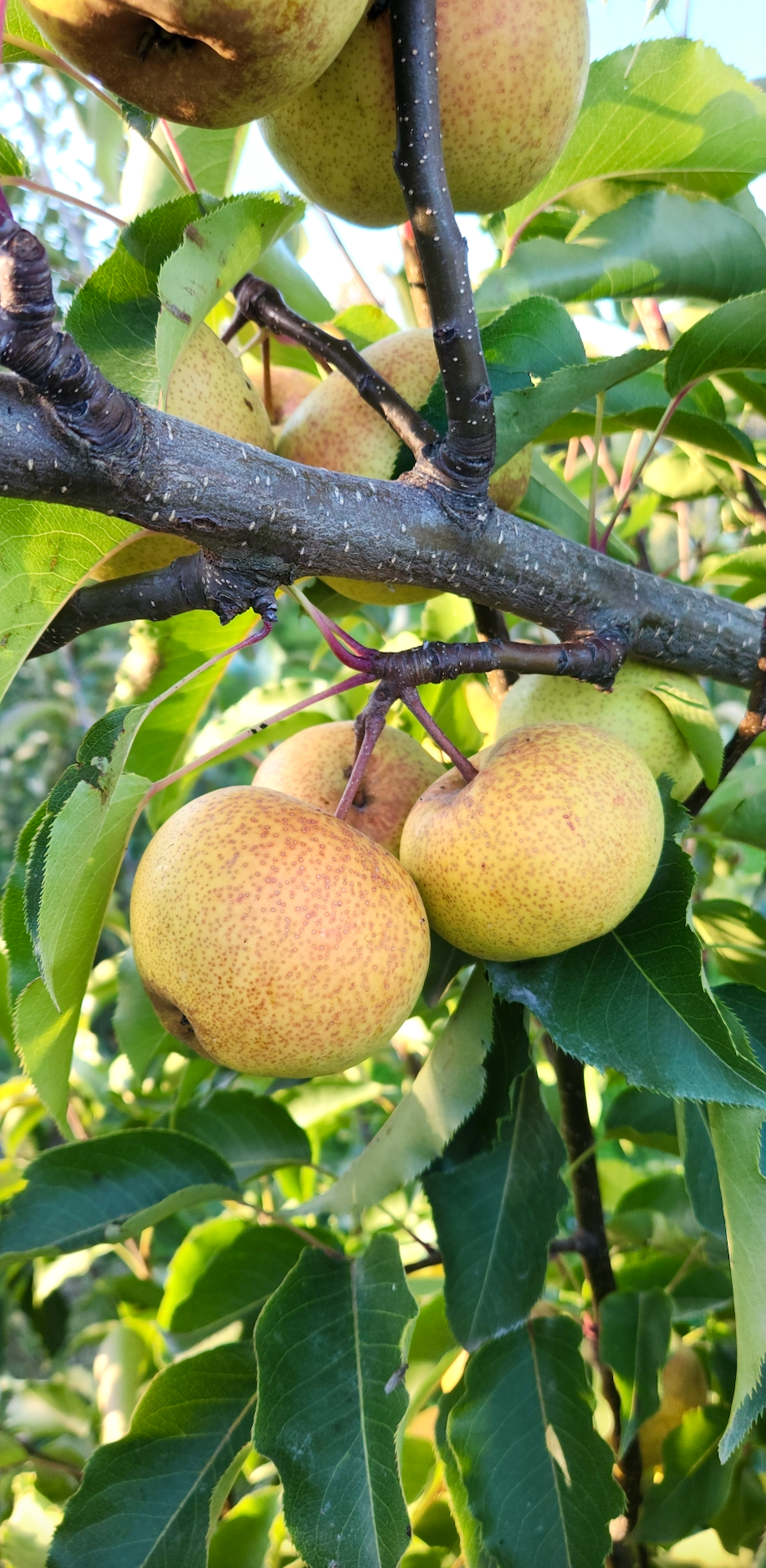
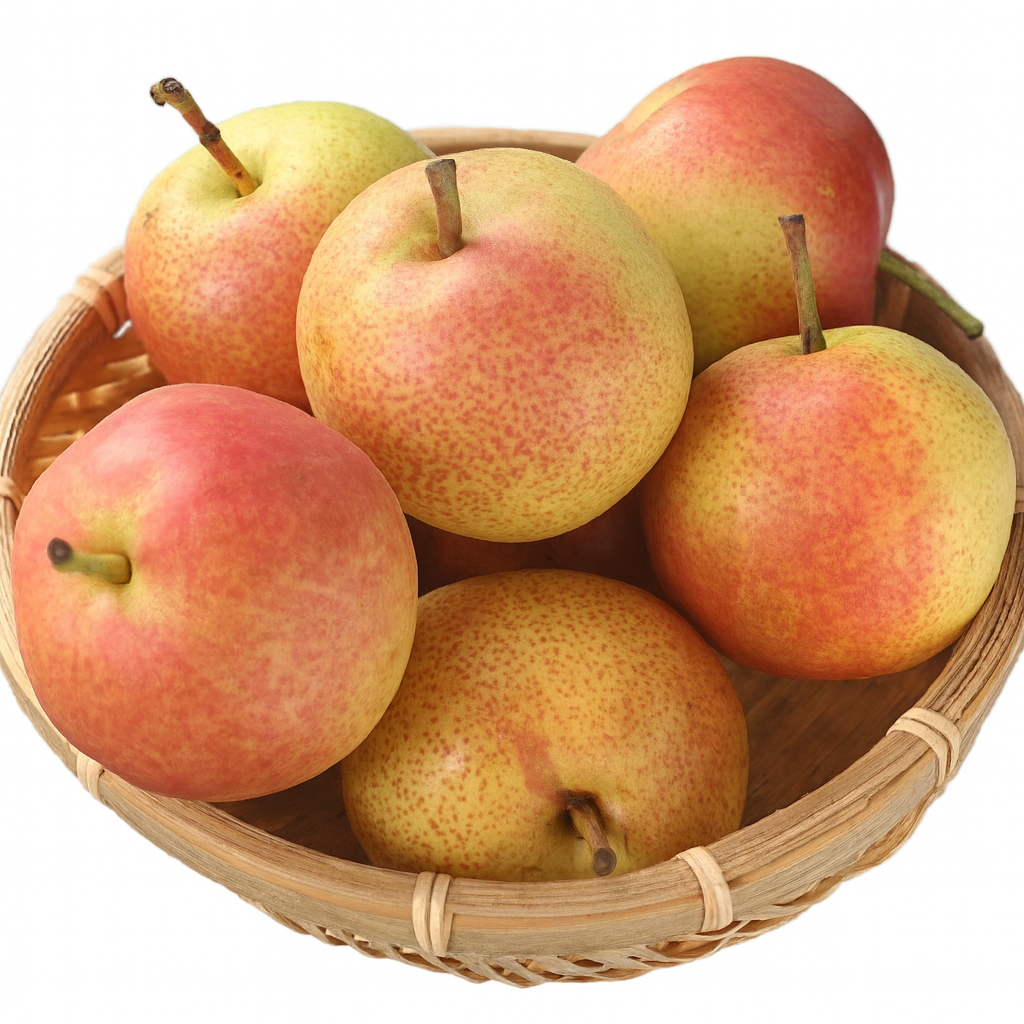
Fruit are commonly described as round, green to yellow-green with a light blush, ripening in the late season (often late September into October depending on climate). The defining characteristic is texture: firm, crisp, and juicy. It is best used fresh—sliced and chilled—and it also holds up well for fresh culinary uses where you want crunch rather than softening.
Growth Habit & Spacing
Fruits are more compact than many European pear trees, with heavy spring bloom followed by firm, waxy-skinned fruit. As with pears generally, early training and annual pruning for structure, light, and airflow are key to keeping the canopy productive and reducing disease pressure.
We offer Taylor Apple Pear on Ussurian pear full-size rootstock. A practical spacing range for this would be roughly 18 ft. depending on site, vigor, and how intensively you plan to prune for size control. If you want a large, low-maintenance tree, lean wider; if you plan regular pruning to keep the canopy tighter, the lower end of that range can work.
Pollination
Taylor Apple Pear is commonly described as at least partially self-fertile, but pears typically set heavier and more consistently with cross-pollination, so the safest recommendation is to plant a second pear nearby that overlaps bloom at your site. Any of our Russian pears would work for pollination, including Krazulya, Larinskaya, Vekovaya, Kraznobokaya, and Bolshaya.
Cold hardiness
Taylor Apple Pear is one of the most cold-hardy Asian-pear-type cultivars in circulation, with some sellers claiming -40°F-class hardiness. In our own Montana network, we obtained scionwood from Les McCartney, who has grown this successfully in Bozeman, Montana, and whose his site reached -45°F, with minimal to no winter injury for this variety. Based on that real-world Montana experience, we consider Taylor Apple Pear at least hardy to -45°F in the right conditions, while noting that duration of cold, acclimation timing, wind exposure, and site microclimate strongly influence winter injury outcomes. To be safe, we are listing it as zone 3a hardy, and protected zone 2b sites.
Image courtesy of Whiffle Tree Nursery in Ontario Canada