
Skip to product information
Thornberry Apple
$34.99
Reliable shipping
Flexible returns
This is our first year growing Thornberry Apple in Montana. Until we have reliable firsthand performance data here, this description is based on established nursery and pomological references rather than our own Montana observations.
Overview
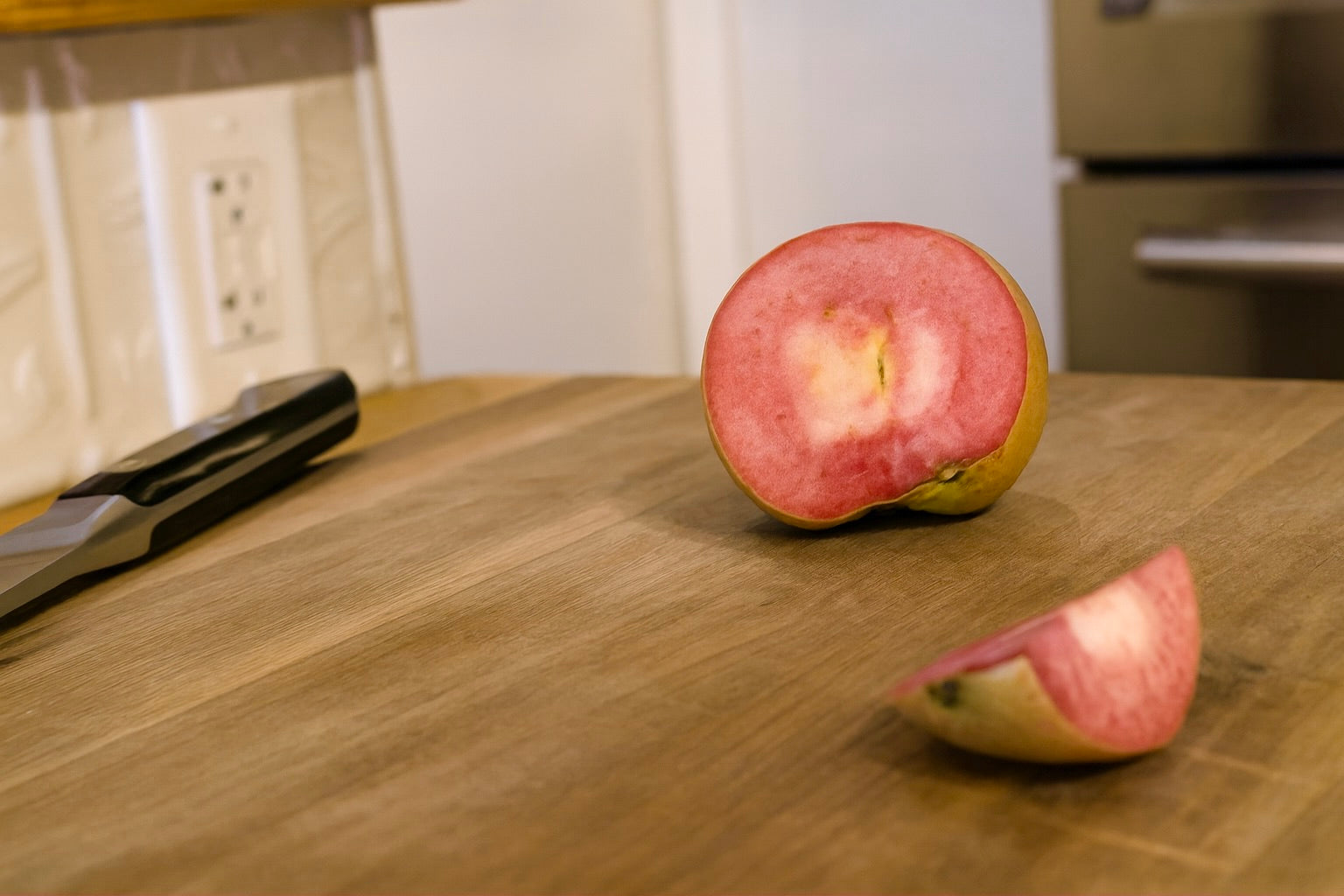
Thornberry is a rare pink-fleshed apple best known for its striking interior color, distinctive berry-like flavor profile, and ornamental bloom. It’s a specialty fruit grown as much for its uniqueness and culinary color as for classic dessert-apple sweetness, and it’s the kind of variety that makes sense for collectors, homesteads, and anyone building an interesting cold-climate apple lineup.
Origin & History
Thornberry is associated with the Albert Etter selection known as Etter 16-32. It is preserved and described through the Rosetta apple collection and specialty nursery records connected to Etter’s legacy of red- and pink-fleshed apples. Some references report Thornberry was found growing in an abandoned orchard and is presumed to trace back to Etter’s work in Humboldt County, California. Documented parentage is not published in the core references we rely on, so we do not state a specific cross.
Fruit & Uses
Thornberry produces pale yellow to translucent-skinned fruit with vivid pink flesh. It is described as ripening in October and is valued for a flavor often compared to berries, with a bright, tangy character. This makes it especially well suited to fresh slicing for color, specialty culinary use, and drying or preserving when you want the pink flesh to be part of the experience. Fruit size is commonly described as on the small side in specialty sources, so it should be approached as a “specialty apple/crab-sized apple” rather than a standard grocery-style large apple.
Growth Habit
Thornberry is highly ornamental in bloom, producing purplish-pink blossoms. Beyond bloom, it should be managed like other apples: trained early for structure, pruned for light penetration and airflow, and thinned if needed to improve fruit sizing and annual bearing.
Spacing
We are offering Thornberry on Bud 118 semi-dwarf rootstock. Bud 118 is a vigorous semi-dwarf that typically finishes closer to a semi-standard footprint than a tight dwarf system, so it benefits from real space. A practical spacing range is about 14–18 feet between trees, depending on soil vigor and how committed you are to long-term pruning for size control. If you want easier maintenance and better airflow, lean wider.
Pollination
Thornberry should be treated as requiring cross-pollination. Plant it with another apple or crabapple that overlaps bloom at your site to ensure reliable fruit set. Because bloom timing can shift by microclimate and MontanaFruitTrees.com does not currently publish standardized bloom groups for every apple listing, we do not publish a fixed “same-bloom” pollenizer list for Thornberry yet.
Cold hardiness
There is not a reliable, cultivar-specific hardiness rating (or documented minimum survival temperature) in the references we rely on. Until we accumulate Montana field performance, Thornberry should be treated as a standard apple in terms of winter expectations: site, acclimation timing, and duration of cold will matter as much as the absolute low.
Other Notes
Thornberry’s main value is its combination of vivid pink flesh, October ripening, and ornamental bloom. Because we do not have credible, variety-specific disease-resistance data to publish, it should be managed with standard apple best practices: good airflow, balanced fertility, pruning hygiene, and an integrated approach to scab, fire blight, rust, and mildew according to your region’s disease pressure.