
Skip to product information
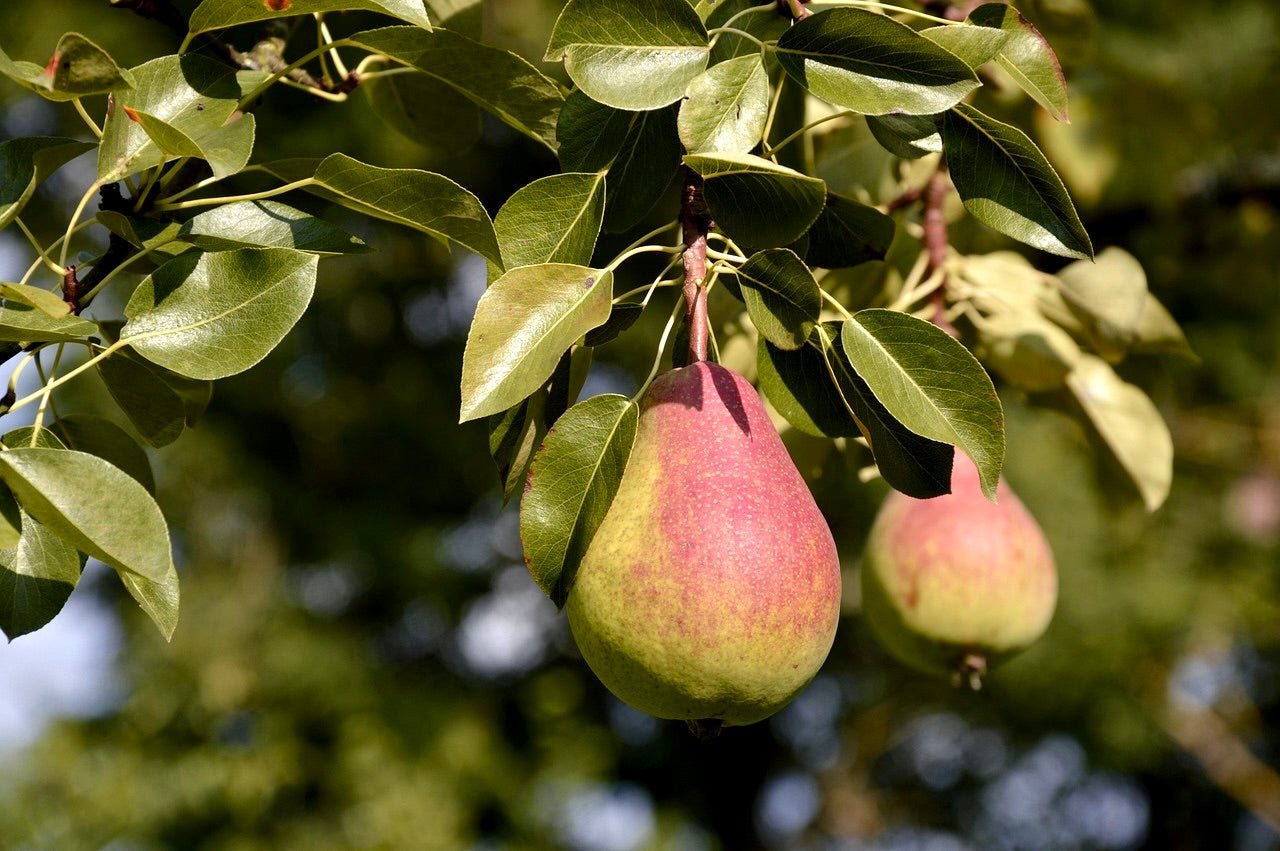
Ubileen Pear
$29.99
Reliable shipping
Flexible returns
Overview
Ubileen is an exceptionally early-season European pear with large, high-quality fruit and a reputation for standout flavor when harvested at the right stage and ripened off the tree.
Origin and History
Ubileen is commonly described in North American nursery trade as a Bulgarian pear, and multiple sources consistently tie it to Bulgarian breeding and introduction work. According to scionwood notes reproduced in a discussion titled “Scionwood from ARS Geneva”, the cultivar is listed as “Ubileen Gift” (PI 392323), originating from the Institute for Fruit Growing, Kyustendil, Bulgaria, bred by Vasil Georgiev in 1957, introduced into the U.S. in 1974, and released in 1984, with parentage given as Clapp's Favorite × Klementinka.
Ubileen also appears in USDA Plant Introduction records by name, including in Plant Inventory No. 183 (covering material introduced in 1975) where ‘Ubileen’ is listed among accessions introduced in that period.
Fruit & Uses
Ubileen fruit is typically large to very large, with yellow skin that can develop a red blush in sun. When picked mature-green and ripened off the tree, it tends to develop a buttery, fine texture with a sweet, aromatic flavor. Because it’s an early pear, it’s best treated like a “watch closely and pick on time” variety. If you let it fully soften on the tree, quality can drop fast. It’s excellent for fresh eating, and it also does well sliced and dried or turned into early-season pear sauce.
Growth Habit & Spacing
Ubileen grows with a fairly vigorous, upright-to-spreading habit. Since we offer it on OHxF 97, you should plan on a near-standard pear tree unless you’re committing to regular pruning. In a home orchard, a practical spacing is often about 16–20 feet between trees if you want a full canopy with minimal training, or closer to 12–16 feet if you’ll prune annually to keep canopies narrower and improve light and airflow. Good light exposure will improve fruit finish and help keep the tree more productive and manageable over time.
Pollination
Ubileen is not a “solo pear” and will need a partner to set fruit. The varieties of other pears we offer that will serve as pollen donors for Ubileen include the following: Bartlett, Red Sensation Bartlett, Beurré Giffard, Summercrisp, Seckel, Luscious, Flemish Beauty, Savignac
Cold Hardiness
Ubileen is an early pear with excellent fruit quality, but it should not be treated like a bulletproof zone-2 Russian pear. Bob Purvis’ notes are especially useful here because he separates “tree hardiness” from “flower bud hardiness.” His take is that Ubileen is a standout for flavor in the Corvallis collection, but that its flower buds are not hardy below about -25°F, meaning it can be a great pear where the tree survives, yet still be crop-limited by brutal winter bud-kill or by spring frost in marginal sites. He lists it as a zone 4, as do other sources, and should not be planted in areas that can see sub-30°F temps. For Montana, this would mean that Ubileen could work in the warmer parts of Missoula such as in town/up on a bench (certainly not where the frost settles by the river/near Orchard Homes/Kelly's Island, etc. It would work around Flathead Lake and in some areas up on benches/out of the frost in the Bitterroot, Kalispell, Plains (including good microclimates from Dixon to Noxon). Shouldn't be planted anywhere in MT other than these places.