
Skip to product information


Enterprise Apple
$34.99
Reliable shipping
Flexible returns
Pollination
Needs a partner
Bloom group
5 of 7 (Mid-Late)
Ripening
Will it finish before your first hard freeze?
Check it on the Ripening Map (opens in a new tab)
Disease resistanceResists 3 of 4
- 5 Apple scab : Highly resistant, 5 of 5
- 4 Cedar-apple rust : Resistant, 4 of 5
- 4 Fire blight : Resistant, 4 of 5
- 3 Powdery mildew : Moderate, 3 of 5
Scored 1 to 5. Higher resists better, and ? means no published data yet.
See it on our apple disease chart (opens in a new tab)At a glance: Enterprise Apple is an apple tree rated hardy to zone 3b in our ratings (winters to -35°F), and not self-fertile, so it needs a different variety nearby as a pollenizer (bloom group 5 of 7, mid-late for an apple or crabapple).
| Hardy to | Zone 3b to 7. The b means the warmer half of zone 3 only (winters to -35°F). Find your zone with our cold hardiness calculator. |
|---|---|
| Chill hours | About 800 hours (800 to 1,000). Well documented. Independent sources agree. Montana winters give it plenty. In milder climates, make sure your winters average at least this much. Check your chill hours or see our sources. |
| Pollination | Needs Cross-Pollination. Bloom group 5 of 7 (mid-late), late spring here. Plant a different apple or crabapple variety that blooms in groups 4 to 6. Its pollen quality isn't confirmed yet, so don't count on it as the only pollenizer for another tree. Good partners we carry: Black Oxford Apple, Honeycrisp Apple, Northern Spy Apple, Oriole Apple and 70 more. Apple Pollination Map. |
| Rootstock and size | M26: dwarf to semi-dwarf, about 8 to 14 ft tall unpruned. Stake it the first few years. Plant about 18 ft apart. Our rootstock guide. |
| Good for | Winter storage (9/10), fresh eating (7/10), pies and baking (6/10). Scores are our own 1 to 10 ratings; 8 and up makes our Best Of lists. |
| Deer | A deer favorite. Fence it or cage it. |
| What you get | Bare root, 2-3 ft or 3-5 ft. Shipped or picked up in Missoula in spring, roots wrapped in moist sawdust. Guaranteed to bud out. |
Overview
Enterprise is a modern disease-resistant apple developed through the PRI (Purdue–Rutgers–Illinois) cooperative breeding program and released in the late 20th century. It was bred specifically to combine high fruit quality with strong resistance to major apple diseases, making it one of the more successful examples of durable, low-input apple breeding. Enterprise is valued for its reliability, long storage life, and adaptability across a wide range of climates. It was actually the other parent, along with Honeycrisp, in the new (and divisive!) Cosmic Crisp apple.
Fruit Quality & Uses
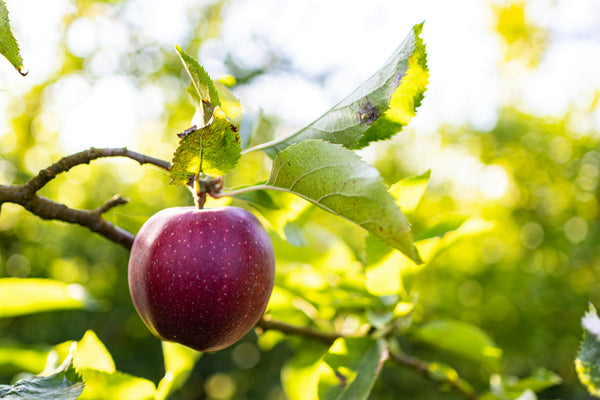
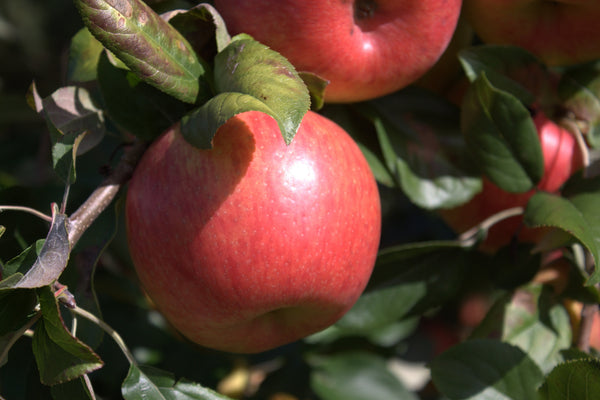
Enterprise produces medium to large apples with a deep red to maroon skin and firm, crisp flesh. When we tried the apple for the first time at Rod McIver's Farm in Kalispell, MT, we thought it was certainly worth growing. The flavor is balanced and clean and leans mildly tart when first harvested, although it does become sweeter and more complex after a period of storage. This makes Enterprise an excellent apple for fresh eating later in the season, as well as for baking, sauce, and cider. It is especially well known for its exceptional keeping quality, often storing for several months under proper conditions without significant loss of texture or flavor. This last quality, and its disease resistance, were likely why it was chosen as one of the pollen parents for Cosmic Crisp, which has a super long shelf life.
Growth Habit & Spacing
Trees are moderately vigorous with an upright to spreading growth habit and good structural strength. Enterprise responds well to pruning and training and can be managed effectively in both home orchards and larger plantings. Final spacing depends on rootstock. On full-size or semi-vigorous rootstocks, trees are typically spaced about 18 feet apart to allow for good airflow and light penetration. For Spring 2027, though, we’re offering Enterprise on M26 semi-dwarf, which makes a smaller tree that can be planted closer. They could be spaced tighter for a more managed spacing (more heavy Spring pruning and possibly summer pruning if there are good growing conditions (deep soils, longer growing season), and wider spacing for a less intensively managed pruning regiment.
Disease Resistance
One of Enterprise’s defining traits is its strong resistance to apple scab, fire blight, cedar apple rust, and powdery mildew. This broad resistance makes it particularly well suited to organic or low-spray systems and regions where disease pressure is high. While no apple is completely immune under all conditions, Enterprise consistently ranks among the more dependable, low-maintenance varieties.
Pollination
Enterprise is not self-fertile and requires a compatible apple pollenizer that blooms at a similar time. Most mid-season apple varieties will work well, and good pollinator activity during bloom will improve fruit set and yield.
Cold Hardiness
Enterprise has performed well in many cold-winter regions. While not among the most extreme cold-hardy apples, it tolerates typical northern winters reliably when properly sited and acclimated. Probably similar to McIntosh in terms of hardiness. Possibly hardy to -40F, but we're listing it as hardy to zone 3b for now (-35F). Not to be planted east of the divide in Montana apart from the warmer microclimates in and around Billings.
Questions we get about Enterprise Apple
Does Enterprise Apple need a pollenizer?
Yes. Enterprise Apple needs pollen from a different variety that blooms at about the same time. Plant a different apple or crabapple variety that blooms in groups 4 to 6. Its pollen quality isn't confirmed yet, so don't count on it as the only pollenizer for another tree. Partners we carry include Black Oxford Apple, Honeycrisp Apple, Northern Spy Apple.
How cold hardy is Enterprise Apple?
We rate Enterprise Apple hardy to zone 3b, which means winters down to about -35°F. Our ratings come from real winters at our two Montana sites and from trusted growers across the North, not from a catalog average.
How many chill hours does Enterprise Apple need?
About 800 hours of winter chill (we count hours at or below 45°F), likely somewhere between 800 and 1,000. That figure is well documented: independent sources agree. Montana winters supply far more than that. Our chill hours guide has a calculator for your winters, and our research page lists the sources.
How big does Enterprise Apple get?
We graft Enterprise Apple onto M26 (dwarf to semi-dwarf), which makes a tree roughly 8 to 14 ft tall if you never prune it. Plant about 18 ft apart.
What is Enterprise Apple good for?
Our top use scores for Enterprise Apple are winter storage (9/10), fresh eating (7/10), pies and baking (6/10). Anything scored 8 or higher makes our Best Of lists.
Is Enterprise Apple disease resistant?
For some diseases, yes. It's highly resistant to apple scab, and resistant to cedar-apple rust and fire blight. It holds up moderately well against powdery mildew. Our apple disease resistance chart has every rating, the notes and the sources.
Will deer eat Enterprise Apple?
Yes, deer love it. Protect Enterprise Apple with a fence or a cage, especially while it is young.
What arrives, and when does Enterprise Apple ship?
A dormant bare-root plant, roots wrapped in moist sawdust with a vapor barrier, shipped or picked up in Missoula in spring. Sizes offered: 2-3 ft or 3-5 ft. We guarantee our plants bud out. Stone fruits can be slow, so if one still has not budded out by August 15, write to us and we credit you for the following spring.
More Plants Like This
Sold Out This Season? Try These
Pollination partners
Trees that will pollenize Enterprise Apple
Enterprise Apple needs a different apple or crabapple nearby to set fruit. Every tree below blooms at the same time and has pollen that works for it. Plant partners within about 100 feet.
Bloom group
5 of 7 (Mid-Late)
Pollination
Needs a partner
Pollen
Not tested yet
-
 Black Oxford Apple(Spring 2027)
From $44.99
-
 Honeycrisp Apple(Spring 2027)
From $59.99
-
 Northern Spy Apple(Spring 2027)
From $39.99
-
 Oriole Apple(Spring 2027)
From $49.99
-
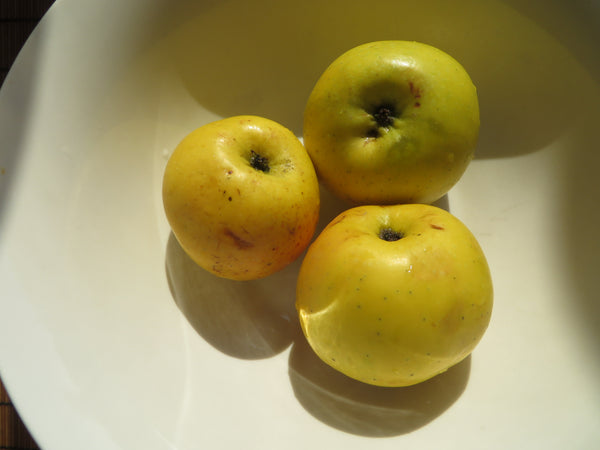 Reinette Simirenko Apple(Spring 2027)
From $44.99
-
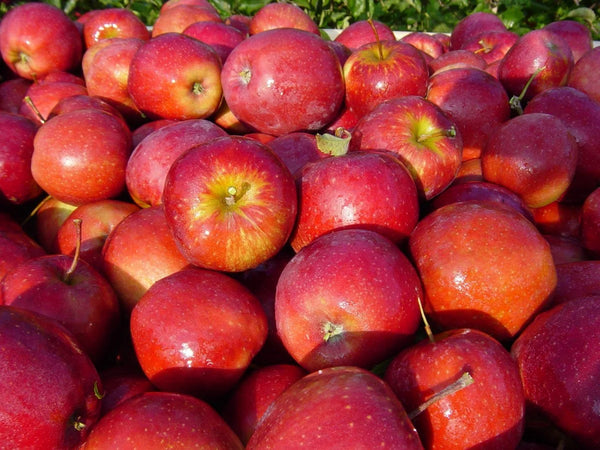 Spencer Apple(Spring 2027)
From $49.99
-
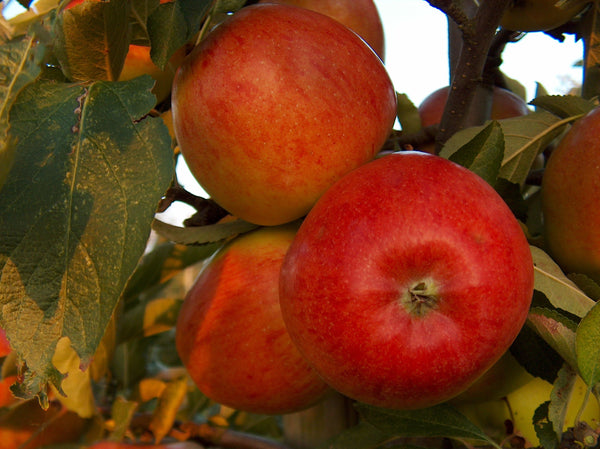 Sweet Sixteen Apple(Spring 2027)
From $44.99
-
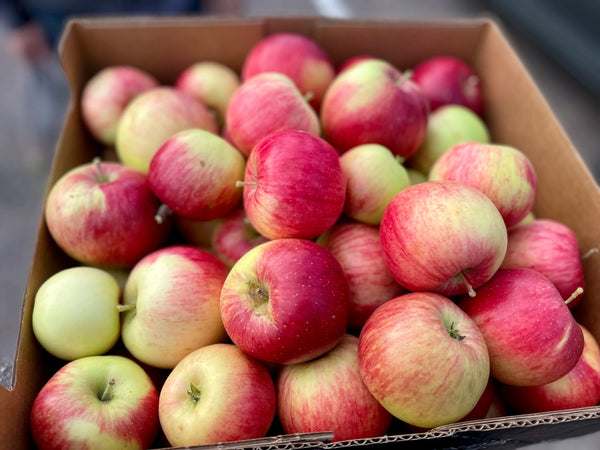 Wealthy Apple(Spring 2027)
From $59.99
-
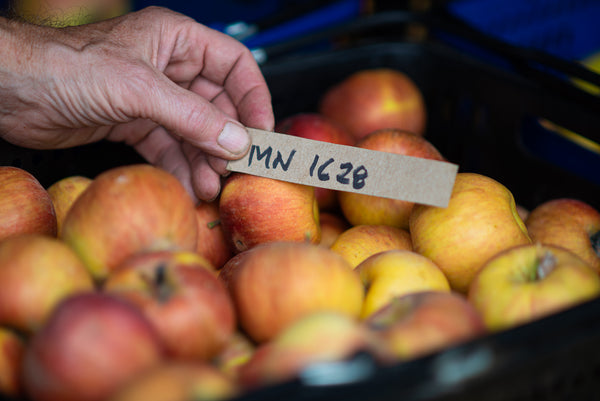 MN 1628 Apple(Spring 2027)
$89.99
-
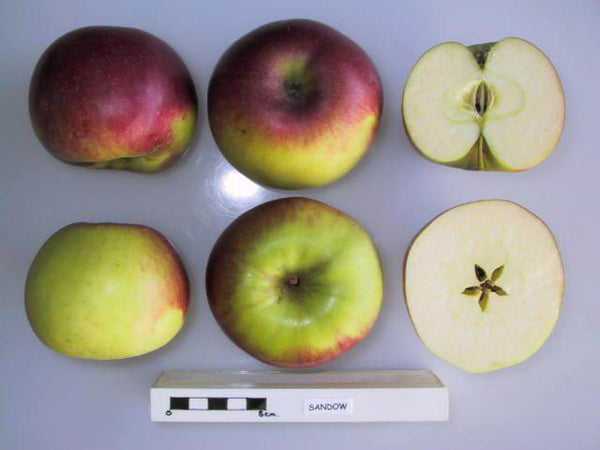 Sandow Apple(Spring 2027)
From $44.99
You may also like
Not available for spring 2027. Here's what we'd plant instead.
Enterprise Apple is off the list this season. These are in stock now, and the full apple trees collection has the rest. Everything on our zone 3 page is rated for the same winters.
Browse the apple trees collection for what's in stock.