Skip to product information


Meteor Tart Cherry
$119.99
Reliable shipping
Flexible returns
Pollination
Self-fertile
Bloom group
4 of 7 (Mid)
Ripening
Will it finish before your first hard freeze?
Check it on the Ripening MapOverview
Meteor is a tart (sour) cherry introduced in 1952 by the University of Minnesota fruit breeding program at Excelsior, Minnesota. It was developed for cold climates and later ripening than Montmorency.
History & Parentage
Extension and pomology references describe Meteor as a cross of Montmorency × a Russian-type selection.
Fruit Quality & Uses
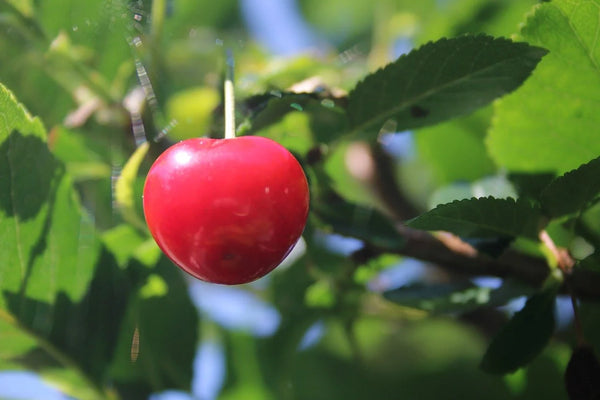
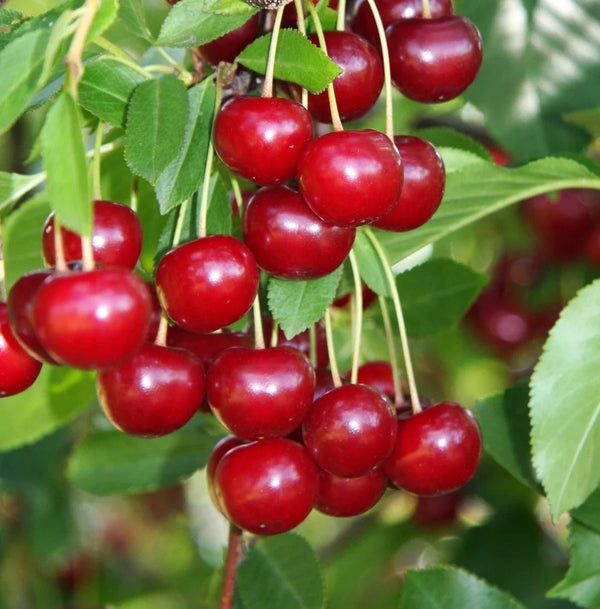
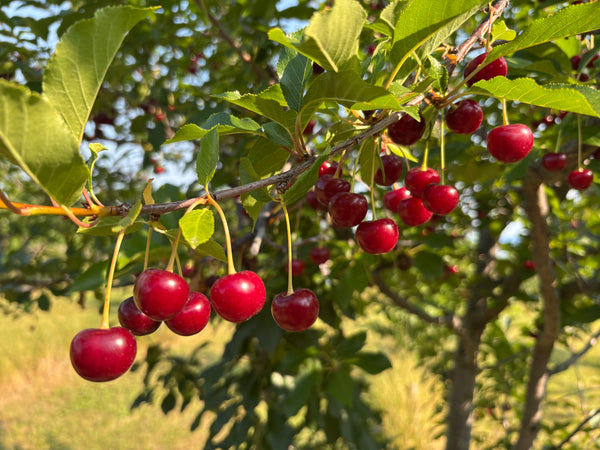
Meteor produces medium-sized, bright red tart cherries with clear juice and semi-firm flesh, ripening about a week after Montmorency (typically around early August here in Missoula, MT). It’s typically positioned as a kitchen/processing cherry for pies, baking, sauce, preserves, and juice. But in our experience, they make dried cherries just as good as Montmorency. One extension note also mentions it’s not ideal for commercial processing because the pit can behave poorly during pitting in some settings.
Growth Habit & Spacing
Meteor is widely sold as a naturally smaller tart cherry tree (often described around the 10–12 ft class in home-orchard contexts), with an upright to spreading habit. A practical spacing for a small tart cherry like this is commonly 10–12 ft (wider if you want more airflow and less pruning pressure).
Pollination
Meteor is as self-fruitful (self-fertile). Even so, tart cherries often crop heavier with another tart cherry nearby that blooms at a similar time. Will cross with Evan's Bali tart cherry or even the dwarf cherries. Could also cross with the less hardy Danube/Montmorency, although if you're planting this due to its adaptability to the cold, plant with either Evan's or the dwarf cherries.
Cold Hardiness
For a concrete mid-winter extreme figure, Meteor can tolerate down to about −50°F when fully dormant.
Pollination partners
Good partners for Meteor Tart Cherry
Meteor Tart Cherry is self-fertile, so one tree will fruit on its own. If you'd like a second tart cherry, these bloom at the same time and work well together.
Bloom group
4 of 7 (Mid)
Pollination
Self-fertile
Pollen
Good pollenizer