
Skip to product information
Pink Pearl Apple
$34.99
Reliable shipping
Flexible returns
Overview
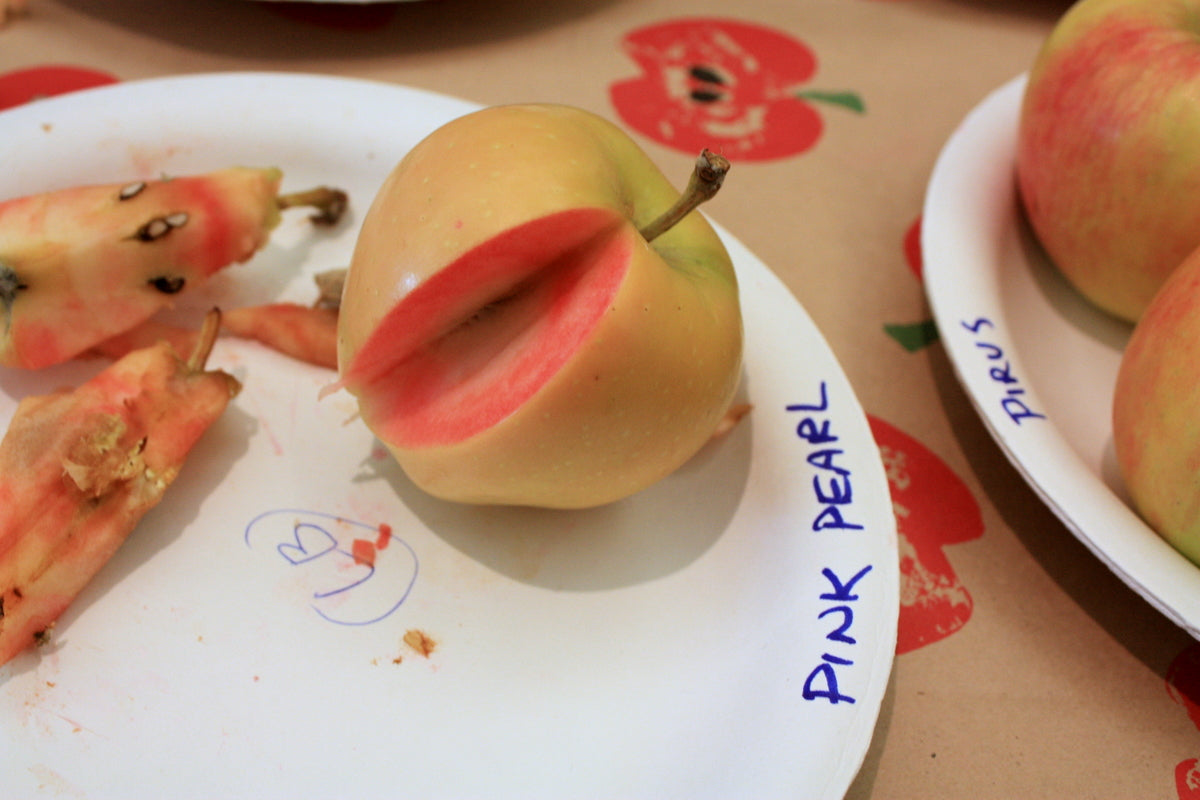
Pink Pearl is a distinctive heirloom apple best known for its vivid pink to rose-colored flesh and bright, high-acid flavor. It stands out both visually and culinarily, offering an apple that is as striking when cut as it is refreshing to eat. Pink Pearl is especially valued by growers and cooks looking for something unusual that still performs reliably in the orchard.
History & Parentage
Pink Pearl was developed in the early 1940s by California fruit breeder Albert Etter, one of the most influential independent apple breeders in American history. It is sometimes referred to as Etter Surprise. Pink Pearl traces part of its lineage to red-fleshed Malus genetics, which is responsible for its characteristic interior color. Unlike many novelty apples, it has remained in cultivation due to its genuine eating quality rather than appearance alone.
Fruit Quality & Uses
The fruit is medium-sized with green to yellow skin that may show a light blush. Inside, the flesh ranges from light pink to deep rose, depending on maturity and growing conditions. Flavor is bright, tart, and refreshing, often compared to a well-balanced citrus acidity rather than sharp sourness.
Pink Pearl excels in:
-
Fresh eating for those who enjoy high-acid apples
-
Applesauce and juice, where it imparts a natural pink hue
-
Cider blends, adding acidity and color
-
Baking, where the flavor holds up well to heat
The flesh tends to oxidize more slowly than many apples, helping preserve its color in fresh preparations.
Ripening Window
Pink Pearl typically ripens in early to mid-fall, depending on climate and site. Flavor improves as the fruit reaches full maturity, and early picking can result in excessive sharpness.
Growth Habit & Spacing
Trees are moderately vigorous with a balanced, upright-spreading habit. Standard apple spacing applies based on rootstock:
-
Approximately 12–15 ft on semi-dwarf systems
-
18–20+ ft on more vigorous or standard rootstocks (can be even tighter with a more rigorous pruning regiment).
Regular pruning helps maintain light penetration and fruit quality.
Pollination
Pink Pearl is not self-fertile and requires cross-pollination. Any compatible apple or crabapple with overlapping bloom will work. Crabapples are especially effective pollinizers due to their abundant and extended bloom period.
Cold Hardiness
Pink Pearl is commonly listed as hardy to Zone 4, although given Rod McIver's experience growing it successfully in a cold location near the Flathead River, where temps dipped near -35F on 1/13/24, without injuring Pink Pearl, it's at least hardy to that from what we have seen. This temperature was however only during the morning, so how Pink Pearl would perform with sustained temps at -35F is another story. We'll list it hardy to zone 3b until we get more data on this cultivar. Given its west coast origin, for site selection in colder regions, make sure to avoid frost pockets and exposure to drying winter winds.
Other Notable Characteristics
Pink Pearl is often chosen by growers seeking a visually striking apple for fresh markets,a high-acid apple to balance sweeter varieties, and an heirloom with real culinary value, not just novelty.
Its combination of color, flavor, and versatility makes it one of the more enduring and useful red-fleshed apples in cultivation today. It performed realy well for Rod McIver in Kaispell MT, where he saw temps near -35F on 1/13/24.
Image courtesy of Leslie Seaton