Overview
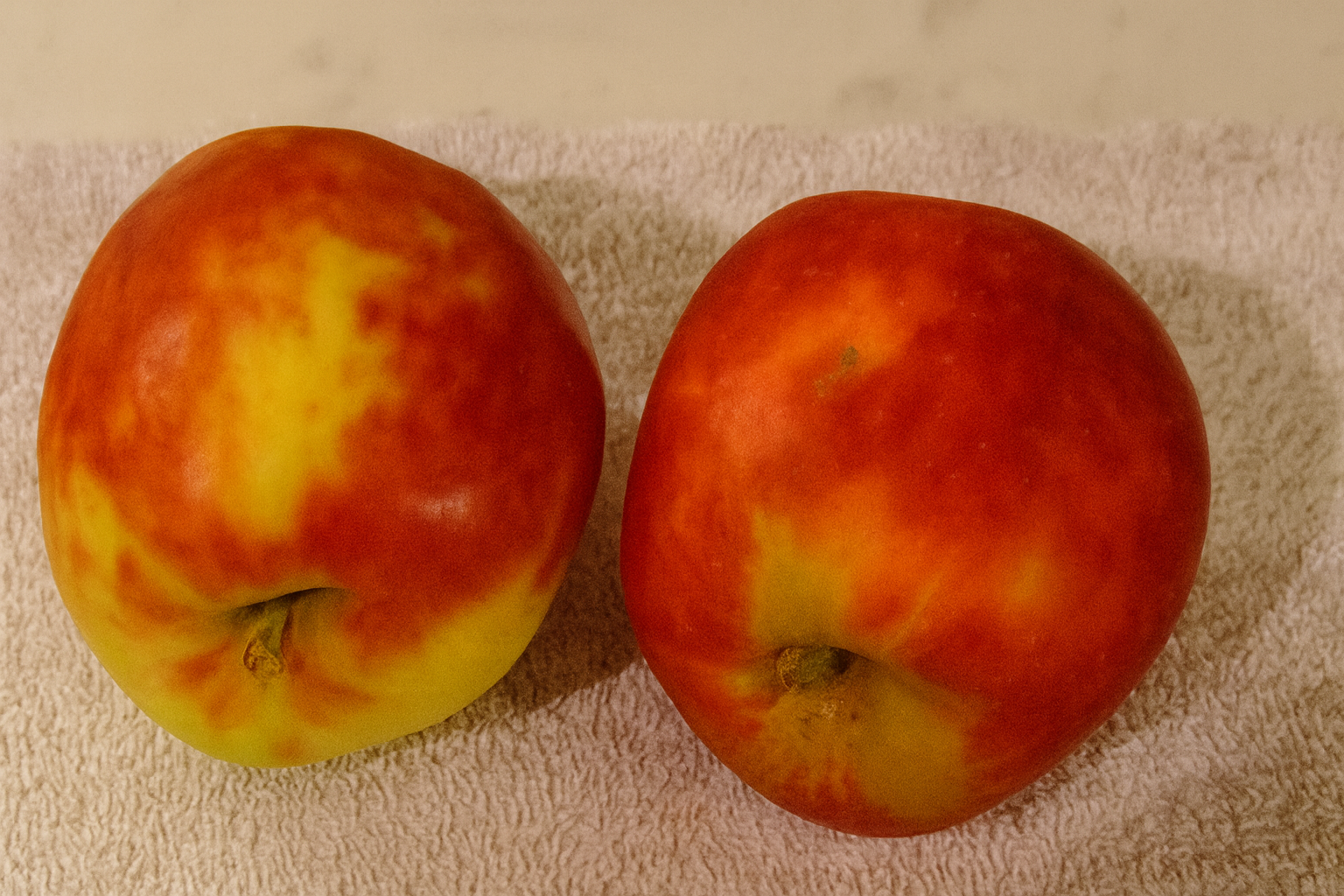
Red Gravenstein is a red-skinned sport of the classic Gravenstein apple, prized for its bold, aromatic flavor and versatility while offering a more colorful, attractive fruit on the tree.
Origin and History
Gravenstein originated in Denmark in the 1600s and became one of the most widely respected early apples in Europe and North America. Red Gravenstein is a naturally occurring sport selected for its deeper red coloration, while retaining the core eating and culinary qualities that made the original Gravenstein famous among orchardists, cooks, and cider makers.
Fruit & Uses
Fruit is medium to large with a rich red blush over a yellow-green background. The flesh is juicy, highly aromatic, and well-balanced, combining sweetness with a bright, refreshing acidity. Red Gravenstein excels for fresh eating when fully ripe but is especially outstanding for applesauce, baking, cooking, and cider, where its complex, spicy flavor really stands out.
Growth Habit & Spacing
Trees are vigorous with an upright to spreading growth habit and can become fairly large if unmanaged. Spacing is typically 18–25 feet depending on rootstock and desired mature size. Regular pruning is recommended to manage vigor, maintain structure, and improve light penetration and fruit quality.
Pollination
Red Gravenstein is a triploid apple. This has important implications for orchard planning:
-
As a triploid, it produces little to no viable pollen, so it cannot effectively pollenize other apple trees.
-
For good fruit set, Red Gravenstein performs best when two compatible diploid apple varieties with overlapping bloom are nearby.
If someone plants only Red Gravenstein and one other apple:
-
The other apple may help pollenize Red Gravenstein if bloom overlaps, but fruit set can be inconsistent or light because Gravenstein ideally wants pollen from more than one source.
-
Red Gravenstein will not pollenize that second tree, so the companion apple may also crop poorly unless there is another apple or crabapple in the area (a neighbor’s tree, wild crabapple, etc.).
Good pollination partners from what we commonly offer include long- and mid-bloom apples and crabapples such as Chestnut Applecrab, McIntosh, Honeycrisp, Haralson, Frostbite, or KinderKrisp.
Cold Hardiness
Gravenstein is generally considered hardy to about zone 4, but real-world observations suggest it can tolerate colder events under favorable conditions, so it is likely even a zone 3b apple. Notably, a Gravenstein (the original type, not specifically this red sport) survived approximately -33°F at Benson’s Farm in Missoula back in the 1980s, and is still growing happily today. While it’s unclear whether that event caused any winter injury at the time, the tree today looks excellent, suggesting strong long-term resilience once established. As with many older apple varieties, site selection and microclimate play a major role in success in very cold regions. Given that we're unsure as to the lower limits of cold that Red Graventein can withstand, we would not recommend it for most of Eastern Montana (apart perhaps from Billings and some of the warmer surrounding areas). Red Gravenstein should work in Kalispell, much of the Flathead and Mission Valleys, Plains and the stretch along the Clark Fork towards Idaho, and warmer microclimates/on a bench with good airflow in the Bitterroot.