
Skip to product information


Rhodes Heartnut Seedling (Bundle of 2)
$59.99
Reliable shipping
Flexible returns
Ripening
Will it finish before your first hard freeze?
Check it on the Ripening Map (opens in a new tab)At a glance: Rhodes Heartnut Seedling is a heartnut tree rated hardy to zone 4b in our ratings (winters to -25°F), and wind-pollinated with staggered male and female bloom, so plant two different trees.
| Hardy to | Zone 4b to 8. The b means the warmer half of zone 4 only (winters to -25°F). Find your zone with our cold hardiness calculator. |
|---|---|
| Pollination | Heterodichogamous - Plant Two Different Trees. Bloom group 5 of 7 (mid-late), late spring to early summer here. Heartnuts are wind-pollinated and each tree tends to shed pollen before or after its own female flowers are ready, so plant both seedlings, or add another heartnut, buartnut, butternut or walnut that blooms at the same time. The parent is reported to flower late, which helps dodge spring frost. Good partners we carry: Black Walnut (Bundle of 3), Buartblack Walnut (Bundle of 2), Purvis English Walnut Seedling (Bundle of 2), Purvis Hardy English Walnut (Bundle of 2). Bloom group is our estimate from the variety's origin and relatives. Walnut & Heartnut Pollination Chart. |
| Spacing | Plant 30 to 40 ft apart. |
| Good for | Edible nuts (7/10), pies and baking (6/10). Scores are our own 1 to 10 ratings; 8 and up makes our Best Of lists. |
| Deer | A deer favorite. Fence it or cage it. |
| What you get | Bare root, 1-2 ft. Shipped or picked up in Missoula in spring, roots wrapped in moist sawdust. Guaranteed to bud out. |
Overview
Rhodes Heartnut seedlings comes from a high-quality heartnut parent selection known for its thin shell, excellent kernel percentage, and uniquely smooth, creamy eating quality that sets it apart.
Origin and History
These Rhodes Heartnut seedlings were grown from seed we obtained from Perfect Circle Farm in the fall of 2023 and have been container-grown for two full seasons. The Rhodes heartnut itself traces back to European heartnut material and has circulated quietly among nut growers for decades. According to a growing guide published by Great British Online, Rhodes is described as a moderately hardy heartnut that flowers late, bears heavily, and is likely self-fertile, with a reputation for excellent kernel quality and easy cracking. Separately, a detailed grower account on FigBid notes that one well-known Rhodes tree was grafted by Mr. Schlageater, a German nut grower who passed away in 2022, suggesting this selection has been preserved and passed along by dedicated growers rather than through commercial breeding programs.
Nut & Uses
Rhodes produces medium to large heart-shaped nuts with thin shells that crack easily and yield a high percentage of usable kernel. Flavor and texture are where this selection stands out. Grower descriptions consistently emphasize how unusually oily, smooth, and creamy the kernel is, with very little bitterness. One grower described it as the oiliest and “greasiest” nut they had ever handled, leaving oil on the hands when cracked. We cracked open several in 2023 before stratifying them. Here are taste notes from then: soft, and creamy. According to Elizabeth "never had a nut like this that wasn’t crunchy. It's interesting because of its smoothness. Doesn't have a strong flavor but it is very creamy, and mellow. Not bitter at all. Could eat lots of them."
Growth Habit & Spacing
Rhodes Heartnut forms a vigorous tree typical of heartnuts, with a strong central leader and broad eventual canopy. As a moderately hardy tree that flowers late, it is well adapted to sites with cold springs where early flowering walnuts can be damaged. Long-term spacing of 30–40 feet is appropriate for mature trees.
Pollination
Rhodes is reported to flower late and bear heavily, and it is described as probably self-fertile. As with most heartnuts, however, having another heartnut or compatible walnut nearby can improve nut set and consistency, especially in variable spring conditions. Even self-fertile walnuts tend to benefit from cross-pollination when possible.
Cold Hardiness
Rhodes is generally described as moderately hardy for a heartnut, with late flowering helping it avoid spring frost damage more than extreme midwinter cold tolerance alone. While specific minimum temperature thresholds are not well documented, we would put it in the range of being able to survive -30F. Colder than that is anyone's guess. If anyone has more data on Rhodes' hardiness, please reach out.
Also bear in mind that this description is from the mother tree of these seedlings. These will all genetically unique.
Questions we get about Rhodes Heartnut Seedling
How cold hardy is Rhodes Heartnut Seedling?
We rate Rhodes Heartnut Seedling hardy to zone 4b, which means winters down to about -25°F. Our ratings come from real winters at our two Montana sites and from trusted growers across the North, not from a catalog average.
What is Rhodes Heartnut Seedling good for?
Our top use scores for Rhodes Heartnut Seedling are edible nuts (7/10), pies and baking (6/10).
Will deer eat Rhodes Heartnut Seedling?
Yes, deer love it. Protect Rhodes Heartnut Seedling with a fence or a cage, especially while it is young.
What arrives, and when does Rhodes Heartnut Seedling ship?
A dormant bare-root plant, roots wrapped in moist sawdust with a vapor barrier, shipped or picked up in Missoula in spring. Sizes offered: 1-2 ft. We guarantee our plants bud out. Stone fruits can be slow, so if one still has not budded out by August 15, write to us and we credit you for the following spring.
Pollination partners
Trees that will pollenize Rhodes Heartnut Seedling
Heartnuts are wind-pollinated and each tree tends to shed pollen before or after its own female flowers are ready, so plant both seedlings, or add another heartnut, buartnut, butternut or walnut that blooms at the same time. The parent is reported to flower late, which helps dodge spring frost.
Bloom group
5 of 7 (Mid-Late)
Pollination
Plant two or more
Pollen
Good pollenizer
-
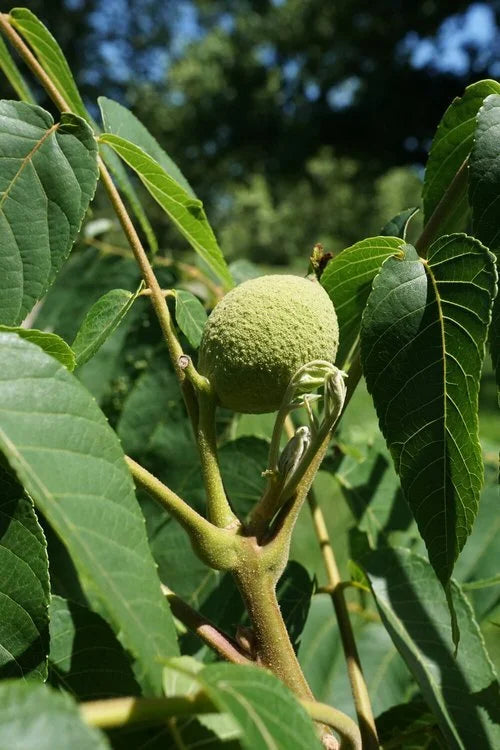 Black Walnut(Bundle of 3)
$99.99
Black Walnut(Bundle of 3)
$99.99
-
 Sold out
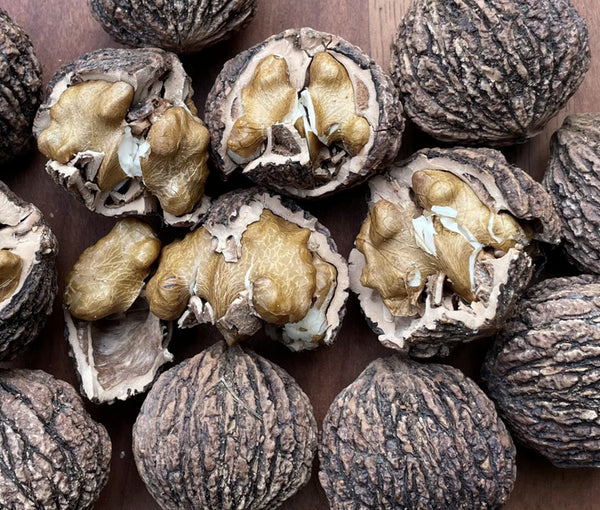
Buartblack Walnut(Bundle of 2)
Sold out
Buartblack Walnut(Bundle of 2)
See every pairing on the Walnut & Heartnut Pollination Chart
Rhodes Heartnut Seedling's bloom group is our best estimate. Watch it bloom and tell us what you see.