
Skip to product information
Romeo Dwarf Cherry (Bundle of 2)
$49.99
Reliable shipping
Flexible returns
Overview
Romeo is a Romance Series dwarf sour cherry from the University of Saskatchewan, bred for extreme cold hardiness and high-quality, dark fruit on a compact, shrub-form plant.
Origin and History
Romeo was officially released in 2004 as part of the University of Saskatchewan’s Romance Series of dwarf sour cherries. (usask)
These Romance Series cherries are interspecific hybrids derived from Prunus cerasus (sour cherry) and Prunus fruticosa (dwarf/cherry steppe types), commonly referred to as Prunus × kerrasis in cold-climate literature.
Fruit & Uses
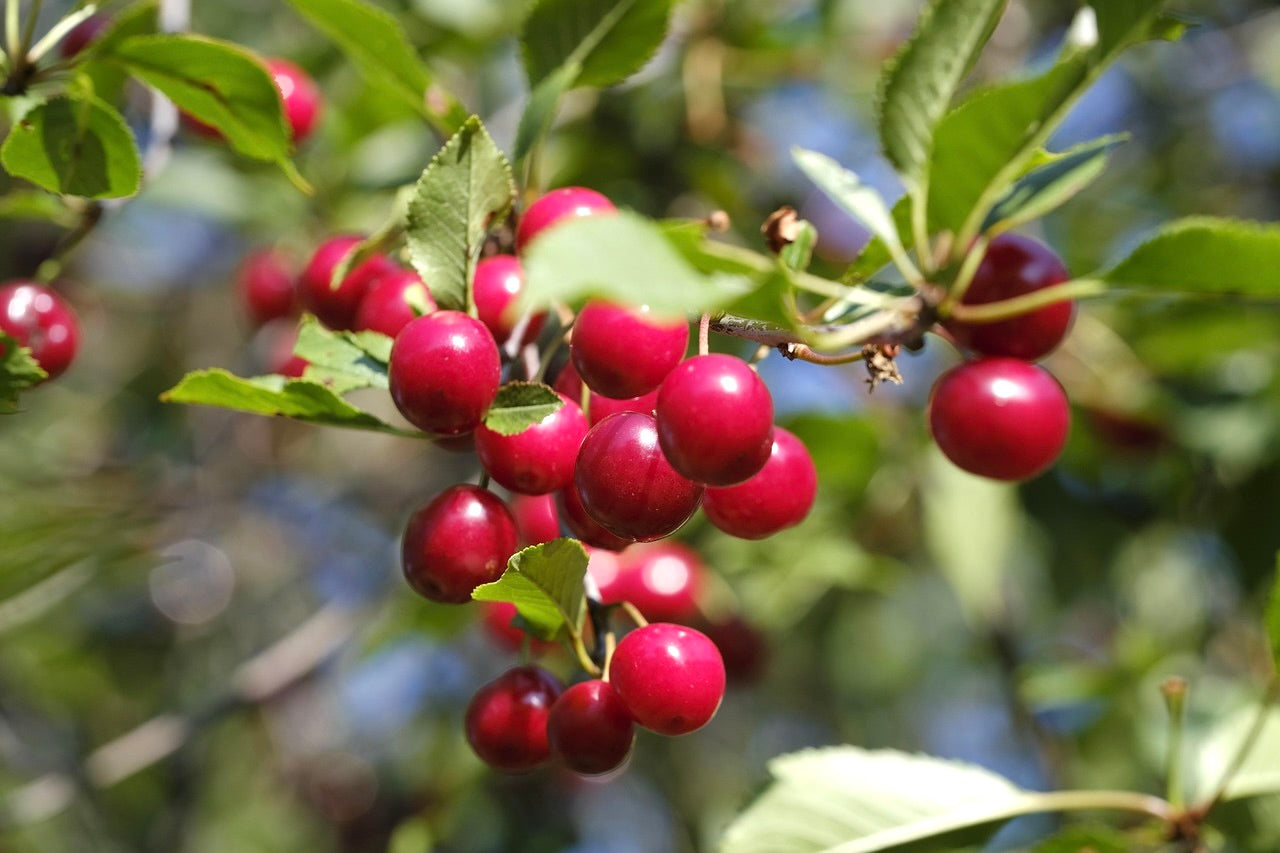
Romeo produces deep red fruit that can ripen very dark and is slightly sweeter than some other bush cherry types. Good for fresh eating and can be used in pies, jellies, and pressed for juice. Never dried them but I'm sure they would be good.
They have relatively high soluble solids and are sweeter than most pie cherries, although do not listen to what some places say online which claim these are sweet cherries. They are not. They are sweeter for a tart cherry but they are still very much have a good deal of acidity. That said, children tend to love them fresh, which says a lot.
Growth Habit & Spacing
Romeo is grown as a compact shrub-form plant (not a standard cherry tree), and cold-climate guidance warns that training these as a single-trunk “tree form” can reduce hardiness in very cold settings (this has not been a problem here in Western MT, although people in colder parts of Eastern MT should take note of this).
For spacing, University of Saskatchewan gardening guidance recommends dwarf sour cherries be spaced about 5–7 feet apart.
Pollination
Romeo (like the other Romance Series bush cherries) is self-fertile, but fruit set can increase when you plant a second compatible bush cherry type nearby. Any of our other dwarf cherries we offer can cross with Romeo.
Cold Hardiness
Romeo is repeatedly positioned in research/extension material as a Zone 2–class hardy, and it should be able withstand near -50F temps. Good for the vast majority of growers in MT.