
Skip to product information
Rugose Rose (Bundle of 3)
$74.99
Reliable shipping
Flexible returns
Overview
Rugosa rose (Rosa rugosa) is a resilient, cold-hardy shrub rose widely used in landscapes and natural plantings for its fragrant flowers and showy rose hips.
Origin and History
Rugosa rose is native to eastern Asia, including northeastern China, Japan, Korea, and southeastern Siberia. It was introduced to Europe and North America in the 1800s, where it became popular for ornamental plantings and coastal stabilization before naturalizing in many regions. The species name rugosa refers to the wrinkled texture of the leaves.
Flowers, Hips & Uses
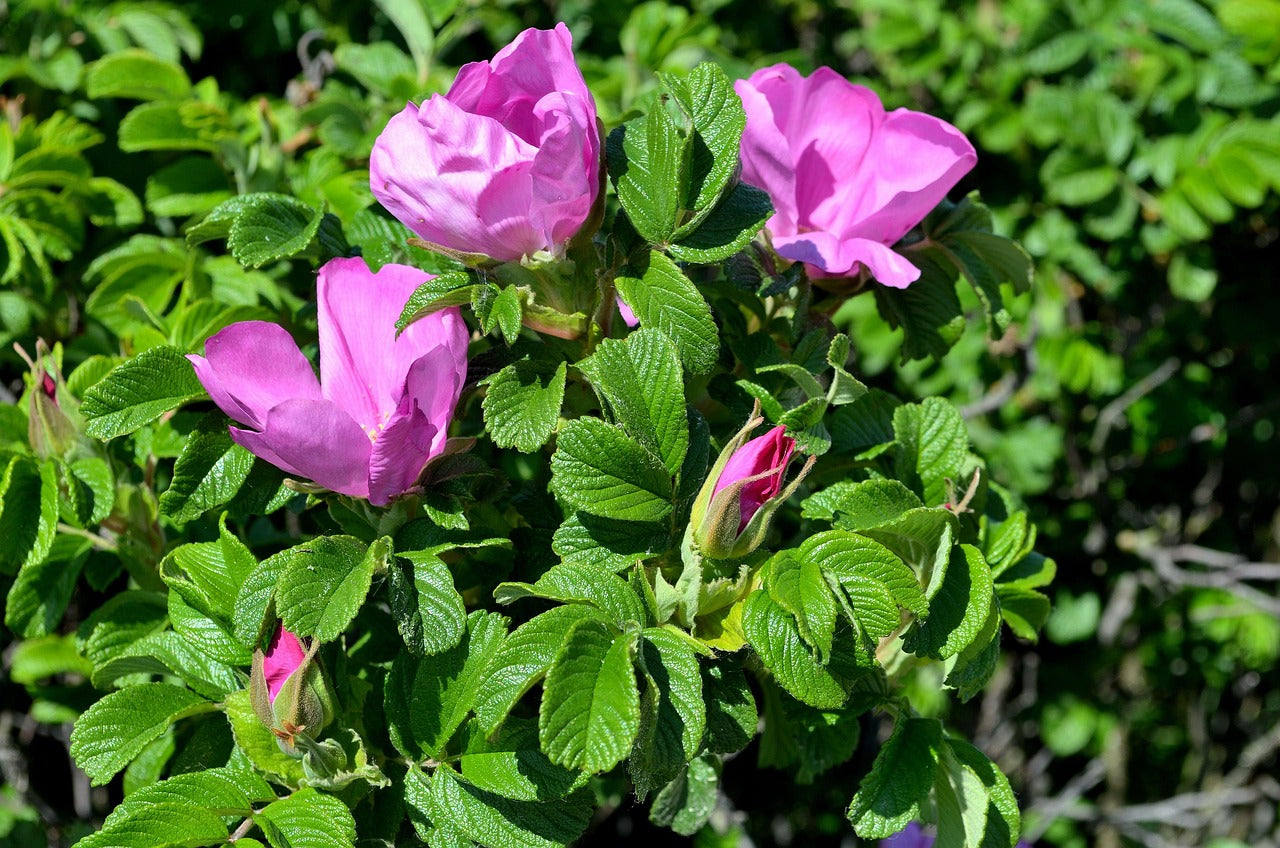
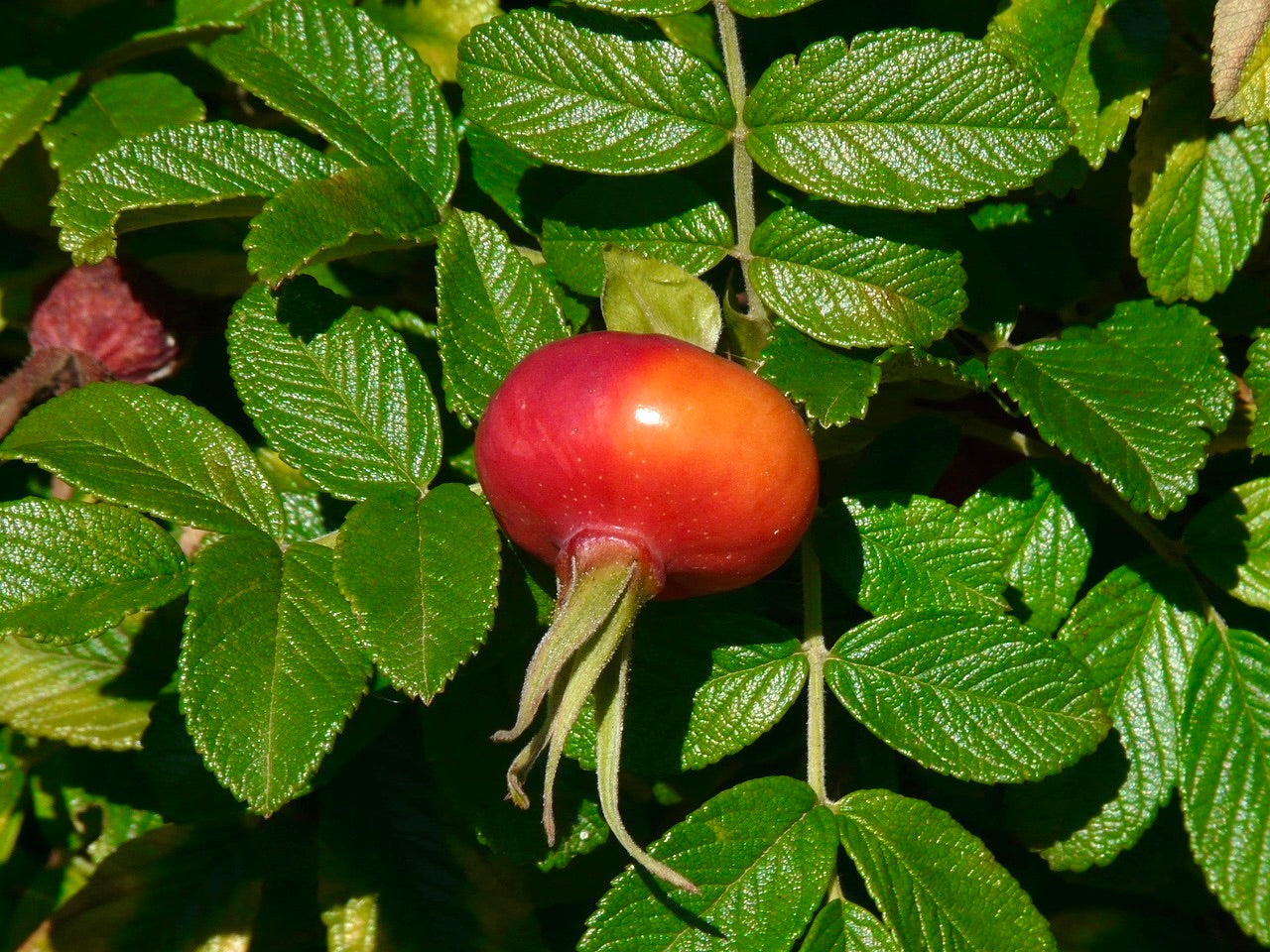
Rugosa rose produces fragrant flowers in shades of pink to white, typically in early to mid-summer, with blooms that may continue intermittently through the season. The plant forms large, round orange-red hips in late summer and fall that are rich in vitamin C and used for making jams, jellies, syrups, and herbal teas. Birds and wildlife also feed on the hips through fall and winter.
Growth Habit & Spacing
This species is a multi-stemmed, suckering shrub that typically reaches 4–6 feet tall and wide. It spreads by suckers to form dense thickets if not managed, making it useful for hedges, windbreaks, erosion control, and wildlife habitat. Rugosa rose is tolerant of a wide range of soils, including sandy, clay, and poor soils, and is also salt-spray and drought tolerant once established.
Pollination
Rugosa rose blooms are insect-pollinated and the species is generally considered self-fertile, meaning a single plant can set hips on its own. Cross-pollination with other roses may increase hip set and diversity of seed, but is not required for fruit production.
Cold Hardiness
Rugosa rose is exceptionally cold-hardy for a woody ornamental. and can survive well into the -40F range. Solid zone 2, even quite possibly zone 1 in a well protected spot with good air drainage/no frost pooling. Can grow in vast majority of Montana.