
Skip to product information
Stuttgarter Gaishirtle Pear
$44.99
Reliable shipping
Flexible returns
Overview
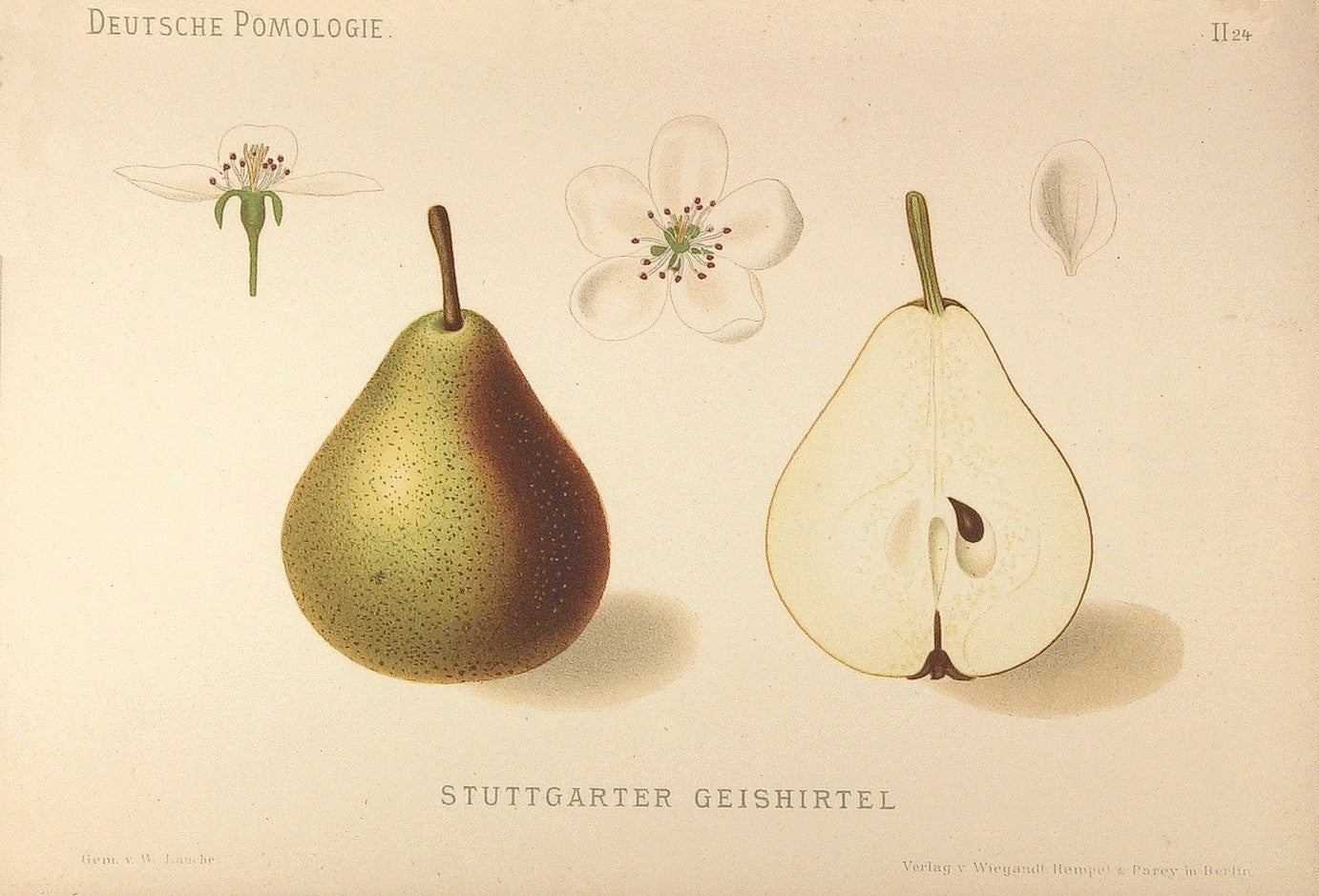
Stuttgarter Gaishirtle (also known as Geishirtl or Geishirtli) is Rod McIver and Luke Robinson’s all-time favorite pear. It is a versatile heirloom discovered around 1750 near Stuttgart, Germany, by a goatherd. Its name translates loosely to “little goatherd from Stuttgart.”
History & Uses
Gaishirtle has long been prized for its versatility, valued both fresh at the table and for preservation. Some sources list it as a really good pear for drying, which I can't believe because they would all be eaten fresh by the time there is any left for drying. One drawback is that it does not have a long shelf life at all. Maybe week or two tops.
Dried Gaishirtle pears are a traditional ingredient in Hutzelbrot, a classic German fruit bread, often made alongside dried plums. Because the fruit contains less tannic acid and juice than many traditional perry pears, it is generally considered less suitable for cider production.
Fruit Quality & Ripening
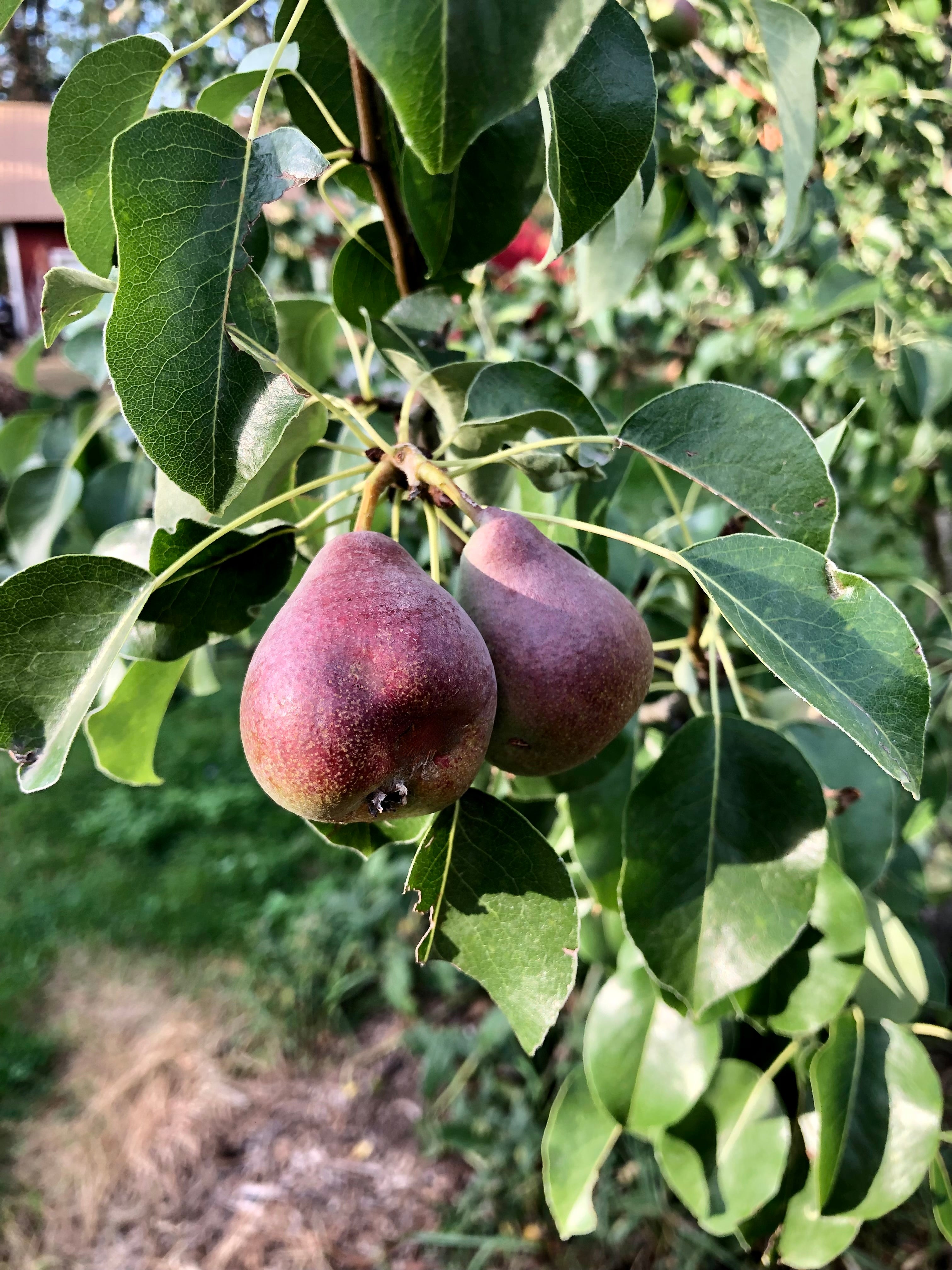
The fruit ripens in Western Montana typically between the third and fourth week of August (the photo for this description was taken August 25th in Kalispell, MT). Flavor is excellent when fully ripe, with qualities that apparently carry particularly well through drying and preservation.
Cold Hardiness
Gaishirtle is hardy to approximately −35°F. It is unknown whether it can reliably survive colder temperatures, and we err on the side of caution when rating its hardiness. Notably, a long-lived tree survived for decades in a cold Zone 4 area of Kalispell, Montana, before being lost to a windstorm in 2024. If you are in much of eastern MT where temps can drop below -35F, steer clear of Gaishirtle and instead opt for one of our Russian pears.
Other Notable Characteristics
This is a pear with deep cultural and historical roots, valued as much for tradition and preservation as for fresh eating. Its combination of flavor, history, and adaptability make it a standout choice for growers interested in classic European pears with proven performance in fairly cold climates. Take it for what it’s worth, this pear has an incredible flavor. “The best pear I’ve had” - Luke