
Skip to product information


Krazulya Pear (Spring 2027)
$44.99
Reliable shipping
Flexible returns
Pollination
Needs a partner
Bloom group
3 of 7 (Early-Mid)
Ripening
Will it finish before your first hard freeze?
Check it on the Ripening Map (opens in a new tab)
Disease resistanceNot tested yet
- ? Fire blight : Unknown, no published data yet
- ? Pear scab : Unknown, no published data yet
Scored 1 to 5. Higher resists better, and ? means no published data yet.
See it on our pear disease chart (opens in a new tab)At a glance: Krazulya Pear is a pear tree rated hardy to zone 2 in our ratings (winters to -50°F), not self-fertile, so it needs a different variety nearby as a pollenizer (bloom group 3 of 7, early-mid for a European pear), and it ripens about Aug 16 to Aug 30 in Missoula (our Missoula estimate).
| Hardy to | Zone 2 to 7. A bare number means the whole of zone 2, colder half included (winters to -50°F). Find your zone with our cold hardiness calculator. |
|---|---|
| Chill hours | About 800 hours (600 to 1,200). Our estimate. No published figure exists for this variety yet. Montana winters give it plenty. In milder climates, make sure your winters average at least this much. Check your chill hours or see our sources. |
| Pollination | Needs Cross-Pollination. Bloom group 3 of 7 (early-mid), mid spring here. Krazulya needs a pollenizer. Larinskaya and our other Russian pears should bloom with it. Good partners we carry: D'Anjou Pear, Stuttgarter Gaishirtle Pear, Summercrisp Pear, Ure Pear and 25 more. Pear Pollination Map. |
| Ripens | About Aug 16 to Aug 30 in Missoula (a Missoula estimate from published sources). Real years swing about a week either way. See the date for your town. |
| Rootstock and size | OHxF 333: semi-dwarf, about 12 to 18 ft tall unpruned. Resists fire blight and pear decline. Ussurian: full size, about 20 to 30 ft tall unpruned. The hardiest pear species there is. Our rootstock guide. |
| Good for | Fresh eating (8/10), juice and sweet cider (7/10). Scores are our own 1 to 10 ratings; 8 and up makes our Best Of lists. |
| Deer | Sometimes damaged by deer. |
| What you get | Bare root, Semi-Dwarf: 2-3 ft or 3-5 ft or 5-7 ft. Shipped or picked up in Missoula in spring, roots wrapped in moist sawdust. Guaranteed to bud out. |
About Krazulya Pear
Krazulya is a South Ural pear that fruits through -40s winters in Bozeman; its juice hasn't been tested, so measure it before you build a perry around it.
- Where it came from: Bred by E. A. Falkenberg at the South Ural Research Institute of Fruit and Vegetable Growing (from our product research).
- Parents: Pozdnyaya x Malenkaya Radost.
- Also called: Krasulya.
- Cider class: Not classed for perry by any source.
- Juice: No juice numbers published.
- Winter: Fruiting through -40s winters in Bozeman with little or no injury.
- Bloom and ripening: blooms in pear group 3 of 7 (early-mid); ripens about Aug 16 to Aug 30 in Missoula.
More reading: pears for perry.
Questions about Krazulya Pear
Can you make perry from Krazulya? Yes, though nobody has published its juice numbers. Measure the sugar and acid and blend it with a sharper pear like Larinskaya if it comes up low in acid.
Is Krazulya good to eat? Yes. It's grown as a dessert pear first.
How big does Krazulya Pear get? On OHxF 333 it's semi-dwarf, about 12 to 18 ft unpruned; on Ussurian roots it's full size, about 20 to 30 ft.
Known in Russian as Красуля, pronounced KRAH-soo-lyah (not sure why the English spelling isn't Krasulya), Krazulya is one of our newest pears we have grown. Given that we do not have experience growing it, and that it is hard to find original info on this pear in the U.S., we have translated from this Russian site here, and put it in our own words (without altering any of the information). We also added a piece on hardiness from Les McCartney's experience growing it in Bozeman, Montana.
Origin & Breeding
Krazulya is a cold-hardy summer pear developed at the South Ural Research Institute of Fruit and Vegetable Growing from a cross between Pozdnyaya and Malenkaya Radost. The variety was bred by E. A. Falkenberg and selected for reliability, flavor, and resilience in harsh continental climates.
Tree Characteristics
The tree is moderately vigorous, forming a rounded, well-balanced crown. Branches emerge from the trunk at nearly right angles, giving the tree a strong, open structure. Occasional thorns are present on the branches. The bark on the trunk and main scaffold limbs is greenish and lightly peeling, a distinctive visual trait of the variety.
Fruiting occurs primarily on spurs, fruiting twigs, and one-year-old wood, contributing to consistent production once the tree is established. Shoots are straight, brown, and smooth.
Leaves & Flowers
Leaves are medium-sized, broad, and rounded, with a short pointed tip and a healthy green color. In spring, Krazulya produces large, white, fragrant flowers with oval petals, offering both ornamental value and strong pollination potential.
Fruit Description
Fruits average 90–120 grams, with a rounded, bergamot-like shape. The skin is thin, smooth, and slightly oily. At harvest maturity, fruit is green, often with a light red blush on a smaller portion of the surface.
As the fruit reaches eating maturity, the background color shifts to greenish-yellow, while a deep dark red to purple-red blush develops over much of the fruit. Gray subcutaneous dots are clearly visible. The stem is short and straight.
Flavor & Texture
The flesh is creamy, tender, and semi-buttery, with a loose, melting texture and exceptional juiciness. Flavor is excellent, balancing sweetness with a gentle spiciness and a pronounced aromatic quality. Fruit stores for up to two weeks, making it best suited for fresh eating.
Productivity & Hardiness
Krazulya begins bearing around its fifth year and is known for high yields. It exhibits excellent winter hardiness and shows strong resistance to major fungal diseases, including pear scab, making it a dependable choice for cold-climate and low-input orchards.
Les McCartney has had good success growing it in Bozeman, Montana, consistently getting good fruit off his mature trees that have experienced temps into the -40Fs on several occasions with little to no winter injury.
Questions we get about Krazulya Pear
Does Krazulya Pear need a pollenizer?
Yes. Krazulya Pear needs pollen from a different variety that blooms at about the same time. Krazulya needs a pollenizer. Larinskaya and our other Russian pears should bloom with it. Partners we carry include D'Anjou Pear, Stuttgarter Gaishirtle Pear, Summercrisp Pear.
How cold hardy is Krazulya Pear?
We rate Krazulya Pear hardy to zone 2, which means winters down to about -50°F. Our ratings come from real winters at our two Montana sites and from trusted growers across the North, not from a catalog average.
How many chill hours does Krazulya Pear need?
About 800 hours of winter chill (we count hours at or below 45°F), likely somewhere between 600 and 1,200. Nobody has published a chill figure for it, so that's our estimate from its relatives and origin. Our chill hours guide has a calculator for your winters, and our research page lists the sources.
When does Krazulya Pear ripen?
About Aug 16 to Aug 30 in Missoula, Montana (an estimate built from published sources and our climate). Warmer places run earlier and cooler places later; our ripening map converts the date to your town.
How big does Krazulya Pear get?
We graft Krazulya Pear onto OHxF 333 (semi-dwarf), which makes a tree roughly 12 to 18 ft tall if you never prune it. Some sizes are on Ussurian.
What is Krazulya Pear good for?
Our top use scores for Krazulya Pear are fresh eating (8/10), juice and sweet cider (7/10). Anything scored 8 or higher makes our Best Of lists.
Is Krazulya Pear disease resistant?
We don't know yet. Nobody has published solid disease data on Krazulya Pear for fire blight and pear scab, so we list it as unknown instead of guessing. That doesn't mean it's weak. Plenty of the plants we grow have never been through formal disease trials. Our pear disease resistance chart has every rating, the notes and the sources.
Will deer eat Krazulya Pear?
Sometimes. Deer browse Krazulya Pear now and then, so protect young plants where deer pressure is high.
Juice data
| SG (Brix) | Acid g/L | Tannin g/L | pH |
|---|---|---|---|
| 1.053 (13.0) E | 5.5 E | 0.7 E | not published |
Letters show how solid each number is: M measured, P published but weaker, E our estimate.
Russian hardy pear. No juice test found; we expect it sharper and more astringent than dessert pears, as Finnish work found for hardy perry-type pears.
Run Krazulya Pear through the hard cider calculator to see what it does in a blend.
More Plants Like This
By Zone
Best For
Pollination, Bloom & Ripening
Pollination partners
Trees that will pollenize Krazulya Pear
Krazulya Pear needs a different European pear nearby to set fruit. Every tree below blooms at the same time and has pollen that works for it. Plant partners within about 100 feet.
Bloom group
3 of 7 (Early-Mid)
Pollination
Needs a partner
Pollen
Good pollenizer
-
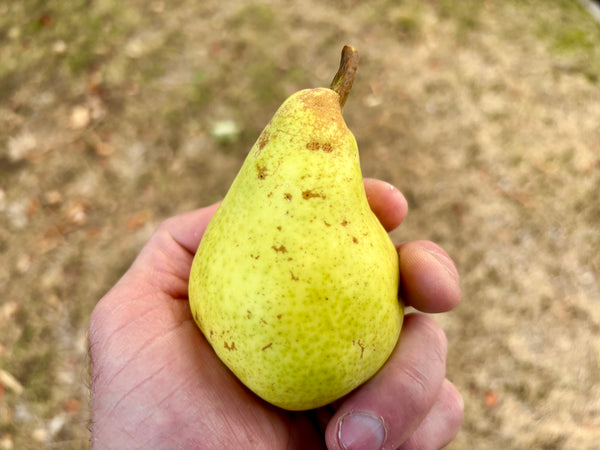 D'Anjou Pear(Spring 2027)
From $64.99
-
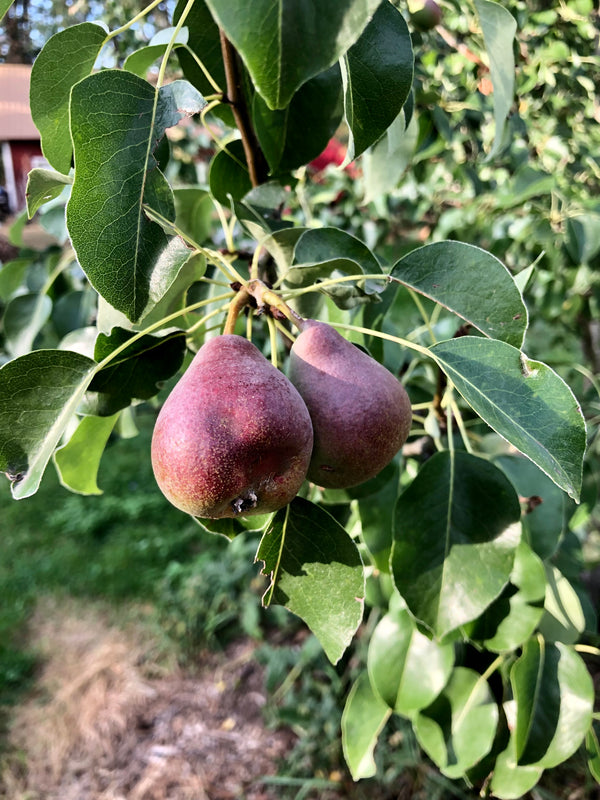 Stuttgarter Gaishirtle Pear(Spring 2027)
From $49.99
-
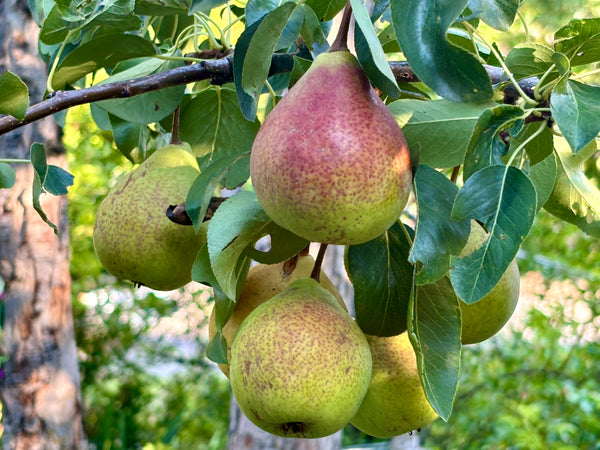 Summercrisp Pear(Spring 2027)
From $34.99
-
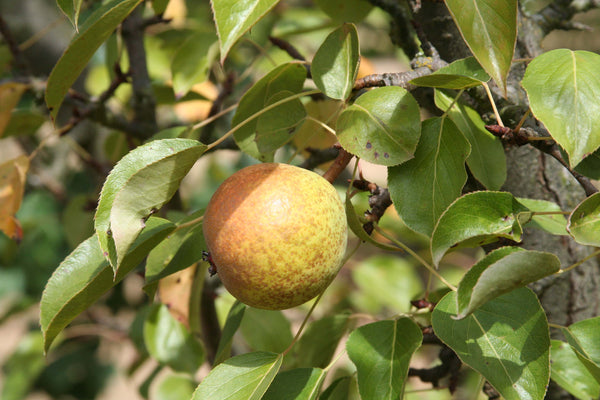 Ure Pear(Spring 2027)
From $49.99
-
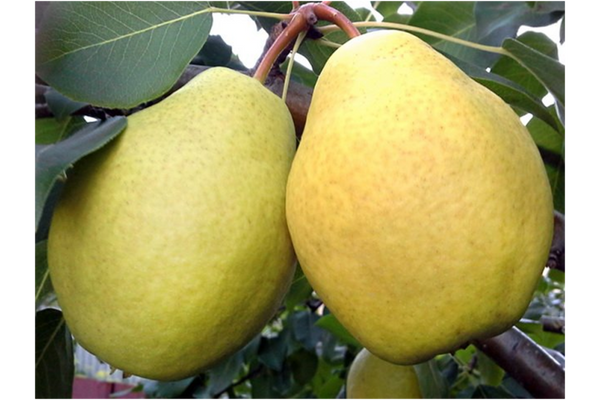 Larinskaya Pear(Spring 2027)
From $44.99
-
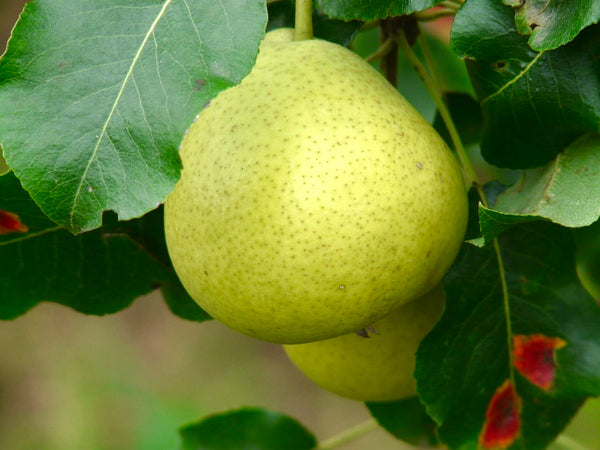 Savignac Pear(Spring 2027)
From $44.99
-
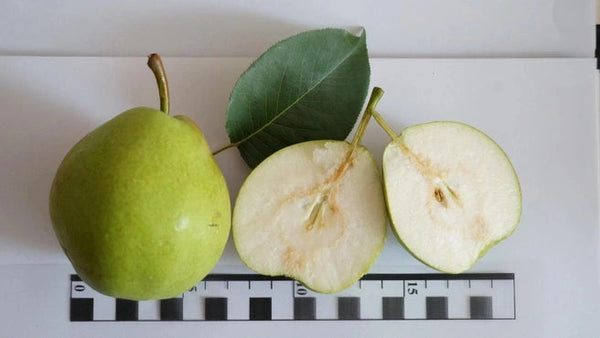 Bolshaya Pear(Spring 2027)
From $34.99
-
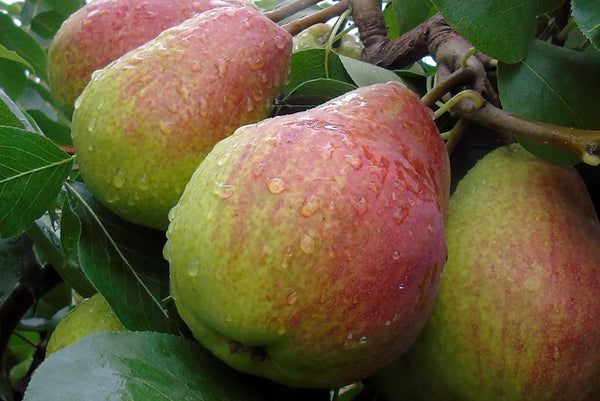 Vekovaya Pear(Spring 2027)
From $49.99
-
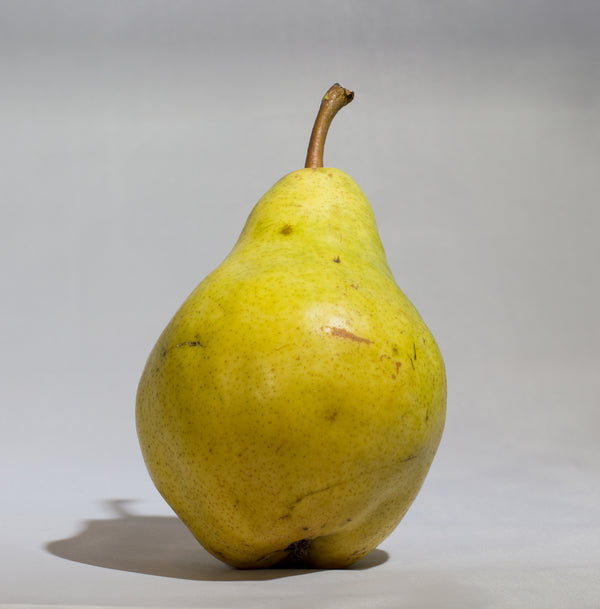 Bartlett Pear(Spring 2027)
From $64.99
-
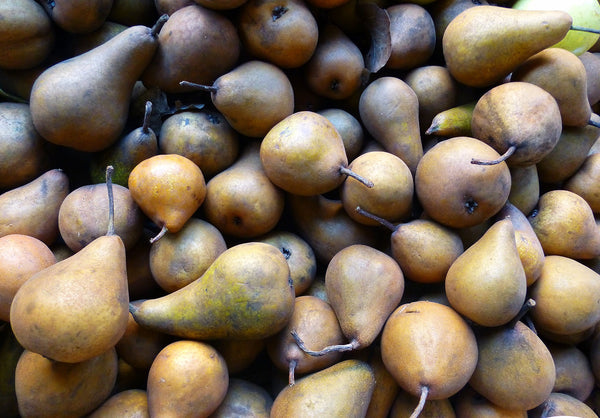 Honeysweet Pear(Spring 2027)
$49.99
-
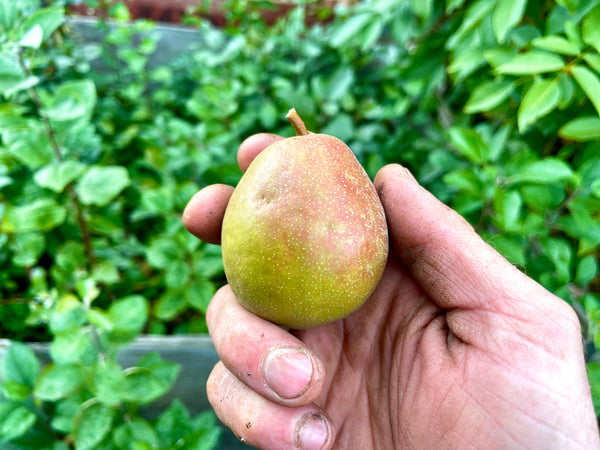 Seckel Pear(Spring 2027)
From $109.99
-
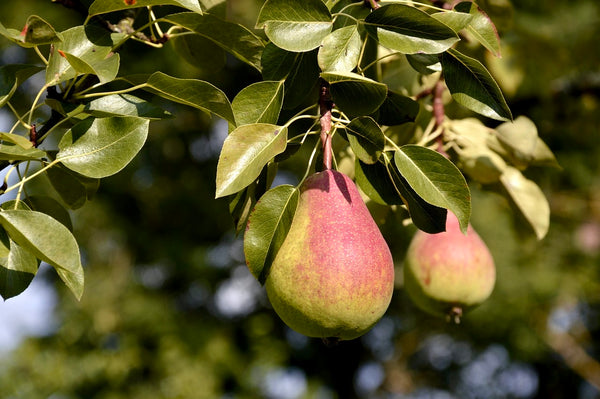 Ubileen Pear(Spring 2027)
From $34.99
