
Skip to product information
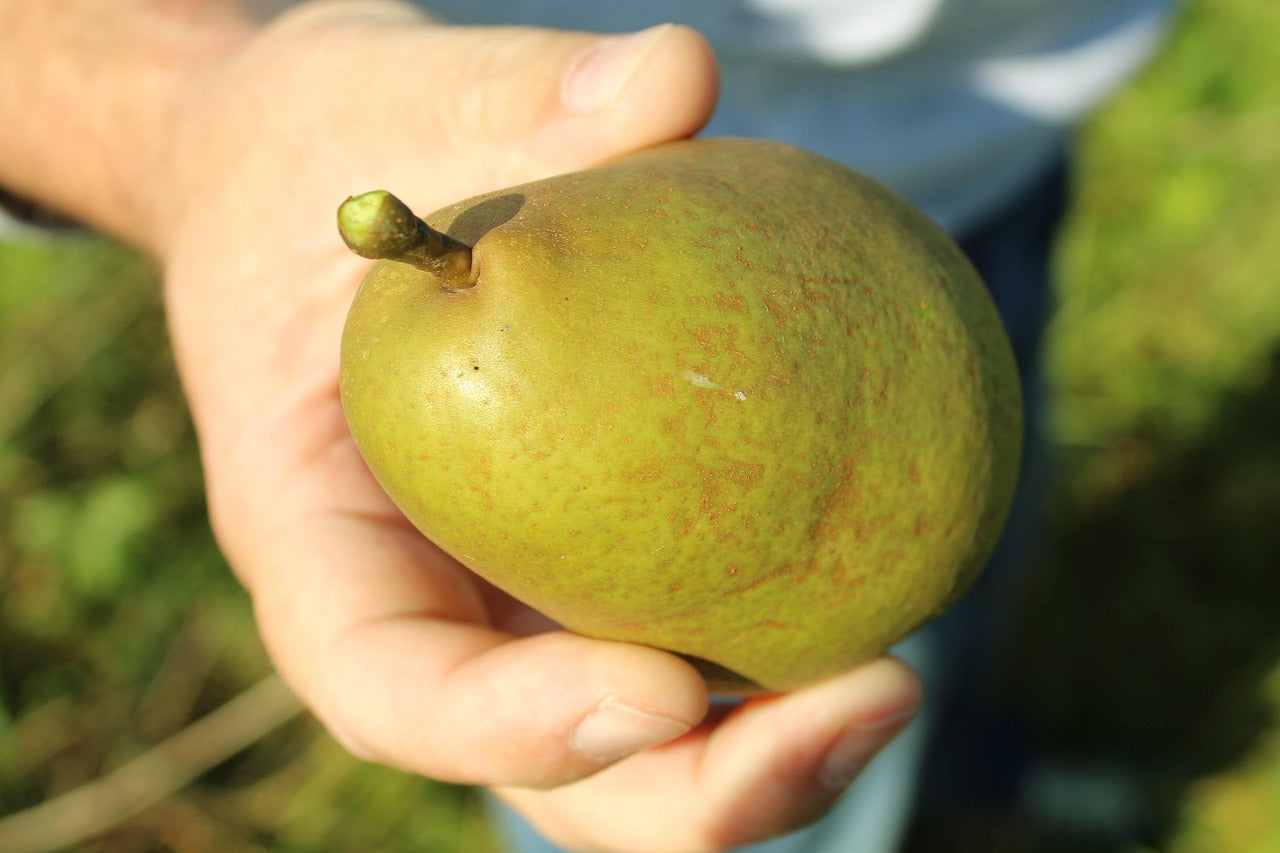
Waterville Pear
$34.99
Reliable shipping
Flexible returns
Overview
Waterville is a fairly cold-climated adapted European pear (Pyrus communis) originally associated with Waterville, Vermont, known for producing large, very juicy fruit with notably sweet flavor and a bit of classic “European pear” texture (slightly coarse).
Origin and History
Waterville is a local Vermont pear—discovered/rediscovered in Waterville, VT and then introduced more widely through Elmore Roots Nursery. Parentage is not documented in the sources describing the variety.
Fruit & Uses
-
Fruit size & texture: Large; very juicy; sweet; often described as slightly coarse-textured (not uncommon in hardy dessert pears).
-
Flavor: Sweet, good dessert quality.
-
Season: The pears come on mid-late September in the Bitterroot Valley, MT.
-
Uses: Fresh eating, but also noted as good in tarts, although we never tried Waterville in a tart.
Growth Habit
Waterville is very vigorous and benefits from training/spreading limbs early rather than heavy pruning right out of the gate.
Spacing
Our 2026 Waterville pears are grafted onto standard, Pyrus communis rootstock, and should be spaced about 20 ft. apart. Can be spaced closer for a more rigorous pruning regiment.
Pollination
Like most pears, Waterville is not self-fertile and needs a pollenzer, i.e. another variety for pollination.Examples of what we offer that will serve as a pollination partner include Bartlett, Flemish Beauty, Karl's Favorite, Johantorp, and Seckel.
Cold hardiness
In our experience in Montana, Waterville pear has been surviving in a fairly cold spot in the Bitterroot—particularly Stevensville, MT—and the tree experienced -38°F on 1/13/24 without showing any signs of winter injury. It very well may survive colder than -40°F, but we simply do not have that data yet. As such, we are listing Waterville as a solid Zone 3a pear based on our experience in Montana.