
Skip to product information


White Gold Sweet Cherry (Spring 2027)
$64.99
Reliable shipping
Flexible returns
Pollination
Self-fertile
Bloom group
5 of 7 (Mid-Late)
Ripening
Will it finish before your first hard freeze?
Check it on the Ripening Map (opens in a new tab)
At a glance: White Gold Sweet Cherry is a cherry tree rated hardy to zone 3b in our ratings (winters to -35°F), self-fertile, so one tree can crop (bloom group 5 of 7, mid-late for a sweet cherry), and it ripens about Jul 13 to Jul 25 in Missoula (our Missoula estimate).
| Hardy to | Zone 3b to 8. The b means the warmer half of zone 3 only (winters to -35°F). Find your zone with our cold hardiness calculator. |
|---|---|
| Pollination | Self-Fertile. Bloom group 5 of 7 (mid-late), mid spring here. White Gold is self-fertile and does not need a partner. It blooms a little after Bing and Rainier but overlaps them enough to be a useful pollenizer, and its pollen works on every sweet cherry. Nearby varieties that can boost the crop: Bing Cherry, Black Gold Sweet Cherry, Gold Sweet Cherry, Rainier Sweet Cherry and 2 more. Sweet Cherry Pollination Map. |
| Ripens | About Jul 13 to Jul 25 in Missoula (a Missoula estimate from published sources). Real years swing about a week either way. See the date for your town. |
| Rootstock and size | Mahaleb: full size, about 20 to 30 ft (sweet cherry), 15 to 18 ft (tart cherry) tall unpruned. Loves dry, well-drained soil. Plant 18 to 22 ft apart. Our rootstock guide. |
| Good for | Fresh eating (8/10), pollenizing other trees (7/10). Scores are our own 1 to 10 ratings; 8 and up makes our Best Of lists. |
| Deer | A deer favorite. Fence it or cage it. |
| What you get | Bare root, 5-7 ft. Regular Grade or 5-7 ft. Larger & More Branching. Shipped or picked up in Missoula in spring, roots wrapped in moist sawdust. Guaranteed to bud out. |
Overview
White Gold is a self-fertile sweet cherry selected for growers who want Rainier-style color and eating quality, but with a tree that is generally more dependable in tougher, wetter, and more disease-prone cherry climates. It’s widely regarded as one of the most broadly “all-around” light-fleshed sweet cherries: productive, good flavor, and notably tolerant of two of the biggest sweet-cherry problems in the North and Northeast—bacterial canker and cherry leaf spot. It has also been sold under the name Newfane.
Origin & History
White Gold was developed in the Cornell/NYSAES sweet cherry breeding program in Geneva, New York and released as NY 13688. Its documented parentage is Emperor Francis × Stella, which is why it combines classic light-fleshed sweet-cherry traits with self-fertility. It was introduced in 2001.
Fruit & Uses
White Gold produces yellow fruit with a red blush and white to very pale flesh, generally in the midseason window. Fruit quality is consistently described as high, with very good sweet-cherry flavor and firm texture for fresh eating. Its tolerance to rain-induced cracking is commonly rated as intermediate—better than Rainier, not as good as the most crack-tolerant cultivars—so it’s still wise to prioritize siting, airflow, and canopy management in wet-summer locations.
Growth Habit
On full-size rootstock, White Gold is a vigorous sweet cherry that benefits from early training to build strong scaffold angles and maintain an open canopy. Like other sweet cherries, it performs best when managed for sunlight penetration and airflow, which supports fruit quality and helps reduce disease pressure.
Spacing
We offer White Gold on full size Mazzard rootstock. For Mazzard, a reliable long-term spacing is about 18–22 feet between trees, depending on soil vigor and how aggressively you plan to manage canopy size. If you want a bigger, lower-maintenance tree over time, push wider; if you plan consistent summer pruning and renewal to keep trees tighter, you can use the lower end of that range.
Pollination
White Gold is self-fertile, so it does not require a pollenizer to set fruit. However, additional sweet cherries nearby often improve consistency and yield. Sweet cherries to pair with White Gold include Gold, Black Gold, Stella, and Lapins. White Gold is commonly treated as a strong pollination partner because it is self-fertile and blooms in the early-to-early-mid portion of the sweet cherry bloom season.
Cold hardiness
Sweet cherry hardiness is not a single fixed number: it changes through winter as trees acclimate, and it can be rapidly lost during warm spells (deacclimation). This happens more readily with sweet cherries than say apples. The duration of cold also matters—brief pre-dawn lows can be survivable where many hours or days at the same temperature would cause much greater injury, especially to flower buds.
In our Montana experience, we used to list White Gold as the second-hardiest sweet cherry after Gold, but we have revised that over time. Based on years of experience and customer observations, we now believe Lapins is the second hardiest in our lineup, having survived down to or very close to -38°F in the Bitterroot (Stevensville, MT) on 1/13/24, which is about what Gold can withstand, although Gold may push even colder (potentially near -40°F) under the right conditions. White Gold was not at that same site. However, we have seen White Gold show real vulnerability to early-season cold before full dormancy: a sharp fall frost on 10/25/20 that reached -10°F wiped our White Golds, while some Gold trees were okay. That event is a strong reminder that timing of cold (hardening-off status) can matter as much as the absolute low.
Other Notes
White Gold is notable historically as the first commercially released self-fertile light-fleshed sweet cherry in the U.S., which is a big reason it remains relevant for small orchards and home growers who only have room for one sweet cherry. On disease, the most defensible claim for White Gold is not “disease-proof,” but that it has unusually good tolerance to cherry leaf spot and bacterial canker relative to many sweet cherries, which is one of the main reasons it’s been recommended for more humid and disease-prone regions.
Questions we get about White Gold Sweet Cherry
Does White Gold Sweet Cherry need a pollenizer?
No. White Gold Sweet Cherry is self-fertile, so a single tree can set fruit. White Gold is self-fertile and does not need a partner. It blooms a little after Bing and Rainier but overlaps them enough to be a useful pollenizer, and its pollen works on every sweet cherry. Partners we carry include Bing Cherry, Black Gold Sweet Cherry, Gold Sweet Cherry.
How cold hardy is White Gold Sweet Cherry?
We rate White Gold Sweet Cherry hardy to zone 3b, which means winters down to about -35°F. Our ratings come from real winters at our two Montana sites and from trusted growers across the North, not from a catalog average.
When does White Gold Sweet Cherry ripen?
About Jul 13 to Jul 25 in Missoula, Montana (an estimate built from published sources and our climate). Warmer places run earlier and cooler places later; our ripening map converts the date to your town.
How big does White Gold Sweet Cherry get?
We graft White Gold Sweet Cherry onto Mahaleb (full size), which makes a tree roughly 20 to 30 ft (sweet cherry), 15 to 18 ft (tart cherry) tall if you never prune it. Plant 18 to 22 ft apart.
What is White Gold Sweet Cherry good for?
Our top use scores for White Gold Sweet Cherry are fresh eating (8/10), pollenizing other trees (7/10). Anything scored 8 or higher makes our Best Of lists.
Will deer eat White Gold Sweet Cherry?
Yes, deer love it. Protect White Gold Sweet Cherry with a fence or a cage, especially while it is young.
Pollination partners
Good partners for White Gold Sweet Cherry
White Gold Sweet Cherry is self-fertile, so one tree will fruit on its own. If you'd like a second sweet cherry, these bloom at the same time and work well together.
Bloom group
5 of 7 (Mid-Late)
Pollination
Self-fertile
Pollen
Good pollenizer
-
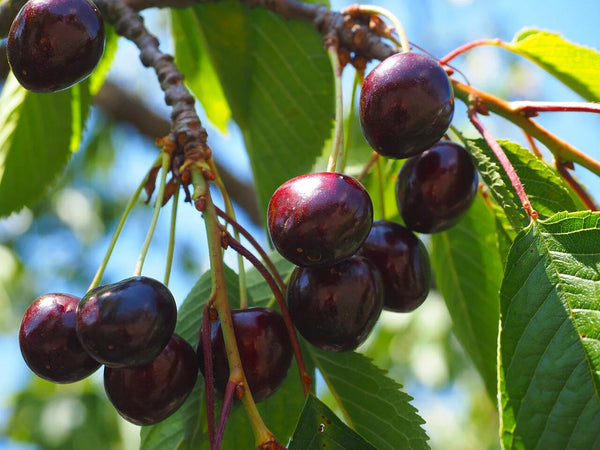 Black Gold Sweet Cherry(Spring 2027)
From $64.99
Black Gold Sweet Cherry(Spring 2027)
From $64.99
-
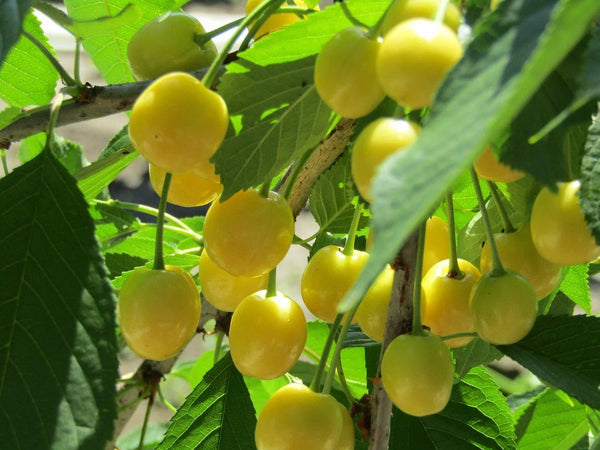 Gold Sweet Cherry(Spring 2027)
From $64.99
Gold Sweet Cherry(Spring 2027)
From $64.99
-
 Rainier Sweet Cherry(Spring 2027)
From $64.99
Rainier Sweet Cherry(Spring 2027)
From $64.99
-
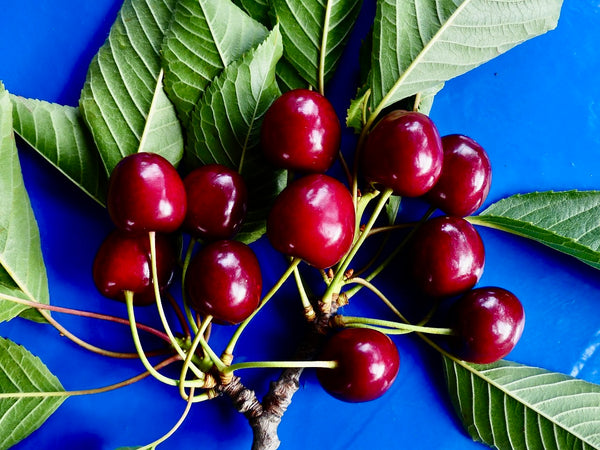 Sold out
Bing Cherry
Sold out
Bing Cherry

