
Skip to product information
William's Pride Apple
$39.99
Reliable shipping
Flexible returns
Overview
William’s Pride is an early-season apple from the PRI (Purdue–Rutgers–Illinois) disease-resistant breeding program, grown for its combination of attractive dark red fruit, crisp texture for an early apple, and unusually strong disease resistance compared with many classic summer varieties. Reliable choice for growers who a quality fresh eating apple in regions where apple scab and rust pressure can be an ongoing issue.
Origin & History
Williams’ Pride was developed through the PRI cooperative apple breeding program and was released in 1988. Its reported parentage is PRI 1018-101 × NJ 50. It was selected as part of a long-running effort to combine good fresh-eating quality with durable disease resistance, particularly against apple scab.
Fruit & Uses
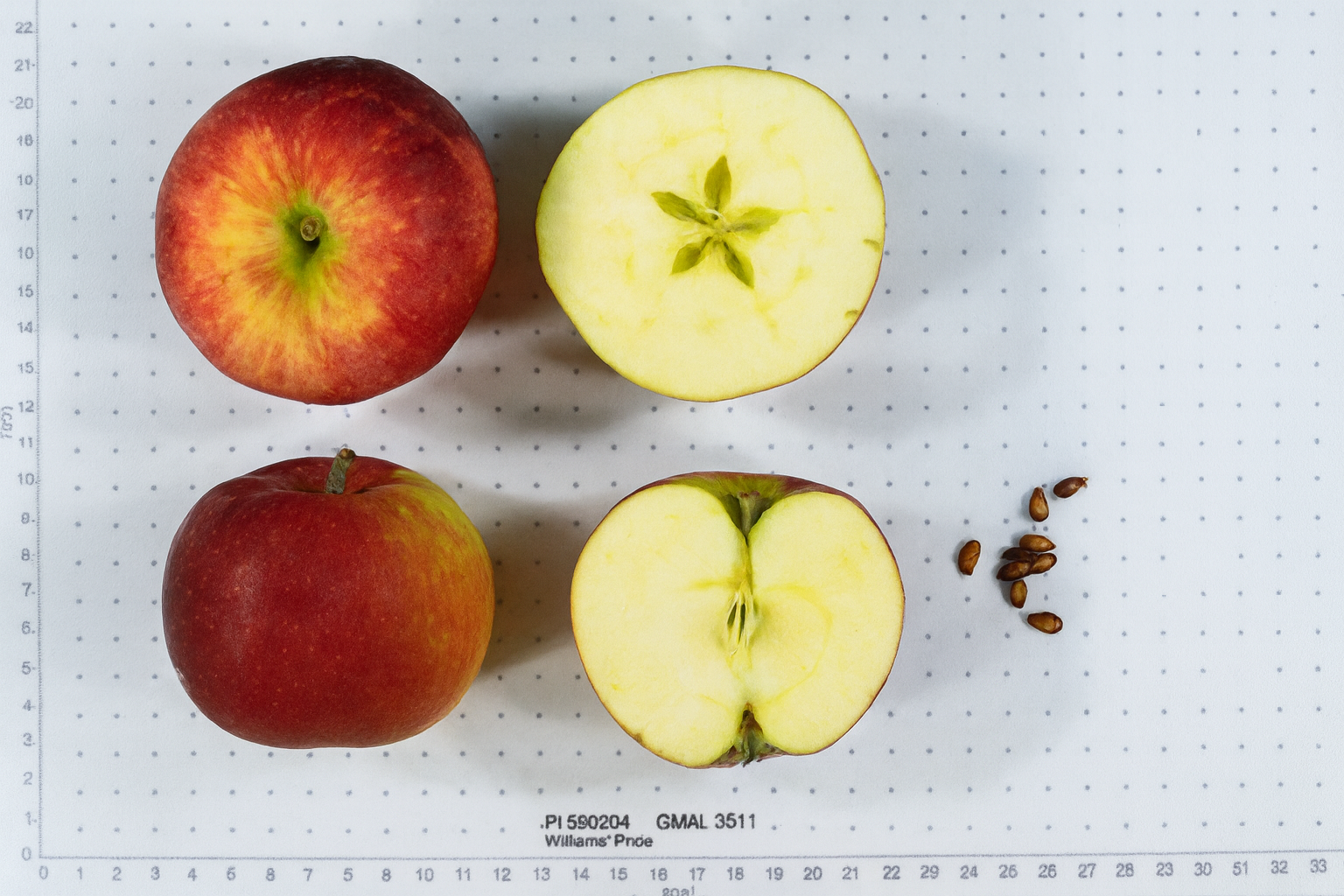
Williams’ Pride typically produces medium to medium-large apples with a deep red to purplish-red skin and cream-colored flesh. It ripens early (often in late July to early August in many growing regions), offering crisp, juicy fruit at a time when many early apples are softer or less complex. It’s best used for fresh eating, but it also performs well for baking and general kitchen use when harvested at peak maturity. One thing we have observed growing William's Pride in MT is that it keeps surprisingly well for an early apple.
Growth Habit
The tree is vigorous, sturdy, and spreading with good branch structure. It tends to be a dependable grower for us in Missoula when trained and pruned like a standard dessert apple. Actually has a relatively extended bloom window compared with many early apples, which can help pollination and can sometimes improve odds of setting a crop in years with uneven spring weather.
Spacing
On Bud 118, a practical spacing range is 14–18 feet between trees, depending on how hard you plan to prune for size control and how vigorous your site is. In richer soils or irrigated ground, wider spacing reduces shading and improves airflow; in leaner soils with consistent pruning, spacing can be somewhat tighter.
Pollination
Should be planted with another apple or crabapple that blooms at the same time to ensure consistent fruit set. Examples of what to plant with William's Pride include Pristine, Honeycrisp, all of our applecrabs, Dolgo, Dearbron's Unknown, Prairie Sensation, McIntosh, Yellow Transparent, Zestar!, and many others.
Cold hardiness
Rod McIver's William's Pride in Kalispell came through the 1/13/24 arctic cold event, which saw -35°F, without winter injury. However, -35°F does not prove -40°F (or more) survival, and we do not yet have direct evidence of Williams’ Pride enduring -40°F. For that reason, we recommend it broadly for much of Western Montana, but for colder parts of Eastern Montana that can genuinely reach the -40°Fs, we recommend prioritizing apples with documented survival deeper into this range unless you are in one of the warmer eastern MT microclimates (such as Billings and the surrounding warmer valleys). Zone 3b.
Other Notes
Williams’ Pride is scab-immune (or field-immune) and is resistant to cedar apple rust and powdery mildew, with resistance to fire blight often noted as well. As with any apple, resistance does not mean invincibility—especially for fire blight under high pressure—so good pruning practices, airflow, and balanced fertility still matter.
Image: Resolution enhanced from a public domain image. The apple is unchanged, but some of the surrounding text and numbers may vary.