Skip to product information


Juliet Dwarf Cherry (Bundle of 2)
$99.99
Reliable shipping
Flexible returns
Pollination
Self-fertile
Bloom group
4 of 7 (Mid)
Origin & Breeding
Juliet Dwarf Cherry, a cross between Prunus fruticosa (Mongolian bush cherry) and Prunus cerasus (sour cherry), was developed by the University of Saskatchewan as part of the Romance Series of bush cherries, bred specifically for extreme cold climates. These cherries were selected to combine the winter hardiness of native cherry species with improved fruit size, flavor, and productivity. Juliet is one of the largest-fruited and most productive selections in the series.
Cold Hardiness
Juliet is exceptionally cold hardy and is reliably winter hardy to even −50°F. This makes it suitable for some of the coldest fruit-growing regions in North America, including much of the northern Plains, interior mountain valleys, and exposed continental sites where traditional sweet and sour cherries fail. Juliet will work in just about all of Montana apart from perhaps the absolute coldest places that can see sub -50°F temps. If you are in an area like this, Juliet and other Romance series cherries could still do well if you site them in a spot free of frost-pooling (higher up/out of depressions on the landscape).
Plant Form & Habit
Juliet grows as a compact, multi-stemmed shrub rather than a standard tree. Sources online typically note Juliet reaching 6–8 feet tall and wide, although a ten year old Juliet tree we saw at the Western Ag. Research Center in Corvallis, MT is closer to 8-10 ft. The bush form eliminates the need for ladders and makes pruning, netting, and harvest straightforward. Plants are naturally dense and upright, and they fit well into small orchards, hedgerows, or mixed plantings.
Leaves & Flowers
Leaves are medium-sized and deep green through the growing season, contributing to good vigor and fruit development. In spring, Juliet produces abundant white blossoms that are attractive to pollinators. Flowering is typically reliable once plants are established.
Fruit Description
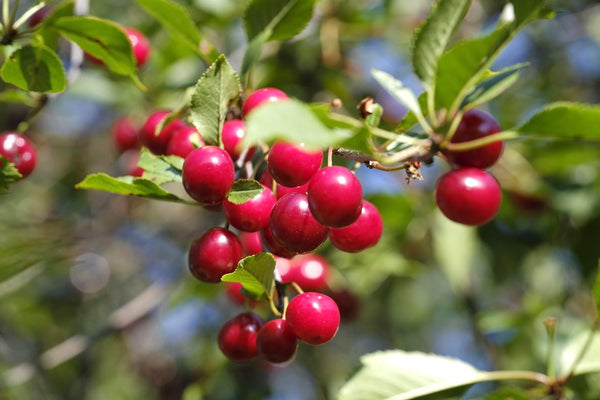
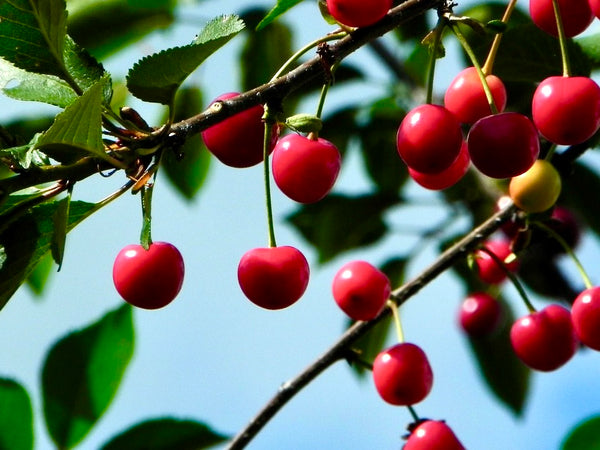
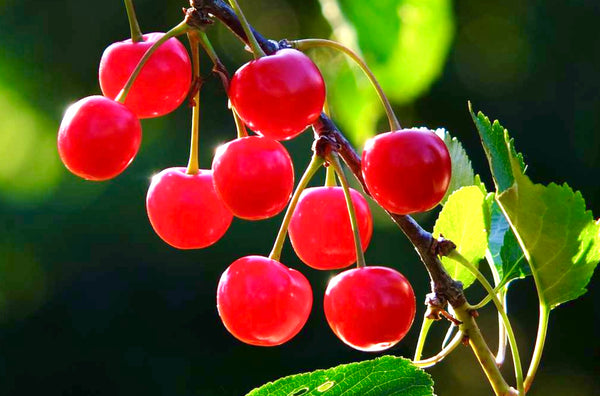
Juliet produces large, dark red cherries that are among the biggest in the bush cherry category. Fruit is borne in clusters and ripens evenly, making harvest efficient. The skin darkens significantly as the fruit reaches full maturity, and allowing cherries to fully color improves flavor.
Flavor & Uses
The flavor of Juliet is balanced and rich, combining sweetness with enough acidity to keep the fruit lively. It is excellent for fresh eating when fully ripe and performs especially well for pies, preserves, juice, syrup, and drying. The higher sugar content compared to many bush cherries makes Juliet a standout for both home and small-scale processing.
Productivity & Pollination
Juliet is highly productive once established and often bears heavy crops annually, with the fruit ripening in Missoula and the Bitterroot around third week to end of July. As with other bush cherries, yield and fruit quality tend to improve as plants mature and develop a larger, better-lit canopy.
Juliet is at least partially self-fertile, meaning you'll get fruit without the need from another variety of dwarf cherry (pollenizer), but planting it near another dwarf cherry, such as Romeo, Cutie Pie, or Wowza!, can increase fruit yield.
Disease Resistance & Reliability
Juliet shows good resistance to common cherry diseases when grown in cold, dry-summer climates with good airflow. The bush form also provides resilience after harsh winters, as new shoots can regenerate from the base if older wood is damaged.
Growing Notes
Juliet performs best in full sun with well-drained soil. Minimal pruning is required beyond removing dead or crowded stems and occasionally renewing older wood. Because of its extreme cold hardiness and manageable size, it is one of the most dependable cherries for growers in challenging climates.
Pollination partners
Good partners for Juliet Dwarf Cherry
Juliet Dwarf Cherry is self-fertile, so one tree will fruit on its own. If you'd like a second dwarf sour cherry, these bloom at the same time and work well together.
Bloom group
4 of 7 (Mid)
Pollination
Self-fertile
Pollen
Good pollenizer