
Skip to product information


Cutie Pie Dwarf Cherry (Bundle of 2)
$39.99
Reliable shipping
Flexible returns
Pollination
Self-fertile
Bloom group
4 of 7 (Mid)
Ripening
Will it finish before your first hard freeze?
Check it on the Ripening Map (opens in a new tab)
Disease resistanceNot tested yet
- ? Bacterial canker : Unknown, no published data yet
- ? Black knot : Unknown, no published data yet
- ? Brown rot : Unknown, no published data yet
- ? Cherry leaf spot : Unknown, no published data yet
- ? Cytospora canker : Unknown, no published data yet
Scored 1 to 5. Higher resists better, and ? means no published data yet.
See it on our cherry disease chart (opens in a new tab)At a glance: Cutie Pie Dwarf Cherry is a cherry tree rated hardy to zone 2 in our ratings (winters to -50°F), and self-fertile, so one tree can crop (bloom group 4 of 7, mid for a dwarf sour cherry).
| Hardy to | Zone 2 to 7. A bare number means the whole of zone 2, colder half included (winters to -50°F). Find your zone with our cold hardiness calculator. |
|---|---|
| Chill hours | About 800 hours (600 to 1,200). Our estimate. No published figure exists for this variety yet. Montana winters give it plenty. In milder climates, make sure your winters average at least this much. Check your chill hours or see our sources. |
| Pollination | Self-Fertile. Bloom group 4 of 7 (mid), mid spring here. Cutie Pie is self-fertile and will crop on its own. Romeo or Juliet planted nearby can boost the crop. Nearby varieties that can boost the crop: Juliet Dwarf Cherry (Bundle of 2), Romeo Dwarf Cherry (Bundle of 2), Wowza! Dwarf Cherry (Bundle of 2). Bloom group is our estimate from the variety's origin and relatives. Tart Cherry Pollination Map. |
| Spacing | Plant 3 to 5 ft apart. |
| Good for | Pies and baking (7/10), jams and jellies (7/10), juice and sweet cider (7/10), ornamental value (7/10), fresh eating (6/10), canning and freezing (6/10). Scores are our own 1 to 10 ratings; 8 and up makes our Best Of lists. |
| Deer | A deer favorite. Fence it or cage it. |
| What you get | Bare root, 6-12" or 1-2 ft or 2-3 ft. Shipped or picked up in Missoula in spring, roots wrapped in moist sawdust. Guaranteed to bud out. |
Overview
Cutie Pie Dwarf Cherry is an extreme dwarf sour cherry introduced by the University of Saskatchewan fruit breeding program in 2021 to mark its centennial. It descends from hardy sour cherry material developed through decades of prairie breeding work, drawing on the legacy of breeders such as Les Kerr. Cutie Pie was selected for its exceptionally compact, shrub-like growth habit and its bright red fruit, which is sweeter and more approachable than many traditional sour cherries.
Horticultural Information
Cutie Pie is a dwarf form of sour cherry (Prunus cerasus) with a naturally multi-stemmed, bushy growth habit. Plants typically reach about 4–5 feet tall and wide at maturity. The compact stature makes it well suited to small gardens, edible landscapes, borders, and container growing. Plants may sucker moderately, allowing them to slowly fill in space while remaining manageable.
Uses
The fruit of Cutie Pie is small, bright red, and pleasantly flavored, offering a balanced sweet–tart profile. The cherries can be eaten fresh by those who enjoy sour cherries and are well suited for pies, baking, jams, jellies, syrups, and other preserves. That said, these are not sweet cherries, contrary to what some places online will state. They are sweeter than a typical tart/pie cherry, such as Montmorency, but they are not as sweet as a sweet cherry. The spring flowers and compact form also make it an attractive ornamental edible shrub.
Cold Hardiness
Cutie Pie was bred specifically for cold prairie climates and is hardy to at least Zone 2, although University of Saskatchewan breeder Bob Bors believes that it could survive zone 1 possibly and with protection.
Spacing & Growth Habit
Due to its dwarf, shrub-like form, space Cutie Pie plants approximately 3–5 feet apart to allow for good air circulation and room to spread. Plants can be spaced more closely in ornamental or hedge-style plantings, but adequate spacing helps reduce disease pressure and improves fruiting.
Cross Pollination
Cutie Pie is self-fertile and capable of setting fruit on its own. However, as with other sour cherries, planting additional compatible sour cherry varieties nearby, such as Romeo, Juliet, and others could improve pollination efficiency and overall yield by increasing pollen availability and pollinator activity during bloom.
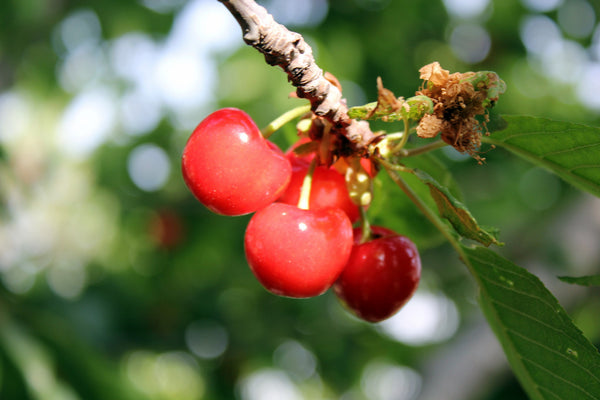
About the photo: this isn’t Cutie Pie itself. Photos of Cutie Pie are either under copyright or simply unavailable, so we picked the open-source image that looks closest to the fruit. Photo: “Prunus fruticosa (Zwerg-Weichsel) IMG 2187” by HermannSchachner, via Wikimedia Commons, licensed CC0.
Questions we get about Cutie Pie Dwarf Cherry
Does Cutie Pie Dwarf Cherry need a pollenizer?
No. Cutie Pie Dwarf Cherry is self-fertile, so a single tree can set fruit. Cutie Pie is self-fertile and will crop on its own. Romeo or Juliet planted nearby can boost the crop. Partners we carry include Juliet Dwarf Cherry (Bundle of 2), Romeo Dwarf Cherry (Bundle of 2), Wowza! Dwarf Cherry (Bundle of 2).
How cold hardy is Cutie Pie Dwarf Cherry?
We rate Cutie Pie Dwarf Cherry hardy to zone 2, which means winters down to about -50°F. Our ratings come from real winters at our two Montana sites and from trusted growers across the North, not from a catalog average.
How many chill hours does Cutie Pie Dwarf Cherry need?
About 800 hours of winter chill (we count hours at or below 45°F), likely somewhere between 600 and 1,200. Nobody has published a chill figure for it, so that's our estimate from its relatives and origin. Bred on the Canadian prairies, so Montana's winters give it all the chill it wants. No measured figure exists yet. Our chill hours guide has a calculator for your winters, and our research page lists the sources.
What is Cutie Pie Dwarf Cherry good for?
Our top use scores for Cutie Pie Dwarf Cherry are pies and baking (7/10), jams and jellies (7/10), juice and sweet cider (7/10), ornamental value (7/10).
Is Cutie Pie Dwarf Cherry disease resistant?
We don't know yet. Nobody has published solid disease data on Cutie Pie Dwarf Cherry for bacterial canker, black knot, brown rot, cherry leaf spot and cytospora canker, so we list it as unknown instead of guessing. That doesn't mean it's weak. Plenty of the plants we grow have never been through formal disease trials. Our cherry disease resistance chart has every rating, the notes and the sources.
Will deer eat Cutie Pie Dwarf Cherry?
Yes, deer love it. Protect Cutie Pie Dwarf Cherry with a fence or a cage, especially while it is young.
What arrives, and when does Cutie Pie Dwarf Cherry ship?
A dormant bare-root plant, roots wrapped in moist sawdust with a vapor barrier, shipped or picked up in Missoula in spring. Sizes offered: 6-12" or 1-2 ft or 2-3 ft. We guarantee our plants bud out. Stone fruits can be slow, so if one still has not budded out by August 15, write to us and we credit you for the following spring.
More Plants Like This
Sold Out This Season? Try These
Pollination partners
Good partners for Cutie Pie Dwarf Cherry
Cutie Pie Dwarf Cherry is self-fertile, so one tree will fruit on its own. If you'd like a second dwarf sour cherry, these bloom at the same time and work well together.
Bloom group
4 of 7 (Mid)
Pollination
Self-fertile
Pollen
Good pollenizer
-
 Sold out
Wowza! Dwarf Cherry(Bundle of 2)
See every pairing on the Tart Cherry Pollination Map
Cutie Pie Dwarf Cherry's bloom group is our best estimate. Watch it bloom and tell us what you see.
You may also like
Not available for spring 2027. Here's what we'd plant instead.
Cutie Pie Dwarf Cherry (Bundle of 2) is off the list this season. These are in stock now, and the full dwarf cherry trees collection has the rest. Everything on our zone 2 page is rated for the same winters.
Browse the dwarf cherry trees collection for what's in stock.