
Skip to product information


Hanska Plum (Spring 2027)
$89.99
Reliable shipping
Flexible returns
Pollination
Needs a partner
Bloom group
4 of 7 (Mid)
Ripening
Will it finish before your first hard freeze?
Check it on the Ripening Map (opens in a new tab)At a glance: Hanska Plum is a plum tree rated hardy to zone 3 in our ratings (winters to -40°F), and not self-fertile, so it needs a different variety nearby as a pollenizer (bloom group 4 of 7, mid for a hybrid or Japanese plum).
| Hardy to | Zone 3 to 8. A bare number means the whole of zone 3, colder half included (winters to -40°F). Find your zone with our cold hardiness calculator. |
|---|---|
| Pollination | Needs Cross-Pollination. Bloom group 4 of 7 (mid), early spring here. Hanska needs a different hybrid plum nearby, such as Toka or South Dakota. Kaga has the same parentage, so do not rely on it as the only partner. A Native American plum nearby covers the Canadian advice that hybrids need wild plum pollen. Good partners we carry: Toka Plum, Kahinta Plum, South Dakota Plum, Superior Plum and 15 more. Bloom group is our estimate from the variety's origin and relatives. Plum Pollination Map. |
| Rootstock and size | Native Plum: semi-dwarf, about 10 to 15 ft tall unpruned. Suckers, so mow or pull suckers. Plant 12 to 16 ft apart. Our rootstock guide. |
| Good for | Cooking and roasting (8/10), sauce and butter (7/10), jams and jellies (7/10), fresh eating (6/10), canning and freezing (6/10). Scores are our own 1 to 10 ratings; 8 and up makes our Best Of lists. |
| Deer | A deer favorite. Fence it or cage it. |
| What you get | Bare root, 5-7 ft. Shipped or picked up in Missoula in spring, roots wrapped in moist sawdust. Guaranteed to bud out. |
Overview
Hanska is one of the classic Hansen hybrid plums developed specifically for the northern Great Plains. Released in 1908 by Dr. N.E. Hansen with South Dakota State, it belongs to the group of hardy Asian–American hybrid plums bred to combine improved fruit quality with the durability of native American plum genetics. Hansen's own account gives the parentage as a seedling of the wild Northwestern plum (Prunus americana) as the seed parent, pollenized by the apricot plum of China (Prunus simonii), so it is an americana by simonii hybrid rather than a Japanese plum cross. Hanska is commonly discussed alongside related Hansen hybrids such as Kaga and is part of the same broader breeding effort that eventually produced well-known plums like Toka. Its purpose from the outset was reliable performance in cold, continental climates. Here's a cool article on Hansen and his life's work.
Fruit Quality & Uses
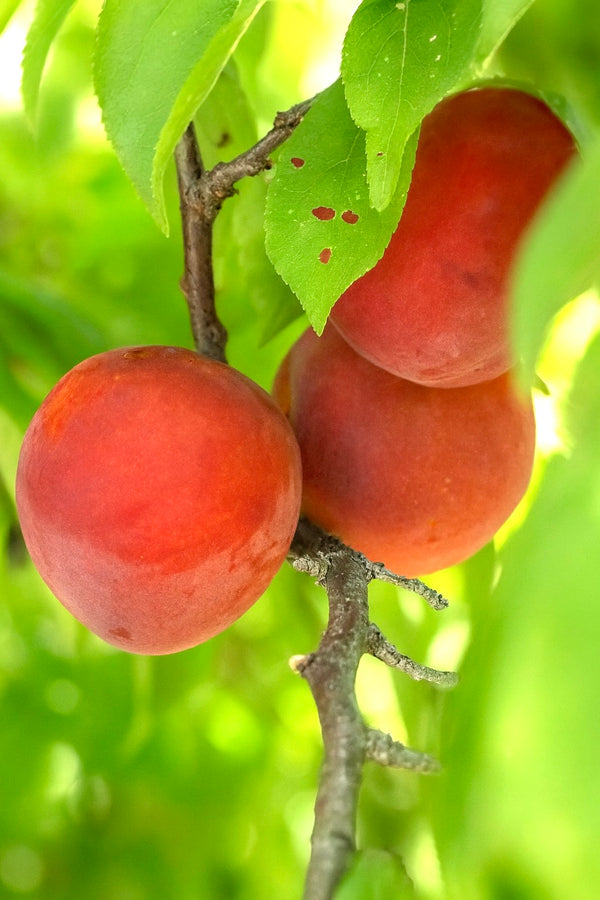
From the research literature and long-standing variety descriptions, Hanska produces medium-sized fruit with red skin and yellow flesh. The fruit is aromatic and firm, with flavor that improves as it fully ripens. It is considered an all-purpose plum, usable for fresh eating when ripe and especially well suited to cooking, preserves, sauces, and other processing where its flavor holds up well.
Cold Hardiness
Hanska is hardy to -40F, which is cited by Bob Purvis, and this matches our field observations in Western Montana, in which Hanska withstood -38F in Stevenville, on Jan. 12th 2024. Hanska will therefore do well in the vast majority of Western Montana, apart from the coldest valleys, such as Potomac, which can get down to -50F. Hanska well not do as well east of the divide where temps can drop below -40F in the winter, but should do survive in Billings and the surrounding warmer valleys, as well as areas that are up on a bench in eastern MT and out of frost pooling. In well-sited plantings with good cold-air drainage and proper fall hardening, it may even perform into colder microclimates than -40F, but there is no published evidence to support assigning a specific lower extreme temperature beyond a Zone 3 placement.
Growth Habit & Spacing
Hanska grows as a vigorous hybrid plum tree rather than a dwarf. Trees develop a strong framework and should be given adequate room to mature. A practical spacing is about 12–16 feet between trees, with wider spacing (15–18 feet) improving airflow, access, and long-term ease of management. Regular pruning helps maintain structure and productivity.
Pollination
Hanska benefits from cross-pollination and should be planted with at least one other compatible hybrid plum that blooms at a similar time. As with most Asian–American hybrid plums, pollination improves fruit set and consistency compared to planting a single tree in isolation. Plant with Toka, Pipestone, Alderman, Underwood, or other asian-american hybrids. Native American plum and Prairie Red Plum can also work. Will not cross with European plums.
Questions we get about Hanska Plum
Does Hanska Plum need a pollenizer?
Yes. Hanska Plum needs pollen from a different variety that blooms at about the same time. Hanska needs a different hybrid plum nearby, such as Toka or South Dakota. Kaga has the same parentage, so do not rely on it as the only partner. A Native American plum nearby covers the Canadian advice that hybrids need wild plum pollen. Partners we carry include Toka Plum, Kahinta Plum, South Dakota Plum.
How cold hardy is Hanska Plum?
We rate Hanska Plum hardy to zone 3, which means winters down to about -40°F. Our ratings come from real winters at our two Montana sites and from trusted growers across the North, not from a catalog average.
How big does Hanska Plum get?
We graft Hanska Plum onto Native Plum (semi-dwarf), which makes a tree roughly 10 to 15 ft tall if you never prune it. Plant 12 to 16 ft apart.
What is Hanska Plum good for?
Our top use scores for Hanska Plum are cooking and roasting (8/10), sauce and butter (7/10), jams and jellies (7/10), fresh eating (6/10). Anything scored 8 or higher makes our Best Of lists.
Will deer eat Hanska Plum?
Yes, deer love it. Protect Hanska Plum with a fence or a cage, especially while it is young.
What arrives, and when does Hanska Plum ship?
A dormant bare-root plant, roots wrapped in moist sawdust with a vapor barrier, shipped or picked up in Missoula in spring. Sizes offered: 5-7 ft. We guarantee our plants bud out. Stone fruits can be slow, so if one still has not budded out by August 15, write to us and we credit you for the following spring.
Pollination partners
Trees that will pollenize Hanska Plum
Hanska Plum needs a different hybrid or Japanese plum nearby to set fruit. Every tree below blooms at the same time and has pollen that works for it. Plant partners within about 100 feet.
Bloom group
4 of 7 (Mid)
Pollination
Needs a partner
Pollen
Good pollenizer
-
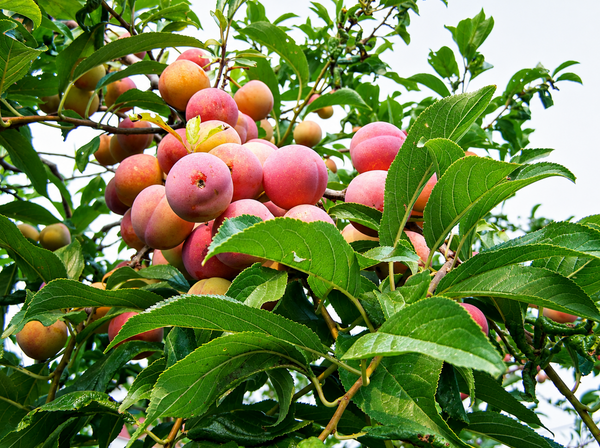 Toka Plum(Spring 2027)
From $49.99
Toka Plum(Spring 2027)
From $49.99
-
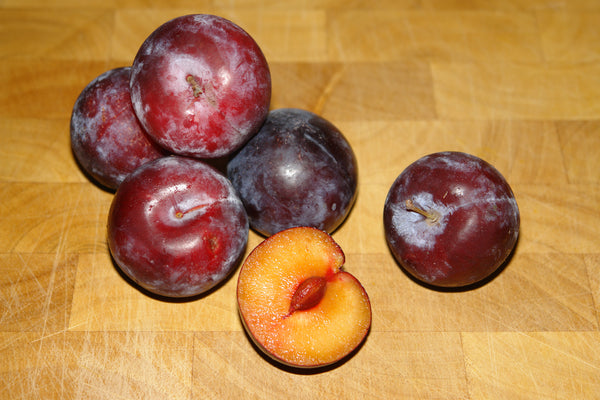 Kahinta Plum(Spring 2027)
$79.99
Kahinta Plum(Spring 2027)
$79.99
-
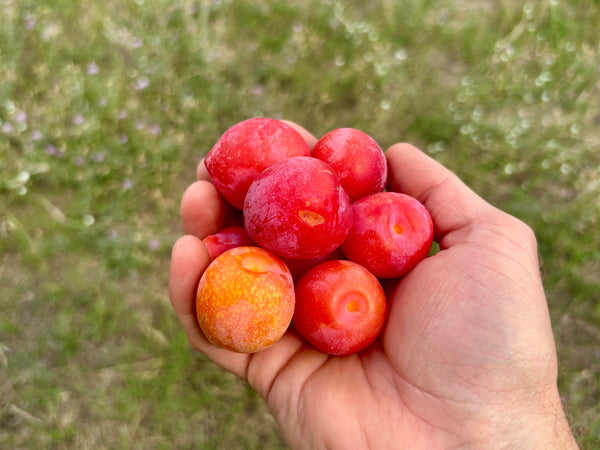 Superior Plum(Spring 2027)
From $49.99
Superior Plum(Spring 2027)
From $49.99
-
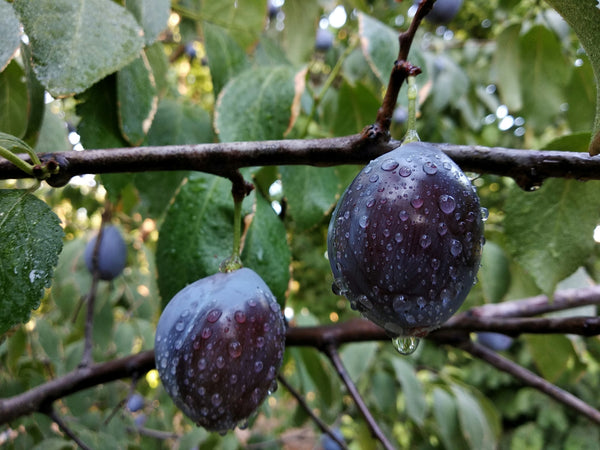 Kaga Plum(Spring 2027)
From $54.99
Kaga Plum(Spring 2027)
From $54.99
-
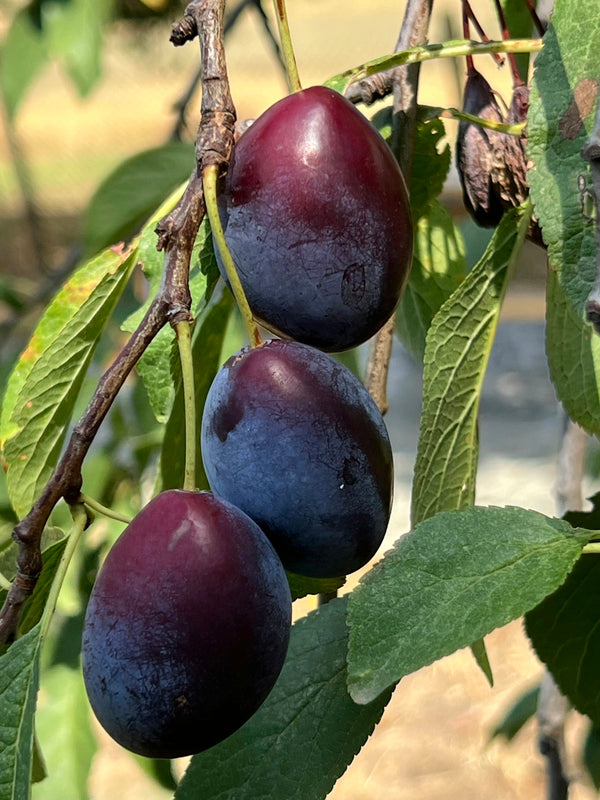 Black Ice Plum(Spring 2027)
From $44.99
Black Ice Plum(Spring 2027)
From $44.99
-
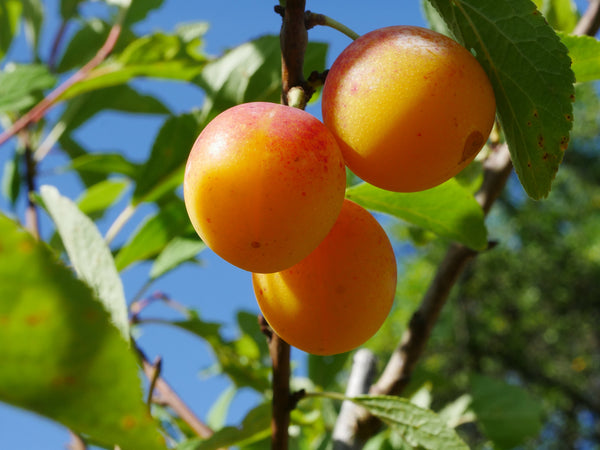 Brookgold Plum(Spring 2027)
From $59.99
Brookgold Plum(Spring 2027)
From $59.99
-
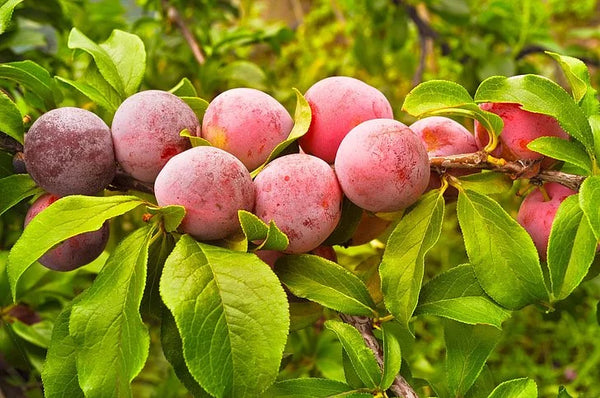 Pipestone Plum(Spring 2027)
From $59.99
Pipestone Plum(Spring 2027)
From $59.99
-
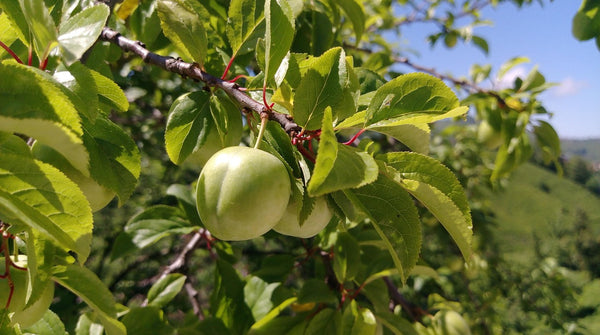 Ptitsin #5 Plum(Spring 2027)
From $54.99
Ptitsin #5 Plum(Spring 2027)
From $54.99
-
 Underwood Plum(Spring 2027)
From $64.99
Underwood Plum(Spring 2027)
From $64.99
-
 Gracious Plum(Spring 2027)
From $59.99
Gracious Plum(Spring 2027)
From $59.99
-
 Kuban Delight Plum(Spring 2027)
$109.99
Kuban Delight Plum(Spring 2027)
$109.99
See every pairing on the Plum Pollination Map
Hanska Plum's bloom group is our best estimate. Watch it bloom and tell us what you see.