Skip to product information


Underwood Plum (Spring 2027)
$64.99
Reliable shipping
Flexible returns
Pollination
Needs a partner
Bloom group
3 of 7 (Early-Mid)
Ripening
Will it finish before your first hard freeze?
Check it on the Ripening Map (opens in a new tab)At a glance: Underwood Plum is a plum tree rated hardy to zone 3 in our ratings (winters to -40°F), not self-fertile, so it needs a different variety nearby as a pollenizer (bloom group 3 of 7, early-mid for a hybrid or Japanese plum), and it ripens about Aug 8 to Aug 20 in Missoula (picked and dated at our place in Missoula).
| Hardy to | Zone 3 to 8. A bare number means the whole of zone 3, colder half included (winters to -40°F). Our notes have it taking -50°F. Find your zone with our cold hardiness calculator. |
|---|---|
| Pollination | Needs Cross-Pollination. Bloom group 3 of 7 (early-mid), early spring here. Underwood blooms early and needs a different hybrid plum nearby. Toka, South Dakota or a Native American plum are good choices. Good partners we carry: Toka Plum, Kaga Plum, Kahinta Plum, South Dakota Plum and 13 more. Plum Pollination Map. |
| Ripens | About Aug 8 to Aug 20 in Missoula (picked and dated off our own trees). Real years swing about a week either way. See the date for your town. |
| Rootstock and size | Native Plum: semi-dwarf, about 10 to 15 ft tall unpruned. Suckers, so mow or pull suckers. Prairie Red Plum: semi-dwarf, about 10 to 15 ft tall unpruned. A seed-grown American plum hybrid from the USDA plant materials center in Bismarck; it suckers. Our rootstock guide. |
| Good for | Fresh eating (8/10), jams and jellies (8/10), cooking and roasting (7/10). Scores are our own 1 to 10 ratings; 8 and up makes our Best Of lists. |
| Deer | A deer favorite. Fence it or cage it. |
| What you get | Bare root, 5-6 ft or 5-7 ft or 4-6 ft or 6-8 ft. Shipped or picked up in Missoula in spring, roots wrapped in moist sawdust. Guaranteed to bud out. |
Overview
Underwood is a classic cold-climate hybrid plum known for dependable survival in relatively harsh winters and for producing attractive, flavorful fruit that works well for both fresh eating and processing.
Origin and History
Underwood is a University of Minnesota introduction from the early 1920s. According to the bilingual plum reference hosted at Cyberfruit, it was introduced in 1921 by the University of Minnesota Fruit Breeding Farm (Excelsior, Minnesota) and is described as a hybrid-type plum derived from Shiro × Wyant. (cyberfruit.info)
Underwood sits in the “Japanese–American hybrid” category that many northern-region plum programs leaned on to combine improved fruit quality with the ruggedness of native North American plum species. (Utah State University Extension)
Fruit & Uses
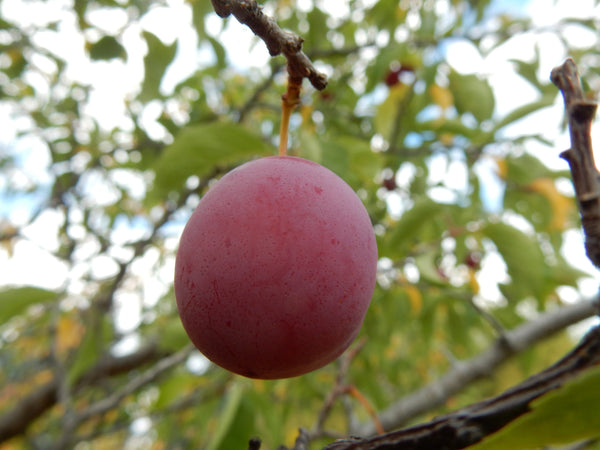
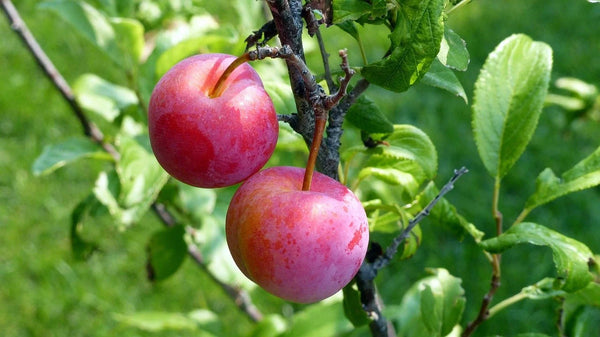
Underwood fruit is large for a hardy hybrid plum, with dark red skin and yellow flesh. The fruit is juicy, melting, and tender, ripening around mid-August in Missoula, and it also holds well in cold storage.
In practice, Underwood can be enjoyed fresh when fully ripe, but it also (apparently) works well in sauce, jam, fruit leather, baking, and fermentation, although we have only ever eaten it fresh.
Growth Habit & Spacing
Underwood grows as a medium-sized plum tree rather than a true dwarf. These Underwood plum trees come in several different rootstock/sizes for Spring 2027. They are either on Native plum, which is likely slightly hardier, and tends to produce a semi-dwarf tree in our dry, alkaline soils and harsh climate. However, key word there is 'tends'. We have found that there is some natural variation in the size of Native Plum as a rootstock (and in general as a stand along tree) as these plants are grown from seed. However, the other rootstock we have grafted Underwood onto is Prairie Red, which is far more uniform according to Dan Sheild, produces a semi-dwarf tree (roughly 15 ft. at maturity or slightly larger in deeper soils), and is hardy to around -50F.
As with many hardy hybrid plums, good air drainage matters because hybrid plums bloom early (right after peaches) and can be more “spring-frost limited” than “midwinter-cold limited” on marginal sites.
Pollination
Underwood is not a “plant-one-tree-and-forget-it” plum in most climates. It needs a compatible hybrid plum nearby for consistent fruit set. Pollenizers for Underwood include Alderman, Pipestone, Hanska, and Gracious, Toka, Kuban Delight, Ptitsin #5, La Crescent, Superior, and other Asian–American hybrids. Native American plum and Prairie Red can work as pollenizers for these hybrid types as well.
Cold Hardiness
We have observed Underwood surviving -38F in Stevensville, MT from a 1/13/24 polar front without showing any signs of winter injury. St. Lawrence lists Underwood as hardy to -50F with occasional winter injury. Because we cannot verify this claim in our experience, we are conservatively saying Underwood is hardy to -40F. Hardy to zone 3a.
Questions we get about Underwood Plum
Does Underwood Plum need a pollenizer?
Yes. Underwood Plum needs pollen from a different variety that blooms at about the same time. Underwood blooms early and needs a different hybrid plum nearby. Toka, South Dakota or a Native American plum are good choices. Partners we carry include Toka Plum, Kaga Plum, Kahinta Plum.
How cold hardy is Underwood Plum?
We rate Underwood Plum hardy to zone 3, which means winters down to about -40°F. Our notes have it taking -50°F. Our ratings come from real winters at our two Montana sites and from trusted growers across the North, not from a catalog average.
When does Underwood Plum ripen?
About Aug 8 to Aug 20 in Missoula, Montana (picked and dated off our own trees). Warmer places run earlier and cooler places later; our ripening map converts the date to your town.
How big does Underwood Plum get?
We graft Underwood Plum onto Native Plum (semi-dwarf), which makes a tree roughly 10 to 15 ft tall if you never prune it. Some sizes are on Prairie Red Plum.
What is Underwood Plum good for?
Our top use scores for Underwood Plum are fresh eating (8/10), jams and jellies (8/10), cooking and roasting (7/10). Anything scored 8 or higher makes our Best Of lists.
Will deer eat Underwood Plum?
Yes, deer love it. Protect Underwood Plum with a fence or a cage, especially while it is young.
Pollination partners
Trees that will pollenize Underwood Plum
Underwood Plum needs a different hybrid or Japanese plum nearby to set fruit. Every tree below blooms at the same time and has pollen that works for it. Plant partners within about 100 feet.
Bloom group
3 of 7 (Early-Mid)
Pollination
Needs a partner
Pollen
Good pollenizer
-
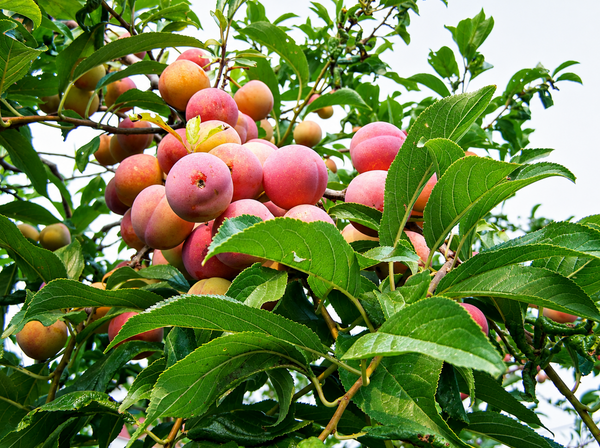 Toka Plum(Spring 2027)
From $49.99
Toka Plum(Spring 2027)
From $49.99
-
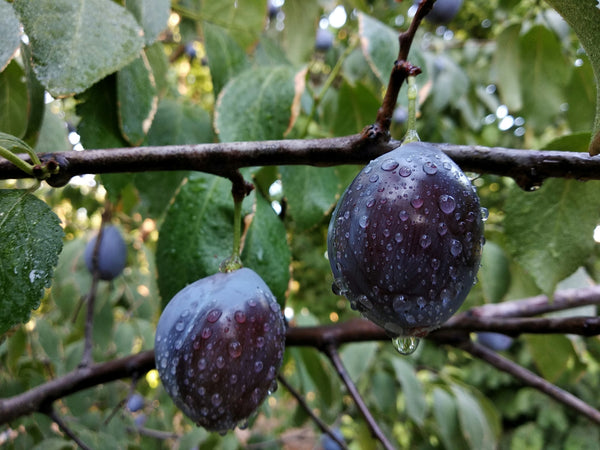 Kaga Plum(Spring 2027)
From $54.99
Kaga Plum(Spring 2027)
From $54.99
-
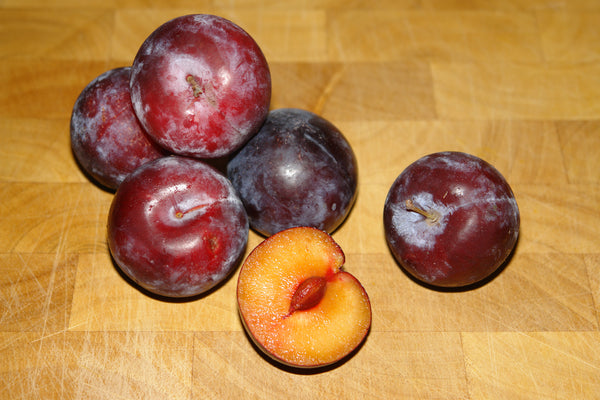 Kahinta Plum(Spring 2027)
$79.99
Kahinta Plum(Spring 2027)
$79.99
-
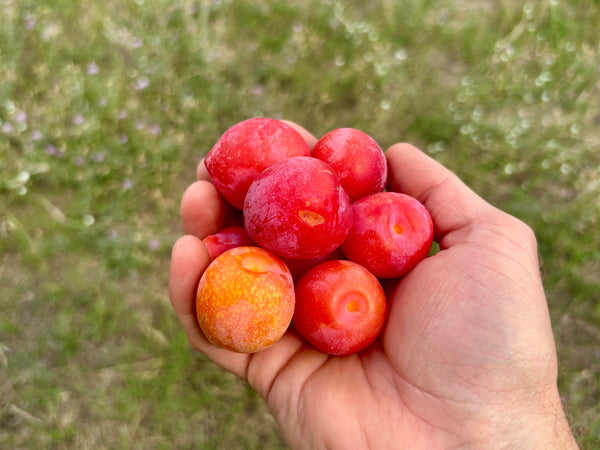 Superior Plum(Spring 2027)
From $49.99
Superior Plum(Spring 2027)
From $49.99
-
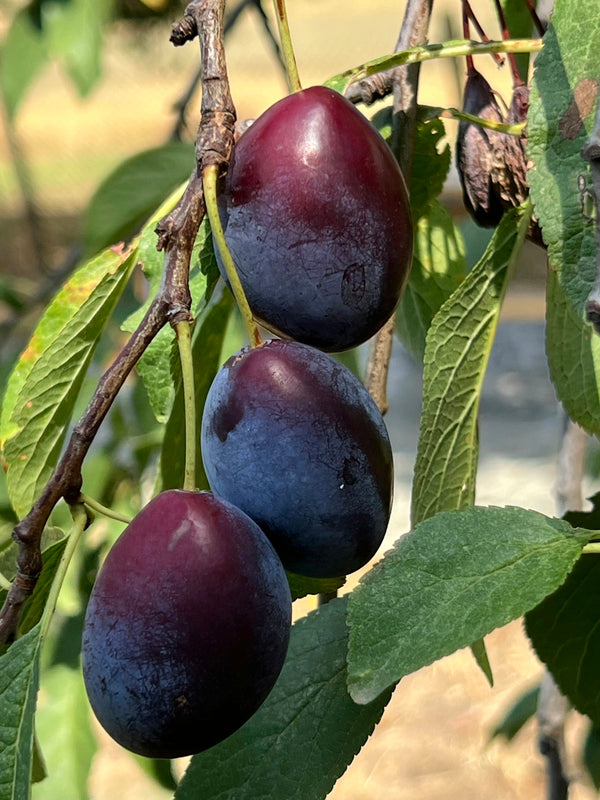 Black Ice Plum(Spring 2027)
From $44.99
Black Ice Plum(Spring 2027)
From $44.99
-
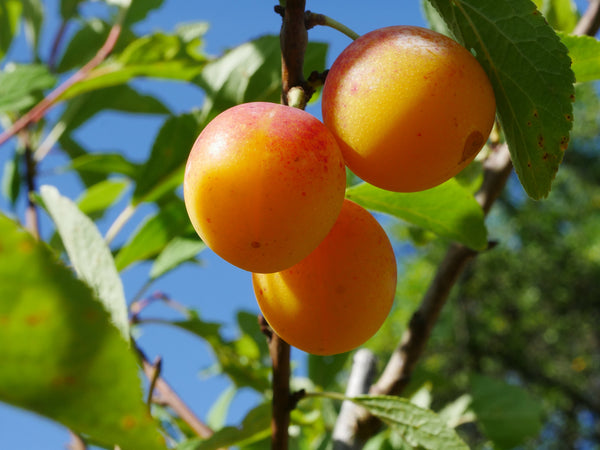 Brookgold Plum(Spring 2027)
From $59.99
Brookgold Plum(Spring 2027)
From $59.99
-
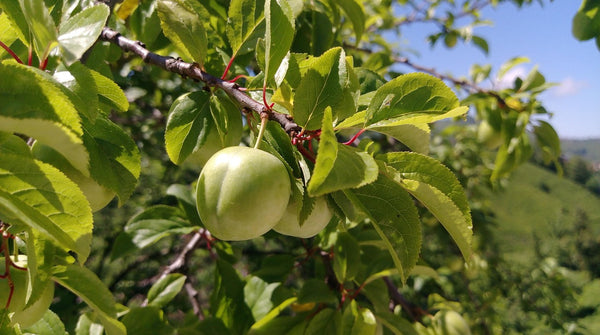 Ptitsin #5 Plum(Spring 2027)
From $54.99
Ptitsin #5 Plum(Spring 2027)
From $54.99
-
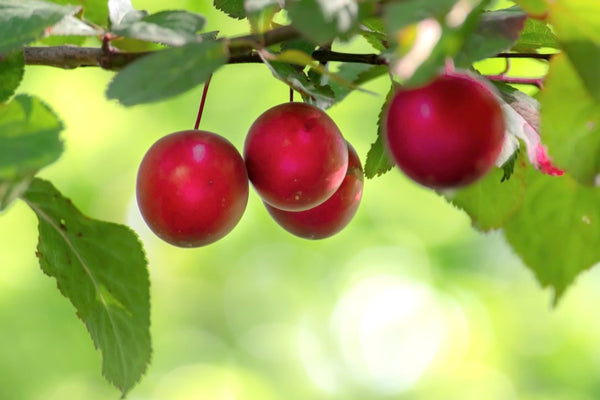 Gracious Plum(Spring 2027)
From $59.99
Gracious Plum(Spring 2027)
From $59.99
-
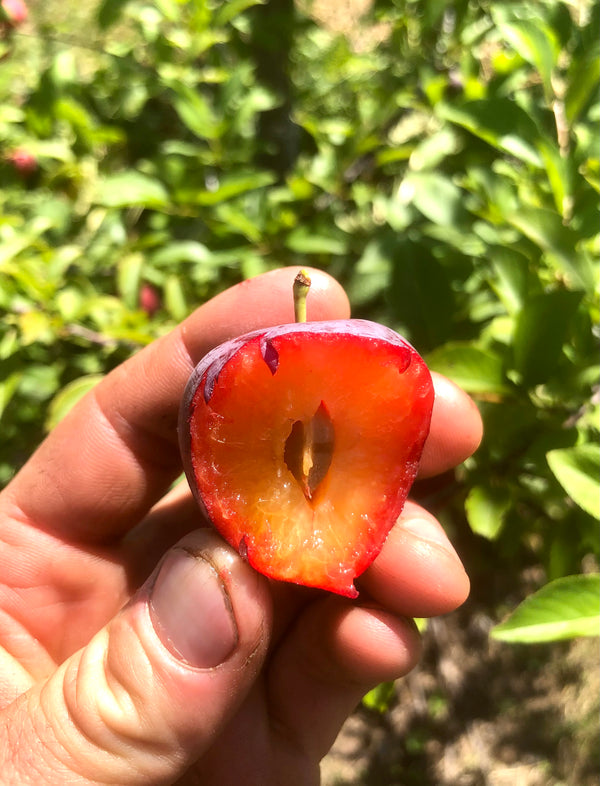 Kuban Delight Plum(Spring 2027)
$109.99
Kuban Delight Plum(Spring 2027)
$109.99
-
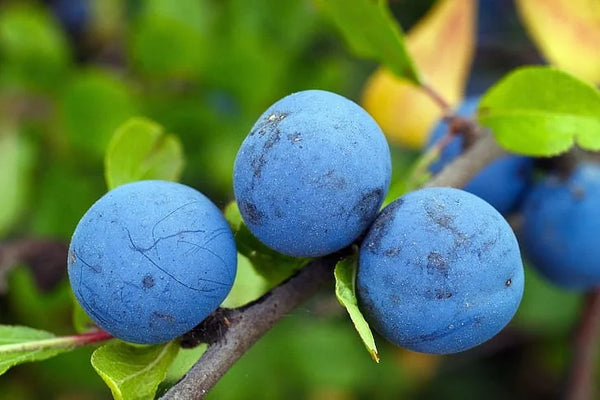 Benson's Gem Plum(Spring 2027)
From $44.99
Benson's Gem Plum(Spring 2027)
From $44.99