
Skip to product information


Ranch Elderberry (Bundle of 2)
$59.99
Reliable shipping
Flexible returns
Ripening
Will it finish before your first hard freeze?
Check it on the Ripening Map (opens in a new tab)At a glance: Ranch Elderberry is an elderberry shrub rated hardy to zone 3 in our ratings (winters to -40°F), and partially self-fertile, so a second variety nearby makes crops more dependable.
| Hardy to | Zone 3 to 8. A bare number means the whole of zone 3, colder half included (winters to -40°F). Find your zone with our cold hardiness calculator. |
|---|---|
| Pollination | Partially Self-Fertile. Bloom group 4 of 7 (mid), early summer here. Ranch sets some fruit alone, but plant a different elderberry such as Adams nearby for a better crop. Two Ranch plants are the same clone. Elderberries bloom in early summer, long after apples and plums. Nearby varieties that can boost the crop: Adam's Elderberry (Bundle of 2), Elderberry, American (Bundle of 3), John's Elderberry (Bundle of 2). Bloom group is our estimate from the variety's origin and relatives. Pollination Charts. |
| Good for | Juice and sweet cider (8/10), feeding wildlife (8/10), sauce and butter (8/10), jams and jellies (7/10), wine (7/10), pies and baking (6/10). Scores are our own 1 to 10 ratings; 8 and up makes our Best Of lists. |
| Deer | Sometimes damaged by deer. |
| What you get | Bare root, 1-2 ft or 2-3 ft. Shipped or picked up in Missoula in spring, roots wrapped in moist sawdust. Guaranteed to bud out. |
Overview
Ranch produces larger elderberries with more vigor. The fruit ripens about two weeks later than Adams, which should be planted nearby for best pollination—though North American Black Elderberry can also do the job.
Easy to Grow, Beautiful in Bloom
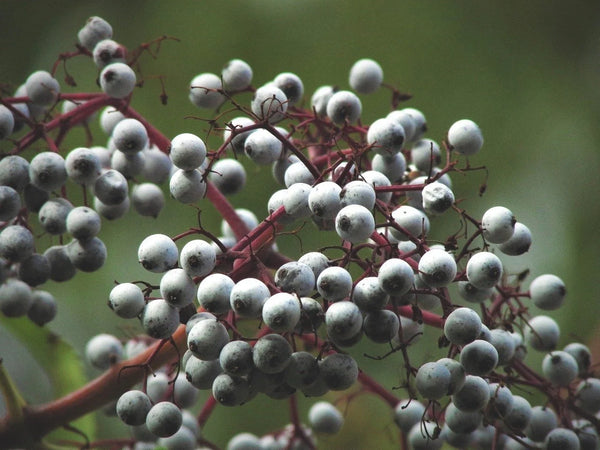
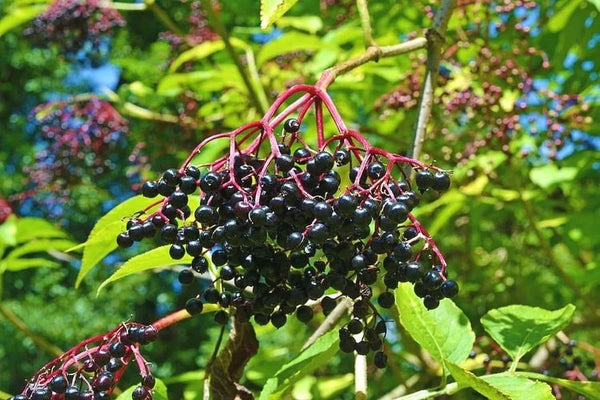
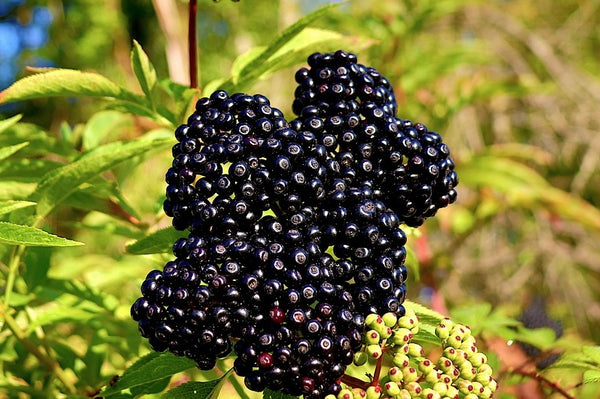
This variety requires very little maintenance. In spring, giant clusters of white flowers bloom, turning into soft, nearly black berries by late summer. Both the elderflowers and the ripe elderberries are edible.
Cold Hardy & Productive
Ranch ripens near the end of August and is reliably cold-hardy—great for northern growers. Hardy to Zone 3.
Current Size & Root Health
These shrubs are available in two sizes, 1–2 feet tall and 2-3 ft. tall. These are potted transplants (not field grown), so they come with lots of fine root hairs and are ready to thrive.
Questions we get about Ranch Elderberry
Does Ranch Elderberry need a pollenizer?
It helps. Ranch Elderberry is partially self-fertile, so it can set some fruit alone, but a second variety nearby makes crops more dependable. Ranch sets some fruit alone, but plant a different elderberry such as Adams nearby for a better crop. Two Ranch plants are the same clone. Elderberries bloom in early summer, long after apples and plums. Partners we carry include Adam's Elderberry (Bundle of 2), Elderberry, American (Bundle of 3), John's Elderberry (Bundle of 2).
How cold hardy is Ranch Elderberry?
We rate Ranch Elderberry hardy to zone 3, which means winters down to about -40°F. Our ratings come from real winters at our two Montana sites and from trusted growers across the North, not from a catalog average.
What is Ranch Elderberry good for?
Our top use scores for Ranch Elderberry are juice and sweet cider (8/10), feeding wildlife (8/10), sauce and butter (8/10), jams and jellies (7/10). Anything scored 8 or higher makes our Best Of lists.
Will deer eat Ranch Elderberry?
Sometimes. Deer browse Ranch Elderberry now and then, so protect young plants where deer pressure is high.
What arrives, and when does Ranch Elderberry ship?
A dormant bare-root plant, roots wrapped in moist sawdust with a vapor barrier, shipped or picked up in Missoula in spring. Sizes offered: 1-2 ft or 2-3 ft. We guarantee our plants bud out. Stone fruits can be slow, so if one still has not budded out by August 15, write to us and we credit you for the following spring.
Pollination partners
Partners for a bigger Ranch Elderberry crop
Ranch Elderberry sets some fruit on its own, but a lot more with a partner. Every tree below blooms at the same time and has pollen that works for it.
Bloom group
4 of 7 (Mid)
Pollination
Partly self-fertile
Pollen
Good pollenizer
See every pairing on the Pollination Charts
Ranch Elderberry's bloom group is our best estimate. Watch it bloom and tell us what you see.