Skip to product information


La Crescent Plum (Spring 2027)
$109.99
Reliable shipping
Flexible returns
Pollination
Needs a partner
Bloom group
6 of 7 (Late)
Ripening
Will it finish before your first hard freeze?
Check it on the Ripening Map (opens in a new tab)
Disease resistanceResists 1 of 6
- ? Bacterial canker : Unknown, no published data yet
- ? Bacterial spot : Unknown, no published data yet
- ? Black knot : Unknown, no published data yet
- 4 Brown rot : Resistant, 4 of 5
- ? Cytospora canker : Unknown, no published data yet
- ? Plum pocket : Unknown, no published data yet
Scored 1 to 5. Higher resists better, and ? means no published data yet.
See it on our plum disease chart (opens in a new tab)At a glance: La Crescent Plum is a plum tree rated hardy to zone 3 in our ratings (winters to -40°F), not self-fertile, so it needs a different variety nearby as a pollenizer (bloom group 6 of 7, late for a hybrid or Japanese plum), and it ripens about Aug 10 to Aug 22 in Missoula (our Missoula estimate).
| Hardy to | Zone 3 to 8. A bare number means the whole of zone 3, colder half included (winters to -40°F). Find your zone with our cold hardiness calculator. |
|---|---|
| Chill hours | About 700 hours (500 to 900). Our estimate. No published figure exists for this variety yet. Montana winters give it plenty. In milder climates, make sure your winters average at least this much. Check your chill hours or see our sources. |
| Pollination | Needs Cross-Pollination. Bloom group 6 of 7 (late), early spring here. La Crescent blooms late, so pick a later-blooming hybrid such as Pipestone or Alderman as its partner. Superior will not pollenize it, and it cannot pollenize European plums like Stanley. Good partners we carry: Toka Plum, Kaga Plum, Kahinta Plum, South Dakota Plum and 3 more. Plum Pollination Map. |
| Ripens | About Aug 10 to Aug 22 in Missoula (a Missoula estimate from published sources). Real years swing about a week either way. See the date for your town. |
| Rootstock and size | Prairie Red: semi-dwarf, about 10 to 15 ft tall unpruned. A seed-grown American plum hybrid from the USDA plant materials center in Bismarck; it suckers. Native Plum: semi-dwarf, about 10 to 15 ft tall unpruned. Suckers, so mow or pull suckers. Plant about 15 ft apart. Our rootstock guide. |
| Good for | Fresh eating (8/10), jams and jellies (7/10). Scores are our own 1 to 10 ratings; 8 and up makes our Best Of lists. |
| Deer | A deer favorite. Fence it or cage it. |
| Where it came from | Read about the University of Minnesota breeding program and what else came out of it. |
| What you get | Bare root, 6-8 ft. Shipped or picked up in Missoula in spring, roots wrapped in moist sawdust. Guaranteed to bud out. |
Overview
La Crescent is a Japanese × American hybrid plum released by the University of Minnesota in the early 1920s. Its reported parentage is Prunus salicina ‘Shiro’ × Prunus americana ‘Howard Yellow’. We have grown Shiro, which is one of the hardier Asian plums (although likely only to about -30F), but since Howard Yellow is a seedling of native american plum, this is where La Crescent gets its hardiness.
History & Parentage
La Crescent was introduced by the University of Minnesota (commonly dated to 1923) and is also sometimes sold under names like Golden La Crescent / Golden Minnesota.
Fruit Quality & Uses
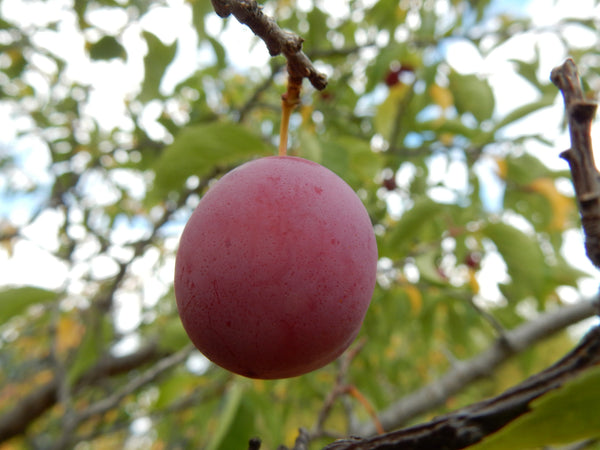
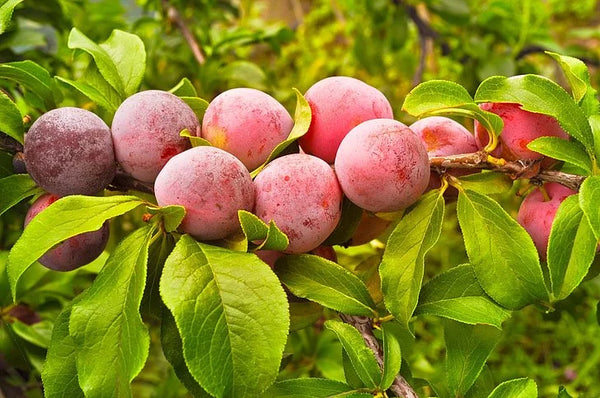
La Crescent is a thin-skinned yellow plum that can develop a pink blush, with tender, juicy yellow flesh and a sweet, aromatic flavor that is often compared to apricot-like notes. Bob Purvis pointed this out to Luke the first time he visited Bob's orchard in Homedale, ID back in 2022. It’s primarily used for fresh eating and preserving/canning.
Growth Habit & Spacing
It’s growth habit is upright to spreading and vigorous. As a practical backyard spacing range, plan about 15 ft apart for trees on Native American rootstock (12 ft for tighter spacing/more pruning), and 18 ft. for trees on Krymsk 86 (15 ft. for tighter spacing).
Pollination
La Crescent needs a pollenizer. You can use Native American plum, Prairie Red Plum, or another Japanese x American hybrid that overlaps bloom (Toka, Pipestone, Underwood, or others).
Cold Hardiness
We do not have a whole lot of first hand data on La Crescent because this is one of the newer plums we have grown, although knowing that when Bob Purvis lists the hardiness of plums he grows, which is from whom we got cuttings of La Crescent, he goes off of the same USDA zone scale of temperatures, but if he lists something as Zone 3a, which is the case for La Crescent, then he implies here that the plum is hardy to -40F. And given we have grown plenty of other Asian x American hybrids that do well down to these temps, i.e. Pipestone and Underwood surviving -38F in Stevensville, MT without any winter injury, I think "hardy down to -40F" for La Crescent tracks.
Questions we get about La Crescent Plum
Does La Crescent Plum need a pollenizer?
Yes. La Crescent Plum needs pollen from a different variety that blooms at about the same time. La Crescent blooms late, so pick a later-blooming hybrid such as Pipestone or Alderman as its partner. Superior will not pollenize it, and it cannot pollenize European plums like Stanley. Partners we carry include Toka Plum, Kaga Plum, Kahinta Plum.
How cold hardy is La Crescent Plum?
We rate La Crescent Plum hardy to zone 3, which means winters down to about -40°F. Our ratings come from real winters at our two Montana sites and from trusted growers across the North, not from a catalog average.
How many chill hours does La Crescent Plum need?
About 700 hours of winter chill (we count hours at or below 45°F), likely somewhere between 500 and 900. Nobody has published a chill figure for it, so that's our estimate from its relatives and origin. A late bloomer for a hybrid plum, which helps dodge spring frost. Chill is estimated around 700 hours from its parents. Our chill hours guide has a calculator for your winters, and our research page lists the sources.
When does La Crescent Plum ripen?
About Aug 10 to Aug 22 in Missoula, Montana (an estimate built from published sources and our climate). Warmer places run earlier and cooler places later; our ripening map converts the date to your town.
How big does La Crescent Plum get?
We graft La Crescent Plum onto Prairie Red (semi-dwarf), which makes a tree roughly 10 to 15 ft tall if you never prune it. Some sizes are on Native Plum. Plant about 15 ft apart.
What is La Crescent Plum good for?
Our top use scores for La Crescent Plum are fresh eating (8/10), jams and jellies (7/10). Anything scored 8 or higher makes our Best Of lists.
Is La Crescent Plum disease resistant?
Yes, for the diseases it's been tested for. It's resistant to brown rot. Nobody has published solid data on it for bacterial canker, bacterial spot, black knot, cytospora canker and plum pocket yet, so we list those as unknown. Our plum disease resistance chart has every rating, the notes and the sources.
Will deer eat La Crescent Plum?
Yes, deer love it. Protect La Crescent Plum with a fence or a cage, especially while it is young.
More Plants Like This
Best For
Pollination, Bloom & Ripening
Disease Resistance
Pollination partners
Trees that will pollenize La Crescent Plum
La Crescent Plum needs a different hybrid or Japanese plum nearby to set fruit. Every tree below blooms at the same time and has pollen that works for it. Plant partners within about 100 feet.
Bloom group
6 of 7 (Late)
Pollination
Needs a partner
Pollen
Good pollenizer
-
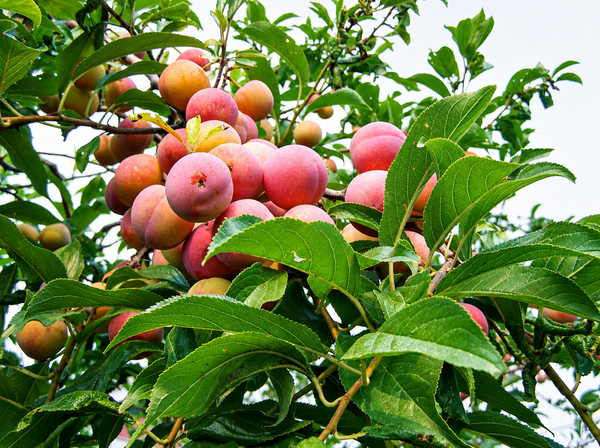 Toka Plum(Spring 2027)
From $49.99
-
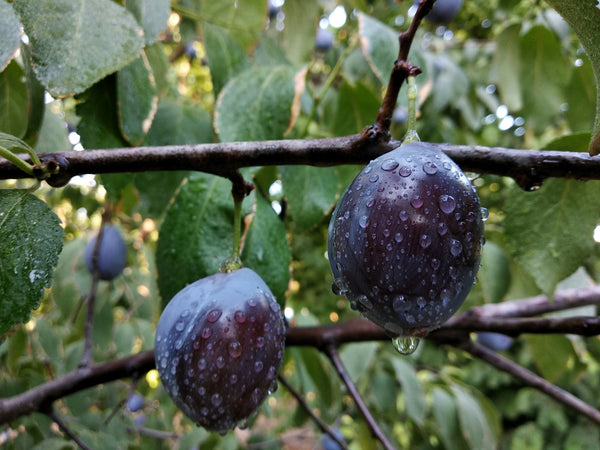 Kaga Plum(Spring 2027)
From $54.99
-
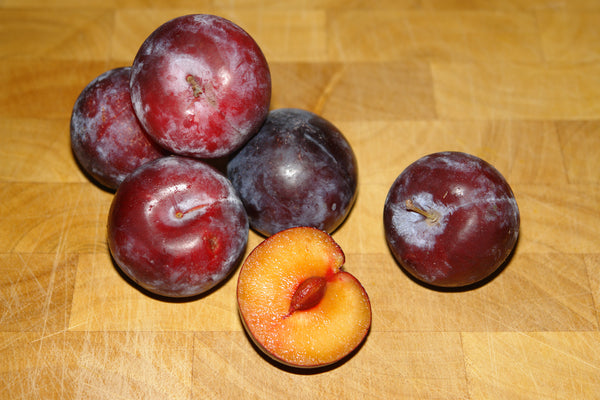 Kahinta Plum(Spring 2027)
$79.99
-
 Pipestone Plum(Spring 2027)
From $59.99