
Skip to product information


Clayton Berg Apple (Spring 2027)
$44.99
Reliable shipping
Flexible returns
Pollination
Needs a partner
Bloom group
4 of 7 (Mid)
Ripening
Will it finish before your first hard freeze?
Check it on the Ripening Map (opens in a new tab)
Disease resistanceNot tested yet
- ? Apple scab : Unknown, no published data yet
- ? Cedar-apple rust : Unknown, no published data yet
- ? Fire blight : Unknown, no published data yet
- ? Powdery mildew : Unknown, no published data yet
Scored 1 to 5. Higher resists better, and ? means no published data yet.
See it on our apple disease chart (opens in a new tab)At a glance: Clayton Berg Apple is an apple tree rated hardy to zone 2 from Ed Schultz's trees (winters to -50°F), and not self-fertile, so it needs a different variety nearby as a pollenizer (bloom group 4 of 7, mid for an apple or crabapple).
| Hardy to | Zone 2 to 8. A bare number means the whole of zone 2, colder half included (winters to -50°F). Find your zone with our cold hardiness calculator. |
|---|---|
| Chill hours | About 1,000 hours (800 to 1,200). Our estimate. No published figure exists for this variety yet. Montana winters give it plenty. In milder climates, make sure your winters average at least this much. Check your chill hours or see our sources. |
| Pollination | Needs Cross-Pollination. Bloom group 4 of 7 (mid), late spring here. Not self-fertile. Plant a different apple or crabapple variety nearby that blooms at about the same time (bloom groups 3 to 5 on our chart). Good partners we carry: Otterson Crabapple, Trail Crabapple, Alexander Apple, Burgundy Apple and 103 more. Bloom group is our estimate from the variety's origin and relatives. Apple Pollination Map. |
| Rootstock and size | Bud 118: semi-dwarf in our dry Montana soils, semi-standard on paper, about 12 to 18 ft tall unpruned. Stands on its own, few suckers. Plant about 15 ft apart. Our rootstock guide. |
| Deer | A deer favorite. Fence it or cage it. |
| What you get | Bare root, 3-4 ft or 4-6 ft. Shipped or picked up in Missoula in spring, roots wrapped in moist sawdust. Guaranteed to bud out. |
This is our first year growing Clayton Berg, so everything below is secondhand until we get more long-term data from our own mother trees.
Overview
Clayton Berg is one of the hardiest apples in our lineup, rated to zone 2 based on Ed Schultz's trees. It's a new one for us, and there isn't much published about it yet.
Origin and History
We haven't found Clayton Berg in any of the pomology references or nursery catalogs we've checked, including Cummins, Purvis, St. Lawrence, Alaska Fruit Trees and MSU's catalog of Montana heritage orchard trees. So there's no published history to pass along yet.
Fruit and Uses
Same goes for the fruit. We'll add our own notes on flavor, ripening and storage once our trees are bearing.
Growth Habit and Spacing
Ours are on Bud 118, which acts more like a semi-dwarf in our Montana soils. Plan on about 15 feet between trees, 12 if you prune hard or up to 18 for more airflow. Bud 118 has handled close to -50F in Montana, so the rootstock is a good match for a zone 2 apple.
Pollination
Clayton Berg needs a pollenizer, and we've estimated it as a mid-season bloomer. For a pollenizer that's close to as hardy, look at Kerr, Mantet, Haralson, Goodland, Wolf River or Trail crab.
Cold Hardiness
We have Clayton Berg rated to zone 2 (-50F). That rating comes from Ed Schultz, whose trees came through two winters of -47F with little to no winter injury. We'll update this as our own trees see some real Montana winters.
Questions we get about Clayton Berg Apple
Does Clayton Berg Apple need a pollenizer?
Yes. Clayton Berg Apple needs pollen from a different variety that blooms at about the same time. Plant a different apple or crabapple variety nearby that blooms at about the same time (bloom groups 3 to 5 on our chart). Partners we carry include Otterson Crabapple, Trail Crabapple, Alexander Apple.
How cold hardy is Clayton Berg Apple?
We list Clayton Berg Apple at zone 2, which means winters down to about -50°F. That rating comes from Ed Schultz, whose trees came through two winters of -47°F with little to no winter injury. We haven't wintered our own trees yet, so we'll update it as they see some real Montana winters.
How many chill hours does Clayton Berg Apple need?
About 1,000 hours of winter chill (we count hours at or below 45°F), likely somewhere between 800 and 1,200. Nobody has published a chill figure for it, so that's our estimate from its relatives and origin. Our chill hours guide has a calculator for your winters, and our research page lists the sources.
How big does Clayton Berg Apple get?
We graft Clayton Berg Apple onto Bud 118 (semi-dwarf in our dry Montana soils, semi-standard on paper), which makes a tree roughly 12 to 18 ft tall if you never prune it. Plant about 15 ft apart.
Is Clayton Berg Apple disease resistant?
We don't know yet. Nobody has published solid disease data on Clayton Berg Apple for apple scab, cedar-apple rust, fire blight and powdery mildew, so we list it as unknown instead of guessing. That doesn't mean it's weak. Plenty of the plants we grow have never been through formal disease trials. Our apple disease resistance chart has every rating, the notes and the sources.
Will deer eat Clayton Berg Apple?
Yes, deer love it. Protect Clayton Berg Apple with a fence or a cage, especially while it is young.
What arrives, and when does Clayton Berg Apple ship?
A dormant bare-root plant, roots wrapped in moist sawdust with a vapor barrier, shipped or picked up in Missoula in spring. Sizes offered: 3-4 ft or 4-6 ft. We guarantee our plants bud out. Stone fruits can be slow, so if one still has not budded out by August 15, write to us and we credit you for the following spring.
Pollination partners
Trees that will pollenize Clayton Berg Apple
Clayton Berg Apple needs a different apple or crabapple nearby to set fruit. Every tree below blooms at the same time and has pollen that works for it. Plant partners within about 100 feet.
Bloom group
4 of 7 (Mid)
Pollination
Needs a partner
Pollen
Not tested yet
-
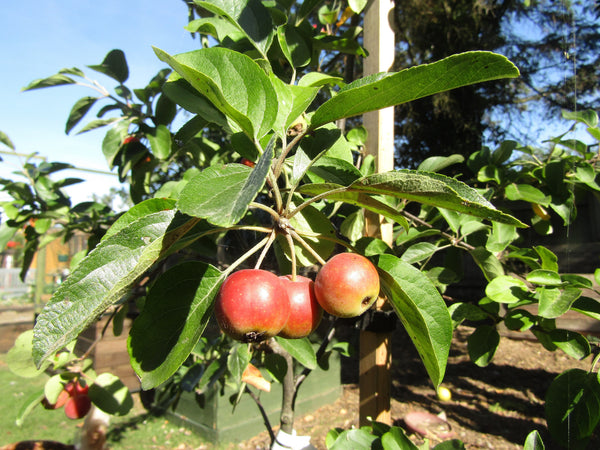 Trail Crabapple(Spring 2027)
$49.99
-
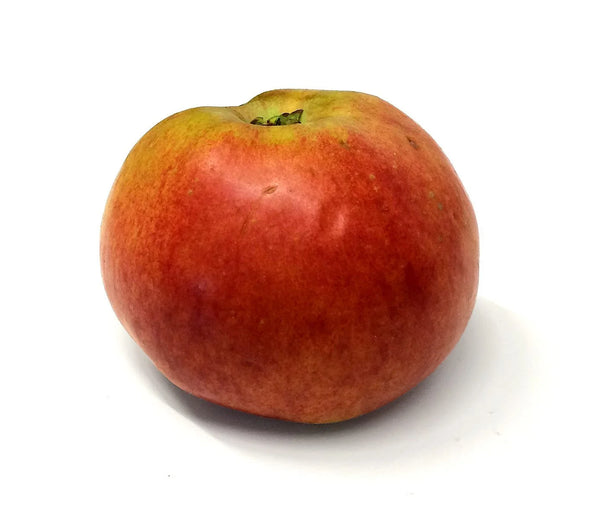 Alexander Apple(Spring 2027)
From $49.99
-
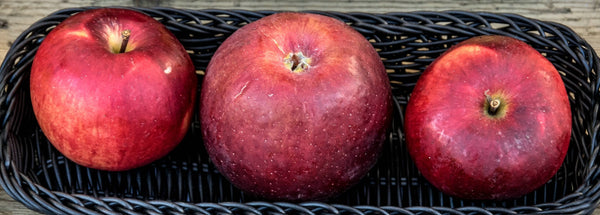 Burgundy Apple(Spring 2027)
From $49.99
-
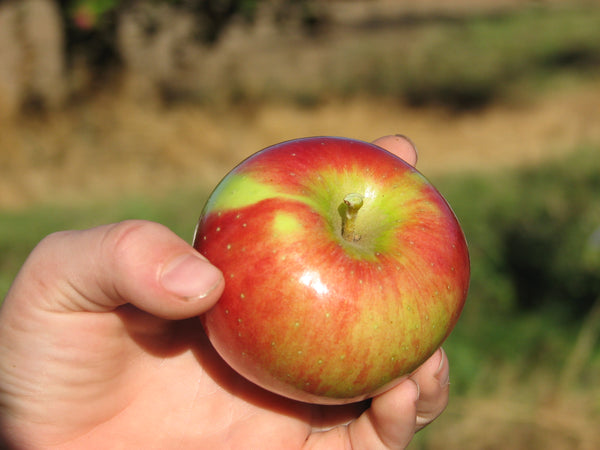 Cortland Apple(Spring 2027)
From $44.99
-
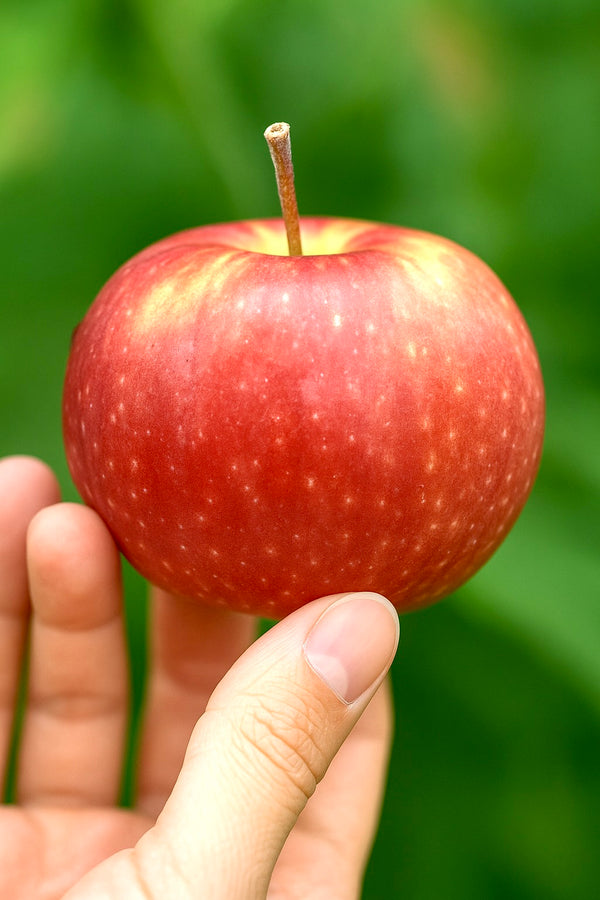 Frostbite Apple(Spring 2027)
From $59.99
-
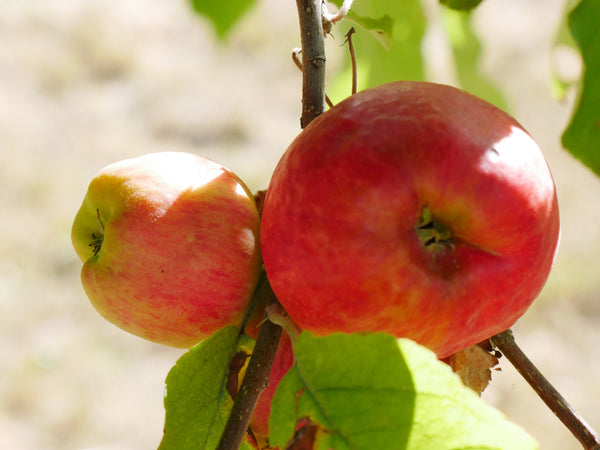 Goodland Apple(Spring 2027)
From $44.99
-
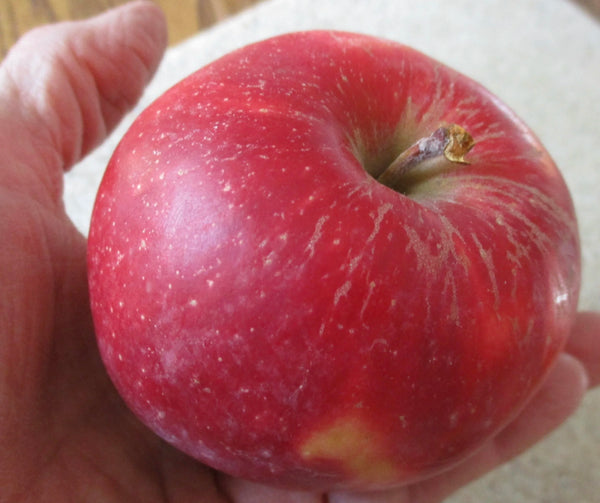 Haralson Apple(Spring 2027)
From $54.99
-
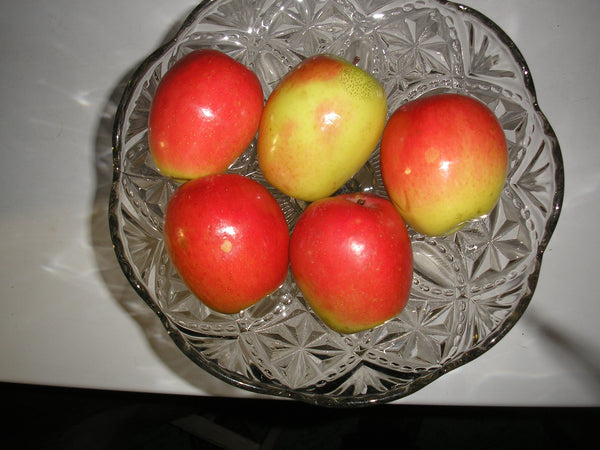 Kandil Sinap Apple(Spring 2027)
From $44.99
-
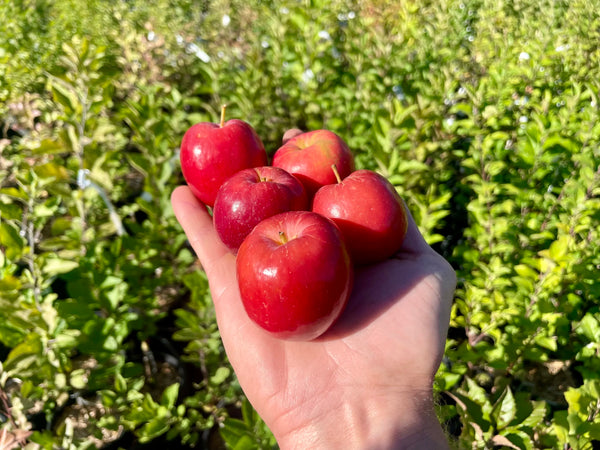 Kerr Applecrab(Spring 2027)
From $54.99
See every pairing on the Apple Pollination Map
Clayton Berg Apple's bloom group is our best estimate. Watch it bloom and tell us what you see.