
Skip to product information


Deluge Plum (Spring 2027)
$59.99
Reliable shipping
Flexible returns
Pollination
Needs a partner
Bloom group
4 of 7 (Mid)
Ripening
Will it finish before your first hard freeze?
Check it on the Ripening Map (opens in a new tab)
Disease resistanceNot tested yet
- ? Bacterial canker : Unknown, no published data yet
- ? Bacterial spot : Unknown, no published data yet
- ? Black knot : Unknown, no published data yet
- ? Brown rot : Unknown, no published data yet
- ? Cytospora canker : Unknown, no published data yet
- ? Plum pocket : Unknown, no published data yet
Scored 1 to 5. Higher resists better, and ? means no published data yet.
See it on our plum disease chart (opens in a new tab)At a glance: Deluge Plum is a plum tree rated hardy to zone 3b in our ratings (winters to -35°F), not self-fertile, so it needs a different variety nearby as a pollenizer (bloom group 4 of 7, mid for a European plum), and it ripens about Aug 1 to Aug 14 in Missoula (picked and dated here).
| Hardy to | Zone 3b to 8. The b means the warmer half of zone 3 only (winters to -35°F). Local trees have taken -30°F. Find your zone with our cold hardiness calculator. |
|---|---|
| Chill hours | About 800 hours (700 to 1,100). Our estimate. No published figure exists for this variety yet. Montana winters give it plenty. In milder climates, make sure your winters average at least this much. Check your chill hours or see our sources. |
| Pollination | Needs Cross-Pollination. Bloom group 4 of 7 (mid), mid spring here. Plant another European plum such as Stanley or Mount Royal nearby. Its plum group is an educated guess, so noting its bloom date next to Stanley and Toka would confirm the right partners. Good partners we carry: Stanley Plum, Mount Royal Plum, Italian Plum, Early Italian Plum and 6 more. Bloom group is our estimate from the variety's origin and relatives. Plum Pollination Map. |
| Ripens | About Aug 1 to Aug 14 in Missoula (picked and dated here). Pick while still fairly firm, then follow the ripening directions below. Real years swing about a week either way. See the date for your town. |
| Rootstock and size | Prairie Red Plum: semi-dwarf, about 10 to 15 ft tall unpruned. A seed-grown American plum hybrid from the USDA plant materials center in Bismarck; it suckers. Our rootstock guide. |
| Good for | Fresh eating (8/10). Scores are our own 1 to 10 ratings; 8 and up makes our Best Of lists. |
| Deer | A deer favorite. Fence it or cage it. |
| What you get | Bare root, 4-6 ft or 6-8 ft. Shipped or picked up in Missoula in spring, roots wrapped in moist sawdust. Guaranteed to bud out. |
A Missoula Landrace Plum
Deluge is a local Missoula landrace plum. Seedling plums of this type are scattered all over town, and this is the best tasting of those ilk. Discovered by James Sapp and selected by Luke Ruffner Robinson.
Cold Hardiness
Many of these seedling plums are old enough to have been standing in Missoula through the 1980s, so they have been through the worst winters this valley has on record: -30°F in December 1983, -28°F in January 1979 and again in December 1990, and -27°F in February 1982, all measured at the Missoula airport. Cold air pools on the valley floor, so the trees in the low spots around town have likely seen a few degrees colder than the airport did. We rate Deluge hardy to zone 3b, to about -35°F. It has proven itself to -30°F.
How to Pick and Ripen Deluge (Read This Part)
These are really exceptional plums if you handle them right, and just ordinary plums if you don't. Here is what works:
- Pick them while they are still fairly firm. In Missoula that is the first to second week of August.
- Leave them out at room temperature for about a week, until they are slightly soft.
- Then move them to the refrigerator. They should keep for another 2 to 3 weeks in there.
We found this out by accident. James Sapp dropped a batch off for us while we were out of town, and they sat outside for a week. Then a friend stopped by and put them in the fridge. When we got back into town we tried them, and they were wonderful. We would score them 8 out of 10, which on our scale is very good.
The following year, in 2026, we had them right after they were picked, when they were already somewhat soft, without that sitting period. They were not nearly as good. Same trees, same plums. Follow the directions above, because they are really exceptional when you do.
Questions we get about Deluge Plum
Does Deluge Plum need a pollenizer?
Yes. Deluge Plum needs pollen from a different variety that blooms at about the same time. Plant another European plum such as Stanley or Mount Royal nearby. Its plum group is an educated guess, so noting its bloom date next to Stanley and Toka would confirm the right partners. Partners we carry include Stanley Plum, Mount Royal Plum, Italian Plum.
How cold hardy is Deluge Plum?
We rate Deluge Plum hardy to zone 3b, which means winters down to about -35°F. Local trees have taken -30°F. Our ratings come from real winters at our two Montana sites and from trusted growers across the North, not from a catalog average.
How many chill hours does Deluge Plum need?
About 800 hours of winter chill (we count hours at or below 45°F), likely somewhere between 700 and 1,100. Nobody has published a chill figure for it, so that's our estimate from its relatives and origin. A Missoula landrace European plum. Chill is estimated at about 800 hours, typical for European plums. Our chill hours guide has a calculator for your winters, and our research page lists the sources.
When does Deluge Plum ripen?
About Aug 1 to Aug 14 in Missoula, Montana, picked and dated off local trees. Pick them firm and let them sit a week at room temperature before refrigerating. Warmer places run earlier and cooler places later; our ripening map converts the date to your town.
How big does Deluge Plum get?
We graft Deluge Plum onto Prairie Red Plum (semi-dwarf), which makes a tree roughly 10 to 15 ft tall if you never prune it.
What is Deluge Plum good for?
Our top use scores for Deluge Plum are fresh eating (8/10). Anything scored 8 or higher makes our Best Of lists.
Is Deluge Plum disease resistant?
We don't know yet. Nobody has published solid disease data on Deluge Plum for bacterial canker, bacterial spot, black knot, brown rot, cytospora canker and plum pocket, so we list it as unknown instead of guessing. That doesn't mean it's weak. Plenty of the plants we grow have never been through formal disease trials. Our plum disease resistance chart has every rating, the notes and the sources.
Will deer eat Deluge Plum?
Yes, deer love it. Protect Deluge Plum with a fence or a cage, especially while it is young.
What arrives, and when does Deluge Plum ship?
A dormant bare-root plant, roots wrapped in moist sawdust with a vapor barrier, shipped or picked up in Missoula in spring. Sizes offered: 4-6 ft or 6-8 ft. We guarantee our plants bud out. Stone fruits can be slow, so if one still has not budded out by August 15, write to us and we credit you for the following spring.
More Plants Like This
By Zone
Best For
Pollination, Bloom & Ripening
Pollination partners
Trees that will pollenize Deluge Plum
Deluge Plum needs a different European plum nearby to set fruit. Every tree below blooms at the same time and has pollen that works for it. Plant partners within about 100 feet.
Bloom group
4 of 7 (Mid)
Pollination
Needs a partner
Pollen
Not tested yet
-
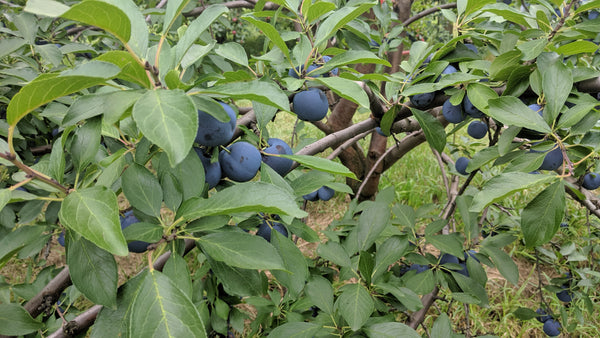 Mount Royal Plum(Spring 2027)
From $49.99
-
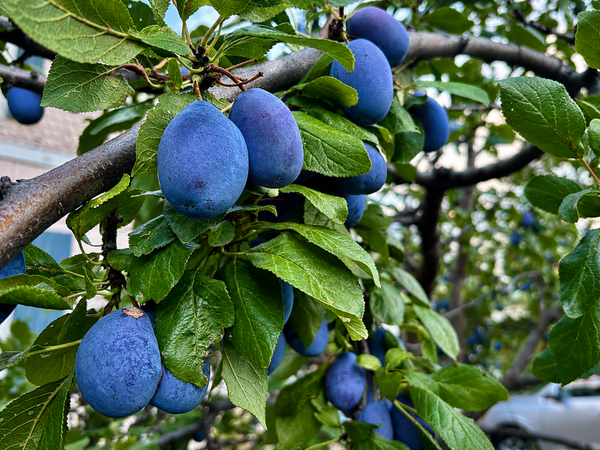 Italian Plum(Spring 2027)
From $74.99
-
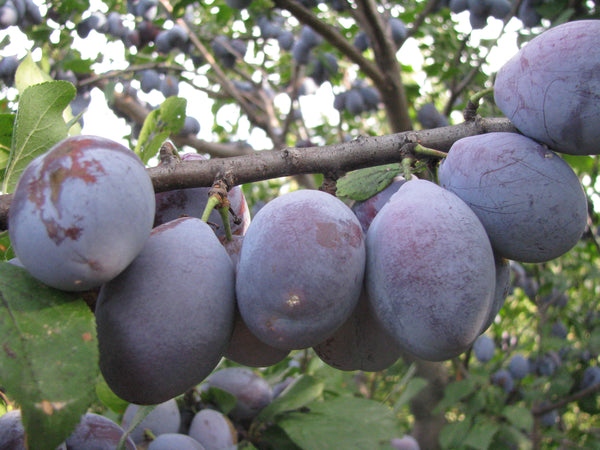 Sold out
Stanley Plum
See every pairing on the Plum Pollination Map
Deluge Plum's bloom group is our best estimate. Watch it bloom and tell us what you see.