Skip to product information


Meteor Tart Cherry (Spring 2027)
$119.99
Reliable shipping
Flexible returns
Pollination
Self-fertile
Bloom group
4 of 7 (Mid)
Ripening
Will it finish before your first hard freeze?
Check it on the Ripening Map (opens in a new tab)
Disease resistanceNo strong resistance
- ? Bacterial canker : Unknown, no published data yet
- ? Black knot : Unknown, no published data yet
- 1 Brown rot : Highly susceptible, 1 of 5
- 3 Cherry leaf spot : Moderate, 3 of 5
- ? Cytospora canker : Unknown, no published data yet
Scored 1 to 5. Higher resists better, and ? means no published data yet.
See it on our cherry disease chart (opens in a new tab)At a glance: Meteor Tart Cherry is a cherry tree rated hardy to zone 3 in our ratings (winters to -40°F), self-fertile, so one tree can crop (bloom group 4 of 7, mid for a tart cherry), and it ripens about Jul 30 to Aug 9 in Missoula (picked and dated at our place in Missoula).
| Hardy to | Zone 3 to 8. A bare number means the whole of zone 3, colder half included (winters to -40°F). Find your zone with our cold hardiness calculator. |
|---|---|
| Chill hours | About 800 hours (650 to 1,000). From published figures. Montana winters give it plenty. In milder climates, make sure your winters average at least this much. Check your chill hours or see our sources. |
| Pollination | Self-Fertile. Bloom group 4 of 7 (mid), mid spring here. Meteor is self-fertile, so one tree will crop on its own. It blooms with Montmorency and Evans Bali if you want to plant more than one. Nearby varieties that can boost the crop: Evan's Bali Tart Cherry, Montmorency Tart Cherry, FE Tart Cherry, Balaton Tart Cherry and 1 more. Tart Cherry Pollination Map. |
| Ripens | About Jul 30 to Aug 9 in Missoula (picked and dated off our own trees). Real years swing about a week either way. See the date for your town. |
| Rootstock and size | Mazzard: full size, about 25 to 35 ft (sweet cherry), 15 to 18 ft (tart cherry) tall unpruned. Slow to bear, often 5 to 6 years. Our rootstock guide. |
| Good for | Pies and baking (8/10), drying (8/10), canning and freezing (7/10), fresh eating (6/10), jams and jellies (6/10). Scores are our own 1 to 10 ratings; 8 and up makes our Best Of lists. |
| Deer | A deer favorite. Fence it or cage it. |
| Where it came from | Read about the University of Minnesota breeding program and what else came out of it. |
| What you get | Bare root, 5-7 ft. One Year Older Larger & More Branching. Shipped or picked up in Missoula in spring, roots wrapped in moist sawdust. Guaranteed to bud out. |
Overview
Meteor is a tart (sour) cherry introduced in 1952 by the University of Minnesota fruit breeding program at Excelsior, Minnesota. It was developed for cold climates and later ripening than Montmorency.
History & Parentage
Extension and pomology references describe Meteor as a cross of Montmorency × a Russian-type selection.
Fruit Quality & Uses
Meteor produces medium-sized, bright red tart cherries with clear juice and semi-firm flesh, ripening about a week after Montmorency (typically around early August here in Missoula, MT). It’s typically positioned as a kitchen/processing cherry for pies, baking, sauce, preserves, and juice. But in our experience, they make dried cherries just as good as Montmorency. One extension note also mentions it’s not ideal for commercial processing because the pit can behave poorly during pitting in some settings.
Growth Habit & Spacing
Meteor is widely sold as a naturally smaller tart cherry tree (often described around the 10–12 ft class in home-orchard contexts), with an upright to spreading habit. A practical spacing for a small tart cherry like this is commonly 10–12 ft (wider if you want more airflow and less pruning pressure).
Pollination
Meteor is as self-fruitful (self-fertile). Even so, tart cherries often crop heavier with another tart cherry nearby that blooms at a similar time. Will cross with Evan's Bali tart cherry or even the dwarf cherries. Could also cross with the less hardy Danube/Montmorency, although if you're planting this due to its adaptability to the cold, plant with either Evan's or the dwarf cherries.
Cold Hardiness
For a concrete mid-winter extreme figure, Meteor can tolerate down to about -40°F when fully dormant.
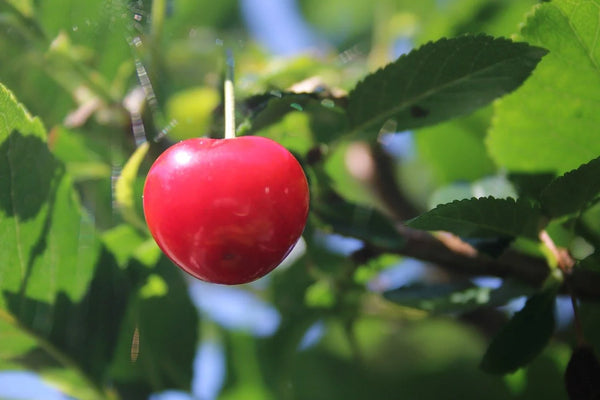
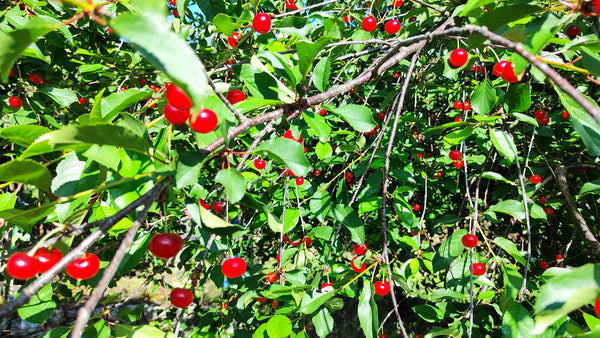
About the photo: this isn’t Meteor itself. Photos of Meteor are either under copyright or simply unavailable, so we picked the open-source image that looks closest to the fruit. Photo: “Sauerkirschen” by Kai-Martin Knaak, via Wikimedia Commons, licensed CC BY-SA 3.0. Other photo: “PI 592848 Meteor (Prunus cerasus), 2013 immature fruit” by USDA ARS National Plant Germplasm System (GRIN-Global), via USDA GRIN, public domain.
Questions we get about Meteor Tart Cherry
Does Meteor Tart Cherry need a pollenizer?
No. Meteor Tart Cherry is self-fertile, so a single tree can set fruit. Meteor is self-fertile, so one tree will crop on its own. It blooms with Montmorency and Evans Bali if you want to plant more than one. Partners we carry include Evan's Bali Tart Cherry, Montmorency Tart Cherry, FE Tart Cherry.
How cold hardy is Meteor Tart Cherry?
We rate Meteor Tart Cherry hardy to zone 3, which means winters down to about -40°F. Our ratings come from real winters at our two Montana sites and from trusted growers across the North, not from a catalog average.
How many chill hours does Meteor Tart Cherry need?
About 800 hours of winter chill (we count hours at or below 45°F), likely somewhere between 650 and 1,000. That comes from published figures for this variety. It was bred in Minnesota, and it blooms about a week after Montmorency, which helps it slip past spring frosts. Our chill hours guide has a calculator for your winters, and our research page lists the sources.
When does Meteor Tart Cherry ripen?
About Jul 30 to Aug 9 in Missoula, Montana (picked and dated off our own trees). Warmer places run earlier and cooler places later; our ripening map converts the date to your town.
How big does Meteor Tart Cherry get?
We graft Meteor Tart Cherry onto Mazzard (full size), which makes a tree roughly 25 to 35 ft (sweet cherry), 15 to 18 ft (tart cherry) tall if you never prune it.
What is Meteor Tart Cherry good for?
Our top use scores for Meteor Tart Cherry are pies and baking (8/10), drying (8/10), canning and freezing (7/10), fresh eating (6/10). Anything scored 8 or higher makes our Best Of lists.
Is Meteor Tart Cherry disease resistant?
Not really. It holds up moderately well against cherry leaf spot. It's very prone to brown rot. Nobody has published solid data on it for bacterial canker, black knot and cytospora canker yet, so we list those as unknown. Our cherry disease resistance chart has every rating, the notes and the sources.
Will deer eat Meteor Tart Cherry?
Yes, deer love it. Protect Meteor Tart Cherry with a fence or a cage, especially while it is young.
More Plants Like This
By Zone
Pollination, Bloom & Ripening
Pollination partners
Good partners for Meteor Tart Cherry
Meteor Tart Cherry is self-fertile, so one tree will fruit on its own. If you'd like a second tart cherry, these bloom at the same time and work well together.
Bloom group
4 of 7 (Mid)
Pollination
Self-fertile
Pollen
Good pollenizer
-
 Montmorency Tart Cherry(Spring 2027)
From $64.99
-
 FE Tart Cherry(Spring 2027)
From $49.99
-
 Balaton Tart Cherry(Spring 2027)
From $64.99