
Skip to product information


Skeena Sweet Cherry
$64.99
Reliable shipping
Flexible returns
Pollination
Self-fertile
Bloom group
4 of 7 (Mid)
Ripening
Will it finish before your first hard freeze?
Check it on the Ripening Map (opens in a new tab)At a glance: Skeena Sweet Cherry is a cherry tree rated hardy to zone 4 in our ratings (winters to -30°F), and self-fertile, so one tree can crop (bloom group 4 of 7, mid for a sweet cherry).
| Hardy to | Zone 4 to 8. A bare number means the whole of zone 4, colder half included (winters to -30°F). Find your zone with our cold hardiness calculator. |
|---|---|
| Pollination | Self-Fertile. Bloom group 4 of 7 (mid), mid spring here. Skeena is self-fertile and will crop on its own. It blooms about the same time as Bing and Rainier, which makes it one of the best pollenizers for those two. Nearby varieties that can boost the crop: Bing Cherry, Rainier Sweet Cherry, Stella Sweet Cherry, White Gold Sweet Cherry. Sweet Cherry Pollination Map. |
| Rootstock and size | Mazzard: full size, about 25 to 35 ft (sweet cherry), 15 to 18 ft (tart cherry) tall unpruned. Slow to bear, often 5 to 6 years. Our rootstock guide. |
| Good for | Fresh eating (8/10). Scores are our own 1 to 10 ratings; 8 and up makes our Best Of lists. |
| Deer | A deer favorite. Fence it or cage it. |
| What you get | Bare root, 5-7 ft. Regular Grade or 5-7 ft. Larger & more branching. Shipped or picked up in Missoula in spring, roots wrapped in moist sawdust. Guaranteed to bud out. |
Overview
Skeena Cherry, another sweet cherry grown around Flathead Lake, is known for its late ripening. It typically ripens a couple of weeks after Bing, making it a great addition to extend the harvest season. Skeena is a cross from the Summerland Research Center in British Columbia, resulting from a combination of a Van/Stella hybrid and a Bing/Stella hybrid.
Flavor Profile and Parentage
Skeena’s flavor is undoubtedly influenced by its Stella parentage, imparting a rich, sweet flavor that is highly praised. The cherries we’ve grown around Flathead Lake have excellent flavor (no hyperbole) with a perfect balance of sweetness and a slight bit a tart kick. They almost had a tropical fruit flavor.
However, the hardiness Skeena inherits from its Van parent may be slightly tempered by the reduced cold tolerance of its Bing side. While it offers perhaps the best flavor of the sweet cherries, Skeena is likely the least hardy sweet cherry variety we grow.
Cold Hardiness and Growing Conditions
Skeena is best suited for warmer microclimates, such as those found around Missoula, Flathead Lake, and a few other protected spots in Montana. In terms of hardiness, it may not be the best choice for colder areas. However, like all sweet cherries, the key to successful growth in colder climates depends less on zone hardiness and more on factors like temperature drops below 0°F before December 1st, soil saturation, and the tree's ability to harden off in the fall.
Rootstock and Growth
These Skeena trees are grafted onto Mazzard rootstock, which provides good growth, strong stability, and disease resistance, helping the trees thrive in a range of conditions.
Skeena is best suited for USDA Zones 5-6 or warmer microclimates, making it ideal for areas like Missoula and around Flathead Lake in Montana, but less suitable for colder regions.
Questions we get about Skeena Sweet Cherry
Does Skeena Sweet Cherry need a pollenizer?
No. Skeena Sweet Cherry is self-fertile, so a single tree can set fruit. Skeena is self-fertile and will crop on its own. It blooms about the same time as Bing and Rainier, which makes it one of the best pollenizers for those two. Partners we carry include Bing Cherry, Rainier Sweet Cherry, Stella Sweet Cherry.
How cold hardy is Skeena Sweet Cherry?
We rate Skeena Sweet Cherry hardy to zone 4, which means winters down to about -30°F. Our ratings come from real winters at our two Montana sites and from trusted growers across the North, not from a catalog average.
How big does Skeena Sweet Cherry get?
We graft Skeena Sweet Cherry onto Mazzard (full size), which makes a tree roughly 25 to 35 ft (sweet cherry), 15 to 18 ft (tart cherry) tall if you never prune it.
What is Skeena Sweet Cherry good for?
Our top use scores for Skeena Sweet Cherry are fresh eating (8/10). Anything scored 8 or higher makes our Best Of lists.
Will deer eat Skeena Sweet Cherry?
Yes, deer love it. Protect Skeena Sweet Cherry with a fence or a cage, especially while it is young.
What arrives, and when does Skeena Sweet Cherry ship?
A dormant bare-root plant, roots wrapped in moist sawdust with a vapor barrier, shipped or picked up in Missoula in spring. Sizes offered: 5-7 ft. Regular Grade or 5-7 ft. Larger & more branching. We guarantee our plants bud out. Stone fruits can be slow, so if one still has not budded out by August 15, write to us and we credit you for the following spring.
Pollination partners
Good partners for Skeena Sweet Cherry
Skeena Sweet Cherry is self-fertile, so one tree will fruit on its own. If you'd like a second sweet cherry, these bloom at the same time and work well together.
Bloom group
4 of 7 (Mid)
Pollination
Self-fertile
Pollen
Good pollenizer
-
 Rainier Sweet Cherry(Spring 2027)
From $64.99
Rainier Sweet Cherry(Spring 2027)
From $64.99
-
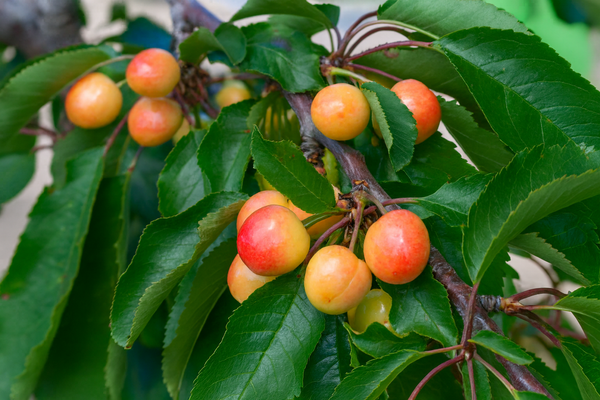 White Gold Sweet Cherry(Spring 2027)
From $64.99
White Gold Sweet Cherry(Spring 2027)
From $64.99
-
 Sold out
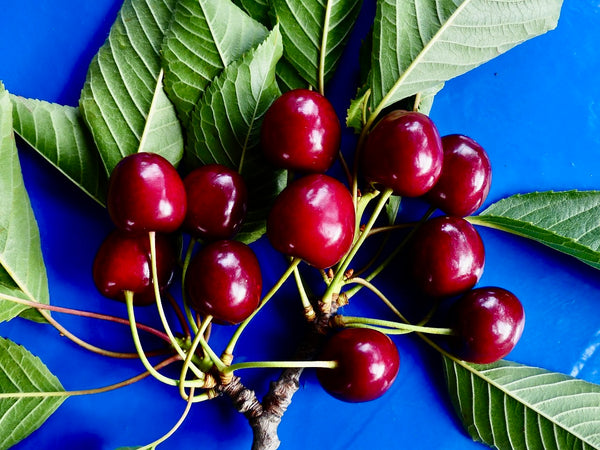
Bing Cherry
Sold out
Bing Cherry
-
 Sold out
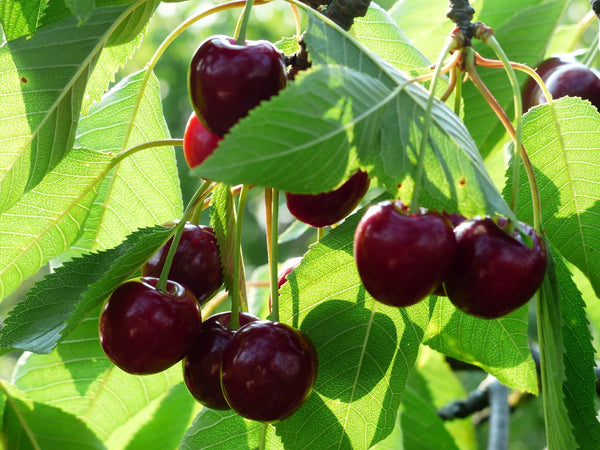
Stella Sweet Cherry
Sold out
Stella Sweet Cherry

