
Skip to product information


Arctic Glo Nectarine
$89.99
Reliable shipping
Flexible returns
Pollination
Self-fertile
Bloom group
3 of 7 (Early-Mid)
Ripening
Will it finish before your first hard freeze?
Check it on the Ripening Map (opens in a new tab)
Disease resistanceNo strong resistance
- 3 Bacterial spot : Moderate, 3 of 5
- ? Brown rot : Unknown, no published data yet
- ? Cytospora canker : Unknown, no published data yet
- ? Peach leaf curl : Unknown, no published data yet
Scored 1 to 5. Higher resists better, and ? means no published data yet.
See it on our peach and nectarine disease chart (opens in a new tab)At a glance: Arctic Glo Nectarine is a nectarine tree rated hardy to zone 5 in our ratings (winters to -20°F), and self-fertile, so one tree can crop (bloom group 3 of 7, early-mid for a peach or nectarine).
| Hardy to | Zone 5 to 9. A bare number means the whole of zone 5, colder half included (winters to -20°F). Find your zone with our cold hardiness calculator. |
|---|---|
| Chill hours | About 450 hours (400 to 500). Well documented. Independent sources agree. Montana winters give it plenty. In milder climates, make sure your winters average at least this much. Check your chill hours or see our sources. |
| Pollination | Self-Fertile. Bloom group 3 of 7 (early-mid), early spring here. Self-fertile, so a single tree will set fruit. No pollenizer needed. Nearby varieties that can boost the crop: Fantasia Nectarine, Flavortop Nectarine, Blushingstar Peach, Contender Peach and 7 more. Bloom group is our estimate from the variety's origin and relatives. Nectarine Pollination Map. |
| Rootstock and size | Lovell: full size, about 12 to 20 ft tall unpruned. Doesn't like wet feet or high-lime soil. Our rootstock guide. |
| Good for | Fresh eating (7/10). Scores are our own 1 to 10 ratings; 8 and up makes our Best Of lists. |
| Deer | Sometimes damaged by deer. |
| What you get | Bare root, 5-7 ft. Larger & More Branching. Shipped or picked up in Missoula in spring, roots wrapped in moist sawdust. Guaranteed to bud out. |
Overview
Arctic Glo Nectarine—along with Hardired and Doug’s Big Red Juicy (and seedlings thereof)—are the only nectarines that have done well in the warmer microclimates of Missoula.
Cold Climate Nectarines in Missoula
We’ve noticed that when it comes to cold-climate nectarine growing in Missoula, elevation matters a lot. If one site has seen -27°F and another site has seen the same temperature but is lower in elevation, nectarines—and other fringey things like some almonds, some peaches, and some sweet cherries—should absolutely be planted higher up.
A good example: our friend Doug Hawes-Davis had nectarines growing for nearly 15 years near one of the highest points on the valley floor. The tree rarely even saw tip dieback, even when temperatures hit -27°F. The tree only disappeared because it got cut down when an alleyway was paved.
Why Elevation Matters
The longer those floating death traps—ice crystals—are present in the air swirling around the tree, the more time they have to penetrate the tree’s cellular membranes and cause damage. Higher elevation (even higher on the valley floor), and especially planting up on a bench or hillside, gives the tree a better chance.
But then it’s not just how long the crystals are present; it’s also their intensity (the amount of crystals plus even colder ambient air temps). There’s always a limit.
For example, if Doug’s tree had seen -32°F around 7 a.m. (right before sunrise), and if temperatures hovered around -24°F to -31°F all night long, the cold would have been much more intense, and the nectarines probably wouldn’t have survived those prolonged lows.
Growing Tips
This is a great nectarine to grow if:
-
you have a good site, and
-
your climate doesn’t dip below about -20°F.
Otherwise you’ll need to take extra precautions, such as:
-
building a teepee around the tree with incandescent bulbs or a 10 ft geothermal hole
-
using incandescent Christmas lights and keeping that heat in
-
planting it near a hot tub (I've seen it! lol)
-
or similar creative hacks where the microclimate around the tree is altered
These are just a few examples but they may not be worth experimenting with for most people—or for any nectarine, really.
Hardiness Notes
Nectarines are one of the most fragile stone fruits to grow here. They’re not as hardy as some of the commercial peaches we grow, like Contender—certainly not Siberian—and others, even though they’re genetically almost identical except for a single allele that controls skin fuzziness.
We’re listing Arctic Glo at zone 5 (-20°F) for now, until we have more data. Doug’s tree took -27°F with hardly any tip dieback, so it may handle a little more than that.
Questions we get about Arctic Glo Nectarine
Does Arctic Glo Nectarine need a pollenizer?
No. Arctic Glo Nectarine is self-fertile, so a single tree can set fruit. Self-fertile, so a single tree will set fruit. No pollenizer needed. Partners we carry include Fantasia Nectarine, Flavortop Nectarine, Blushingstar Peach.
How cold hardy is Arctic Glo Nectarine?
We rate Arctic Glo Nectarine hardy to zone 5, which means winters down to about -20°F. Our ratings come from real winters at our two Montana sites and from trusted growers across the North, not from a catalog average.
How many chill hours does Arctic Glo Nectarine need?
About 450 hours of winter chill (we count hours at or below 45°F), likely somewhere between 400 and 500. That figure is well documented: independent sources agree. Low chill for a nectarine, around 450 hours. It can wake early in warm spells, so avoid spots with reflected heat off south walls. Our chill hours guide has a calculator for your winters, and our research page lists the sources.
How big does Arctic Glo Nectarine get?
We graft Arctic Glo Nectarine onto Lovell (full size), which makes a tree roughly 12 to 20 ft tall if you never prune it.
What is Arctic Glo Nectarine good for?
Our top use scores for Arctic Glo Nectarine are fresh eating (7/10).
Is Arctic Glo Nectarine disease resistant?
Somewhat. It holds up moderately well against bacterial spot. Nobody has published solid data on it for brown rot, cytospora canker and peach leaf curl yet, so we list those as unknown. Our peach and nectarine disease resistance chart has every rating, the notes and the sources.
Will deer eat Arctic Glo Nectarine?
Sometimes. Deer browse Arctic Glo Nectarine now and then, so protect young plants where deer pressure is high.
What arrives, and when does Arctic Glo Nectarine ship?
A dormant bare root plant, roots wrapped in moist sawdust with a vapor barrier, shipped or picked up in Missoula in spring. Sizes offered: 5-7 ft. Larger & More Branching. We guarantee our plants bud out. Stone fruits can be slow, so if one still has not budded out by August 15, write to us and we credit you for the following spring.
More Plants Like This
Sold Out This Season? Try These
Pollination partners
Good partners for Arctic Glo Nectarine
Arctic Glo Nectarine is self-fertile, so one tree will fruit on its own. If you'd like a second peach or nectarine, these bloom at the same time and work well together.
Bloom group
3 of 7 (Early-Mid)
Pollination
Self-fertile
Pollen
Good pollenizer
-
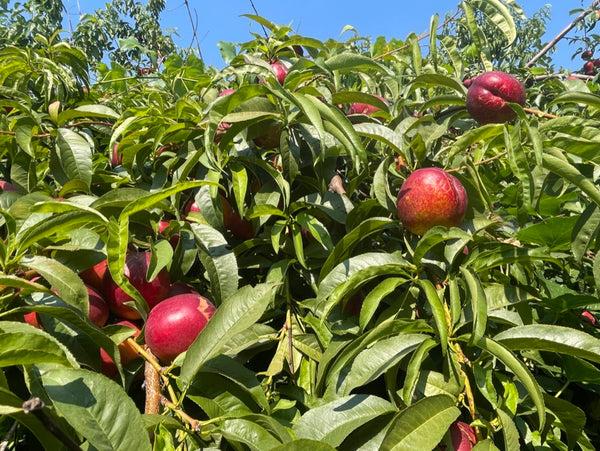 Fantasia Nectarine(Spring 2027)
From $64.99
-
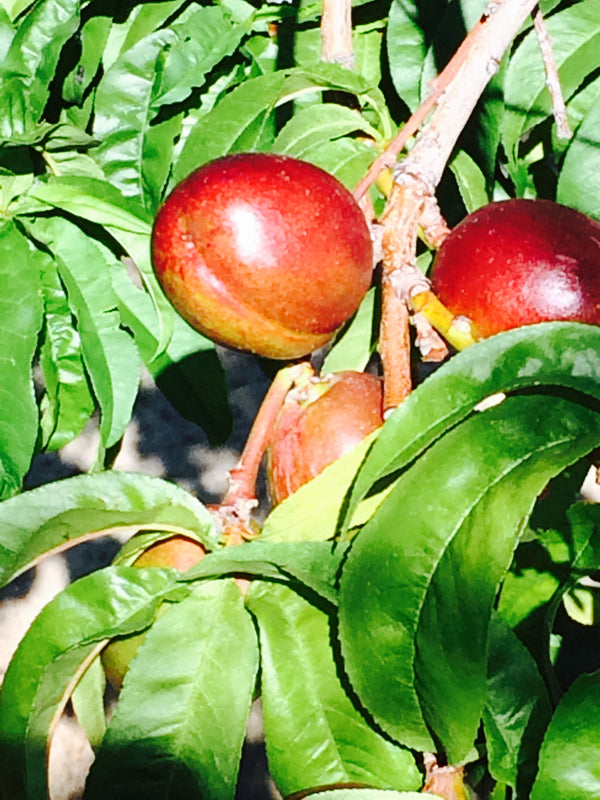 Flavortop Nectarine(Spring 2027)
From $64.99
-
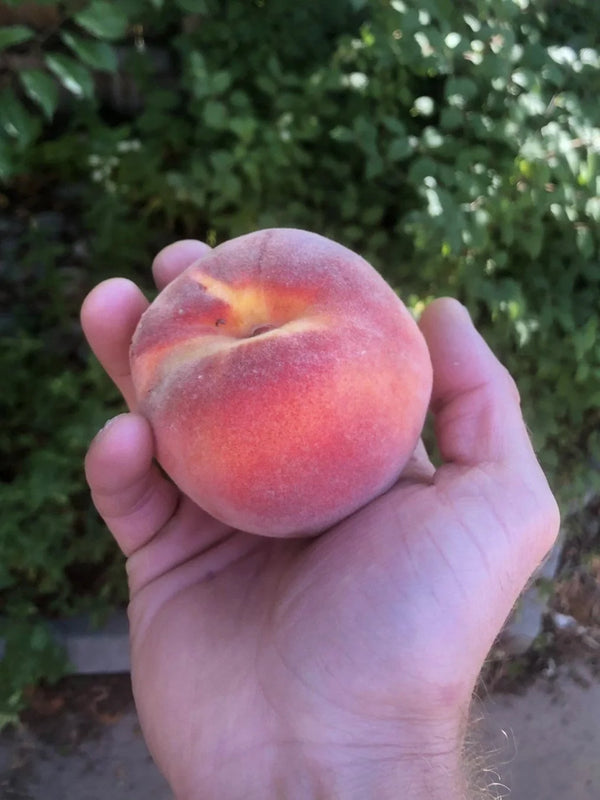 Contender Peach(Spring 2027)
From $54.99
-
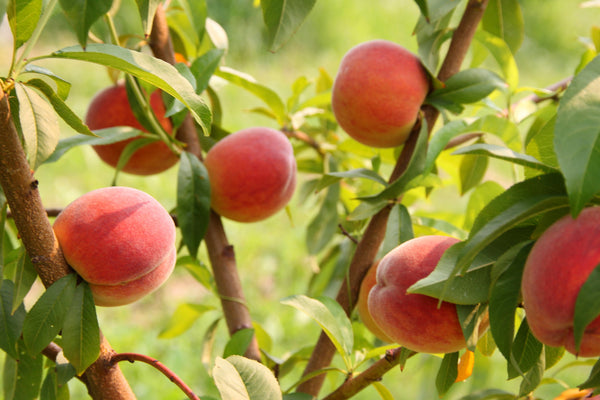 Glohaven Peach(Spring 2027)
From $64.99
-
 Hardired Nectarine(Spring 2027)
From $44.99
-
 Mericrest Nectarine(Spring 2027)
From $44.99

See every pairing on the Nectarine Pollination Map
Arctic Glo Nectarine's bloom group is our best estimate. Watch it bloom and tell us what you see.
You may also like
Not available for spring 2027. Here's what we'd plant instead.
Arctic Glo Nectarine is off the list this season. These are in stock now, and the full nectarine trees collection has the rest. Everything on our zone 5 page is rated for the same winters.
Browse the nectarine trees collection for what's in stock.