Skip to product information


Martha Applecrab (Spring 2027)
$44.99
Reliable shipping
Flexible returns
Pollination
Needs a partner
Bloom group
2 of 7 (Early)
Ripening
Will it finish before your first hard freeze?
Check it on the Ripening Map (opens in a new tab)
Disease resistanceNo strong resistance
- ? Apple scab : Unknown, no published data yet
- ? Cedar-apple rust : Unknown, no published data yet
- 3 Fire blight : Moderate, 3 of 5
- ? Powdery mildew : Unknown, no published data yet
Scored 1 to 5. Higher resists better, and ? means no published data yet.
See it on our crabapple disease chart (opens in a new tab)At a glance: Martha Applecrab is an applecrab tree rated hardy to zone 3 in our ratings (winters to -40°F), not self-fertile, so it needs a different variety nearby as a pollenizer (bloom group 2 of 7, early for an apple or crabapple), and it ripens about Aug 26 to Sep 7 in Missoula (our Missoula estimate).
| Hardy to | Zone 3 to 7. A bare number means the whole of zone 3, colder half included (winters to -40°F). Find your zone with our cold hardiness calculator. |
|---|---|
| Chill hours | About 700 hours (500 to 900). Our estimate. No published figure exists for this variety yet. Montana winters give it plenty. In milder climates, make sure your winters average at least this much. Check your chill hours or see our sources. |
| Pollination | Needs Cross-Pollination. Bloom group 2 of 7 (early), late spring here. Plant a different apple or crabapple variety that blooms in groups 1 to 3, such as Chestnut Applecrab, Rescue Applecrab or Dearborn's Unknown. It has good pollen, so it can also pollenize other apples blooming at the same time. Good partners we carry: Chestnut Applecrab, Lodi Apple, Norda Apple, Norland Apple and 42 more. Apple Pollination Map. |
| Ripens | About Aug 26 to Sep 7 in Missoula (a Missoula estimate from published sources). Real years swing about a week either way. See the date for your town. |
| Rootstock and size | Malus baccata: full size, about 20 to 30 ft tall unpruned. Siberian crab, about as hardy as apple roots get. Bud 118: semi-dwarf in our dry Montana soils, semi-standard on paper, about 12 to 18 ft tall unpruned. Stands on its own, few suckers. Plant about 15 ft apart. Our rootstock guide. |
| Good for | Cooking and roasting (8/10), jams and jellies (8/10), fresh eating (7/10), sauce and butter (7/10), pies and baking (6/10), hard cider (6/10). Scores are our own 1 to 10 ratings; 8 and up makes our Best Of lists. |
| Deer | A deer favorite. Fence it or cage it. |
| What you get | Bare root, 3-4 ft or 4-6 ft. Shipped or picked up in Missoula in spring, roots wrapped in moist sawdust. Guaranteed to bud out. |
About Martha Applecrab
Martha is an old Minnesota applecrab, sweet-tart and good fresh or in jelly, that took -38F in Corvallis, Montana with no injury.
- Where it came from: Minnesota, late 1800s, from the Peter Gideon era (our research; we haven't found a primary source).
- Parents: Not published.
- Also called: Martha Crab.
- Cider class: Not classed by any source (our store tag says sharp).
- Juice: None published.
- Winter: Took -38F in Corvallis, Montana with no injury.
- Bloom and ripening: blooms in apple group 2 of 7 (early); ripens about Aug 26 to Sep 7 in Missoula.
Part of: sharp cider apples, zone 3 cider apples.
More reading: best crabapples for cider.
Questions about Martha Applecrab
Is Martha good for cider? We score it 6 out of 10 for hard cider. Nobody has published its juice numbers, so measure yours; it ripens early, late August to early September here.
Is Martha applecrab edible? Yes: sweet-tart and great fresh, cooked or in jelly.
How big does Martha Applecrab get? On Malus baccata roots it's full size, about 20 to 30 ft unpruned; on Bud 118 it's semi-dwarf, about 12 to 18 ft.
Overview
Martha is an applecrab from Minnesota dating to the late 1800s, commonly associated with the work of Peter Gideon (the same Minnesota pioneer famous for the Wealthy apple). It’s grown because it’s hardy, reliable, and genuinely useful for fresh eating and cooking.
History & Parentage
Edible Crab, applecrab, crabapple. People have different names for Martha and given that we do not know exactly if it is a cross between a pure crab and a domesticated apple (unlike Kerr, which is Dolgo x Haralson), Rod and others we know in Montana refer to it as an applecrab. Its history goes back to the late 1800s, tied to Peter Gideon’s era of Minnesota fruit work. Formal parentage is not typically published in the references most growers use.
Fruit Quality & Uses
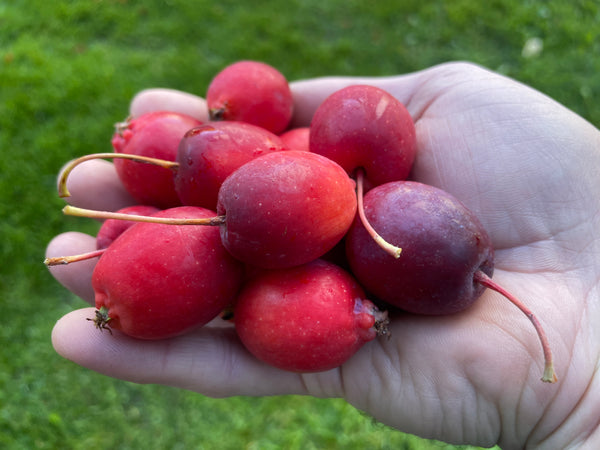
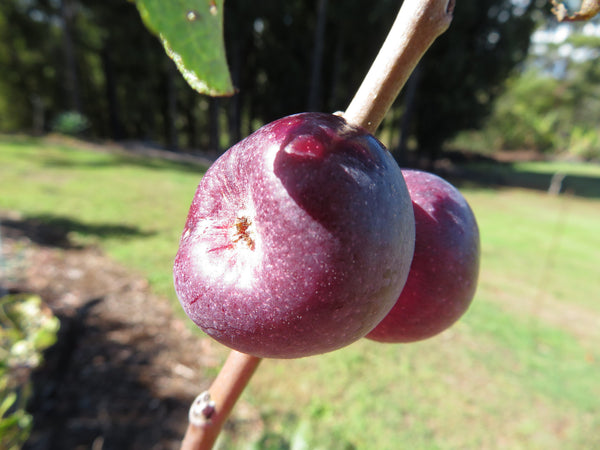
Martha is rose-red, about 2 inches across, with crisp, juicy, slightly yellow flesh and a sweet-tart flavor. The flavor is exceptional and life changing (see the story below!). It’s used for fresh eating, baking, sauce, jelly/jam, and as an excellent addition to cider blends.
Growth Habit & Spacing
It’s spreading/open and productive. Spacing depends on rootstock and training, some of these are on Bud 118 and can be spaced 15 ft. apart. The full size Dolgo should be 20 ft. apart. Both rootstocks can be spaced tighter for a more intense spacing/pruning regiment, or even further apart for a more lax approach.
Pollination
As with essentially all apples/crabapples, cross-pollination improves fruit set. The list is long but some ideas to go with Martha include Trailman, Kerr, Chestnut, Rescue, Dearborn's Unknown, Mantet, Norland, Norson, Norda, Lodi, Yellow Transparent, and many others.
Cold Hardiness
Given Martha's success in which it saw no winter injury in Corvallis, MT that saw -38F on 1/13/24, Martha is at least hardy to -40F. It's certainly a zone 3a apple, and is likely hardy down to temps even colder, although we simply don't have this data yet.
Fun Backstory
One of Luke's mentors, the late Rod McIver, fell in love with fruit growing because of a single taste. When he was in his 50s, a friend from Oregon handed him a Wickson crabapple. The flavor floored him. Wanting to grow it but unable to find a nursery that carried it, he was told the only solution was to learn to graft. So he did. He found cuttings, grafted one successfully, waited four years, and when he finally tasted the fruit he said, in his southern drawl, “This ain’t the fruit I tried five years ago!”
That started a decade-long quest. He gathered cuttings from near and far, trialed rootstocks, and devoured books. He didn't realize it at the time but he was falling in love with fruit growing and pomology (the science/practice of growing fruit). Finally one late-summer evening, he plucked a tree ripened apple, took a bite, and shouted, “By God, I’ve found it. Martha!”
That was the name of the apple he’d tried all those years earlier (and funny enough, the name of his eldest daughter!). Rod went on to have the largest germplasm of fruit varieties in the whole state, and it all started with Martha.
Images courtesy Maine Organic Farmers and Gardeners
Questions we get about Martha Applecrab
Does Martha Applecrab need a pollenizer?
Yes. Martha Applecrab needs pollen from a different variety that blooms at about the same time. Plant a different apple or crabapple variety that blooms in groups 1 to 3, such as Chestnut Applecrab, Rescue Applecrab or Dearborn's Unknown. It has good pollen, so it can also pollenize other apples blooming at the same time. Partners we carry include Chestnut Applecrab, Lodi Apple, Norda Apple.
How cold hardy is Martha Applecrab?
We rate Martha Applecrab hardy to zone 3, which means winters down to about -40°F. Our ratings come from real winters at our two Montana sites and from trusted growers across the North, not from a catalog average.
How many chill hours does Martha Applecrab need?
About 700 hours of winter chill (we count hours at or below 45°F), likely somewhere between 500 and 900. Nobody has published a chill figure for it, so that's our estimate from its relatives and origin. Our chill hours guide has a calculator for your winters, and our research page lists the sources.
When does Martha Applecrab ripen?
About Aug 26 to Sep 7 in Missoula, Montana (an estimate built from published sources and our climate). Warmer places run earlier and cooler places later; our ripening map converts the date to your town.
How big does Martha Applecrab get?
We graft Martha Applecrab onto Malus baccata (full size), which makes a tree roughly 20 to 30 ft tall if you never prune it. Some sizes are on Bud 118. Plant about 15 ft apart.
What is Martha Applecrab good for?
Our top use scores for Martha Applecrab are cooking and roasting (8/10), jams and jellies (8/10), fresh eating (7/10), sauce and butter (7/10). Anything scored 8 or higher makes our Best Of lists.
Is Martha Applecrab disease resistant?
Somewhat. It holds up moderately well against fire blight. Nobody has published solid data on it for apple scab, cedar-apple rust and powdery mildew yet, so we list those as unknown. Our crabapple disease resistance chart has every rating, the notes and the sources.
Will deer eat Martha Applecrab?
Yes, deer love it. Protect Martha Applecrab with a fence or a cage, especially while it is young.
Juice data
| SG (Brix) | Acid g/L | Tannin g/L | pH |
|---|---|---|---|
| 1.057 (14.0) E | 9.0 E | 0.8 E | not published |
On these numbers it's a sharp on the Long Ashton scale. Letters show how solid each number is: M measured, P published but weaker, E our estimate.
Run Martha Applecrab through the hard cider calculator to see what it does in a blend.
Pollination partners
Trees that will pollenize Martha Applecrab
Martha Applecrab needs a different apple or crabapple nearby to set fruit. Every tree below blooms at the same time and has pollen that works for it. Plant partners within about 100 feet.
Bloom group
2 of 7 (Early)
Pollination
Needs a partner
Pollen
Good pollenizer
-
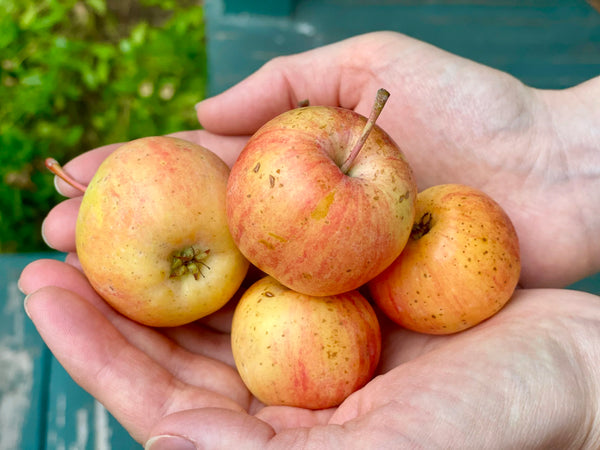 Chestnut Applecrab(Spring 2027)
From $59.99
-
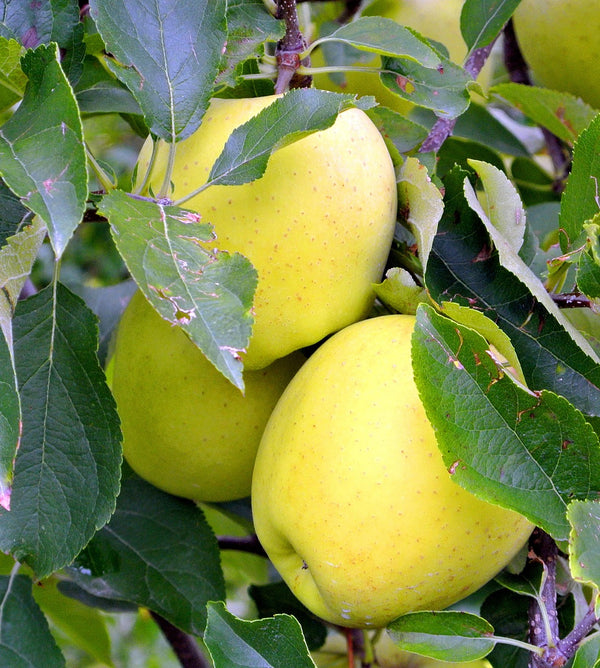 Lodi Apple(Spring 2027)
From $54.99
-
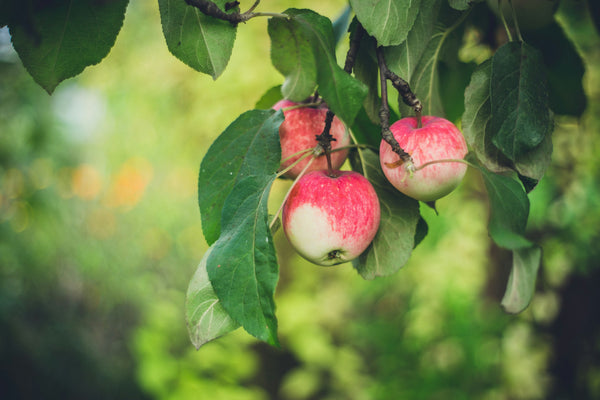 Norda Apple(Spring 2027)
From $54.99
-
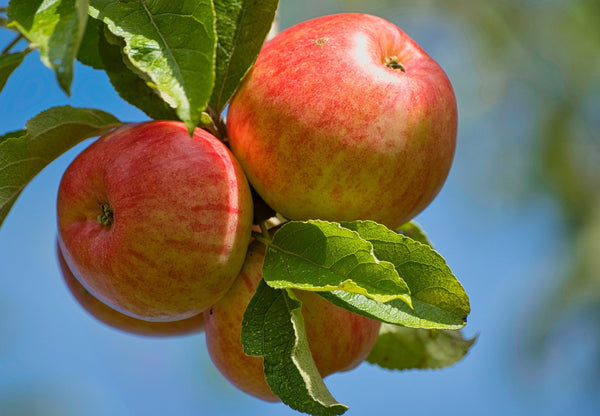 Norland Apple(Spring 2027)
From $49.99
-
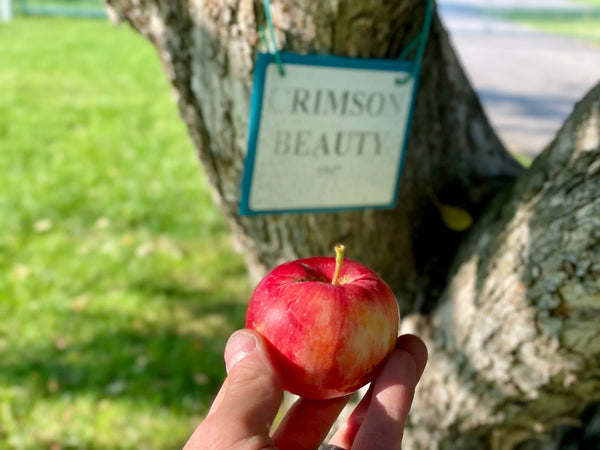 Crimson Beauty Apple(Spring 2027)
From $59.99
-
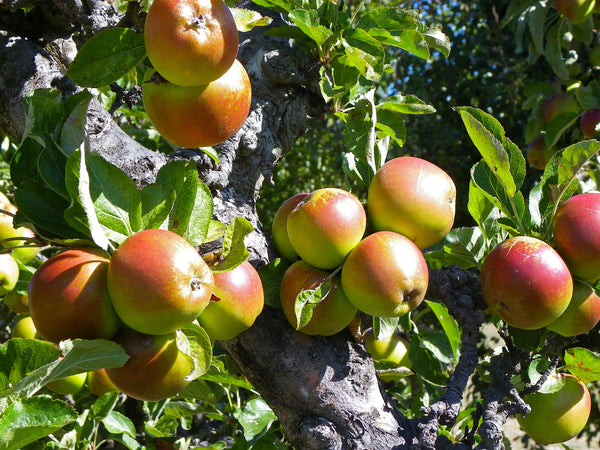 Red Baron Apple(Spring 2027)
$74.99
-
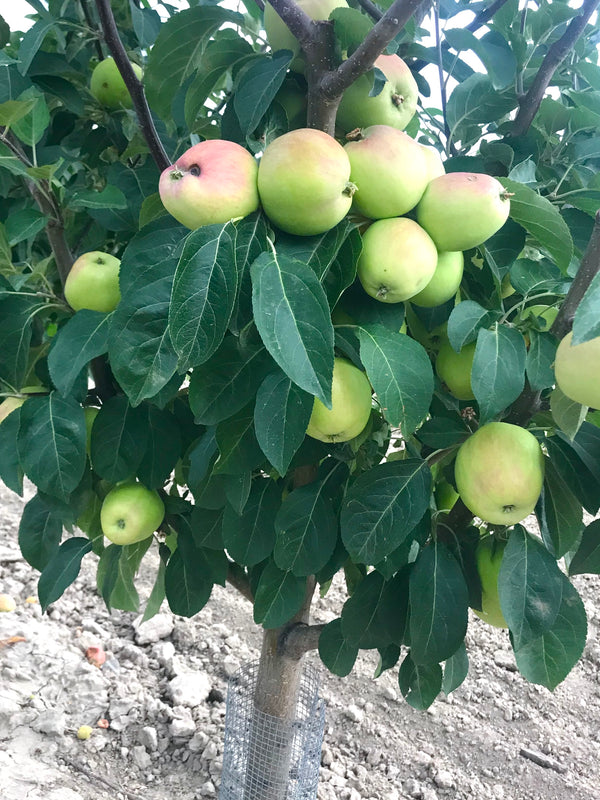 Dearborn's Unknown Apple(Spring 2027)
From $59.99
-
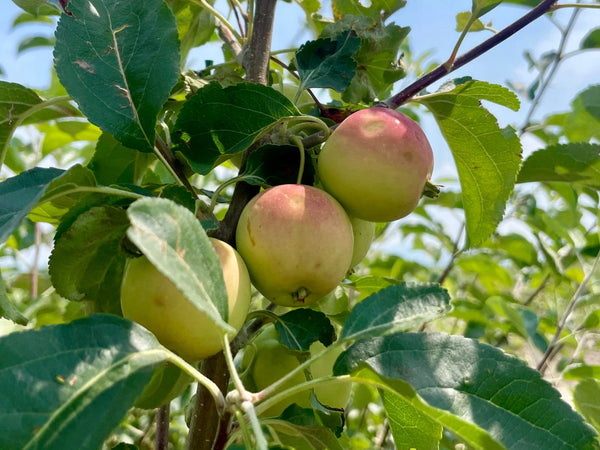 Rescue Applecrab(Spring 2027)
From $49.99
-
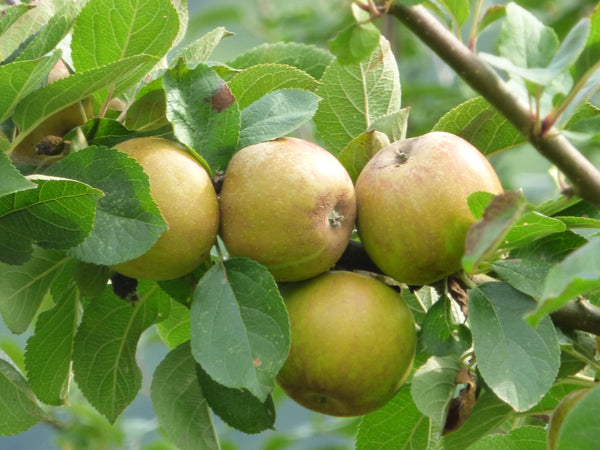 St. Edmund's Pippin Apple(Spring 2027)
From $44.99
-
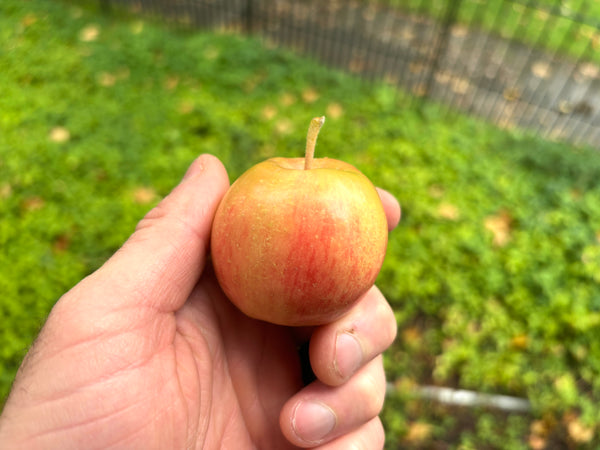 Hewe's Virginia Crabapple(Spring 2027)
From $74.99